How Leading Companies Use Design Thinking to Drive Enterprise Innovation
Companies use design thinking to systematically solve complex enterprise problems by centering product development, service design, and business strategy around human needs. By combining empathetic user research, cross-functional colla...
Companies use design thinking to systematically solve complex enterprise problems by centering product development, service design, and business strategy around human needs. By combining empathetic user research, cross-functional collaboration, rapid prototyping, and iterative testing, organizations reduce market risk, accelerate time-to-market, and create products and services that directly align with end-user expectations.
Contents
What Enterprise Design Thinking Means in Modern Business
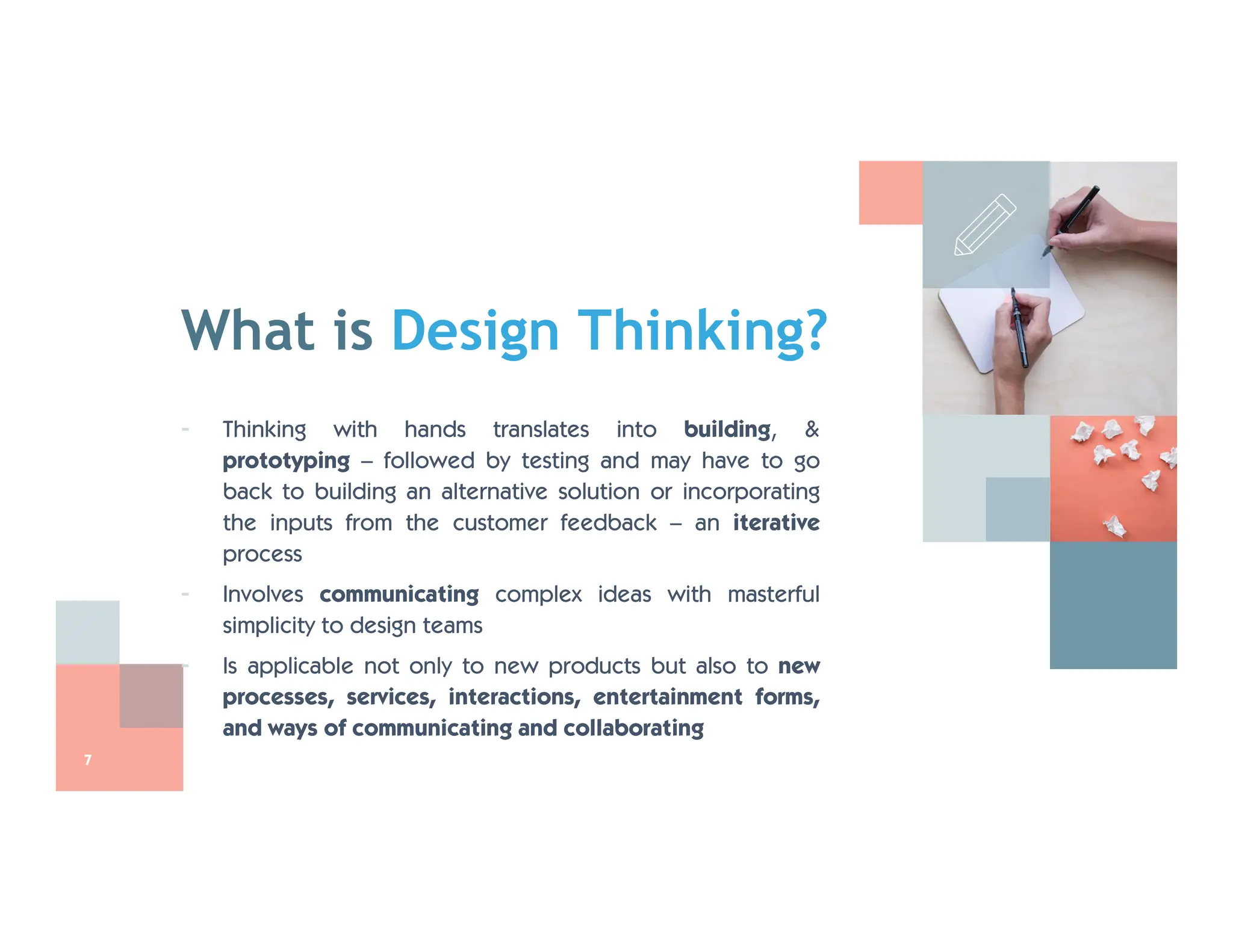
Design thinking is no longer restricted to design studios or digital product agencies. In modern corporate environments, design thinking functions as a strategic management framework. It enables cross-functional teams—comprising engineers, business analysts, product managers, and executive leaders—to approach ambiguous business challenges with the structured mindset of a designer.
Traditionally, corporate product development relied heavily on linear, hypothesis-light models. Teams built business cases based on internal assumptions, spent months or years developing features behind closed doors, and launched products into the market only to discover that end users found them unintuitive or unhelpful. Design thinking reverses this model by forcing organizations to validate user needs and product viability continuous throughout the development process.
When implemented at scale, design thinking shifts organizational culture from opinion-driven decision-making to evidence-based problem solving. Companies that embed this methodology across their operations move past superficial aesthetic design. Instead, they leverage design as a driver of core business outcomes: reducing operational friction, minimizing wasted engineering hours, and capturing sustainable market share.
The Core Enterprise Design Thinking Framework
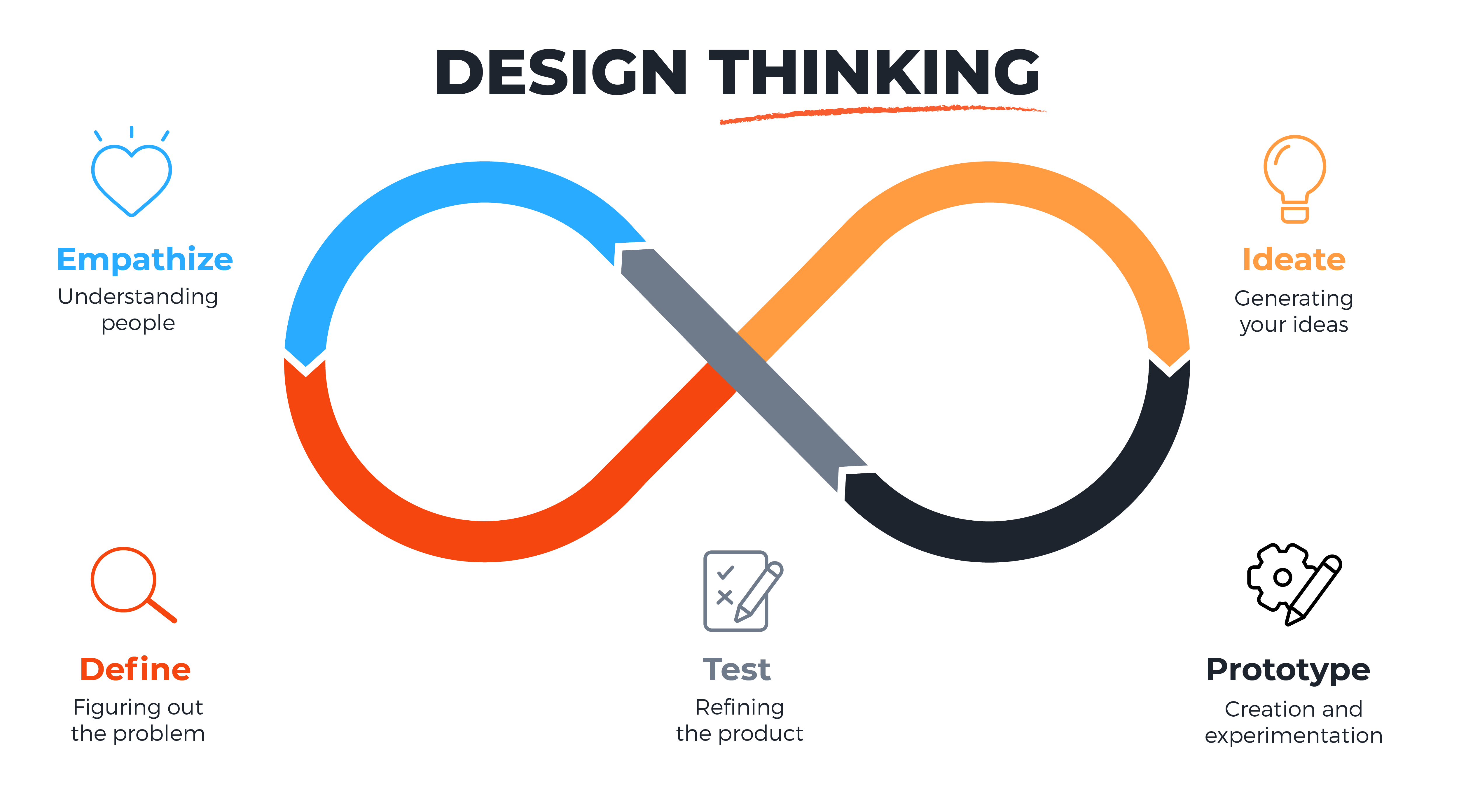
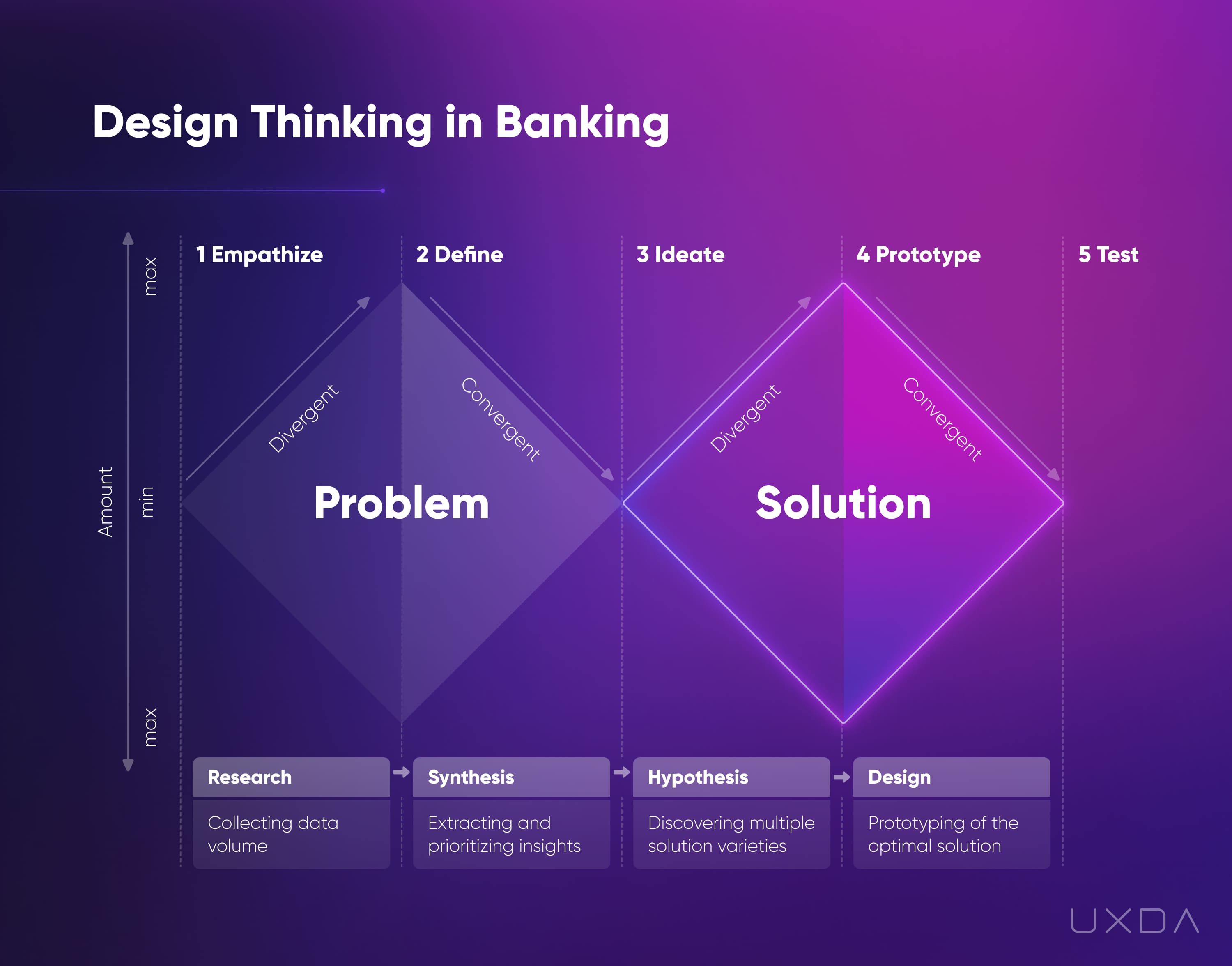
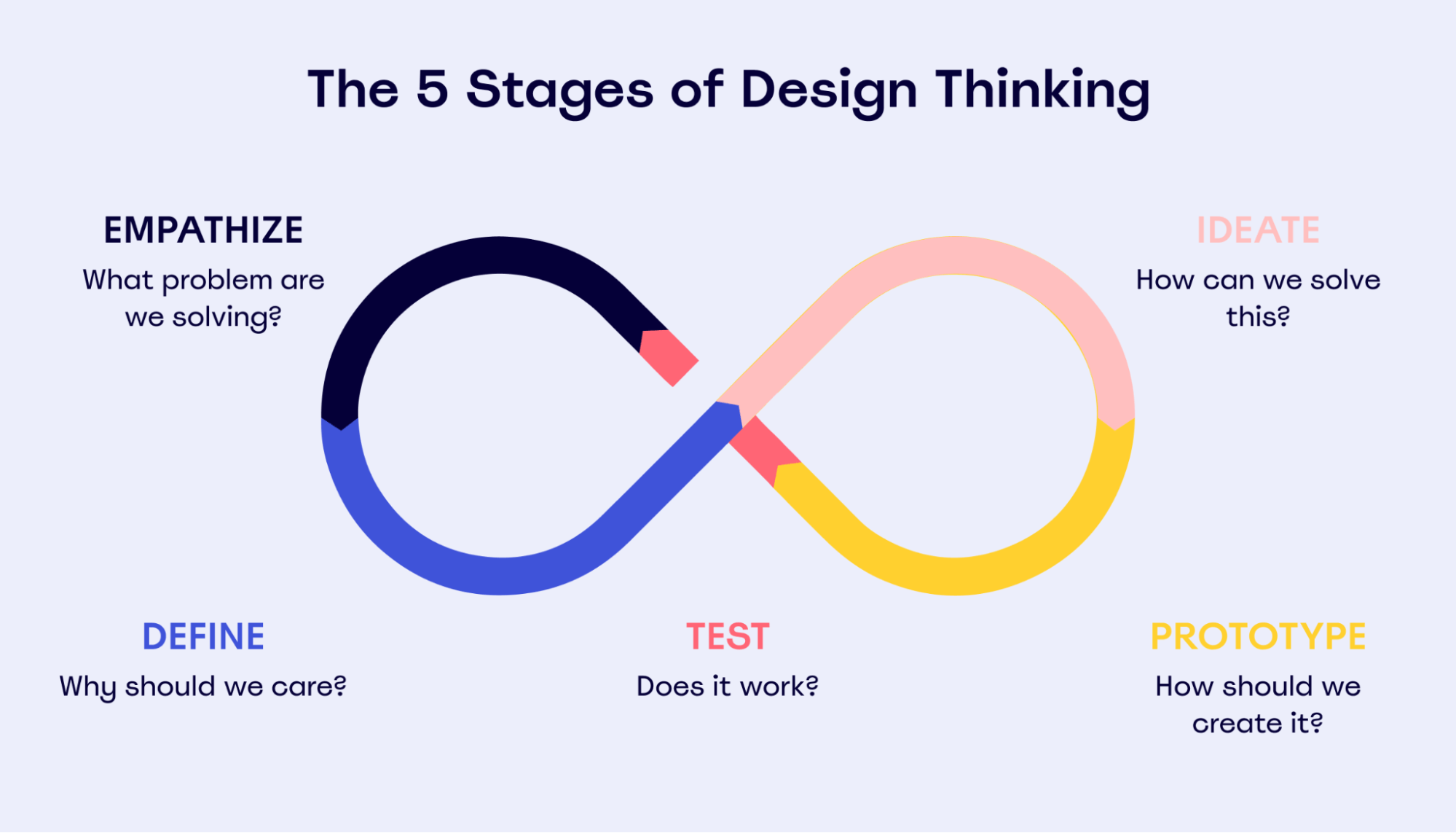
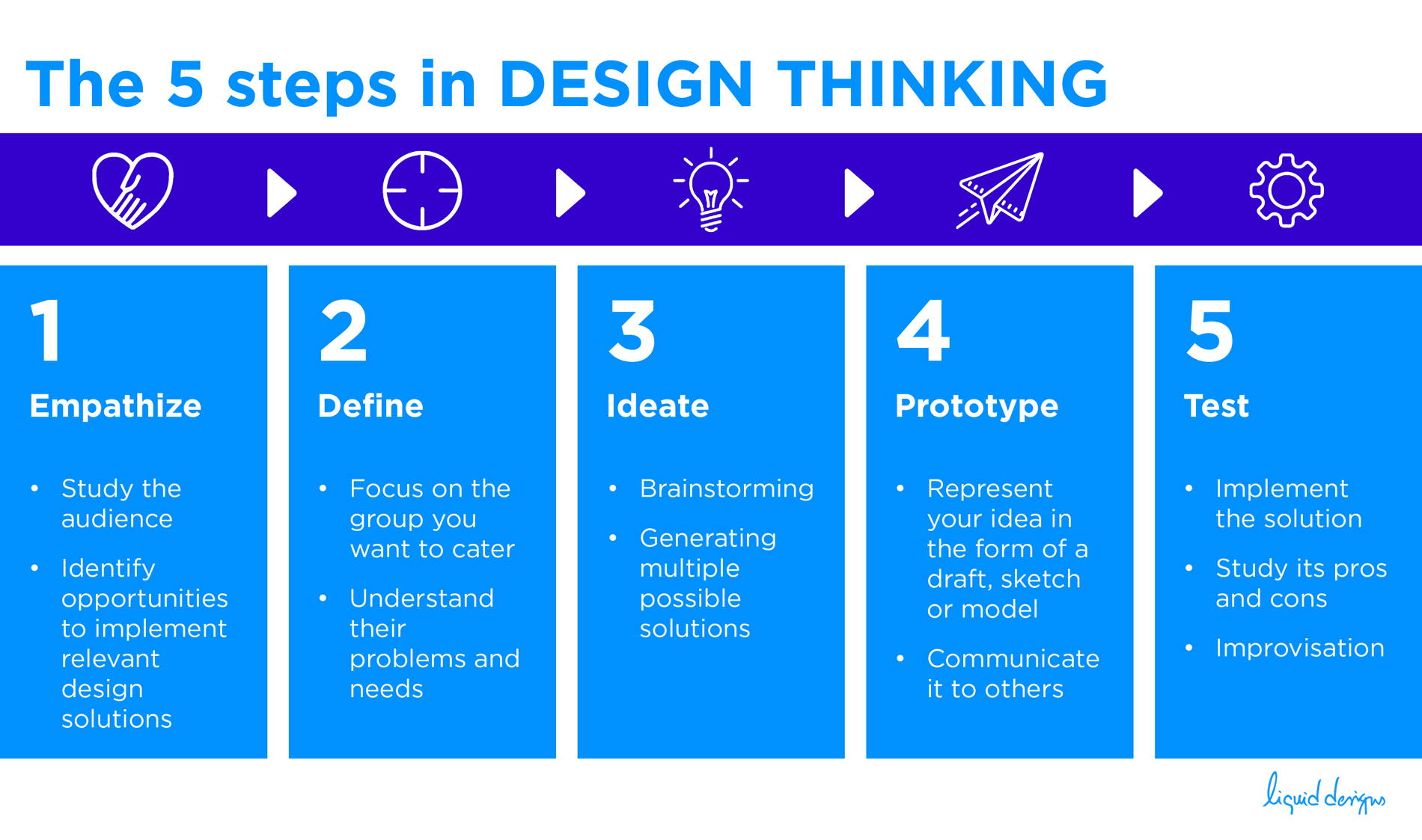
While design thinking originated from human-centered design principles refined by institutions like IDEO and the Stanford d.school, enterprise adoption requires adapting these principles to complex organizational structures. The classic model consists of five distinct, non-linear stages adapted for corporate environments:
| 1. EMPATHY | 2. DEFINE | 3. IDEATE | 4. PROTOTYPE | 5. TEST |
|---|---|---|---|---|
| Understand User Needs | Frame the Problem | Brainstorm Solutions | Build Scaled MVPs/Models | Validate Outcomes |
1. Empathize: Uncovering Unmet Needs
Enterprise empathy goes beyond baseline market research or quantitative surveys. Teams conduct contextual inquiries, observational studies, and deep-dive user interviews to observe how customers, employees, or operational staff interact with tools and processes in real-world environments. The goal is to uncover hidden frustration points, workaround behaviors, and unstated emotional drivers.
2. Define: Reframing Complex Problems
Large organizations often fail because they build efficient solutions for the wrong problems. In the definition stage, teams synthesize qualitative and quantitative data into clear, human-centered problem statements (often structured as "How Might We" statements). This stage aligns executives and delivery teams around the actual user problem rather than individual stakeholder preferences.
3. Ideate: Divergent Solution Generation
During ideation, cross-functional teams generate a broad volume of diverse potential solutions. Removing immediate technical and operational constraints allows teams to explore novel approaches. Techniques such as journey mapping, crazy eights, and storyboarding help surface non-obvious strategies before filtering them down based on technical feasibility and business viability.
4. Prototype: Making Ideas Tangible
Enterprise prototyping prioritizes speed and low cost over perfection. Teams construct low-fidelity physical models, wireframes, role-playing scenarios, or interactive digital mockups to make abstract concepts concrete. Low-fidelity artifacts prevent organizations from investing heavy development capital into unproven ideas.
5. Test: Iterative Validation
Prototypes are placed directly in front of target users to collect qualitative feedback and measure behavioral responses. Testing is not a final hurdle before launch; it is a continuous feedback loop that informs whether a project should pivot, refine its core features, or be discontinued early to preserve corporate resources.
How Global Companies Apply Design Thinking
Examining real-world enterprise deployments illustrates how major global corporations adapt design thinking principles to solve distinct business challenges.
IBM: Scaling Frameworks across Global Organizations
IBM faced a massive operational challenge: standardizing design practices across more than 300,000 employees working across disparate software divisions, consulting units, and geographic regions. To address this, the company developed the IBM Enterprise Design Thinking framework, built around three core concepts:
- Hills: Aligning teams around clear, user-centric outcome statements (Who, What, Wow) rather than feature delivery lists.
- Sponsor Users: Bringing actual end-users directly into the development lifecycle as active collaborators throughout design iterations.
- Playbooks & Delivery Systems: Providing scalable toolkits and training programs to ensure non-designers can lead empathetic problem-solving sessions.
Independent financial analysis conducted by Forrester Research demonstrated that IBM’s framework reduced project risk, cut defect remediation costs, and accelerated time-to-market by up to 50% across measured projects.
Airbnb: Transforming Business Models Through Empathy
In its early stages, Airbnb struggled with low revenue growth. Co-founders Brian Chesky and Joe Gebbia realized that host listings featured low-quality photographs taken on mobile phones, making properties unappealing to prospective renters.
Rather than attempting to fix the issue through algorithm optimization or server-side code changes, the team traveled directly to listings in New York to interact with hosts. They took high-resolution, professional photographs of the properties themselves. This high-empathy, non-scalable intervention immediately doubled weekly revenue, establishing a user-first iteration mindset that remains central to Airbnb’s product strategy.
SAP: Humanizing Enterprise B2B Systems
Enterprise enterprise resource planning (ERP) systems were historically notorious for complex, difficult-to-navigate user interfaces. SAP recognized that poor usability resulted in increased customer support costs and low user adoption rates.
SAP integrated design thinking deep into its software architecture process, resulting in the creation of the SAP Fiori design system. By shifting focus from feature complexity to user-role workflows, SAP simplified core operations for millions of global business users, demonstrating that enterprise B2B software benefits just as significantly from consumer-grade design thinking as business-to-consumer (B2C) applications.
Nike: Merging Material Science with Athlete Insights
Nike approaches design thinking by combining physiological performance data with psychological empathy. The company’s Innovation Kitchen brings elite athletes into dedicated research labs to capture biometric feedback, physical mechanics, and personal sensory preferences.
This human-centered feedback loop directly informed breakthrough product innovations, such as Flyknit manufacturing technology—which reduced footwear production waste while improving fit—and specialized long-distance running footwear that reshaped competitive athletics standards.
Enterprise Implementation Comparison Matrix
Different organizations tailor design thinking to suit their specific operational cultures and market requirements. The table below outlines how major implementation archetypes compare across critical delivery vectors:
| Implementation Model | Primary Focus Area | Typical Facilitators | Key Artifacts / Outputs | Primary Business Metric |
|---|---|---|---|---|
| Enterprise Scaled Framework (e.g., IBM) | Organizational alignment, cross-silo delivery | Internal certified champions, product leaders | Hills, Sponsor User feedback loops, Playbooks | Time-to-market reduction, project cost efficiency |
| B2B Usability Overhaul (e.g., SAP) | Operational friction reduction, complex UX | Dedicated UX architects, systems strategists | Standardized design systems, role-based workflows | User adoption rates, support ticket reduction |
| Behavioral Experience Design (e.g., Airbnb) | Customer touchpoints, brand loyalty | Founders, design researchers, cross-functional squads | Journey maps, rapid real-world prototypes | Net Promoter Score (NPS), conversion rates |
| Product & Material Innovation (e.g., Nike) | Physical engineering, performance optimization | R&D teams, industrial designers, domain experts | Physical prototypes, biometric feedback maps | Patent generation, premium product margin |
Strategic Blueprint: Implementing Design Thinking at Scale
To establish a design thinking practice within an enterprise environment, management teams should follow a structured rollout roadmap to prevent methodology dilution and ensure strategic alignment.
- Phase 1: Executive Alignment & Scope Definition
- Secure C-suite sponsorship
- Establish clear target KPIs
- Phase 2: Pilot Program Deployment
- Select 2-3 high-impact, manageable projects
- Form cross-functional core teams
- Phase 3: Capability Building & Infrastructure
- Train internal champions
- Standardize design systems and tools
- Phase 4: Operational Integration & Scaling
- Integrate design gates into agile planning
- Institutionalize continuous user testing loops
Phase 1: Secure Executive Sponsorship and Executive Alignment
Design thinking initiatives often fail when treated as bottom-up grassroots experiments without senior executive backing. C-suite leaders must champion design thinking not as an aesthetic initiative, but as an operational investment aimed at mitigating risk and growing enterprise revenue.
Phase 2: Launch High-Impact Pilot Projects
Rather than attempting to retrain the entire organization immediately, select two or three business-critical projects that suffer from strategic ambiguity or customer churn. Form dedicated, cross-functional squads containing a balance of product managers, engineers, market analysts, and UX researchers to execute these pilots using design thinking methodologies.
Phase 3: Build Internal Capability and Enablement Systems
To scale beyond pilot teams, organizations must create clear enablement mechanisms:
- Design Systems: Maintain central repositories of pre-built, accessible UI components and design tokens to streamline technical execution.
- Champion Networks: Train and certify internal facilitators across business units who can lead design discovery workshops.
- User Research Pools: Establish rapid-recruitment channels to access verified end users for feedback sessions within 48 to 72 hours.
Phase 4: Integrate Design Gates with Agile Delivery Frameworks
Design thinking must not run parallel to software engineering or business delivery cycles. Successful enterprises embed design thinking discovery mechanisms directly into their existing Agile, Scrum, or SAFe (Scaled Agile Framework) planning cycles. Discovery phases feed directly into sprint backlogs, ensuring that engineering efforts remain aligned with validated user needs.
Overcoming Common Enterprise Pitfalls
Even mature organizations encounter obstacles when operationalizing human-centered design principles. Understanding these failure modes allows leadership to establish proactively appropriate governance rules.
Avoiding "Innovation Theater"
Many enterprises fall into the trap of host-led brainstorming workshops filled with sticky notes, whiteboards, and energetic exercises that yield no actionable follow-through. To prevent design thinking from devolving into innovation theater, every design sprint must terminate with clear deliverable milestones: a validated low-fidelity prototype, an updated user journey map, or a prioritized backlogs of tested feature requirements.
Mitigating Resistance from Traditional Engineering and Finance Culture
Technical teams may view design iterations as delays to code execution, while finance managers may struggle to evaluate early-stage, non-deterministic discovery phases. Leaders can resolve this by framing design thinking as an explicit risk management tool: spending two weeks validating a prototype costs a fraction of building, testing, and shipping unvalidated software over six months.
Preventing Research Isolation
Design research should never exist in a silo separate from product management. When qualitative research teams produce heavy reports that product managers do not read, design insights become disconnected from software delivery. Product leaders, developers, and data analysts must participate directly in primary user interviews to build shared strategic empathy across functional areas.
Measuring the ROI of Enterprise Design Thinking
Demonstrating the strategic value of design thinking requires tracking concrete quantitative operational metrics alongside traditional qualitative design measures.
Efficiency & Velocity
- Time-to-market reduction
- Sprint velocity improvement
- Faster feature validation
Financial & Risk
- Reduced rework expenses
- Decreased development waste
- Lower customer support costs
Customer & Brand
- Customer Lifetime Value (CLV)
- Net Promoter Score (NPS)
- User retention & engagement
Time-to-Market Acceleration: Measuring the duration from initial problem identification to initial market release. Teams utilizing validated design sprints reduce overall project cycles by eliminating late-stage strategy changes.
Reductions in Engineering Rework: Calculating the ratio of engineering hours spent re-architecting features post-launch versus pre-launch. Effective initial prototyping substantially lowers post-release code refactoring.
Portfolio Efficiency Ratios: Tracking the ratio of launched features actively utilized by customers versus underperforming or abandoned software functions.
Customer Lifetime Value (CLV) and Retention: Measuring how user-centric product refinements directly impact long-term churn rate, customer acquisition cost (CAC), and organic expansion within core accounts.
Frequently Asked Questions
How does design thinking differ from traditional Agile methodology?
Design thinking focuses on identifying the correct problem to solve and discovering what to build through empathy and iteration. Agile focuses on how to build, test, and ship that solution efficiently in short, incremental engineering sprints. Leading enterprises combine both: using design thinking for problem discovery and product definition, and Agile for delivery and software execution.
Can non-technology companies benefit from design thinking?
Yes. Design thinking applies equally to physical manufacturing, healthcare services, financial logistics, and retail operations. Any business process that involves human interactions—whether customers using a banking portal or logistics staff operating warehouse software—benefits from empathy-driven research and iterative operational prototyping.
What is the role of executive leadership in a design thinking enterprise?
Executive leaders create the governance structure and cultural permission needed for design thinking to thrive. This includes authorizing cross-functional team structures, funding early-stage exploratory phases before formal business cases are finalized, and recognizing early project pivots or stopped initiatives as successful risk prevention rather than strategic failures.
How long does a typical enterprise design thinking cycle take?
Duration varies depending on project scope. A focused design sprint addressing a specific workflow issue can take between five days and two weeks. Broader enterprise digital transformations use continuous design thinking loops, where dedicated discovery teams run parallel research sprints two to four weeks ahead of engineering delivery cycles.
How does artificial intelligence interface with corporate design thinking?
Organizations utilize AI tools to accelerate qualitative research synthesis, analyze large sets of customer feedback transcripts, and generate rapid visual design options. However, AI acts as an accelerator for the process rather than a replacement for genuine human empathy, real-world context observation, and strategic decision-making.
Actionable Next Steps for Enterprise Leaders
To transition an organization toward a mature design-led innovation strategy, business leaders should execute the following sequence:
- Conduct an Operational Audit: Review your organization's recent product launches to identify instances where post-launch rework occurred due to misaligned user expectations.
- Define Executive Objectives: Establish clear financial and operational target KPIs (such as reduced time-to-market or lower churn rates) that design initiatives will directly support.
- Sponsor a Cross-Functional Pilot: Form a dedicated squad containing business, technology, and design team members, and isolate them from standard operational routines for a two-week focused design sprint.
- Establish User Access Protocols: Create standardized legal and regulatory frameworks that allow internal teams to recruit and interview end customers rapidly without administrative delay.
- Measure and Communicate Results: Document qualitative and quantitative business outcomes from initial pilots to build corporate consensus and secure long-term investment for enterprise-wide scaling.
Image Gallery