Choosing the Better Fit Between Rural and Country Living
Deciding between rural and country living depends on whether your priority is official location classification or lifestyle preference. "Rural" refers to specific demographic and geographic boundaries defined by government agencies for...
Deciding between rural and country living depends on whether your priority is official location classification or lifestyle preference. "Rural" refers to specific demographic and geographic boundaries defined by government agencies for zoning, funding, and utilities. "Country" describes a broader lifestyle centered on open land, privacy, and low-density living, regardless of strict municipal designations.
Contents
Understanding this distinction helps prospective buyers and movers evaluate property access, financing eligibility, land-use rights, and daily infrastructure reality. While many properties fit both descriptions, choosing the right environment requires balancing legal definitions with personal lifestyle priorities.
Defining Rural vs. Country: Key Definitions and Distinctions
While people often use the terms interchangeably in everyday conversation, "rural" and "country" carry distinct meanings in real estate, government policy, and spatial planning.
- Non-Urban Living
- Rural
- Census/USDA defined
- Low density pop.
- Specific zoning
- Loan eligibility
- Country
- Cultural/lifestyle
- Open land/scenery
- Exurban or remote
- Flexible usage
- Rural
What Defines a Rural Area?
Government agencies and financial institutions use strict numerical criteria to define rural areas. The U.S. Census Bureau defines rural areas as any territory, population, or housing unit located outside designated urban clusters and urbanized areas. Urban areas generally include housing clusters with specific population density thresholds.
Similarly, the U.S. Department of Agriculture (USDA) establishes precise geographical boundaries to determine eligibility for housing programs, business grants, and infrastructure funding. A location qualifies as rural under USDA guidelines based on population limits (typically fewer than 20,000 to 35,000 residents depending on the specific program) and distance from major metropolitan centers.
Key indicators of a rural property include:
- Official designation under federal, state, or regional development classifications.
- Specific agricultural or low-density residential zoning codes.
- Eligibility for targeted federal programs, such as USDA Rural Development Guaranteed Housing Loans.
What Defines Country Living?
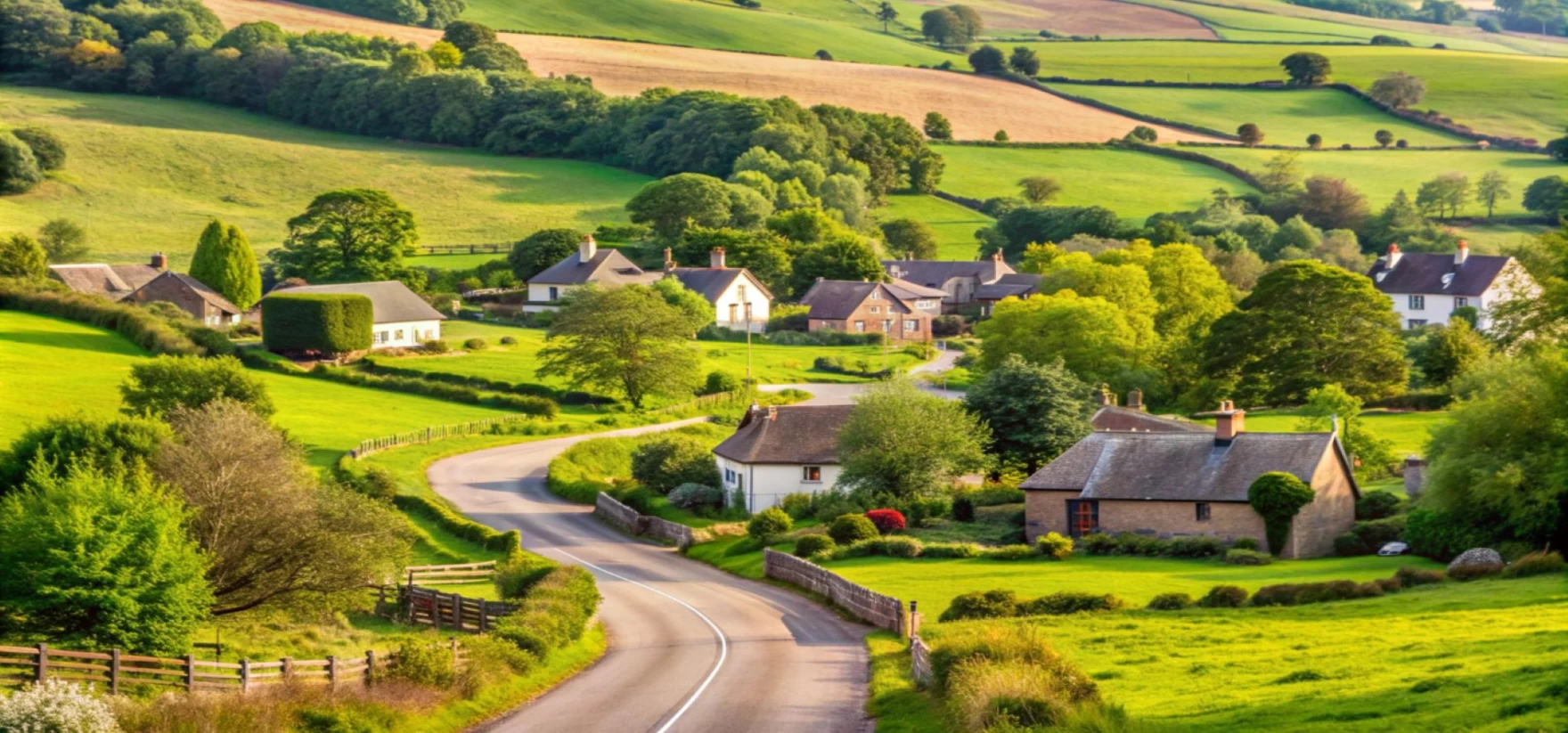
"Country" living is a broader descriptive term rather than a regulatory standard. It focuses on physical geography, environmental character, and lifestyle features rather than population thresholds. A country property may sit inside a small township, on an exurban parcel just outside suburban boundaries, or deep within a wilderness area.
The defining characteristics of country properties emphasize space and environment:
- Ample acreage, natural tree lines, rolling hills, or open fields.
- Greater physical distance between neighboring residences.
- A aesthetic centered on privacy, natural landscapes, and freedom from high-density subdivisions.
Because a country property might exist in an area classified as exurban or small-town rather than strictly rural, it may not meet federal definitions for rural grants or specialized loans. However, it still offers the physical space and peaceful setting buyers expect from countryside living.
Land Use, Zoning, and Local Governance
The governance model of your land determines what you can build, what animals you can keep, and how you can use your property over time.
Zoning Regulations in Rural Jurisdictions
Rural properties usually fall under county-level jurisdiction or rural township zoning authorities. Zoning classifications in these areas prioritize land protection, resource management, and agricultural production.
Common rural zoning designations include:
- Agricultural (A-1, A-2): Reserved primarily for farming, livestock raising, timber harvesting, and associated residential structures. Commercial non-farm operations are strictly limited.
- Rural Residential (RR): Intended for single-family homes on medium-to-large lots, often ranging from 2 to 10 acres. These zones limit intensive commercial farming while permitting small-scale homesteading, such as keeping small livestock or gardens.
- Conservation/Resource Protection: Designed to safeguard watersheds, forests, or wildlife corridors. Development density in these areas is restricted.
In strictly rural zones, local ordinances may restrict land subdivision, limit multi-family structures, or impose agricultural easements that preserve open space long-term.
Land Use Flexibility in Country Settings
Properties described as "country" but located in unincorporated exurbs or transitional zones between suburbs and farm country can feature very different regulatory environments.
In some unincorporated country areas, property owners benefit from fewer municipal restrictions. This allows for flexible land use, such as constructing secondary outbuildings, storing recreational vehicles, or hosting small home-based enterprises.
However, country properties within master-planned acreage communities may carry restrictive covenants, homeowners association (HOA) rules, or architectural controls. Prospective buyers should review title commitments and county records to verify land-use rights before purchase.
Utility Infrastructure and Essential Services
Transitioning away from suburban centers requires evaluating how utility systems operate and who maintains them.
| Infrastructure Category | Rural Property | Country Property |
|---|---|---|
| Water Supply | Private Well / Cistern | Well or Small District |
| Wastewater Treatment | On-Site Septic System | Septic or Package Plant |
| Electricity Grid | Rural Electric Co-op | Regional Investor Utility |
| Internet / Telecom | Satellite / Fixed Wireless | Fiber / Broadband Cable |
| Road Maintenance | County / Private Unpaved | County Paved / HOA Shared |
Water and Wastewater Management
Most non-urban properties rely on private, on-site systems for essential water management:
- Private Wells: Homes rely on groundwater drawn from individual wells. Property owners bear responsibility for well pump repairs, filtration systems, and routine water quality testing for contaminants like nitrates or bacteria. The U.S. Environmental Protection Agency (EPA) provides guidance on managing private drinking water wells.
- Septic Systems: Wastewater processes through on-site septic tanks and soil absorption fields. System performance depends on soil percolation rates, site slope, and routine maintenance (such as tank pumping every 3 to 5 years). High water tables or rocky terrain can require specialized, high-cost engineered mound systems.
Energy Grid Connection and Internet Connectivity
Utility connections vary considerably between deep rural areas and country properties located nearer to urban nodes:
- Electrical Power: Rural areas often receive service from Rural Electric Cooperatives (RECs). While these cooperatives deliver reliable power, line restoration during major weather events can take longer across remote feeder networks. Country homes closer to developed centers usually connect to standard investor-owned regional utilities.
- High-Speed Internet Access: Internet access has expanded across remote areas, but service quality still depends on local infrastructure. Options include low-Earth-orbit (LEO) satellite systems, fixed wireless broadband, and expanding rural fiber-to-the-home networks funded through federal infrastructure grants. Country properties closer to municipal edges are more likely to have direct fiber or coaxial cable connections.
Financing, Mortgages, and Tax Implications
Securing a mortgage and managing ongoing property taxes requires understanding how lenders and tax assessors view rural and country real estate.
Specialized Mortgage Options
The legal status of a property dictates available financing structures:
- USDA Guaranteed Loans: Available strictly for properties within USDA-eligible rural boundaries. These loans allow qualified low-to-moderate-income buyers to purchase a primary residence with zero down payment.
- FHA and Conventional Mortgages: Standard loans apply to both rural and country properties, provided the appraisal supports the home's value and site features. Lenders assess outbuildings, site utilities, and road maintenance access agreements when approving these loans.
- Agricultural Land Loans: Properties with significant acreage intended for commercial agricultural production often require specialized agricultural financing through institution networks like the Farm Credit System.
- USDA Eligibility vs. Conventional Country Loan
- USDA Eligibility
- Geographic restriction
- Income limits apply
- 0% Down payment option
- Primary residence only
- Conventional Country Loan
- Flexible locations
- No income limits
- Down payment required
- Primary/Second home/Inv
- USDA Eligibility
Tax Assessments and Agricultural Exemptions
Property tax liabilities differ based on land use and official tax classifications:
- Agricultural Use Valuation (Greenbelt/Ag Exemption): Many states offer preferential tax treatment for land actively used for farming, livestock production, or timber management. This valuation assesses the property based on its agricultural productivity rather than market value, reducing annual property tax liability.
- Residential Valuation: Country properties used purely for residential enjoyment without active agricultural management face standard ad valorem property taxes based on market appraisals. Large acreage without an active agricultural exemption can lead to high annual tax bills.
Lifestyle, Daily Services, and Community Integration
Choosing the right fit requires evaluating how daily routines align with local service availability and community expectations.
Emergency Response and Healthcare Access
Physical distance from population centers directly impacts access to essential services:
- Emergency Response Times: Rural properties rely on volunteer fire departments and regional sheriff patrols covering wide geographic areas. Emergency medical service (EMS) response times are longer compared to suburban or exurban country locations.
- Healthcare Facilities: Accessing specialized healthcare providers, hospitals, or emergency rooms often requires driving 30 to 60 minutes or longer from rural communities.
Transportation, School Districts, and Social Dynamics
Daily routines depend heavily on transportation and local community structure:
- Commute Costs: Living in country settings further from employment centers increases vehicle fuel, maintenance, and wear. Road conditions, including unpaved gravel roads requiring winter snowplowing, directly affect vehicle choice.
- School Access: Rural school districts cover large geographic boundaries, resulting in longer bus rides for children. However, these districts often feature smaller class sizes and close community involvement.
- Community Life: Traditional rural areas emphasize self-reliance, neighborly cooperation, and local civic participation through agricultural extension programs, local boards, and community organizations.
Practical Comparison: Rural vs. Country Properties
This breakdown summarizes the structural, financial, and operational differences between rural and country properties to help evaluate personal preferences.
| Feature Category | Rural Property | Country Property |
|---|---|---|
| Official Classification | Defined by U.S. Census Bureau and USDA population parameters. | Broad aesthetic/geographic descriptive term; no strict population limits. |
| Primary Zoning Types | Agricultural (A-1/A-2), Forestry, Resource Protection. | Low-Density Residential (RR), Exurban, Unincorporated County. |
| Financing Options | USDA Loans, Farm Credit, FHA, Conventional. | Conventional, FHA, VA, Custom Construction Mortgages. |
| Water & Sewer Infrastructure | Private wells, cisterns, individual septic systems. | Private wells or small community water systems; septic fields. |
| Internet & Connectivity | Satellite, fixed wireless, expanding rural fiber grants. | Fiber, cable, fixed wireless, or high-speed satellite. |
| Tax Status Opportunities | High eligibility for agricultural/timber exemptions. | Requires active production for ag exemptions; otherwise standard residential rates. |
| Emergency & Civil Services | Volunteer fire units, county sheriff, longer EMS response times. | Mix of municipal and county emergency services; variable response times. |
| Building Restrictions | Subject to county land-use codes and environmental easements. | Subject to county codes; may include HOA rules in acreage tracts. |
Decision Framework: Evaluating Your Best Fit
Use this step-by-step framework to evaluate property options and choose the location type that aligns with your goals.
- Decision Framework
- Prioritize Financing & Homesteading
- Choose: RURAL
- USDA loan eligible
- Low property taxes
- Full agricultural focus
- Prioritize Convenience & Flexible Acreage
- Choose: COUNTRY
- Shorter commute times
- Nearer urban amenities
- Modern infrastructure
- Prioritize Financing & Homesteading
Step 1: Define Your Financial Strategy
- Target USDA Financing: If you plan to use zero-down financing through federal housing programs, use the USDA Property Eligibility Tool to confirm the location qualifies as rural.
- Calculate True Holding Costs: Compare property tax estimates with and without agricultural tax exemptions. Account for private well maintenance, septic pumping, and long-distance commuting expenses.
Step 2: Assess Infrastructure and Work Requirements
- Evaluate Remote Work Needs: If you work from home, test real-time internet speeds at the property. Verify whether fiber optic lines run to the road or if you must rely on satellite systems.
- Inspect Utilities: Hire licensed technicians to conduct water well yield tests, water purity analysis, and septic field inspections before removing contract contingencies.
Step 3: Align Daily Lifestyle Preferences with Location Realities
- Test the Daily Commute: Drive from the prospective property to your regular destinations—work, schools, grocery stores, and medical facilities—during peak travel hours.
- Confirm Property Rights: Read county zoning regulations and property deeds carefully to ensure your planned activities (such as keeping chickens, building a large workshop, or operating a home business) are fully permitted.
Frequently Asked Questions
Can a property be both rural and country?
Yes. Many properties meet federal demographic definitions for a rural area while offering the privacy, open land, and natural surroundings associated with country living. The terms describe different aspects of the property: "rural" addresses legal and statistical status, while "country" describes the environment and lifestyle.
Are USDA loans available for country properties near suburbs?
USDA loan eligibility depends strictly on federal boundary maps rather than aesthetics. If a country home sits within an area designated as rural on USDA maps, it may qualify for USDA financing regardless of its proximity to outer suburban rings. Homes located in areas classified as urbanized by the Census Bureau are ineligible.
How do I check if land has an active agricultural tax exemption?
Review county property tax records through the local tax assessor's office. Assessors list current land classifications, such as agricultural, timberland, or residential. If purchasing land with an active exemption, check whether changing the land's use will trigger back-tax penalties (often called rollback taxes).
What is the biggest unexpected cost when moving to a non-urban home?
Maintaining private utilities is often the largest unbudgeted expense. Replacing a deep-well water pump, installing water treatment systems, or repairing a damaged septic drain field can require thousands of dollars in unexpected repairs. Prospective buyers should thoroughly inspect these systems before completing a purchase.
Are building codes less strict in rural areas?
While some rural county jurisdictions have fewer active building inspectors or simpler permitting processes than major cities, most regions enforce state or national building, electrical, and plumbing codes. Properties in designated environmental protection or flood zones must follow strict building guidelines regardless of location.
Next Steps
To make an informed decision, begin by confirming your financing options and land-use requirements. Verify property eligibility using official mapping tools from the USDA Rural Development Office and review local county zoning ordinances.
Schedule comprehensive inspections for private wells, septic systems, and boundary lines. Testing daily routines, commute times, and service access during the planning stage ensures your selected property delivers the right long-term balance between location, cost, and lifestyle.
Image Gallery