NY Income Tax Brackets 2016: Rates, Schedules, and Filing Rules
For tax year 2016, New York State personal income tax rates ranged from 4.00% to 8.82% across eight distinct marginal tax brackets. Taxable income thresholds depended directly on filing status, while standard deductions ranged from $3,...
For tax year 2016, New York State personal income tax rates ranged from 4.00% to 8.82% across eight distinct marginal tax brackets. Taxable income thresholds depended directly on filing status, while standard deductions ranged from $3,100 to $15,050. These historical rates apply to 2016 returns, tax audits, back tax calculations, and amended state filings.
Contents
Overview of New York State Personal Income Tax for Tax Year 2016
New York State operates a progressive personal income tax system where higher portions of income are taxed at higher marginal rates. For the 2016 tax year (returns originally filed in early 2017), state tax calculations began with Federal Adjusted Gross Income (FAGI), which was then adjusted to determine New York Adjusted Gross Income (NYAGI) using state-specific additions and subtractions.
Understanding 2016 tax schedules remains essential for individuals addressing historical tax audits, reviewing past state filings, filing back taxes, or processing amended state tax returns using New York Form IT-201-X.
New York taxes residents on all income earned regardless of source, while nonresidents and part-year residents are taxed only on income derived from New York State sources. Furthermore, residents of New York City and Yonkers were subject to additional local income taxes or surcharges on top of the base New York State tax rates.
Disclaimer: Tax laws, audit windows, and historical filing procedures are complex. This guide provides objective technical tax references. Consult a certified public accountant (CPA) or qualified tax attorney for advice regarding specific past filings or audit responses.
2016 New York State Tax Brackets and Rate Schedules
New York State tax liability for 2016 was divided into eight tax brackets. The exact dollar threshold for each bracket varied based on your state filing status: Single, Married Filing Jointly, Head of Household, or Married Filing Separately.
1. Single and Married Filing Separately
Taxpayers filing as Single (and not claimed as a dependent) or Married Filing Separately used the following progressive rate structure for 2016 taxable income:
- $0 to $8,500: 4.00% of taxable income
- $8,501 to $11,700: $340 plus 4.50% of the amount over $8,500
- $11,701 to $13,900: $484 plus 5.25% of the amount over $11,700
- $13,901 to $21,400: $599 plus 5.90% of the amount over $13,900
- $21,401 to $80,650: $1,042 plus 6.45% of the amount over $21,400
- $80,651 to $215,400: $4,863 plus 6.65% of the amount over $80,650
- $215,401 to $1,077,550: $13,824 plus 6.85% of the amount over $215,400
- Over $1,077,550: $72,876 plus 8.82% of the amount over $1,077,550
2. Married Filing Jointly and Qualifying Widow(er)
Married couples filing jointly and qualifying surviving spouses calculated state tax using wider income bands to prevent tax penalty effects:
- $0 to $17,150: 4.00% of taxable income
- $17,151 to $23,600: $686 plus 4.50% of the amount over $17,150
- $23,601 to $27,900: $976 plus 5.25% of the amount over $23,600
- $27,901 to $43,000: $1,202 plus 5.90% of the amount over $27,900
- $43,001 to $161,550: $2,093 plus 6.45% of the amount over $43,000
- $161,551 to $323,200: $9,739 plus 6.65% of the amount over $161,550
- $323,201 to $2,155,350: $20,489 plus 6.85% of the amount over $323,200
- Over $2,155,350: $145,991 plus 8.82% of the amount over $2,155,350
3. Head of Household
Taxpayers maintaining a household for a qualifying dependent qualified for intermediate bracket thresholds:
- $0 to $12,800: 4.00% of taxable income
- $12,801 to $17,650: $512 plus 4.50% of the amount over $12,800
- $17,651 to $20,900: $730 plus 5.25% of the amount over $17,650
- $20,901 to $32,200: $901 plus 5.90% of the amount over $20,900
- $32,201 to $107,650: $1,568 plus 6.45% of the amount over $32,200
- $107,651 to $269,300: $6,439 plus 6.65% of the amount over $107,650
- $269,301 to $1,616,450: $17,198 plus 6.85% of the amount over $269,300
- Over $1,616,450: $109,473 plus 8.82% of the amount over $1,616,450
2016 New York Tax Rate Summary Table
The following comparison table highlights the 2016 New York State marginal income tax rates and income thresholds across primary filing statuses.
| Marginal Tax Rate | Single / Married Filing Separately Threshold | Head of Household Threshold | Married Filing Jointly Threshold |
|---|---|---|---|
| 4.00% | $0 – $8,500 | $0 – $12,800 | $0 – $17,150 |
| 4.50% | $8,501 – $11,700 | $12,801 – $17,650 | $17,151 – $23,600 |
| 5.25% | $11,701 – $13,900 | $17,651 – $20,900 | $23,601 – $27,900 |
| 5.90% | $13,901 – $21,400 | $20,901 – $32,200 | $27,901 – $43,000 |
| 6.45% | $21,401 – $80,650 | $32,201 – $107,650 | $43,001 – $161,550 |
| 6.65% | $80,651 – $215,400 | $107,651 – $269,300 | $161,551 – $323,200 |
| 6.85% | $215,401 – $1,077,550 | $269,301 – $1,616,450 | $323,201 – $2,155,350 |
| 8.82% | Over $1,077,550 | Over $1,616,450 | Over $2,155,350 |
2016 New York Standard Deductions and Dependent Exemptions
Before tax rates are applied to taxable income, taxpayers reduce their New York Adjusted Gross Income (NYAGI) using either the New York standard deduction or New York itemized deductions, alongside allowable dependent exemptions.
Standard Deduction Amounts for 2016
For 2016, New York State provided fixed standard deduction amounts based on tax status:
- Single (can be claimed on another's return): $3,100
- Single (cannot be claimed on another's return): $7,500
- Married Filing Jointly: $15,050
- Married Filing Separately: $7,500
- Head of Household: $10,500
- Qualifying Widow(er): $15,050
Dependent Exemptions
New York allowed a $1,000 dependent exemption for each qualified dependent in 2016. Unlike federal rules for that year, New York State did not allow a personal exemption for the taxpayer or spouse—only for eligible dependent children or relatives.
Itemized Deduction Adjustments
Taxpayers who itemized deductions on their federal return (Form 1040 Schedule A) could itemize on their New York State return using Form IT-201. However, New York required specific adjustments, including adding back state and local income taxes deducted on federal returns and applying state-level phaseouts for high-income earners.
Technical Computation Rules and High-Income Recapture
Calculating 2016 New York tax liability required more than multiplying taxable income by a single bracket percentage. Two critical mechanisms altered final tax owed: marginal progression and tax benefit recapture.
- Federal Adjusted Gross Income (FAGI)
- (+/-) New York Additions & Subtractions = NYAGI
- (-) NY Standard Deduction OR Itemized Deduction
- (-) Dependent Exemptions ($1,000 per dependent)
- New York Taxable Income
- Apply 2016 Tax Rates (or High-Income Tax Benefit Recapture)
1. Marginal Rate Breakdown vs. Flat Recapture
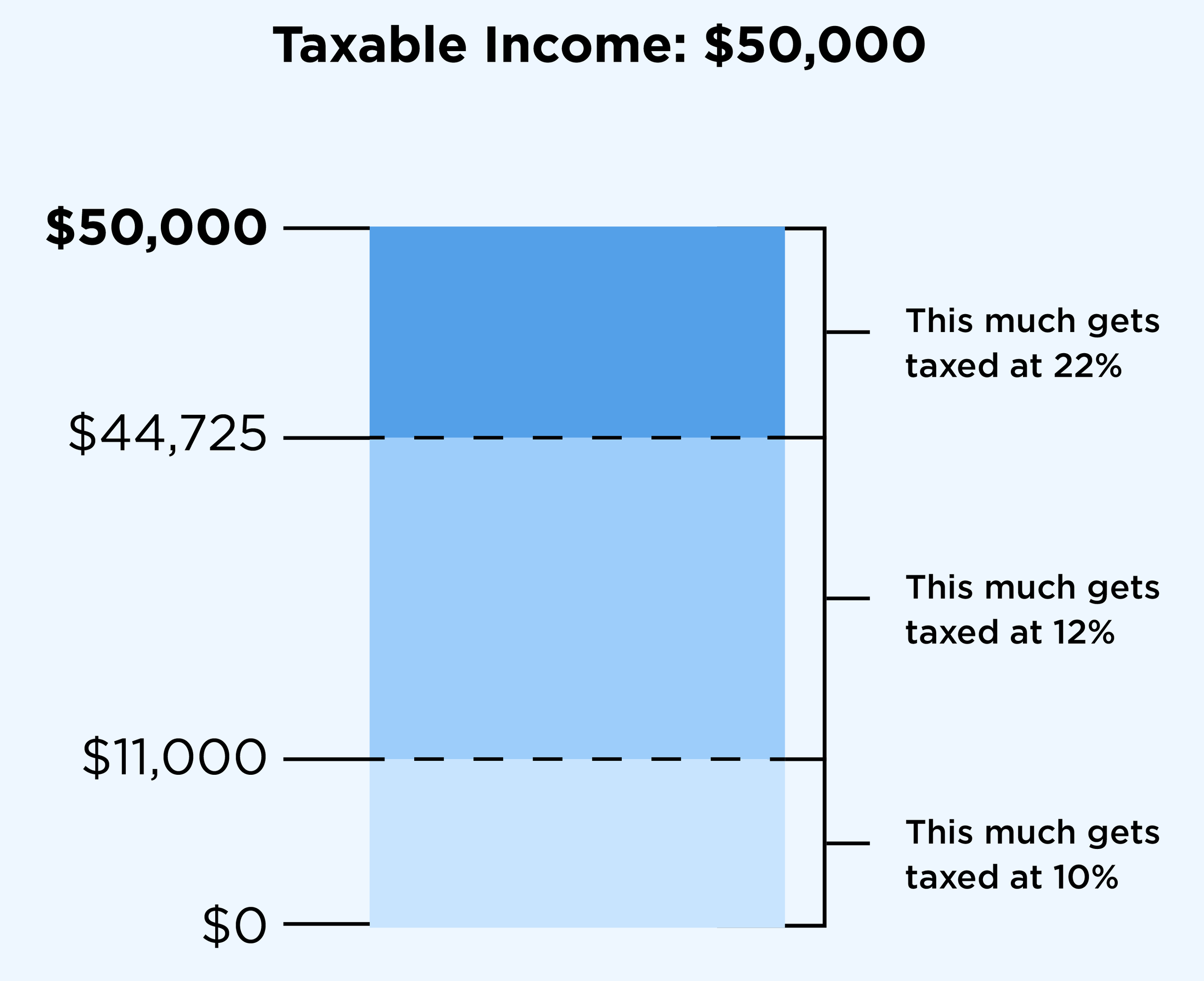
In a standard progressive system, higher tax rates apply only to the portion of income within that specific bracket. For example, a single filer earning $50,000 in 2016 did not pay 6.45% on the entire $50,000. Instead, they paid 4.00% on the first $8,500, 4.50% on the next tier, up through 6.45% on income exceeding $21,400.
2. High-Income Tax Benefit Recapture (Supplemental Tax)
Taxpayers with higher incomes were subject to New York's Tax Benefit Recapture. Under New York tax law, once NYAGI exceeded designated thresholds (such as $2,000,000 for high earners in 2016), the tax savings derived from the lower progressive brackets (4.00% through 6.85%) were gradually phased out.
For top-tier earners, this supplemental tax effectively re-computed the entire taxable income at the maximum 8.82% rate, eliminating the benefit of lower marginal brackets. High-income tax computation worksheets in the 2016 New York State Department of Taxation and Finance IT-201 instruction booklet detail these exact calculations.
Local City Taxes: New York City and Yonkers Add-Ons
New York State collects local personal income taxes on behalf of New York City and Yonkers. Residents of these municipalities paid local taxes in addition to state taxes on their 2016 returns.
New York City Resident Tax (2016)
New York City residents paid a local progressive income tax with four tax brackets. For 2016, NYC marginal rates ranged from 2.907% to 3.876%. Combined state and city marginal tax rates for high earners in NYC reached up to 12.696% (8.82% state + 3.876% city).
Yonkers Resident Surcharge and Nonresident Tax
- Yonkers Residents: Paid a state surcharge calculated as 16.75% of their net New York State tax liability for 2016.
- Yonkers Nonresidents: Individuals who worked in Yonkers but lived elsewhere were subject to a Yonkers nonresident earnings tax of 0.50% on wages and self-employment income earned within the city.
Residency Rules and Allocation (Form IT-201 vs. IT-203)
Determining residency status is a major focal point of New York tax compliance. For tax year 2016, New York classified taxpayers into three categories:
1. Full-Year Resident (Form IT-201)
A taxpayer was considered a full-year New York State resident if:
- New York was their domicile (permanent primary residence) for the entire year; or
- They met the Statutory Resident Test: maintained a permanent place of abode in New York for substantially all of the tax year AND spent more than 183 days inside New York State during 2016.
Full-year residents reported all income from all world sources on Form IT-201.
2. Nonresident and Part-Year Resident (Form IT-203)
Nonresidents and individuals who moved into or out of New York during 2016 filed Form IT-203. Nonresidents paid tax only on New York-source income, such as wages earned physically within New York, business operations inside the state, or real estate transactions located in NY.
Tax rates for nonresidents were calculated using a base tax method: tax was computed on their total income as if they were residents, and then multiplied by an allocation percentage (New York source income divided by total federal income).
Statute of Limitations, Audits, and Amending 2016 Returns
Because 2016 tax returns were filed years ago, taxpayers interacting with 2016 brackets today are typically dealing with state audit notices, federal audit adjustments, or back-tax obligations.
Statute of Limitations Rules
Under New York Tax Law § 683:
- Standard Assessment Window: The general statute of limitations for auditing a state tax return is three years from the date the return was filed or the due date, whichever is later.
- Omission of Income: If a taxpayer omitted more than 25% of gross income from their 2016 return, the assessment window extends to six years.
- Unfiled Returns or Fraud: There is no statute of limitations if a 2016 return was never filed or if a fraudulent return was submitted. State authorities may assess back taxes, penalties, and interest at any time.
- Federal Audit Changes: If the Internal Revenue Service (IRS) adjusted a taxpayer's 2016 federal return, the taxpayer was legally required to report those changes to New York State within 90 days using an amended state return (Form IT-201-X). Failure to report allows New York State extra time to assess additional state tax.
Frequently Asked Questions (FAQs)
What were the 2016 top tax rates for New York State?
The maximum New York State personal income tax rate for 2016 was 8.82%. This top marginal rate applied to taxable income exceeding $1,077,550 for single filers, $1,616,450 for head of household filers, and $2,155,350 for married couples filing jointly. High earners were also subject to tax benefit recapture rules that applied the 8.82% rate across all taxable income.
What was the New York State standard deduction in 2016?
For 2016, the standard deduction was $7,500 for single taxpayers (who could not be claimed as dependents elsewhere), $15,050 for married couples filing jointly, $10,500 for head of household filers, and $7,500 for married individuals filing separately. Single dependents received a standard deduction of $3,100.
Did New York State allow personal exemptions in 2016?
New York State allowed a $1,000 exemption per qualified dependent in 2016. However, New York did not provide personal exemptions for the primary taxpayer or spouse, relying instead on state standard deductions.
How did New York City tax differ from New York State tax in 2016?
New York City income tax is a separate local tax levied on NYC residents in addition to New York State tax. For tax year 2016, NYC local tax rates ranged from 2.907% to 3.876%. The local tax was calculated on the same NY State return (Form IT-201) and remitted directly to the state tax department.
Can I still file or amend a 2016 New York State tax return?
Yes. If you failed to file a 2016 return, or if you need to report federal audit changes made by the IRS, you can submit Form IT-201 (for original late returns) or Form IT-201-X (for amended returns). However, state tax refunds for 2016 are generally subject to strict refund claim deadlines, typically restricted to within three years of the original filing or two years from tax payment.
Practical Actions for 2016 Tax Records
When reviewing or resolving tax matters related to the 2016 tax year, follow these steps to verify accuracy and compliance:
- Obtain Official Wage Records: Retrieve original 2016 W-2s, 1099s, and Federal Form 1040 transcripts from the Internal Revenue Service to ensure reported base income figures match official records.
- Download Historical State Tax Forms: Obtain the 2016 Form IT-201 or IT-203 instructions directly from the New York State Department of Taxation and Finance tax archives.
- Verify Residency Days: If disputing a 2016 residency audit, compile primary evidence such as calendar logs, flight history, credit card receipts, and lease agreements verifying physical presence during 2016.
- Calculate State Interest and Penalties: Remember that unpaid 2016 tax balances accrue mandatory state interest and potential late-filing or late-payment penalties under NY Tax Law.
- Consult a Qualified Representative: Work with a CPA, Enrolled Agent (EA), or tax attorney before responding to historical New York State desk audit letters or deficiency notices.
Image Gallery