Why Net Profit and Net Income Are Not Identical: A Comprehensive Financial Guide
While business owners, investors, and media outlets frequently use the terms "net profit" and "net income" interchangeably to describe a company's financial bottom line, they are not strictly identical across formal accounting, corpora...
While business owners, investors, and media outlets frequently use the terms "net profit" and "net income" interchangeably to describe a company's financial bottom line, they are not strictly identical across formal accounting, corporate finance, and taxation. Net income is a rigidly defined accounting standard under US GAAP representing total earnings for an entire legal entity after deducting all operational costs, interest, taxes, and non-operating expenses. Conversely, net profit is a broader term used in managerial accounting, tax reporting (such as IRS Schedule C), and international financial reporting frameworks to describe localized profitability, segment performance, or operating earnings.
Contents
Defining the Core Financial Concepts
To evaluate why these two terms diverge, it is essential to establish their precise definitions within modern financial accounting and corporate governance.
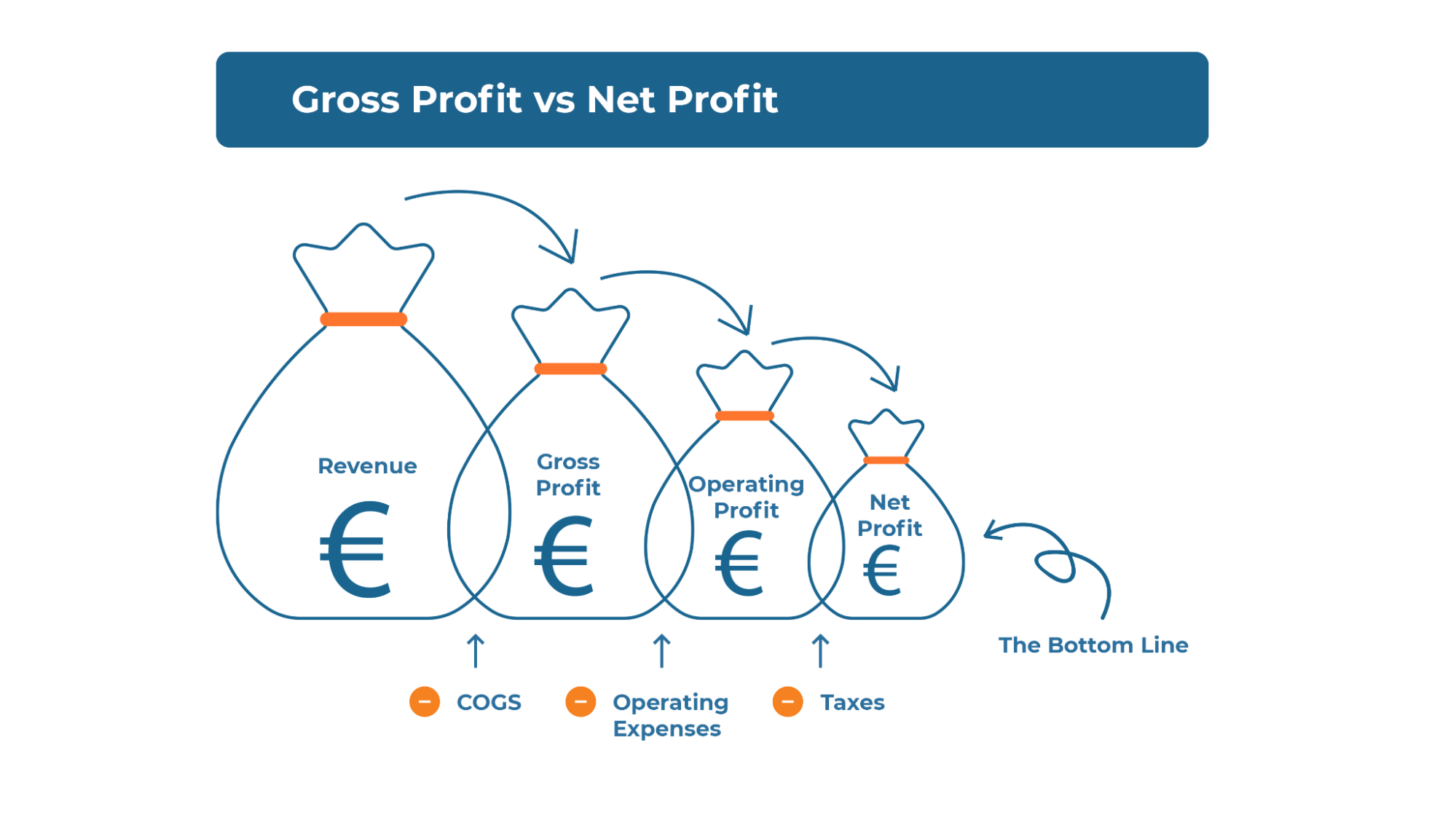
- TOTAL REVENUE
- Direct Costs (COGS)
- GROSS PROFIT
- Operating Expenses (SG&A, R&D, Depreciation)
- NET OPERATING PROFIT
- +/- Non-Operating Items (Interest, Asset Sales)
- Tax Liabilities
- CONSOLIDATED NET INCOME (GAAP Bottom Line)
What Is Net Income?
Net income represents the ultimate financial residual value of a business entity over a specific accounting period. Under Financial Accounting Standards Board (FASB) guidelines and US GAAP Accounting Standards Codification (ASC) Topic 220, net income is calculated as gross revenue plus non-operating income, minus total cost of goods sold (COGS), operating expenses, depreciation and amortization, interest expenses, discontinued operations, and tax obligations.
Net income appears on the final line of a multi-step income statement—earning it the standard nickname "the bottom line." It serves as the definitive legal metric for calculating basic and diluted Earnings Per Share (EPS) for publicly traded companies and forms the direct bridge between the Income Statement and Retained Earnings on the Balance Sheet.
What Is Net Profit?
Net profit is a versatile financial metric used across business administration, segment analysis, and international accounting. In managerial accounting, net profit frequently refers to the operational profit generated by a specific business unit, store location, or product line before corporate-level tax allocations and financing costs are applied.
In small business taxation, the term carries a legal definition established by internal revenue codes. For example, the United States Internal Revenue Service (IRS) defines net profit on Schedule C (Form 1040) as gross business income minus direct business expenses. This Schedule C net profit figure represents sole proprietorship operating profit before personal tax deductions, self-employment tax calculations, or non-business investment income are integrated.
Furthermore, under International Financial Reporting Standards (IFRS) as published by the International Accounting Standards Board (IASB), standard statements use the term "Profit for the Period" or "Net Profit" where US GAAP mandated reporting specifies "Net Income."
Key Differences Between Net Profit and Net Income
Although net profit and net income coincide on simple income statements for small, single-entity businesses, substantial structural differences emerge as organizational complexity increases.
1. Scope of Coverage: Entity-Wide vs. Segment-Specific
Net income is strictly a consolidated, whole-entity calculation. A parent corporation with twelve international subsidiaries will report a single consolidated net income figure that incorporates all global revenues, tax liabilities, currency translations, intercompany eliminations, and debt service costs.
Net profit is often applied at the segment or division level. Corporate controllers routinely measure the "net profit" of individual product lines, geographic territories, or retail branches. These segment net profit calculations measure operational health by attributing direct expenses (such as regional labor and local lease costs) while excluding centralized corporate financing costs, corporate executive compensation, or entity-level income taxes.
2. Treatment of Non-Operating Revenue and Expenses
Net income includes all non-operating activities that affect the entity's wealth during the period. These items include:
- Realized gains or losses from the sale of equipment or real estate.
- Investment returns, dividend receipts, and interest income.
- One-time restructuring costs, impairment charges, and legal settlements.
- Interest payments on corporate bond issuances and debt facilities.
Managerial net profit calculations frequently filter out non-operating gains and losses to provide a clean view of core operational performance. A business that sells a factory at a $5 million gain will see its net income rise by $5 million (minus applicable taxes), but its core operational net profit remains unchanged because the transaction does not reflect ongoing commercial sales.
3. Tax and Regulatory Definitions
Tax authorities distinguish between business net profit and an individual or entity's total taxable net income.
Under the U.S. tax code, a sole proprietor calculates business profitability on IRS Schedule C. The resulting line item is titled "Net profit or (loss)." This figure represents pure trade or business income. However, this net profit is not the business owner's final net income. To reach total Net Income or Adjusted Gross Income (AGI), the tax filer must combine Schedule C net profit with capital gains, interest income, retirement contributions, standard or itemized deductions, and self-employment tax adjustments.
- Business Revenue - Business Expenses = IRS Schedule C Net Profit
- Schedule C Net Profit + Investment Income - Tax Deductions - Tax Liabilities = Total Taxable Net Income
4. International Accounting Frameworks (US GAAP vs. IFRS)
Jurisdiction and accounting framework dictate financial terminology:
- US GAAP (ASC 220 / ASC 225): Standardizes the term Net Income for primary financial reporting. The term "net profit" does not appear as a primary line-item classification on formal GAAP balance sheets or income statements.
- IFRS (IAS 1 Presentation of Financial Statements): Standardizes the term Profit or Loss or Profit for the Period (often reported in financial press as net profit). IFRS permits greater flexibility in presenting operational subtotals than US GAAP.
Multi-Step Income Statement Breakdown
To understand where these figures diverge in corporate reporting, consider the structural flow of a standardized multi-step income statement.
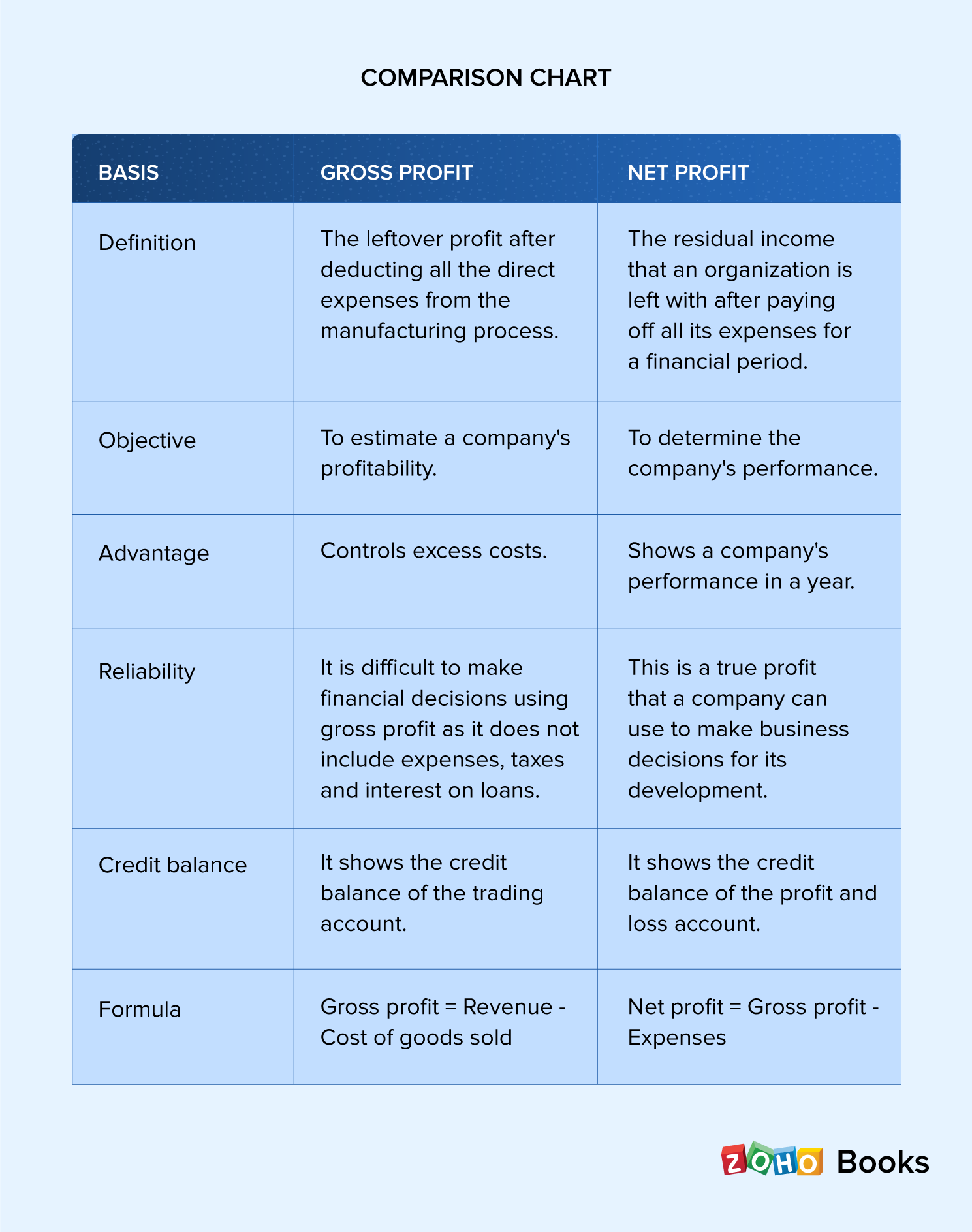
| Financial Statement Line Item | Included Components | Financial Classification |
|---|---|---|
| Gross Revenue (Sales) | Total cash and credit sales generated | Top Line Revenue |
| Less: Cost of Goods Sold (COGS) | Direct labor, raw materials, manufacturing overhead | Cost Reduction |
| Gross Profit | Revenue minus direct production costs | Primary Margin Metric |
| Less: Operating Expenses (OpEx) | Sales, General & Administrative (SG&A), R&D, Depreciation | Overhead Expense |
| Operating Profit (EBIT) | Gross Profit minus Operating Expenses | Core Operational Performance |
| Plus/Less: Non-Operating Items | Interest income, interest expense, asset sales, foreign exchange | Financing & Investments |
| Pre-Tax Income (EBT) | Operating Profit plus/minus Non-Operating items | Tax Base |
| Less: Income Tax Expense | Current and deferred federal, state, and international taxes | Regulatory Liability |
| Net Income | Pre-Tax Income minus total tax expense | GAAP Bottom Line |
In this structural flow, Net Income occupies the absolute final line. By contrast, when financial analysts refer to managerial Net Profit, they are typically isolating Operating Profit (or Net Operating Profit After Taxes - NOPAT) to assess commercial viability without debt structure distortion.
Comparative Matrix: Net Profit vs. Net Income
The following matrix highlights the functional, operational, and regulatory distinctions between the two metrics:
| Attribute | Net Income | Net Profit |
|---|---|---|
| Standardization Level | Strictly defined by US GAAP (ASC 220) and SEC filings | Broad term; defined by management context, IFRS, or tax schedules |
| Primary Scope | Whole legal entity (consolidated parent + subsidiaries) | Flexible: entity-wide, single division, product line, or store location |
| Non-Operating Items | Includes interest, dividends, asset sales, and foreign exchange gains | Excluded in managerial contexts; included in whole-entity IFRS contexts |
| Tax Inclusions | Net of all corporate, state, deferred, and foreign income taxes | Pre-tax in managerial contexts; business-level only on tax Schedule C |
| Primary Audience | External stakeholders: investors, regulators, SEC, lenders | Internal stakeholders: department heads, plant managers, tax officers |
| Calculation Impact on EPS | Direct numerator for Basic and Diluted EPS | Not directly used for GAAP EPS calculations |
| Cash Flow Relationship | Starting point for Indirect Method Cash Flow from Operations | Requires adjustment for non-cash overhead and financing activities |
Practical Scenarios Demonstrating the Distinction
Examining concrete business scenarios illustrates how treating these metrics as identical can lead to flawed financial analysis.
Scenario 1: Sole Proprietorship Tax Reporting
Consider a freelance software consultant operating as a sole proprietor:
- Gross Consulting Fees: $150,000
- Eligible Business Expenses (Software, Office Lease, Travel): $40,000
- IRS Schedule C Net Profit: $110,000
The consultant's business net profit is $110,000. However, this is not their total personal net income. To determine net income, the consultant must calculate:
- Deductions for 50% of self-employment tax (-$7,771)
- Standard deduction or itemized deductions (-$15,000)
- Health insurance premiums (-$6,000)
- Personal tax liabilities (-$18,000)
- Capital gains from stock sales (+$5,000)
- Final Individual Net Income: $83,229
Evaluating the consultant's financial standing based solely on Schedule C net profit overstates personal retained earnings by over $26,000 because it omits personal tax obligations and non-business income adjustments.
Scenario 2: Multi-Divisional Corporate Performance
Imagine a consumer electronics corporation evaluating its home audio division:
- Home Audio Division Sales: $20,000,000
- Division Direct Materials & Production: $11,000,000
- Division Marketing & Regional Management: $4,000,000
- Division Net Operating Profit: $5,000,000
Corporate leadership notes the division achieved a $5,000,000 net profit. However, at the parent corporate level:
- Corporate Debt Interest Expense: -$2,000,000
- Legal Settlement Loss (Unallocated): -$1,500,000
- Entity-Wide Income Taxes: -$1,000,000
- Loss from Discontinued Appliance Unit: -$1,000,000
- Consolidated Corporate Net Income: -$500,000
While the home audio division produced a positive internal net profit of $5,000,000, the total corporation reported a net income loss of $500,000 on its audited SEC Form 10-K. Investors evaluating the legal entity must rely on consolidated net income, whereas division leaders use unit net profit to evaluate operational efficiency.
Common Misconceptions and Reporting Pitfalls
Misinterpreting net profit and net income leads to errors in financial analysis, business valuation, and legal reporting.
- Confusing Cash Flow with Net Income
- Treating Managerial Net Profit as Audited GAAP
- Ignoring Non-Operating Gains in Valuation
- Applying Incorrect Metrics to Division Earnings
1. Equating Net Income with Cash Flow
A common error is assuming that net income or net profit equals cash in the bank. Net income is calculated using the accrual basis of accounting, matching revenues earned with expenses incurred regardless of cash movements.
Items that cause net income to diverge from cash flow include:
- Accounts Receivable: Revenue recognized upon delivery but uncollected in cash.
- Depreciation and Amortization: Non-cash expenses that reduce net income without outflowing cash.
- Capital Expenditures: Cash spent on equipment that appears on the balance sheet rather than reducing net income immediately.
Financial analysts must review the Statement of Cash Flows—specifically Cash Flow from Operating Activities—alongside Net Income to determine genuine liquidity.
2. Treating Managerial Net Profit as Audited Financials
Internal management reports often display "Net Profit" numbers that exclude shared corporate costs (such as central IT infrastructure or executive compensation). While these numbers assist internal resource allocation, presenting internal net profit figures as comprehensive business earnings to prospective buyers or commercial lenders can constitute misrepresentation if unallocated overhead and debt obligations are omitted.
3. Misapplying Valuation Multiples
Business valuations frequently rely on earnings multiples (such as P/E ratio or EV/EBITDA). Conflating segment net profit with consolidated net income can severely distort business valuations:
- Price-to-Earnings (P/E) Ratios strictly require consolidated Net Income in the denominator.
- Enterprise Value (EV) Multiples use pre-interest, pre-tax metrics like EBITDA or Net Operating Profit After Tax (NOPAT).
Using divisional net profit in a P/E calculation understates the true price multiple, leading to overvalued acquisition offers.
Frequently Asked Questions
Are net profit and net income the same on a standard corporate income statement?
Under US GAAP reporting, the term "Net Income" is the required standard for the final bottom line. While informal commentary may refer to this final figure as "net profit," standard financial statements published in SEC filings (Form 10-K) use Net Income to reflect total consolidated earnings after all expenses, interest, and taxes.
Why does IRS Schedule C use the term "Net Profit" instead of Net Income?
IRS Schedule C measures the operational profit or loss of a sole proprietorship trade or business. The IRS uses "Net Profit" because this figure reflects business revenue minus direct business deductions before integrating personal tax adjustments, non-business income, capital gains, standard deductions, or personal income tax calculations.
Can a company's net profit be positive while its net income is negative?
Yes. A company's operating divisions can generate positive operational net profit, but entity-level interest payments on heavy debt burdens, non-operating lawsuit settlements, asset impairment charges, or taxes can pull the final consolidated net income into negative territory.
How does EBITDA differ from net profit and net income?
EBITDA stands for Earnings Before Interest, Taxes, Depreciation, and Amortization. It is a non-GAAP cash-proxy metric that strip out financing decisions (interest), tax environments (taxes), and non-cash accounting items (depreciation/amortization). Net income includes all of these costs, while managerial net profit may exclude some non-operating costs but typically includes depreciation.
Is net profit used to calculate Earnings Per Share (EPS)?
No. Publicly traded companies calculate basic and diluted Earnings Per Share (EPS) under US GAAP (ASC 260) using consolidated Net Income (minus preferred stock dividends) divided by the weighted-average number of common shares outstanding. Division-level or managerial net profit figures cannot be used for official EPS reporting.
Actionable Recommendations for Business Leaders and Analysts
To maintain financial accuracy across reporting, valuation, and compliance, implement these standard accounting practices:
- Standardize Internal Financial Terminology: Align internal management accounting definitions with formal reporting standards. Reserve "Net Income" strictly for whole-entity, post-tax, post-interest audited results. Use "Net Operating Profit" or "Segment Margin" when discussing divisional performance.
- Reconcile Tax Schedules to Entity Statements: For small business owners and partnership entities, ensure clear separation between Schedule C business net profit and owner taxable net income. Work with a certified public accountant (CPA) to model self-employment taxes and quarterly estimated tax payments accurately.
- Audit Non-Operating Adjustments: When reviewing corporate earnings reports, isolate one-time non-operating items (such as asset sales or restructuring charges) from net income to establish the enterprise's sustainable operational profit base.
- Evaluate Liquidity via Cash Flow Statements: Never rely on net income or net profit alone to measure financial solvency. Always evaluate the Statement of Cash Flows alongside the Income Statement to verify that reported net income translates into actual cash generation.
Professional Advice Disclaimer: This article is for informational and educational purposes only and does not constitute formal legal, accounting, tax, or financial advisory services. Accounting rules (US GAAP, IFRS) and tax codes (IRS regulations) undergo periodic updates. Consult a qualified Certified Public Accountant (CPA), corporate attorney, or certified financial auditor for advice regarding specific institutional reporting or tax compliance requirements.
Image Gallery