Why a Cat Underwater Treadmill Rarely Pays Off
Investing in a feline underwater treadmill rarely yields a positive financial or clinical return for veterinary practices or physical rehabilitation centers. High capital equipment costs and demanding maintenance overhead paired with l...
Investing in a feline underwater treadmill rarely yields a positive financial or clinical return for veterinary practices or physical rehabilitation centers. High capital equipment costs and demanding maintenance overhead paired with low patient compliance due to feline hydro-aversion lead to severely depressed utilization rates. Land-based rehabilitation modalities consistently deliver superior therapeutic outcomes with vastly lower financial risk.
Contents
- THE FELINE HYDROTHERAPY PARADOX
- High Equipment CapEx + High Operational OpEx + Low Feline Compliance = POOR FINANCIAL & CLINICAL ROI
The Financial Reality: High Capital Costs vs. Low Feline Throughput
Acquiring and maintaining an underwater treadmill (UWTM) system represents one of the largest physical plant investments a veterinary facility can make. While these units are staple revenue drivers in canine rehabilitation, applying the same financial model to feline patients consistently fails due to a mismatch between fixed costs and patient volume.
Capital Expenditure (CapEx) Infrastructure
A commercial-grade veterinary underwater treadmill system requires a significant upfront investment. In the veterinary equipment market, a dedicated hydrotherapy treadmill suite includes several components:
- Primary Unit: The stainless-steel glass chamber, motorized belt, and elevation control system cost between $35,000 and $70,000 depending on features such as dual-door entry, incline capabilities, and resistance jets.
- Water Management Systems: Specialized water storage tanks, high-capacity commercial heaters, filtration units, and chemical dosing systems add another $5,000 to $12,000.
- Facility Retrofitting: Installing the system requires reinforced floor loads (a 300-gallon tank adds over 2,500 lbs of static weight), dedicated 220V electrical circuits, specialized drainage, and commercial dehumidification systems to prevent mold growth in the treatment room. Retrofitting costs often exceed $10,000.
Ongoing Operational Expenditure (OpEx)
Once installed, underwater treadmills incur continuous baseline overhead regardless of how many patients use the machine:
- Utility Overhead: Water heaters must maintain temperatures between 84°F and 92°F (29°C to 33°C) continuously to prevent thermal shock in patients. Continuous heating and filtration drive high monthly electricity and water bills.
- Chemical and Water Maintenance: Routine water testing, bromination or chlorination, filter replacement, and periodic full-tank drainage and deep cleaning demand ongoing material purchases and facility labor.
- Preventative Maintenance Contracts: Servicing belt motors, water pumps, door seals, and hydraulic lifts typically requires an annual service contract ranging from $1,500 to $3,500.
The Throughput Deficit
The financial viability of capital-intensive equipment relies entirely on throughput—the number of billable patient sessions completed per week.
- Canine Hydrotherapy Model:
- High Patient Volume (80%+ Compliance)
- High Throughput
- Fast CapEx Amortization
- Profitability
- Feline Hydrotherapy Model:
- Low Patient Volume (<10% Compliance)
- Idle Equipment
- Continuous OpEx Drain
- Financial Loss
In canine physical therapy, up to 80% of post-operative orthopedic, osteoarthritic, and neurological cases can be acclimated to an underwater treadmill. In feline practice, fewer than 10% of feline patients candidate for physical therapy can be safely and productively acclimated to water immersion. As a result, the machine sits idle for the vast majority of feline clinical hours while continuing to generate fixed operational costs.
Behavioral and Physiological Barriers in Feline Hydrotherapy
The primary driver of low feline throughput is not a lack of clinical need—feline osteoarthritis and neurological deficits are widespread—but rather the unique behavioral and neuroendocrine responses of cats to water immersion.
Fear-Anxiety-Stress (FAS) and the Sympathetic Surge
Unlike dogs, domestic cats (Felis catus) have evolved without strong evolutionary selection for aquatic interaction. Introducing an injured or painful cat into an enclosed glass box filling with warm water usually triggers a maximum Fear-Anxiety-Stress response.
When a cat experiences severe stress, the sympathetic nervous system initiates a massive surge of catecholamines (epinephrine and norepinephrine) alongside rapid cortisol release. This acute stress response induces physiological side effects that directly conflict with rehabilitation goals:
- Tachycardia and Tachypnea: Rapid heart rate and hyperventilation increase cardiovascular strain, creating medical risks for senior felines with underlying subclinical hypertrophic cardiomyopathy (HCM).
- Muscle Hypertonicity: Fear causes cats to contract their axial and appendicular musculature rigidly. This panicky muscular guarding defeats the main purpose of hydrotherapy, which is to achieve smooth, low-impact joint range of motion.
- Risk of Acute Re-injury: Panicked attempts to scramble up the glass walls or jump out of the chamber create shear forces on healing surgical sites, such as post-operative femoral head ostectomies (FHO) or cruciate repairs.
Tonic Immobility vs. Active Exercise
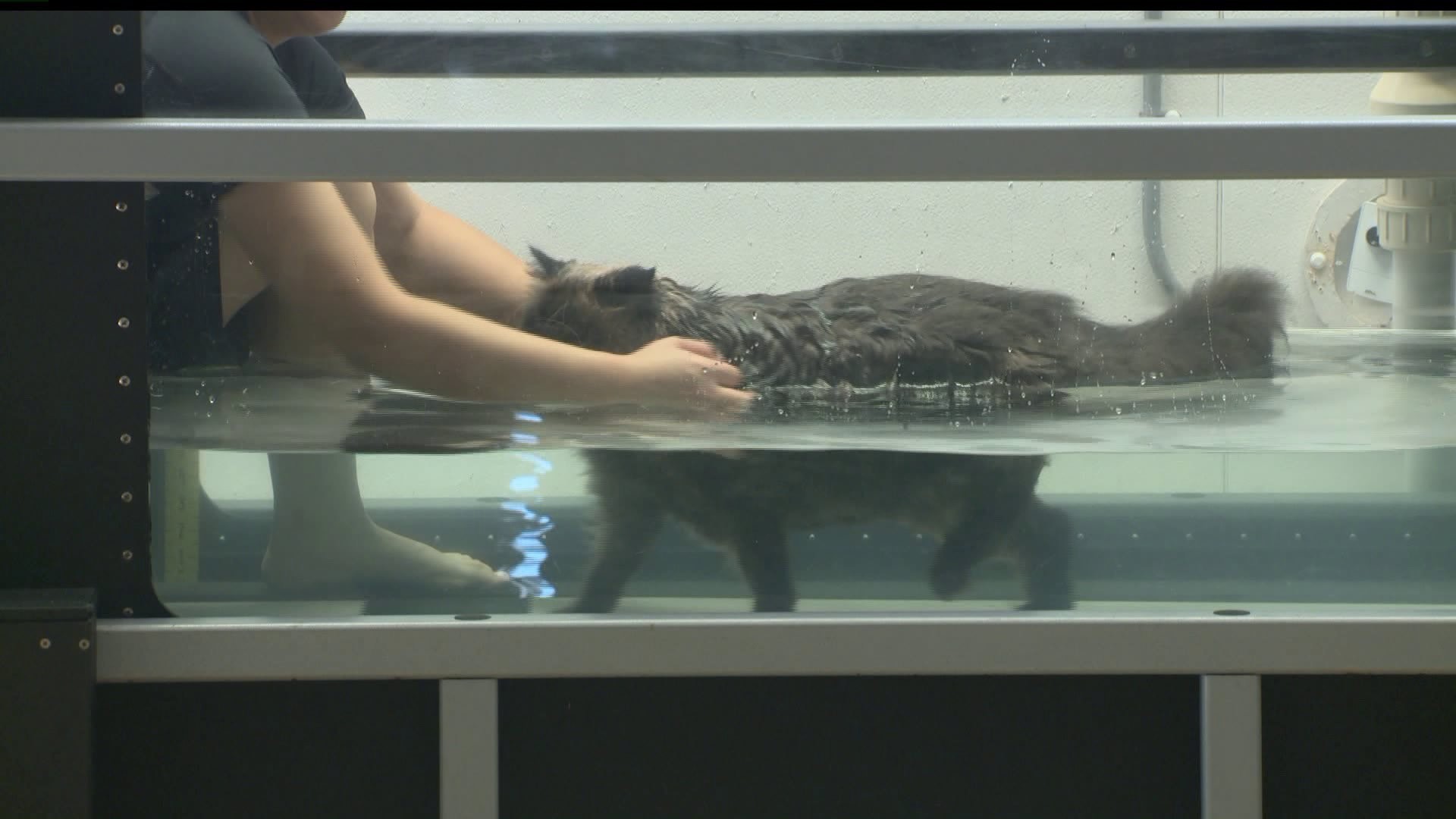
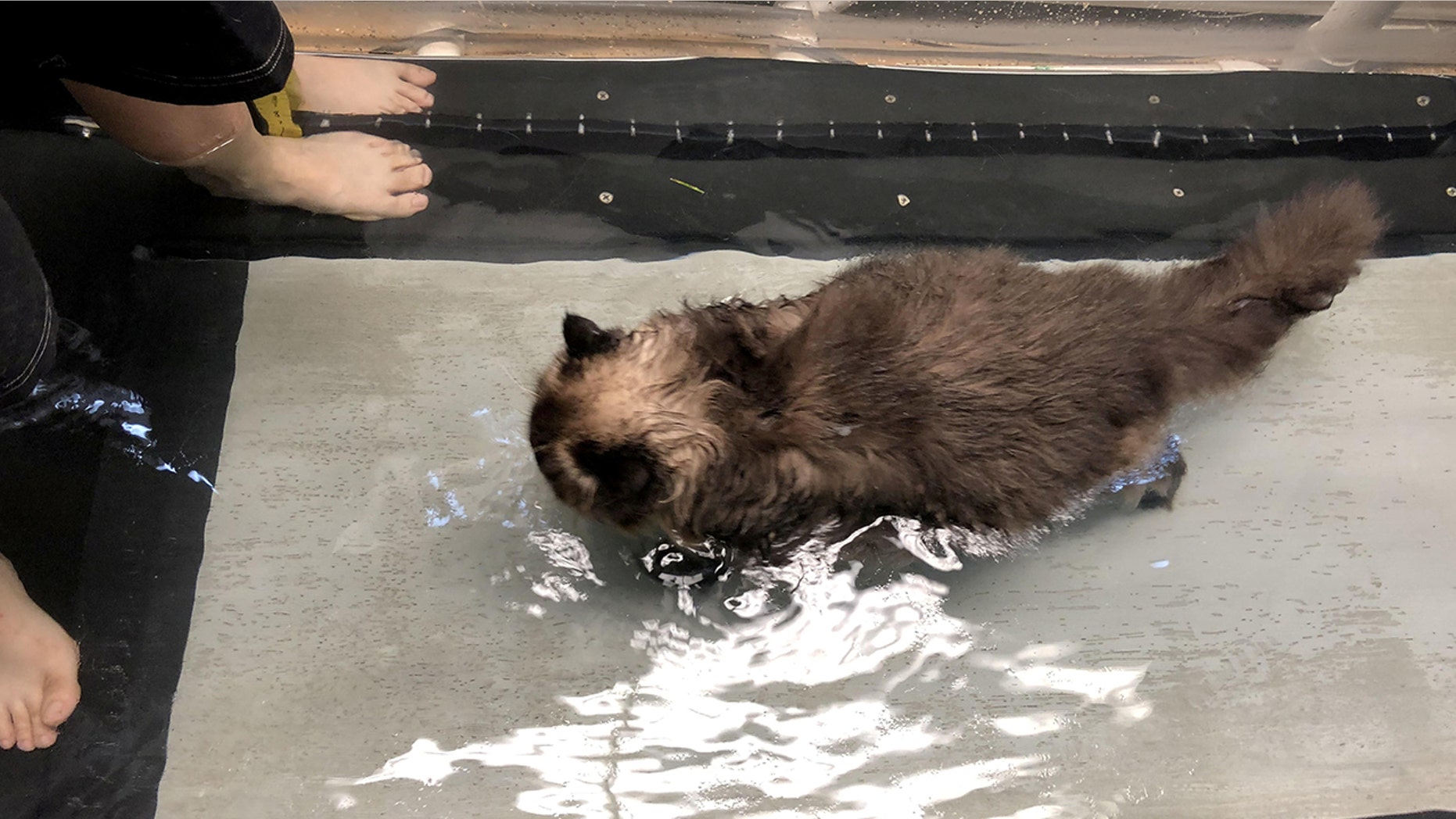
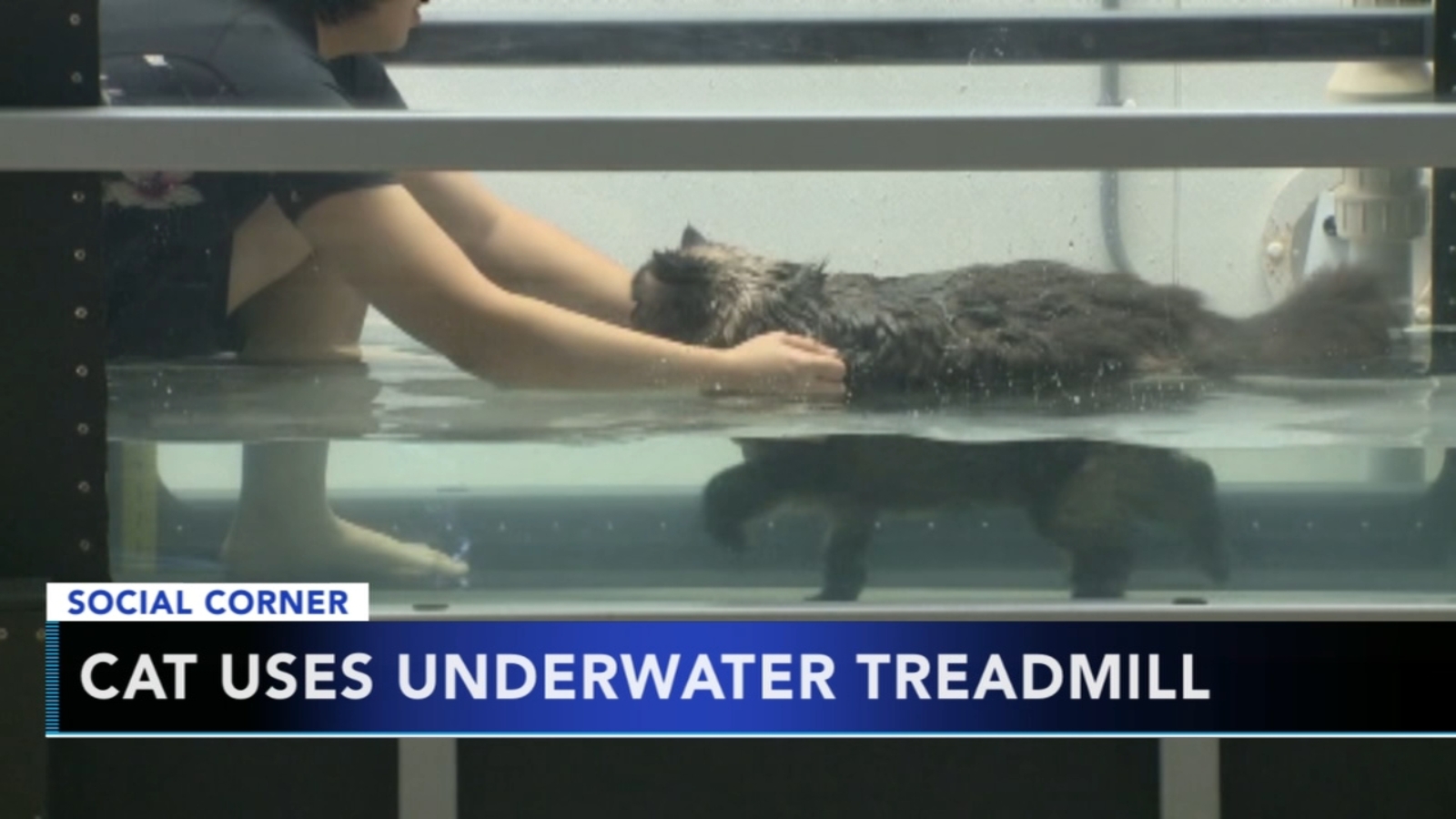
A common misconception occurs when a stressed cat stands motionless in an underwater treadmill while the belt moves beneath its feet. Uninformed observers may mistake this for calm compliance. In reality, the cat is often experiencing tonic immobility—an involuntary freeze response triggered by overwhelming fear.
- Water Immersion / Enclosed Chamber
- Severe Stress / Fear Surge
- Active Panic / Scrambling
- High risk of re-injury
- Muscular guarding
- Cardiovascular strain
- Tonic Immobility ("Freeze")
- Zero active joint flexion
- Limb dragging & skin abrasions
- Zero therapeutic benefit
- Active Panic / Scrambling
- Severe Stress / Fear Surge
During tonic immobility, the cat stops actively placing its paws, allowing the belt to drag its feet backward until the limbs hit the rear wall. This state provides zero therapeutic value: muscle activation is uncoordinated, joint range of motion is absent, and the experience reinforces severe behavioral aversion.
Violation of Modern Feline-Friendly Standards
Modern veterinary medicine emphasizes low-stress handling and cat-friendly practice principles supported by organizations such as the American Association of Feline Practitioners (AAFP). Forcing an averse cat into an aquatic treadmill directly contradicts these clinical guidelines. Forcing a patient into an environment that causes acute fear damages the human-animal bond, degrades the client's trust in the clinic, and makes subsequent physical examinations far more difficult due to learned fear response.
Biomechanical Limitations: Cats Are Not Small Dogs
Proponents of aquatic therapy often cite its biomechanical advantages in canine patients: hydrostatic pressure reduces edema, while buoyancy decreases gravitational load on painful joints. However, applying these canine biomechanical assumptions to cats ignores fundamental anatomical differences.
Skeletal Mass and Joint Loading Dynamics
Cats possess a much lighter skeletal structure and a lower overall body mass index relative to their muscle efficiency than dogs. A standard 4.5 kg (10 lb) cat exerts minimal ground reaction forces during normal terrestrial walking.
| Biomechanical Parameter | Canine Rehabilitation Patient | Feline Rehabilitation Patient |
|---|---|---|
| Avg Body Mass | 15.0 kg – 40.0 kg | 3.5 kg – 5.5 kg |
| Ground Reaction Force | High (Significant joint loading) | Low (Minimal weight bearing stress) |
| Buoyancy Benefit | High (Relieves heavy joint load) | Low to Moderate (Minimal baseline) |
| Water Resistance Impact | Smooth, fluid swimming/walking | High resistance disrupts motion |
| Preferred Motion Strategy | Forward stride acceleration | High-stepping, splashing reflex |
Because baseline joint loading in cats is already low, the relative benefit of buoyant support in water is far smaller for a cat than for a 35 kg Golden Retriever suffering from severe hip dysplasia.
Kinematic Alterations in Water
When submerged in water to shoulder height, a cat’s normal gait kinematics deteriorate:
- Exaggerated Flexion and Splashing: Rather than executing a smooth stance and swing phase, submerged cats typically adopt a high-stepping, splashing gait to clear the water surface. This posture causes hyperextension of the tarsal and stifle joints and accentuates lumbar spine flexion.
- Loss of Proprioceptive Feedback: Aquatic environments obscure the tactile feedback of solid ground. For cats recovering from neurological deficits (such as intervertebral disc disease or fibrocartilaginous embolism), the sensation of water can cause confusion, preventing the re-establishment of normal motor pathways.
Research published via PubMed/NCBI on feline biomechanics demonstrates that therapeutic exercises utilizing solid, textured surfaces yield significantly more predictable joint range of motion and muscle activation patterns than aquatic locomotion in small quadrupeds.
Comparative Modalities: Underwater Treadmill vs. Alternative Feline Rehab Methods
To understand why an underwater treadmill rarely pays off, clinics must compare its performance, cost, and patient compliance directly against land-based modalities.
| Rehabilitation Modality | Estimated Equipment Cost (CapEx) | Feline Patient Compliance Rate | Average Staffing Requirement | Space Footprint Needed | Clinical Efficacy for Feline OA & Neuro |
|---|---|---|---|---|---|
| Underwater Treadmill (UWTM) | $35,000 – $70,000 | < 10% | 2 Technicians (High oversight) | Large (Requires wet room & tank) | Low to Moderate (Due to stress/gait disruption) |
| Dry Land Treadmill / Slatmill | $1,500 – $4,000 | 40% – 60% | 1 Technician | Medium (Dedicated dry space) | Moderate to High |
| Photobiomodulation (Class IV Laser) | $12,000 – $30,000 | 90% – 95% | 1 Technician | Very Small (Portable cart) | High (Proven analgesia & tissue repair) |
| Targeted Therapeutic Exercise (Paws-on) | $200 – $1,000 | 80% – 90% | 1 Technician | Small to Medium (Flexible) | Very High (Functional strength & neuro-retraining) |
| Pulsed Electromagnetic Field (PEMF) | $300 – $3,000 | 95% – 98% | 0 to 1 Technician (Passive mat/loop) | Minimal (Fits in standard cage/table) | Moderate to High (Non-invasive pain management) |
As shown above, alternative modalities such as Photobiomodulation (Laser Therapy) and Targeted Therapeutic Exercises achieve compliance rates of 80% to 95% among feline patients, require a fraction of the capital investment, take up minimal floor space, and can be staffed efficiently by a single technician.
Safer, More Profitable Alternatives in Feline Rehabilitation
Replacing an aquatic treadmill with targeted land-based strategies allows veterinary practices to build a profitable feline rehabilitation service while keeping stress levels low for their patients.
- HIGH-ROI FELINE REHABILITATION PROGRAMME
- Targeted Exercises
- Cavaletti rails
- Balance cushions
- Target stick training
- Photobiomodulation
- Class IV Laser
- Deep tissue analgesia
- Rapid session times
- Environmental Modification
- Ramp acclimation
- Weight management
- Custom home plans
- Targeted Exercises
1. Targeted Therapeutic Exercises (Paws-On Physical Therapy)
Land-based therapeutic exercise utilizes positive reinforcement, target training, and environmental enrichment to encourage natural movement patterns.
- Cavaletti Rails: Low-profile foam or plastic poles spaced at cat-specific stride lengths force the patient to actively flex their carpi, elbows, stifles, and hocks without stress.
- Balance Cushions and Incline Boards: Soft foam pads and rubberized ramps challenge core stability and proprioception, building paraspinal and gluteal muscle mass safely.
- Clicker and Target Training: Using food treats or high-value rewards encourages cats to step onto balance discs, perform controlled weight shifts, or stretch their vertebral column voluntarily.
2. Photobiomodulation (Class IV Laser Therapy)
Low-Level Laser Therapy (LLLT) or Photobiomodulation (PBM) delivers light energy at specific infrared wavelengths to stimulate cellular cytochrome c oxidase, increasing ATP production and reducing tissue inflammation.
- Clinical Advantages: Highly effective for feline degenerative joint disease (DJD), chronic renal pain compensation, and soft tissue injuries.
- Patient Acceptance: Sessions take only 3 to 8 minutes per joint area. Most cats relax completely during warm laser application.
- Financial Advantage: A Class IV laser unit can be amortized rapidly across both canine and feline patients, yielding high profit margins per session with minimal room setup time.
3. Weight Management and Nutritional Interventions
Osteoarthritis in cats is exacerbated by obesity. Adipose tissue functions as an active endocrine organ, secreting pro-inflammatory cytokines (adipokines) that worsen joint pain.
- Excess Body Fat
- Adipokine Release
- Increased Systemic Inflammation
- Accelerated Joint Degeneration
Combining caloric restriction diets with targeted joint supplements (omega-3 fatty acids like EPA and DHA, green-lipped mussel extract, and glucosamine/chondroitin) reduces joint loading naturally. This approach treats systemic inflammation directly without needing water buoyancy.
4. Controlled Dry Land Treadmill Training
For feline patients needing gait retraining, a dry land treadmill—particularly models with soft rubber belts or slatmills—is far easier for cats to accept than an aquatic unit.
Removing the fear of water allows clinicians to focus on gradual speed acclimation, using food bowls or visual target sticks placed at the front of the belt to establish a natural trotting cadence.
Strategic Exceptions: When Is an Aquatic Treadmill Warranted?
While a cat underwater treadmill rarely pays off for a standard general practice or private specialty clinic, specific institutional environments may justify the investment.
1. University Veterinary Teaching Hospitals
Academic medical centers operating under tertiary care guidelines prioritize research, comprehensive educational exposure, and trial protocols over strict profit-and-loss margins.
- Grant Funding: Equipment acquisition is frequently subsidized by educational grants, private donations, or research endowments, eliminating private CapEx risks.
- Specialized Clinical Studies: Academic facilities conduct controlled clinical trials measuring muscle mass gain or kinematic joint angles in hydrotherapy vs. land therapy.
2. High-Volume Multi-Species Referral Centers
Large referral centers seeing 40 to 60 canine rehabilitation patients per day already operate an underwater treadmill profitably based on canine volume alone.
In these facilities, the underwater treadmill's capital and operational costs are fully covered by canine revenue. If an occasional, unusually calm cat tolerates aquatic therapy, the machine can be used without needing the feline patient to generate an independent return on investment.
Frequently Asked Questions
Can cats learn to enjoy or tolerate an underwater treadmill?
A small percentage of cats can be desensitized to water through slow, gradual positive reinforcement over many weeks. However, this acclimation process requires significant staff time that most clients cannot afford. For the vast majority of felines, the fear response remains a persistent barrier that undermines treatment gains.
What are the main orthopedic conditions targeted in feline rehabilitation?
Feline physical rehabilitation primarily treats degenerative joint disease (osteoarthritis of the hip, stifle, elbow, and spine), post-operative recovery (such as femoral head ostectomy or cruciate stabilization), patellar luxation, and neurological conditions like fibrocartilaginous embolism (FCE) or spinal trauma.
How much does a professional veterinary underwater treadmill cost to operate monthly?
Monthly operational costs typically range between $400 and $1,200. This includes electricity for continuous water heating and filtration, water usage, chemical sanitation supplies, ambient room dehumidification, and prorated costs for annual preventative maintenance contracts.
Are hydrotherapy pools better than underwater treadmills for cats?
No. Open hydrotherapy pools are generally worse for cats because swimming forces an uncoordinated, frantic panic paddle that causes severe lumbar extension and extreme stress. Underwater treadmills are preferred over open pools because the cat's feet remain in contact with a moving surface, but land-based therapy remains far superior to both.
How can a veterinary clinic offer effective feline rehabilitation without high equipment costs?
Clinics can build a highly effective feline rehabilitation service by investing in a Class IV therapeutic laser, basic balance pads, cavaletti poles, incline ramps, and target sticks. Combined with dedicated technician training in feline low-stress handling and nutritional weight loss programs, this setup delivers excellent clinical results with minimal overhead.
Practical Recommendations for Practice Owners and Clinicians
For veterinary clinic owners, practice managers, and rehabilitation professionals evaluating equipment purchases, the data points to a clear decision framework:
- Avoid Purchasing UWTMs for Feline-Only Services: Do not buy an underwater treadmill if feline patients represent a major portion of your projected patient volume. The return on investment will almost certainly remain negative.
- Leverage Canine Volume for Aquatic Units: If purchasing an underwater treadmill, base your financial projections and pay-back period entirely on canine patient volume. Treat any feline usage as an exceptional, non-budgeted bonus rather than a revenue pillar.
- Prioritize Low-Stress, High-ROI Modalities: Allocate capital toward Photobiomodulation (laser), dry-land exercise gear, and staff certifications in low-stress feline handling. These investments offer low CapEx, minimal ongoing maintenance, high patient compliance, and rapid profitability.
- Emphasize Home-Based Rehabilitation: Teach clients how to perform targeted therapeutic exercises, sensory brushing, and environmental modifications at home. Cats recover faster and experience less pain when rehabilitation occurs in their familiar home environment.
By focusing on feline behavioral instincts, natural biomechanics, and realistic practice metrics, veterinary professionals can provide effective physical therapy that protects both animal welfare and business profitability.
EDITORIAL CATEGORY METADATA:
Image Gallery