Exploring Winnipeg: The Capital City of Manitoba, Canada
Winnipeg is the capital and largest city of the province of Manitoba, Canada. Situated at the confluence of the Red and Assiniboine Rivers, it serves as the primary longitudinal center of North America. As of 2026, Winnipeg remains the...
Winnipeg is the capital and largest city of the province of Manitoba, Canada. Situated at the confluence of the Red and Assiniboine Rivers, it serves as the primary longitudinal center of North America. As of 2026, Winnipeg remains the province’s undisputed political, economic, and cultural hub, hosting over half of Manitoba's population.
Contents
The Historical Significance of Winnipeg as a Capital
The establishment of Winnipeg as the capital of Manitoba is deeply rooted in the history of Western Canada. Long before European contact, the area known as "The Forks" served as a meeting place for Indigenous peoples for thousands of years. The junction of the two major rivers provided a natural crossroads for trade, social gathering, and resource sharing.
In the early 19th century, the site became a focal point for the fur trade, leading to the establishment of the Red River Colony. The political tensions surrounding the governance of this territory eventually culminated in the Red River Resistance of 1869-1870, led by Louis Riel. This movement led to the passage of the Manitoba Act in 1870, which brought Manitoba into the Canadian Confederation as the fifth province. Winnipeg was officially incorporated as a city in 1873 and was designated the provincial capital due to its established infrastructure, growing population, and strategic location as a gateway for westward expansion.
Throughout the late 19th and early 20th centuries, Winnipeg experienced an unprecedented boom. It became known as the "Chicago of the North," serving as the essential rail link between Eastern Canada and the burgeoning agricultural lands of the West. This historical legacy is still visible today in the city’s historic Exchange District, which contains one of North America’s most extensive collections of early 20th-century terracotta and stone warehouses.
Governance and the Manitoba Legislative Building
As the capital city, Winnipeg is the seat of the provincial government. The Manitoba Legislative Building, completed in 1920, stands as one of the most architecturally significant government buildings in North America. Designed by Frank Worthington Simon and Henry Boddington III, the neoclassical structure is built from Tyndall stone—a local limestone rich in fossils.
The building is not merely a workplace for the Premier and the Legislative Assembly; it is a monument of symbolic architecture. The most famous feature is the "Golden Boy," a five-meter-tall bronze statue sheathed in 23-carat gold, perched atop the building’s dome. Facing north, the figure represents Manitoba’s commitment to progress and the development of the province's northern resources.
In recent decades, the building has gained international fame for its "Hermetic Code." Researchers have documented a series of hidden symbols, numerological sequences, and Masonic influences embedded in the design, including sphinxes, medusa heads, and proportions modeled after the Temple of Solomon. This architectural depth makes the capital’s administrative center a significant site for both political history and esoteric study.
Geography and the "Gateway to the West"
Winnipeg’s geography is defined by its position at the edge of the Canadian Prairies. Located in the Red River Valley, the landscape is exceptionally flat, a remnant of the prehistoric Lake Agassiz. This topography, while ideal for railway expansion and urban development, has historically made the city prone to flooding.
To protect the capital, the provincial government constructed the Red River Floodway, often referred to as "Duff’s Ditch." Completed in 1968, this massive engineering project diverts excess water from the Red River around the city during spring thaws. In 2026, the floodway continues to be recognized as one of the most successful civil engineering feats in Canada, having saved the city from billions of dollars in potential damages over the decades.
The climate in Winnipeg is continental, characterized by four distinct seasons. Winters are notoriously cold, often seeing temperatures drop below -30°C, while summers are warm and frequently reach above 30°C. This extreme variance has shaped the city’s infrastructure, leading to the development of an extensive "Skywalk" system—a series of enclosed pedestrian bridges that connect major downtown buildings, allowing residents to navigate the city center without exposure to the elements.
The Economic Engine of Manitoba
Winnipeg serves as the economic powerhouse of the province. Its economy is notably diversified, which provides stability even during broader national economic shifts. As of 2026, the city’s major industries include:
- Aerospace: Winnipeg is home to the largest aerospace manufacturing and maintenance hub in Western Canada, with major players like Boeing Canada and StandardAero maintaining significant operations.
- Agribusiness: As the capital of a province with vast agricultural resources, Winnipeg hosts the headquarters of several global grain companies and the Canadian Grain Commission.
- Finance and Insurance: The city is the headquarters for several major Canadian financial institutions, including Canada Life and IG Wealth Management.
- Transportation and Logistics: Positioned at the center of the continent, Winnipeg is the only city between Vancouver and Thunder Bay with three Class 1 railways (CN, CPKC, and BNSF).
The development of CentrePort Canada, North America’s largest tri-modal inland port, has further solidified the city’s status as a logistics hub. This 20,000-acre industrial zone provides direct access to rail, truck, and air cargo facilities, facilitating international trade and strengthening the capital's role in global supply chains.
Culture, Arts, and Indigenous Heritage
Winnipeg is often described as the "cultural cradle of Canada." It was the first city in Canada to establish a community arts council and has maintained a vibrant arts scene for over a century.
The city is home to several world-class institutions, including the Royal Winnipeg Ballet, which is the oldest continuously operating ballet company in North America. The Winnipeg Symphony Orchestra and the Manitoba Theatre Centre also enjoy national acclaim.
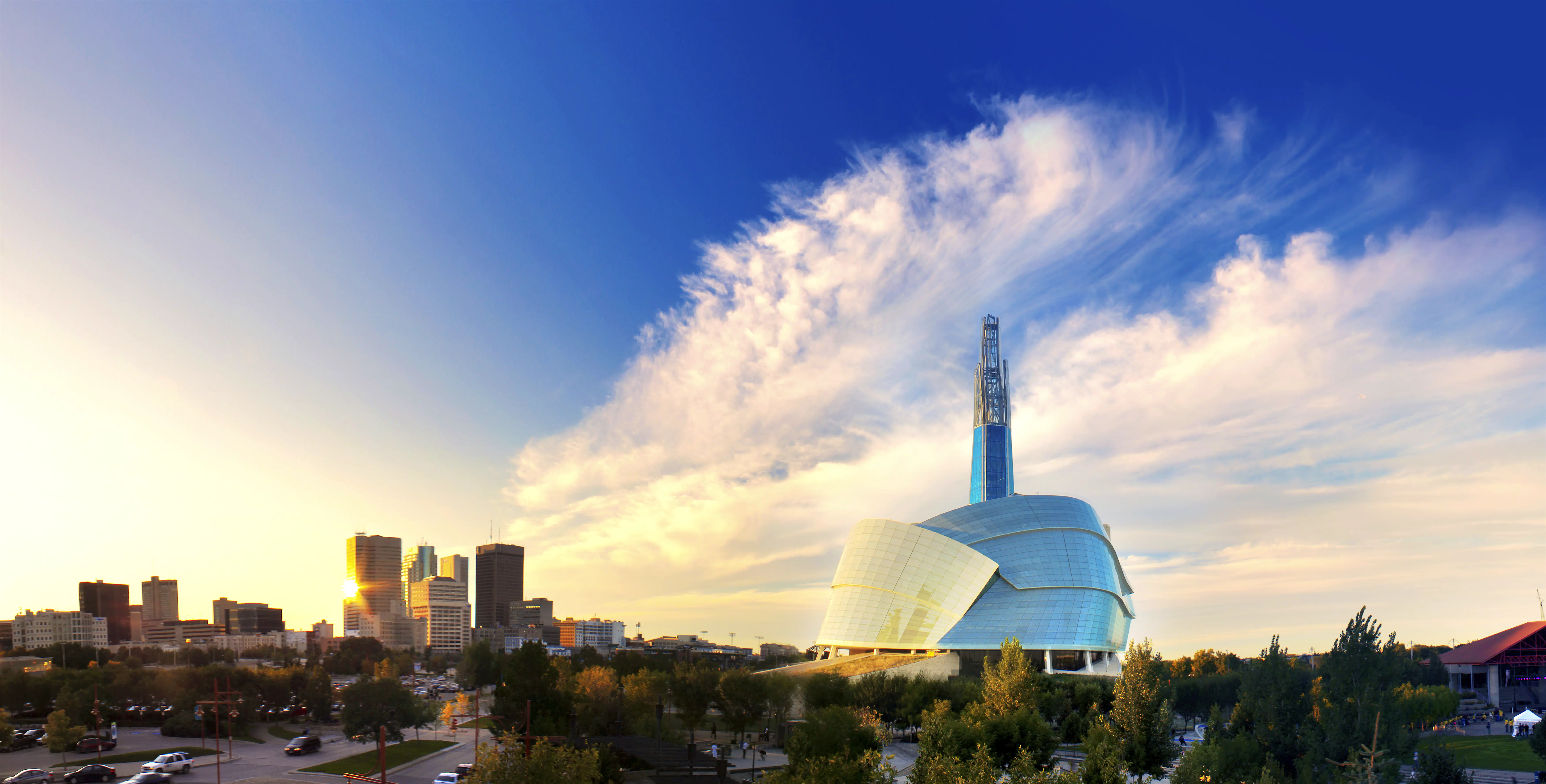
A defining feature of the city's modern cultural landscape is the Canadian Museum for Human Rights (CMHR). Opened in 2014, it is the first national museum built outside the National Capital Region (Ottawa). The building’s striking glass-and-stone design has become a signature part of the Winnipeg skyline, and its exhibits draw visitors from across the globe to the capital.
Furthermore, Winnipeg has the largest Indigenous population of any major city in Canada. The city is located on Treaty 1 territory, the traditional lands of the Anishinaabeg, Cree, Oji-Cree, Dakota, and Dene Peoples, and the homeland of the Métis Nation. This heritage is integral to the city's identity, reflected in local governance, education, and the annual Manito Ahbee Festival, which celebrates Indigenous music, art, and culture.
Comparative Overview: Winnipeg vs. Other Manitoba Hubs
To understand the capital's dominance, it is helpful to compare it to other significant urban centers in Manitoba.
| Feature | Winnipeg (Capital) | Brandon | Steinbach |
|---|---|---|---|
| Status | Provincial Capital | 2nd Largest City | Rapidly Growing Hub |
| Approx. Population (2026) | 825,000 (Metro: 900,000+) | 55,000 | 20,000 |
| Primary Industry | Diversified (Gov, Tech, Logistics) | Agriculture & Education | Manufacturing & Agriculture |
| Major Landmark | Legislative Building / CMHR | Keystone Centre | Mennonite Heritage Village |
| Governance Role | Seat of Provincial Government | Regional Judicial Center | Regional Service Center |
| Transportation | International Airport / Rail Hub | Regional Airport / Highway 1 | Regional Highway Hub |
Living in and Visiting Winnipeg
For those looking to relocate or visit, Winnipeg offers a high quality of life with a relatively low cost of living compared to other major Canadian capitals like Toronto or Victoria. The city's residential landscape is a mix of historic neighborhoods like River Heights and Wolseley, characterized by mature elm canopies, and newer suburban developments like Sage Creek and Bridgwater.
Transportation and Access
The city is served by the James Armstrong Richardson International Airport, which provides non-stop flights to major North American hubs. Within the city, public transit is managed by Winnipeg Transit, which has been expanding its Southwest Rapid Transitway to improve connectivity between the downtown core and the southern suburbs.
Education
As the capital, Winnipeg is the primary center for higher education in the province. It houses the University of Manitoba, the University of Winnipeg, and Red River College Polytechnic, ensuring a steady pipeline of skilled workers for the city's diverse industries.
Tourism and Recreation
Visitors to the capital often begin at The Forks National Historic Site. This 54-acre park offers year-round recreation, from river skating trails in the winter to outdoor festivals in the summer. Assiniboine Park, which includes the Leo Mol Sculpture Garden and the "Journey to Churchill" polar bear exhibit at the zoo, remains one of the largest and most beloved urban parks in Canada.
FAQs About the Capital of Manitoba
Why is Winnipeg the capital of Manitoba instead of a more central city?
Winnipeg was established as the capital because it was the site of the earliest major European settlements and the hub of the fur trade. By the time Manitoba was formed in 1870, the Red River Colony (now Winnipeg) already possessed the necessary administrative buildings and population density to serve as a government seat.
Is Winnipeg the largest city in the Canadian Prairies?
As of 2026, Winnipeg is one of the three major cities of the Canadian Prairies, alongside Calgary and Edmonton. While Calgary and Edmonton have larger metropolitan populations, Winnipeg remains the largest and most influential city in the eastern Prairie region.
What is the significance of the "Golden Boy" on the capital building?
The Golden Boy represents the "Eternal Youth of Manitoba" and the spirit of enterprise. He carries a sheaf of wheat in his left arm, representing the province's agricultural roots, and a torch in his right hand, symbolizing the light of progress.
How does Winnipeg's climate affect its infrastructure?
The city uses "Tyndall stone" in many public buildings because of its durability in freeze-thaw cycles. Additionally, the city has one of the most robust snow-clearing operations in North America and a specialized "Skywalk" system to ensure the downtown remains functional during extreme winter weather.
What is the "Red River Floodway" and why is it important to the capital?
The Red River Floodway is an artificial waterway that diverts part of the Red River's flow around Winnipeg during flood seasons. It is essential because Winnipeg is built on a flood-prone plain; without the floodway, the capital would face catastrophic damage during significant spring melts.
Final Recommendation
For those researching provincial capitals or considering a visit to Manitoba, Winnipeg offers a unique blend of historical depth and modern economic opportunity. It is advisable to visit during the summer months to experience the city's renowned festival season—specifically Folklorama, the world's longest-running multicultural festival—or in the winter to witness the architectural beauty of the frozen rivers and the world-class culinary scene at the "Raw:Almond" pop-up restaurant. Understanding Winnipeg is central to understanding the broader social and economic fabric of Canada.
Image Gallery