How Does Tax Lien Investing Work: A Comprehensive Guide
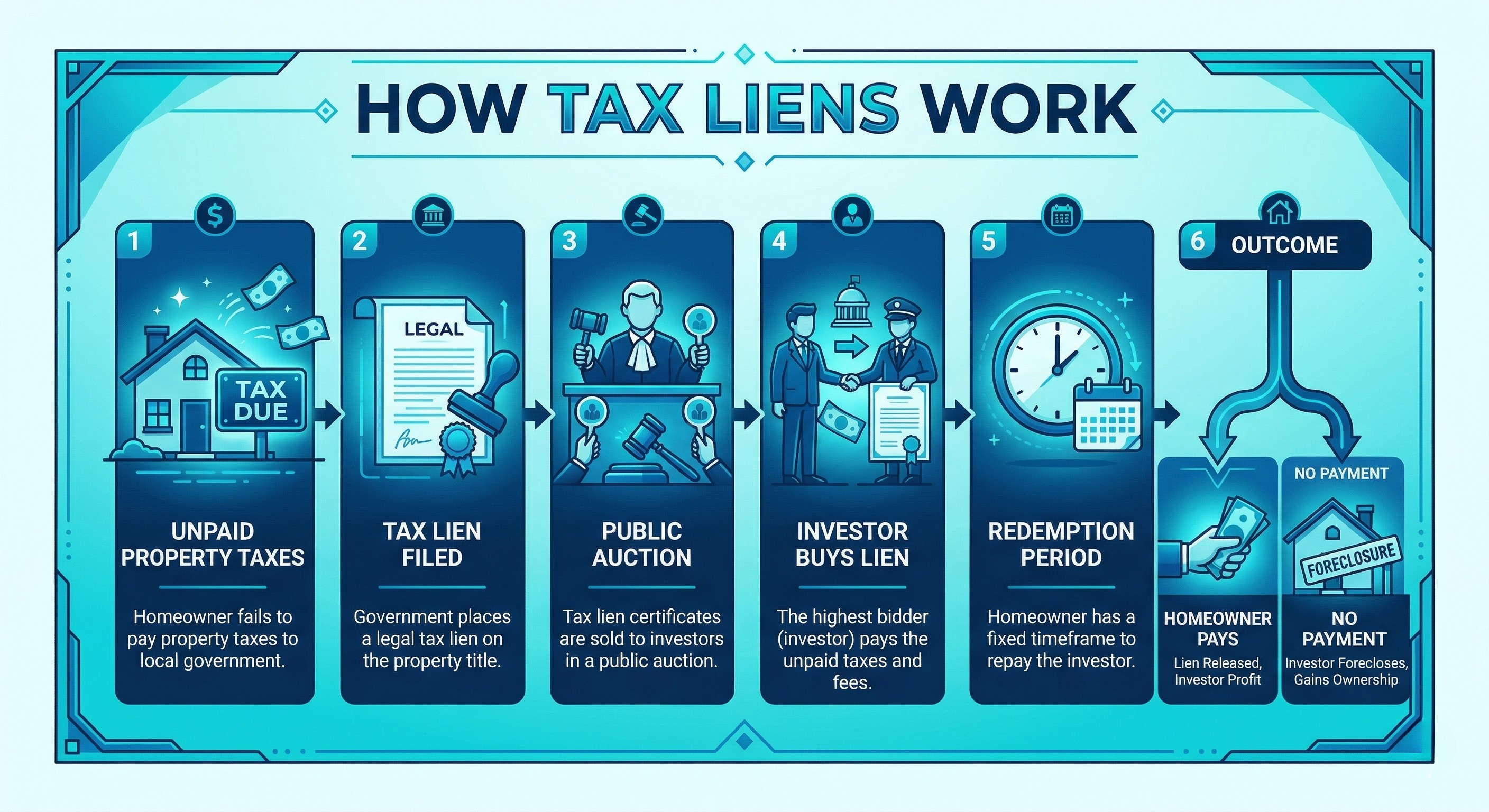
Tax lien investing involves purchasing government-held liens placed on real estate properties when owners fail to pay their property taxes. When an investor buys a tax lien, they essentially pay off the overdue taxes, penalties, and in...
Tax lien investing involves purchasing government-held liens placed on real estate properties when owners fail to pay their property taxes. When an investor buys a tax lien, they essentially pay off the overdue taxes, penalties, and interest owed to the local municipality. In return, the investor receives the right to collect that debt plus high interest rates from the property owner, or eventually, to foreclose on the property. This alternative investment asset class can offer substantial returns, but it requires rigorous research, local market knowledge, and an understanding of statutory procedures.
Contents
Understanding the Fundamentals of Tax Liens
To understand how tax lien investing works, it is essential to distinguish between property taxes and income or corporate taxes. Local governments—typically counties, cities, or towns—rely heavily on real property taxes to fund public services like schools, road maintenance, and emergency services. When a property owner falls delinquent on these payments, the local government needs a mechanism to recover the lost revenue without enduring prolonged fiscal shortfalls.
To solve this, the municipality places a legal claim—known as a tax lien—against the real estate. This lien acts as a superior encumbrance, meaning it typically takes precedence over almost all other claims, including standard mortgages and bank loans. Because municipalities are in the business of governing rather than collecting long-term debt, they often auction off these liens to private investors to replenish their coffers immediately.
The process bridges public administration and private finance. Investors act as third-party financers for delinquent public revenue. In exchange for providing immediate capital to the municipality, the investor acquires a government-backed financial instrument. However, this is not a direct investment in real estate initially; rather, it is an investment in the debt attached to the real estate.
The Mechanics of Tax Lien Auctions
Tax lien investing typically begins with a public auction conducted by the local tax collector or treasurer. These auctions can take place in person or, increasingly, through online bidding platforms. Local governments announce upcoming auctions well in advance, publishing lists of delinquent properties, the amount of back taxes owed, and legal descriptions of the parcels.
Before the auction occurs, prospective investors must conduct extensive due diligence. This involves reviewing the published lists, visiting properties if possible, and checking county records for environmental hazards, structural integrity, and competing liens. Once the auction commences, jurisdictions generally use one of two primary bidding mechanisms:
- Bidding on Interest Rate: Investors compete by offering the lowest interest rate they are willing to accept. The investor who bids the lowest interest rate wins the lien. This method is common in states like Florida and Arizona, where competition can drive down the yield significantly.
- Bidding on Premium: Investors bid a cash premium over and above the face value of the delinquent taxes. The investor willing to pay the highest premium wins the lien. While the investor earns interest based on the statutory rate applied to the original tax amount, they must absorb the premium cost, which may or may not be returned depending on state laws.
Once an investor wins the bid and pays the total amount due to the municipality, the county issues a tax lien certificate. This document serves as legal proof of the investor's right to collect the debt.
| State/Jurisdiction Type | Primary Bidding Mechanism | Typical Redemption Period | Foreclosure Process After Redemption Expires |
|---|---|---|---|
| Florida | Interest Rate (starts at 18% max, bids go down) | 2 years from April 1st | Public tax deed auction |
| Arizona | Interest Rate (starts at 16% max, bids go down) | 3 years from sale date | Judicial foreclosure |
| Illinois | Penalty/Interest Bid (bids go down from statutory max) | 2 to 2.5 years | Administrative/Judicial deed issuance |
| New Jersey | Premium (bids go up in percentage or cash) | 6 months to 2 years | In rem foreclosure |
How Investors Earn Returns
Investors generate returns through two main avenues: the payment of statutory interest by the redeeming property owner, or through the eventual acquisition of the underlying property at a fraction of its market value.
Interest and Penalties
The primary goal for most tax lien investors is not to own real estate, but to earn the high interest rates established by state statute. These rates vary wildly by jurisdiction, ranging from 5% to as high as 36% annually, depending on state laws. When the property owner decides to pay their debt, they must pay the original delinquent amount plus all accrued interest, penalties, and administrative fees directly to the county, which then passes those funds along to the investor.
Redemption Periods
Every tax lien certificate is subject to a statutory redemption period. This is a window of time—typically ranging from six months to three years—during which the property owner has the legal right to "redeem" the lien by paying off the total debt. During this redemption period, the investor cannot force the owner out or take possession of the property. The investor merely waits and collects the high-yield interest as long as the owner continues to pay or eventually redeems the full balance.
Transitioning to Tax Deeds and Foreclosure
If the redemption period expires and the property owner fails to pay the delinquent taxes, interest, and penalties, the tax lien investor can initiate foreclosure proceedings to claim the real estate. This transition shifts the investment from a debt instrument to physical property ownership.
The exact foreclosure process depends entirely on state law. In some states, the process is administrative, where the county issues a tax deed directly to the investor after the redemption window closes. In other states, the investor must file a strict judicial foreclosure lawsuit to wipe out existing mortgages, junior liens, and other encumbrances to clear the title.
It is critical to note that acquiring a property through a tax lien foreclosure does not automatically guarantee a clean title. Outstanding federal tax liens, municipal utility liens, or bankruptcy proceedings can complicate or invalidate an investor's ownership claims. Therefore, comprehensive legal title searches are mandatory before pursuing foreclosure.
Advantages and Risks of Tax Lien Investing
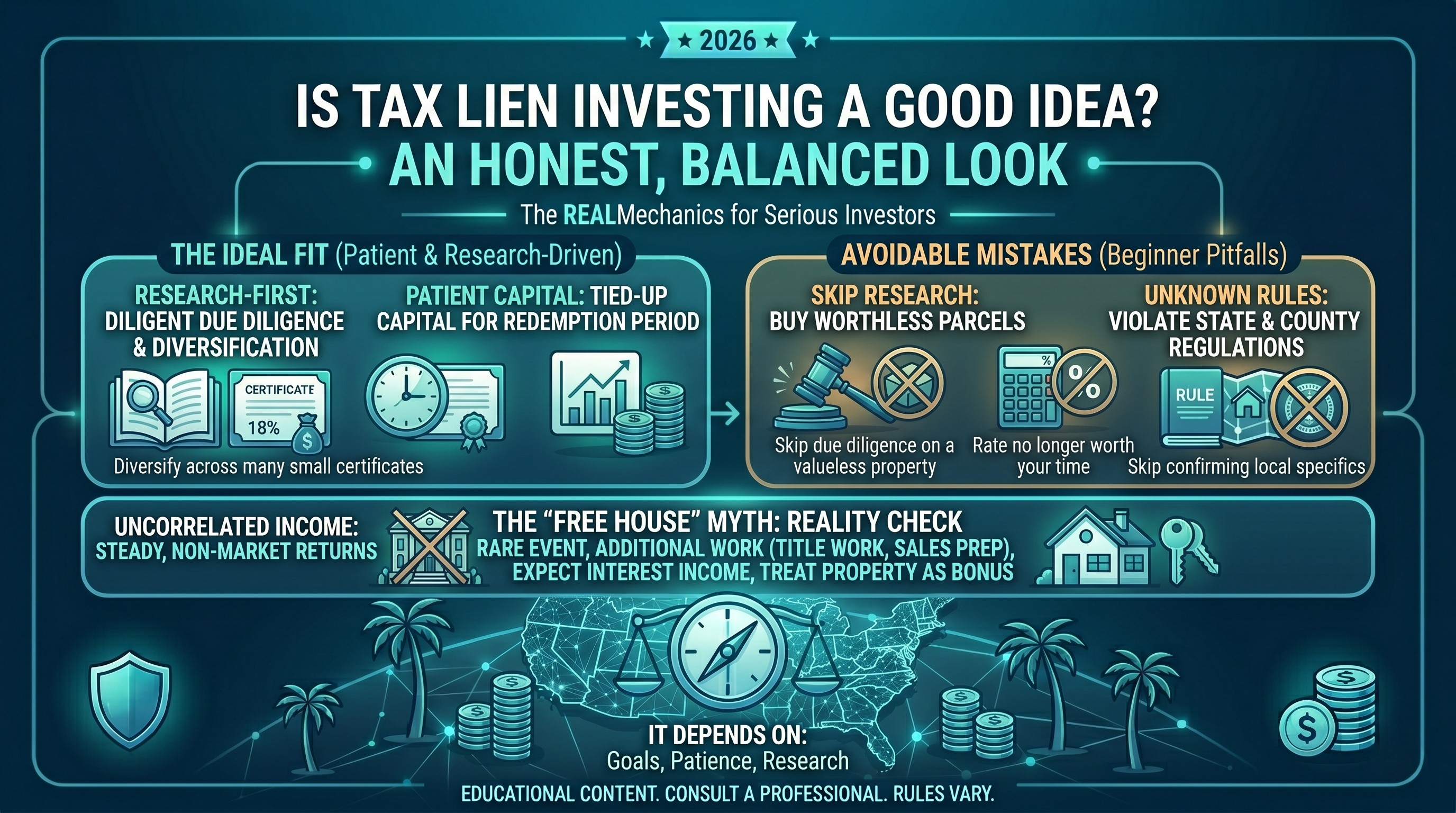
Like any financial strategy, tax lien investing presents a distinct balance of reward and exposure. Understanding these dynamics helps investors calibrate their strategies and avoid severe pitfalls.
Potential Benefits
- High Yields: Statutory interest rates can significantly outperform traditional fixed-income investments, certificates of deposit, and many stock market portfolios.
- Government backing: The debt is secured by real estate and backed by municipal authority, offering a higher degree of baseline security than unsecured consumer debt.
- Potential Real Estate Acquisition: Investors have the opportunity to acquire real estate for pennies on the dollar if the property owner fails to redeem the lien.
- Priority Status: Tax liens generally supersede mortgages and other private liens, placing the investor first in line for repayment.
Significant Risks and Drawbacks
- Due Diligence Burden: Investors must independently evaluate properties. Buying a lien on an environmentally contaminated industrial site or a burned-out structure can leave the investor with a worthless asset or immense liability.
- Illiquidity: Tax lien certificates cannot be easily sold on a secondary market. Capital can be tied up for years during redemption periods or legal foreclosure battles.
- Bankruptcy Stalls: If a property owner declares bankruptcy, the automatic stay halts foreclosure and redemption proceedings, freezing the investor's capital indefinitely.
- Administrative Complexity: Navigating disparate county rules, strict statutory deadlines, and local auction procedures demands meticulous organization and legal oversight.
Step-by-Step Guide to Getting Started
Entering the tax lien market requires a structured, methodical approach. Rushing into auctions without preparation can lead to severe financial losses.
- Study Local State Laws: Tax lien laws vary completely by state and even by county. Review the statutory interest rates, redemption periods, and bidding rules for your target jurisdiction.
- Establish a Dedicated Budget: Determine your capital allocation. Only invest funds that you can afford to lock up for extended, unpredictable periods.
- Research Available Properties: Obtain the tax lien lists released by the county treasurer. Filter properties based on location, assessed value, and estimated tax debt relative to market value. Avoid properties with high environmental risks or insignificant market equity.
- Perform Title and Property Inspections: Check county recorder offices for competing liens, mortgages, and bankruptcies. Physically inspect the properties or hire local agents to verify their physical condition.
- Participate in the Auction: Register for the county's physical or online auction platform, adhere to registration deposits, and place strategic bids based on your maximum acceptable interest rate or premium limit.
- Manage the Portfolio: Track redemption deadlines, monitor payments from the county, and consult with real estate attorneys if the redemption period expires and foreclosure becomes necessary.
Frequently Asked Questions
Can I lose money investing in tax liens?
Yes. While tax liens are considered secure because they are tied to real estate, investors can lose money if the underlying property has zero market value, severe environmental contamination, or if superior liens like federal tax claims wipe out the investment's recovery value during foreclosure.
Do I need to be a cash buyer to start?
Most tax lien auctions require immediate payment in full upon winning a bid. Cash or high-liquidity funds are typically mandatory, as traditional mortgage lenders do not finance tax lien certificate purchases.
What happens if the property owner files for bankruptcy?
When a property owner files for bankruptcy, an automatic stay goes into effect. This legal injunction pauses all collection activities, foreclosures, and redemptions, meaning the investor cannot collect interest or pursue the property until the bankruptcy court resolves the case.
Is tax lien investing the same as tax deed investing?
No. In tax lien investing, you purchase the debt and collect interest, with foreclosure as a secondary outcome. In tax deed investing, the government has already foreclosed on the property, and the auction directly sells the real estate property itself to the highest bidder.
Can I live in a property while holding its tax lien?
No. Holding a tax lien certificate grants you no ownership or possessory rights to the property during the redemption period. You cannot enter, occupy, or rent out the property until the redemption period expires and you successfully complete the legal foreclosure process to secure a tax deed.
Next Actions for Prospective Investors
Begin your journey by selecting a single state and county to study. Read the statutory guidelines published on the official state department of revenue or county treasurer websites. Do not bid on any liens during your first auction cycle; instead, observe the bidding dynamics, analyze the winning bids, and track how many liens are redeemed versus how many proceed to foreclosure. This observational due diligence provides practical insights without financial exposure, laying a solid foundation for profitable investing.
Image Gallery