The Best Ways to Learn Cyber Security Step by Step
Learning cybersecurity step by step requires a structured progression from fundamental information technology concepts to advanced defensive and offensive engineering practices. Because the digital threat landscape continues to expand...
Learning cybersecurity step by step requires a structured progression from fundamental information technology concepts to advanced defensive and offensive engineering practices. Because the digital threat landscape continues to expand across cloud, enterprise, and operational environments, mastering this domain demands a blend of theoretical knowledge, hands-on technical labs, and continuous alignment with industry certifications.
Contents
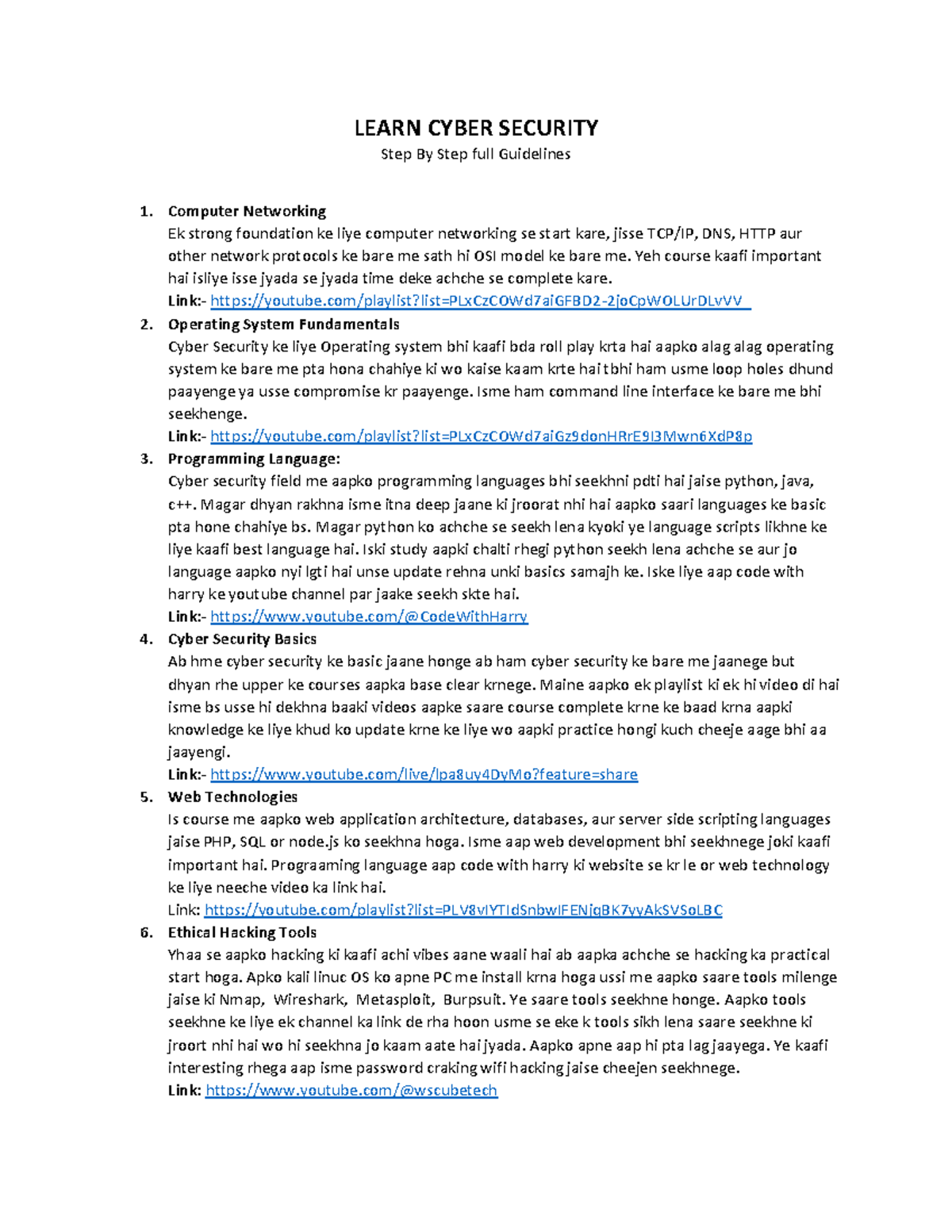
Establishing the Foundation: IT and Networking Essentials
Before examining firewalls, encryption algorithms, or malware analysis, every aspiring security professional must understand how data moves across networks and how operating systems process instructions. Attempting to secure a system without understanding its baseline architecture is like trying to repair an advanced engine without knowing basic mechanics.
Core Operating Systems and Architecture
You need operational fluency in both Linux and Windows environments. The vast majority of enterprise servers, cloud instances, and security tools run on Linux distributions such as Ubuntu, Debian, or Red Hat Enterprise Linux.
- Command Line Proficiency: Master shell scripting, file permissions, process management, and log inspection.
- Windows Internals: Understand the Windows Registry, Active Directory, event logs, and Group Policy Objects, as corporate networks heavily rely on these systems.
Networking Fundamentals
Data security is fundamentally about protecting data in transit and data at rest. You must master the OSI model and TCP/IP protocol suite. Key areas of focus include:
- Subnetting and Routing: Knowing how packets travel across local area networks (LANs) and wide area networks (WANs).
- Core Protocols: Deep dive into DNS, HTTP/HTTPS, DHCP, SSH, and FTP. Recognizing anomalies in these protocols is often the first step in identifying a network intrusion.
Mastering Core Security Concepts
Once you have a firm grasp of IT infrastructure, you can transition into core security principles. This phase introduces the frameworks, mental models, and defensive strategies that dictate how organizations protect their digital assets.
The CIA Triad
The Confidentiality, Integrity, and Availability (CIA) triad forms the backbone of information security policies:
- Confidentiality: Ensuring that sensitive data is accessed only by authorized individuals through encryption, access control lists, and multi-factor authentication (MFA).
- Integrity: Maintaining the accuracy and trustworthiness of data by preventing unauthorized modifications or deletions.
- Availability: Ensuring that systems and data are accessible to authorized users when needed, often protected against denial-of-service (DoS) attacks.
Threat Modeling and Risk Management
Security is ultimately a risk management discipline. You cannot eliminate all risk, so you must learn how to identify assets, assess vulnerabilities, evaluate potential threats, and calculate business impact. Frameworks like NIST SP 800-30 provide structured methodologies for conducting risk assessments.
Choosing a Specialization and Hands-On Labs
Cybersecurity is a vast field. While generalists are valuable, career progression often requires specializing in a specific track. Practical, hands-on experience is non-negotiable during this phase. Reading textbooks is insufficient; you must break and fix environments in controlled lab settings.
| Specialization Track | Primary Focus Areas | Recommended Hands-On Platforms |
|---|---|---|
| Security Operations (Blue Team) | SIEM management, threat hunting, log analysis, incident response. | TryHackMe, LetsDefend, Blue Team Labs Online |
| Offensive Security (Red Team) | Penetration testing, vulnerability assessment, exploit development, social engineering. | Hack The Box, TryHackMe, PortSwigger Web Security Academy |
| Cloud Security | Identity and access management (IAM), infrastructure as code (IaC) scanning, container security. | AWS Skill Builder, Microsoft Learn, CloudGoat |
| Governance, Risk, and Compliance | Policy drafting, audit preparation, regulatory frameworks (ISO 27001, GDPR, HIPAA). | ISACA resources, Compliance Forge |
Industry Certifications and Career Progression
Certifications serve as validation of your skills to employers. However, they should be pursued alongside practical experience rather than viewed as standalone resume boosters.
Entry-Level Milestones
- CompTIA Security+: Widely recognized as the baseline standard for foundational security concepts, networking, and risk management.
- Certified in Cybersecurity (CC) by ISC2: A strong entry-level option that covers foundational principles and operational security.
Intermediate and Advanced Milestones
- CompTIA CySA+ or Certified Incident Handler (EC-CIH): Ideal for those pursuing Blue Team and Security Operations Center (SOC) roles.
- Offensive Security Certified Professional (OSCP) or Certified Ethical Hacker (CEH): Essential for penetration testers and red team operators, heavily focused on practical, hands-in-the-keyboard examination.
- Certified Information Systems Security Professional (CISSP): The gold standard for management and architectural roles, requiring verifiable professional experience.
Frequently Asked Questions
Do I need a degree in computer science to learn cybersecurity?
No. While a computer science or information technology degree provides a helpful theoretical background, the cybersecurity industry values practical skills, certifications, and demonstrable hands-on experience over formal credentials. Many professionals successfully transition from unrelated fields through dedicated self-study and practical lab work.
How long does it take to become job-ready in cybersecurity?
The timeline varies based on your prior technical experience. For individuals starting from scratch, dedicating 15 to 20 hours per week typically takes 12 to 18 months to build the foundational knowledge, practical lab experience, and entry-level certifications required to secure a junior role, such as a SOC analyst or IT support specialist.
Which programming languages should I learn for cybersecurity?
Python is the most versatile language for cybersecurity professionals, as it is widely used for writing automation scripts, parsing log files, and developing custom tools. For web application security, a solid understanding of JavaScript, HTML, and PHP is essential. For low-level exploit analysis and reverse engineering, familiarity with C and Assembly is required.
Is cybersecurity a math-heavy discipline?
Advanced cryptography relies heavily on number theory and linear algebra, but day-to-day cybersecurity roles rarely require complex calculus or advanced mathematics. Logic, pattern recognition, problem-solving, and a systematic approach to troubleshooting are far more critical to daily success than high-level math.
How can I practice ethical hacking legally?
You should only practice your hacking skills on dedicated platforms that provide explicit authorization, such as Hack The Box, TryHackMe, or legally sanctioned bug bounty programs like HackerOne and Bugcrowd. Never test systems, networks, or applications without written permission from the asset owner, as unauthorized scanning or penetration testing violates computer fraud laws.
Next Actions for Aspiring Professionals
Begin your journey by setting up a dedicated learning environment. Install a virtualization platform like VirtualBox, spin up a Linux virtual machine, and commit to spending at least one hour a day working through structured labs on platforms like TryHackMe or PortSwigger. Document your learning process through a technical blog or GitHub repository to showcase your growing competency to prospective employers.
Image Gallery