Understanding What Equinix Canada Offers to Data Center Users
Equinix Canada provides enterprise-grade colocation, interconnected ecosystems, and digital infrastructure services designed to help businesses reduce latency and scale IT operations. By leveraging a high-density network of Internation...
Equinix Canada provides enterprise-grade colocation, interconnected ecosystems, and digital infrastructure services designed to help businesses reduce latency and scale IT operations. By leveraging a high-density network of International Business Exchange (IBX) data centers in key Canadian markets, the company offers secure physical space, robust power availability, and direct, private connectivity to global cloud and network service providers.
Contents
The Role of Equinix in the Canadian Digital Landscape
For businesses operating within or expanding into the Canadian market, the physical location and the quality of data center infrastructure are critical to performance. Equinix serves as a neutral party in this landscape, providing facilities where companies can house their critical IT hardware. Unlike telco-specific data centers that may prioritize their own network traffic, Equinix focuses on "carrier neutrality." This means users are not locked into a single service provider; instead, they can choose from a vast array of telecommunications carriers, cloud service providers, and local internet exchanges available within the same facility.
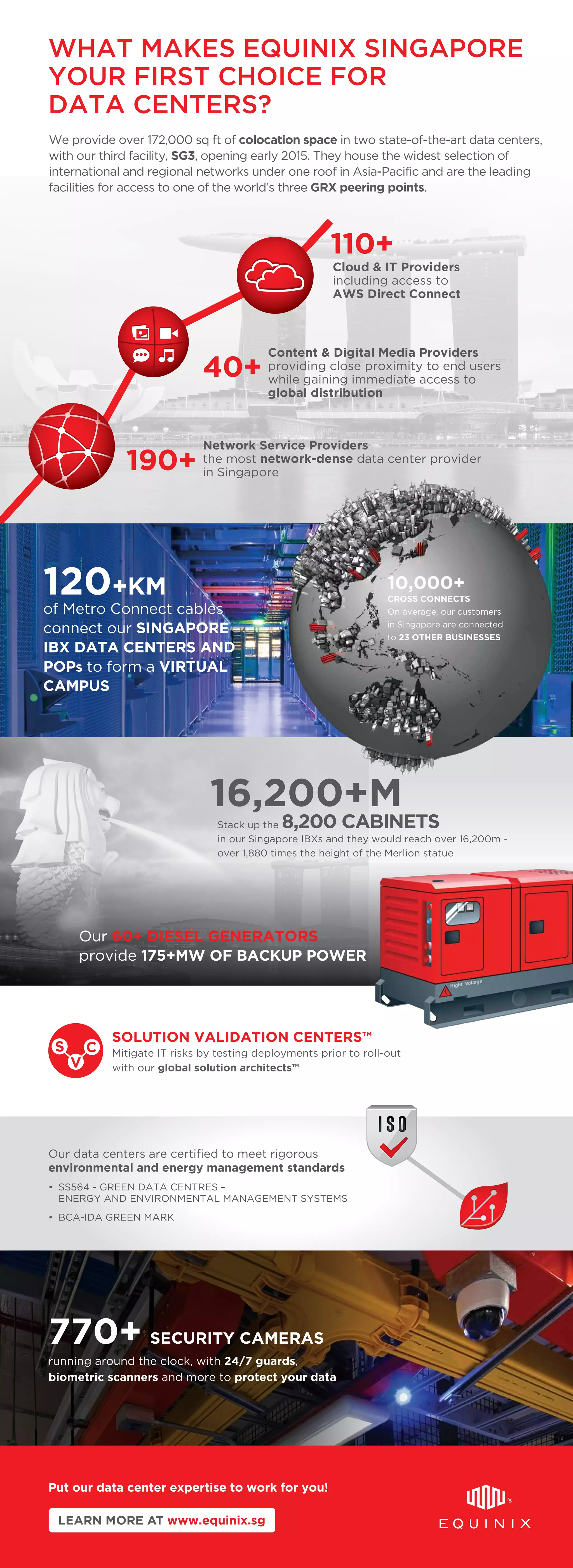
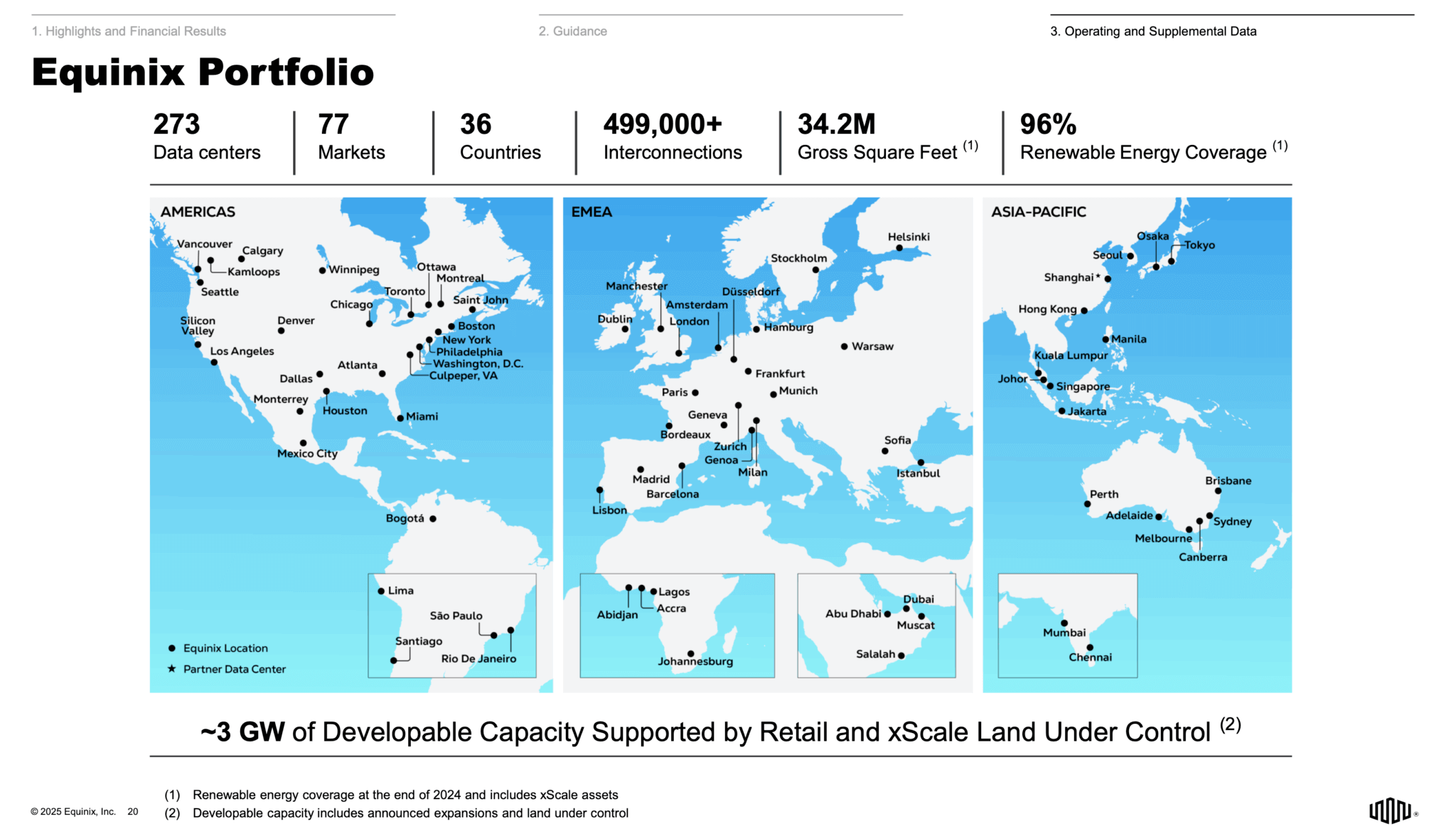
As of 2026, Equinix’s presence in Canada centers around strategic urban hubs, most notably Toronto, Montreal, Calgary, and Vancouver. These facilities are designed to meet the rigorous standards of modern enterprises, including high-availability power architectures, sophisticated cooling systems, and multi-layered physical security protocols.
Core Offerings for Data Center Users
Equinix’s value proposition to Canadian data center users is built on three primary pillars: physical infrastructure, interconnection, and software-defined digital services.
1. Colocation and Physical Security
The most fundamental offering is space, power, and cooling. Users can choose from different configurations, ranging from partial cabinets (shared racks) to full private cages or custom-built rooms. Equinix provides:
- Redundant Power Infrastructure: Uninterruptible Power Supply (UPS) systems and diesel generators configured in N+1 or 2N arrangements to ensure continuous uptime even during grid instability.
- Environmental Controls: Precision cooling systems designed to maintain optimal temperatures for sensitive server hardware, crucial for high-density compute environments.
- Physical Security: Facilities feature biometric access controls, man-traps, CCTV surveillance, and 24/7 security personnel to ensure the physical integrity of collocated hardware.
2. Interconnection and Network Services
The "Equinix Fabric" is perhaps the most significant differentiator for users. This software-defined interconnection service allows businesses to create private, secure connections between their local infrastructure and other providers. Instead of routing traffic over the public internet, a user in a Toronto IBX can connect directly to a cloud provider like AWS, Microsoft Azure, or Google Cloud. This results in lower latency, improved security, and more predictable network performance—essential for high-frequency trading, real-time analytics, and enterprise applications.
3. Digital Infrastructure on Demand
Equinix has moved beyond traditional "bricks and mortar" by offering digital services that allow companies to provision hardware as if it were a cloud service. This includes bare-metal-as-a-service, where users can rent physical servers in an Equinix facility and provision them via an API, avoiding the capital expense of purchasing proprietary hardware.
Comparative Overview of Service Tiers
Choosing the right deployment model depends on a company’s operational scale and security requirements. The following table summarizes the typical service options available within the Equinix Canada ecosystem.
| Service Option | Target Audience | Primary Benefit |
|---|---|---|
| Shared Cabinet | Startups, Small Business | Low entry cost; access to ecosystem. |
| Private Cabinet | Mid-market Enterprises | Dedicated security; isolated environment. |
| Private Cage | Large Enterprises | Tailored infrastructure; high security. |
| Equinix Fabric | Any-size Enterprise | Low-latency cloud and network access. |
| Bare Metal | Hybrid/Agile IT Teams | No CapEx; instant hardware provisioning. |
Operational Prerequisites and Considerations
Before transitioning workloads to an Equinix Canada facility, organizations must assess their readiness. Moving to a colocation environment is not merely a "lift and shift" of server hardware; it requires a deep understanding of the facility’s operational standards.
- Compliance and Certifications: Equinix facilities generally maintain SOC 1, SOC 2, and ISO certifications. Users must verify if the specific IBX facility meets their industry-specific compliance needs (e.g., PCI DSS for payment processing or HIPAA-aligned standards for healthcare data).
- Technical Readiness: Users are responsible for the management of their own hardware, including the operating system, applications, and patches. Equinix provides the "environment" (power/cooling/connectivity), but the user maintains the "logical" management of the infrastructure.
- Latency Requirements: Companies should map their connectivity needs. For example, if a business relies heavily on trans-Atlantic data transfer, choosing a facility with proximity to major subsea cable landing points—often a feature of Equinix’s coastal facilities—is paramount.
Addressing Common Challenges in Colocation
Despite the advantages, potential users often face hurdles regarding cost management and network design.
One common mistake is underestimating the "total cost of ownership." While colocation eliminates the need to build a physical building, users must factor in the recurring costs of power usage, cross-connect fees (the physical cabling to connect to a service provider), and technical "remote hands" services. Remote hands—where Equinix staff perform physical tasks on the user's behalf—can be invaluable, but they should be budgeted for accurately during the planning phase.
Furthermore, network architecture must be planned for redundancy. Even with a highly reliable data center, a user’s own hardware or configuration could fail. Standard practice involves deploying equipment across multiple "zones" or, in high-availability scenarios, across two different Equinix buildings within the same region to ensure that local power or maintenance events do not cause a total service outage.
Frequently Asked Questions
What does "carrier-neutral" mean in an Equinix data center?
It means the facility is not owned or operated by a single telecommunications provider. Users are free to contract with multiple network providers to ensure the best pricing, speed, and redundancy, preventing vendor lock-in.
How does Equinix Canada support hybrid cloud strategies?
Equinix provides physical proximity to the "on-ramps" of major cloud providers. By using Equinix Fabric, a company can keep sensitive data on their own private hardware within a Canadian IBX while connecting it securely to public cloud services, creating a seamless hybrid environment.
Are there environmental sustainability benefits to using Equinix?
Yes. Equinix has committed to global sustainability goals, including the use of renewable energy. For Canadian users, this can help companies meet their own corporate Environmental, Social, and Governance (ESG) reporting requirements by lowering the carbon footprint of their IT infrastructure.
What is the purpose of "Remote Hands" services?
Remote Hands services allow Equinix’s on-site technicians to handle basic hardware tasks, such as rebooting a server, swapping a hard drive, or checking cable connections. This is especially useful for companies whose IT staff are not located near the data center.
How do I determine which Equinix Canada location is right for me?
Selection depends on your proximity to your user base, your latency requirements, and the availability of specific carriers or cloud partners you need. Most users consult with an Equinix solution architect to map their workload requirements against the specific capabilities of each facility.
Next Steps for Prospective Users
For organizations looking to leverage Equinix Canada, the first step is to conduct a thorough audit of current IT hardware and network traffic patterns. Determine which applications are latency-sensitive and which require private, high-speed access to the cloud. Once your technical requirements are documented, engage an Equinix representative to tour the local facility or request a virtual walkthrough. This ensures that the physical configuration of the cabinets, the power capacity, and the ecosystem of available network providers align with your long-term business goals. Prioritize securing a design that allows for future scalability, as moving hardware between locations after deployment is a resource-intensive process.
Image Gallery