How Long Did Job Suffer? Analyzing the Timeline of the Book of Job
The Book of Job does not provide an explicit calendar duration for Job’s period of suffering, but internal textual clues and historical traditions offer significant insights. While the initial losses occurred in a single day, Job 7:3 m...
The Book of Job does not provide an explicit calendar duration for Job’s period of suffering, but internal textual clues and historical traditions offer significant insights. While the initial losses occurred in a single day, Job 7:3 mentions "months of vanity," and Jewish tradition in the Seder Olam Rabbah specifies a duration of 12 months.
Contents
The question of how long Job suffered is one of the most frequent inquiries for students of Hebrew wisdom literature. Because the Book of Job functions primarily as a philosophical and theological exploration of theodicy—the vindication of divine goodness in the view of the existence of evil—the author prioritizes the emotional and spiritual weight of the trial over a chronological log. However, by examining the biblical text, historical commentaries, and the cultural context of the Ancient Near East, we can construct a comprehensive timeline of Job’s ordeal.
Textual Clues Within the Book of Job
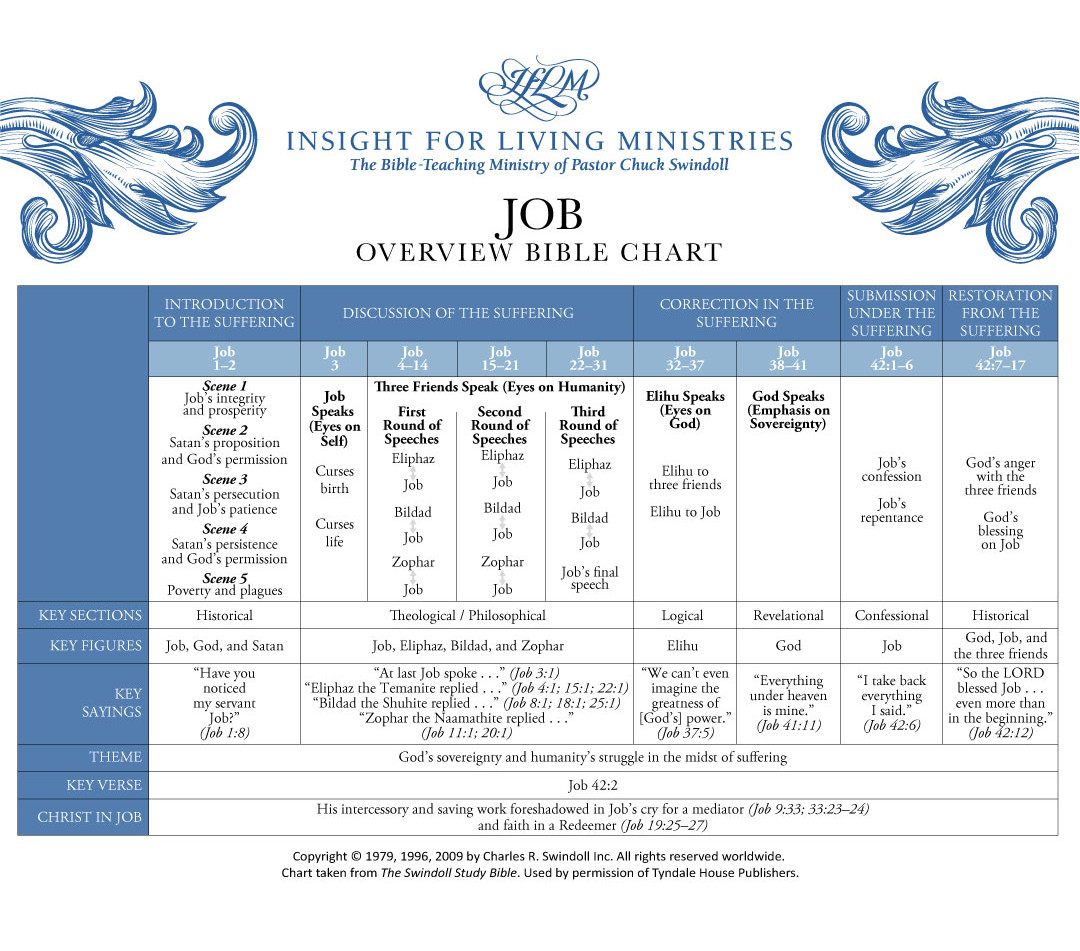
To determine the timeframe of Job's suffering, we must look at the specific language used in the Masoretic Text and early translations. The narrative is structured in three distinct movements: the prologue (prose), the dialogue (poetry), and the epilogue (prose). Each phase provides different hints regarding the passage of time.
The Initial Calamities (The "One Day" Events)
The first chapter of Job describes a series of catastrophic events that occur with staggering speed. Messengers arrive one after another, each reporting a new tragedy while the previous messenger is still speaking (Job 1:13–19). In a single day, Job loses his livestock, his servants, and all ten of his children. This phase of suffering is instantaneous and serves as the catalyst for the deeper, more prolonged physical and psychological suffering that follows.
The Period of Physical Affliction
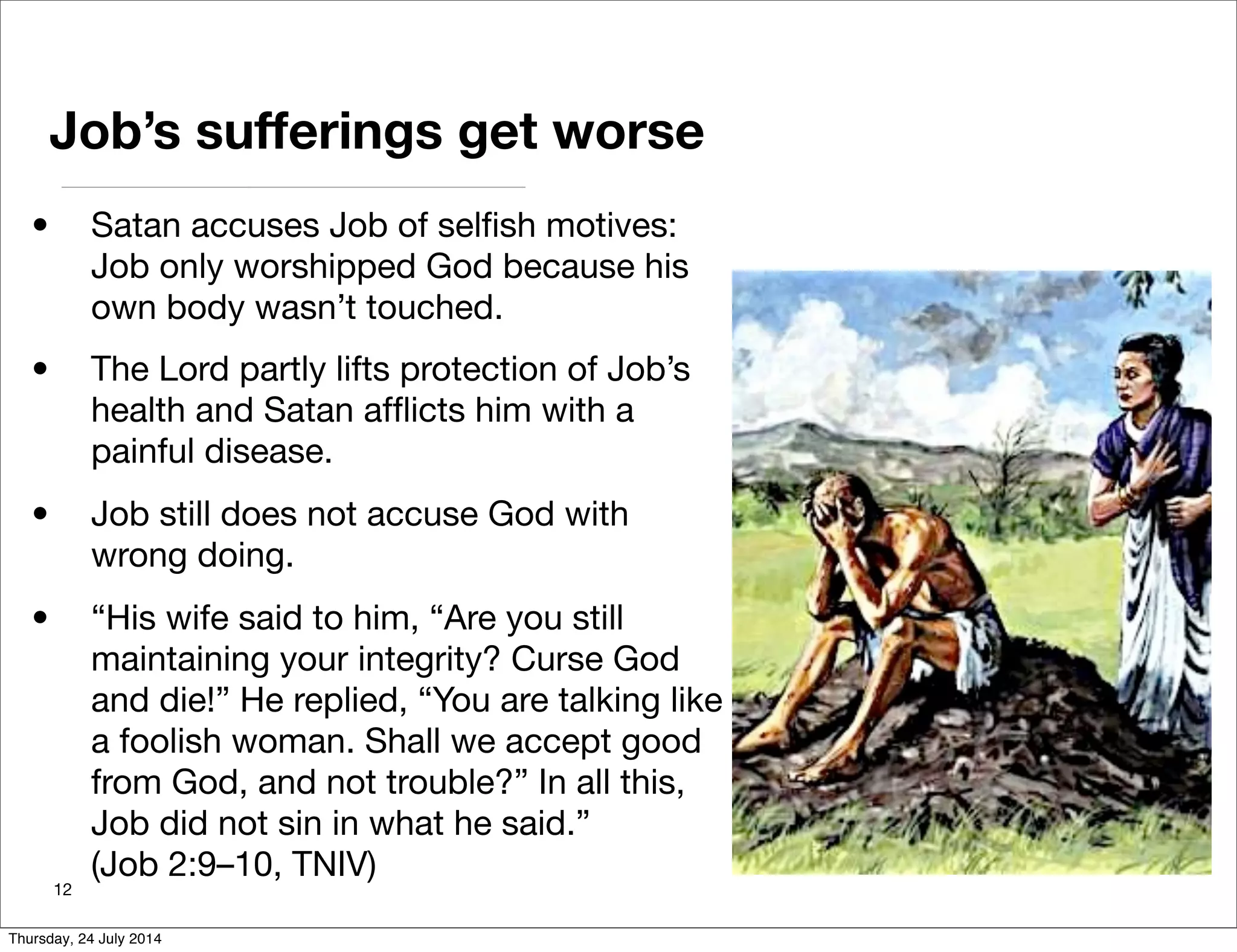
After Job passes the first "test" by refusing to curse God, a second trial begins. Job is struck with "loathsome sores" or boils from the sole of his foot to the crown of his head (Job 2:7). This marks the beginning of the "long" suffering.
The most definitive textual evidence for a prolonged period is found in Job 7:3, where Job laments:
"So I am allotted months of emptiness, and wearisome nights are appointed to me."
The use of the plural word "months" (Hebrew: yerach) indicates that the trial lasted for at least two months, and likely several more. The "wearisome nights" suggest a chronic condition that prevented rest, emphasizing that this was not a brief illness but a long-term state of physical and mental exhaustion.
The Seven Days of Silence
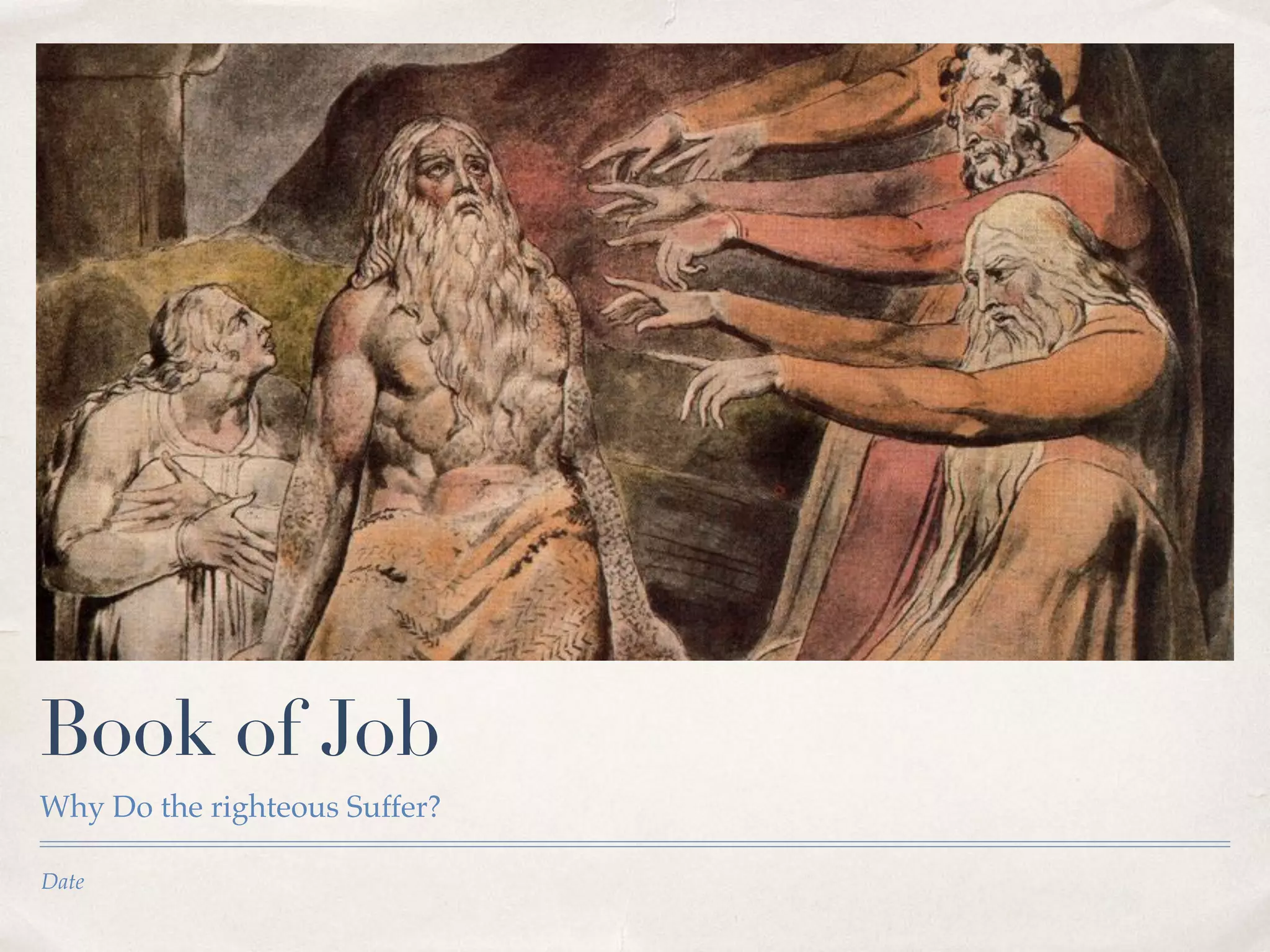
When Job's three friends—Eliphaz, Bildad, and Zophar—arrive to comfort him, they are so shocked by his disfigured appearance that they sit with him on the ground for seven days and seven nights without saying a word (Job 2:13). In ancient Jewish culture, seven days was the standard period of mourning (the shiva). This fixed period provides a clear marker that at least a week of silent suffering occurred before the famous cycles of dialogue even began.
Historical and Traditional Interpretations of the Timeline
Because the biblical text is not exhaustive regarding dates, various religious traditions have sought to fill the gaps using exegesis and oral history. These interpretations provide the most specific numbers available to scholars.
The Jewish Tradition: 12 Months
The most prominent tradition regarding the length of Job’s suffering comes from the Seder Olam Rabbah, a second-century CE Hebrew language chronology detailing the history of the world from the creation to the revolt of Bar Kokhba. Chapter 3 of this work explicitly states:
"The judgment of Job lasted twelve months."
This twelve-month period is often linked by commentators to the "year of punishment" or a full cycle of seasons, symbolizing a complete and total trial. Many rabbinic sources support this one-year timeframe, viewing it as a period of purification or a standard unit of divine judgment in traditional thought.
The Septuagint (LXX) and the Testament of Job
The Septuagint, the ancient Greek translation of the Hebrew Bible, contains an expanded postscript in the Book of Job. This postscript identifies Job with "Jobab," a king of Edom mentioned in Genesis 36:33. While it doesn't specify the duration of the suffering itself, it adds significant biographical detail, suggesting a much longer overall lifespan.
Furthermore, the Testament of Job, a pseudepigraphal work likely written between the 1st century BCE and the 1st century CE, offers a much more dramatic timeline. In this version of the story, Job’s physical plague lasts for seven years. While this is not considered canonical by Jewish or Christian authorities, it reflects a tradition that viewed Job’s endurance as a multi-year feat of patience.
Analyzing the Cycles of Dialogue
The majority of the Book of Job (Chapters 3 through 37) consists of three cycles of speeches between Job and his friends, followed by the speeches of Elihu. While these read as continuous dialogue, the complexity of the arguments suggests a significant passage of time.
- The Depth of Argument: The speeches are not brief exchanges; they are sophisticated, highly structured poems. This suggests that these conversations took place over several sittings or perhaps weeks.
- The Arrival of Elihu: Elihu appears toward the end of the dialogue. He is a younger man who had been listening to the entire exchange (Job 32:4). His presence implies that a "crowd" or a group of observers had gathered over time to witness the debate, which would typically happen over a prolonged period in an ancient Near Eastern "city gate" setting.
- Job’s Physical Deterioration: Throughout the speeches, Job describes his changing physical state—his bones cleaving to his skin, his breath becoming offensive to his wife, and his skin turning black and peeling (Job 19:17, 30:30). These are descriptions of a body undergoing long-term wasting, not a sudden infection.
Summary of Key Time Indicators
| Event Phase | Duration Clue | Source |
|---|---|---|
| Initial Losses | One single day | Job 1:13–19 |
| Silent Mourning | Seven days and nights | Job 2:13 |
| Physical Affliction | "Months of vanity" | Job 7:3 |
| Rabbinic Consensus | 12 months | Seder Olam Rabbah |
| Extracanonical Tradition | 7 years | Testament of Job |
| Post-Restoration Life | 140 years | Job 42:16 |
Why the Duration Remains Ambiguous
The ambiguity of time in the Book of Job is likely a deliberate literary and theological choice. If the author had stated that Job suffered for exactly 42 days or 3 months, the story might be treated as a historical anomaly rather than a universal meditation on human pain.
Universalizing Suffering
By omitting a specific calendar, the Book of Job allows any reader experiencing a "season" of suffering to identify with the protagonist. Whether a trial lasts for months or years, the psychological experience of "months of vanity" remains the same. The focus is shifted from the quantity of time to the quality of the experience—the feeling that time has slowed down and that the "wearisome nights" will never end.
The Contrast with Restoration
The brevity of the suffering (whether one year or seven) is meant to be contrasted with the length of Job’s restoration. The epilogue in Job 42:16 states that Job lived for 140 years after his trials were over. He lived to see four generations of his descendants. In the grand scheme of his life, the period of suffering—though intense and life-altering—was a fraction of his total experience. This serves the theological point that God’s ultimate intention for the righteous is life and abundance, even if preceded by a period of severe testing.
Medical Perspectives on Job's Condition
While speculative, modern medical analyses of Job's symptoms often suggest conditions like Pemphigus foliaceus or a severe form of leishmaniasis. Historically, without modern treatment, such skin conditions would take months to progress through their most acute stages before either killing the host or entering a chronic, dormant phase. This biological reality aligns with the "months" mentioned in the text and the "12 months" cited in Jewish tradition.
Frequently Asked Questions
Did Job suffer for 40 days like Jesus in the desert?
There is no textual evidence in the Book of Job to support a 40-day duration. While "40" is a common biblical number for testing (such as Noah’s rain or Israel’s wandering), the Book of Job explicitly points to "months," making it longer than a 40-day period.
How old was Job when his suffering began?
The Bible does not state his age at the start. However, since his ten children were old enough to have their own homes and hold feasts (Job 1:4), Job was likely at least in his 50s or 60s. Since he lived 140 years after the trial, his total age was likely around 200–210 years, placing him in the patriarchal age (similar to Abraham or Isaac).
Did Job’s friends stay the whole time?
The text suggests that the three friends arrived after hearing of Job's trouble and stayed through the silent week and the subsequent dialogue cycles. It is widely understood that they remained present for the bulk of his most acute suffering until God spoke from the whirlwind.
Was the "One Day" of loss literal?
In the context of the prologue's prose, the "one day" is presented as a literal, rapid-fire sequence. This highlights the "shock and awe" nature of Job's testing—where his entire world was dismantled in the time it takes for the sun to set.
How many children did Job have after his suffering?
After his restoration, Job had seven more sons and three more daughters (Job 42:13), exactly matching the number he had lost. This "replacement" is often viewed as part of the "double portion" Job received, as he still "had" his first ten children in the afterlife, effectively doubling his family.
Final Recommendation for Students of Job
When studying the timeline of the Book of Job, focus less on finding a specific date and more on the progression of the trial. Recognize that the initial trauma was sudden, the silent mourning lasted a week, and the physical/philosophical struggle lasted for several months (or a year, according to tradition). For those using the text for personal or pastoral reflection, the "months of vanity" in Job 7:3 serves as the most reliable scriptural anchor for understanding the duration of his pain.
Image Gallery