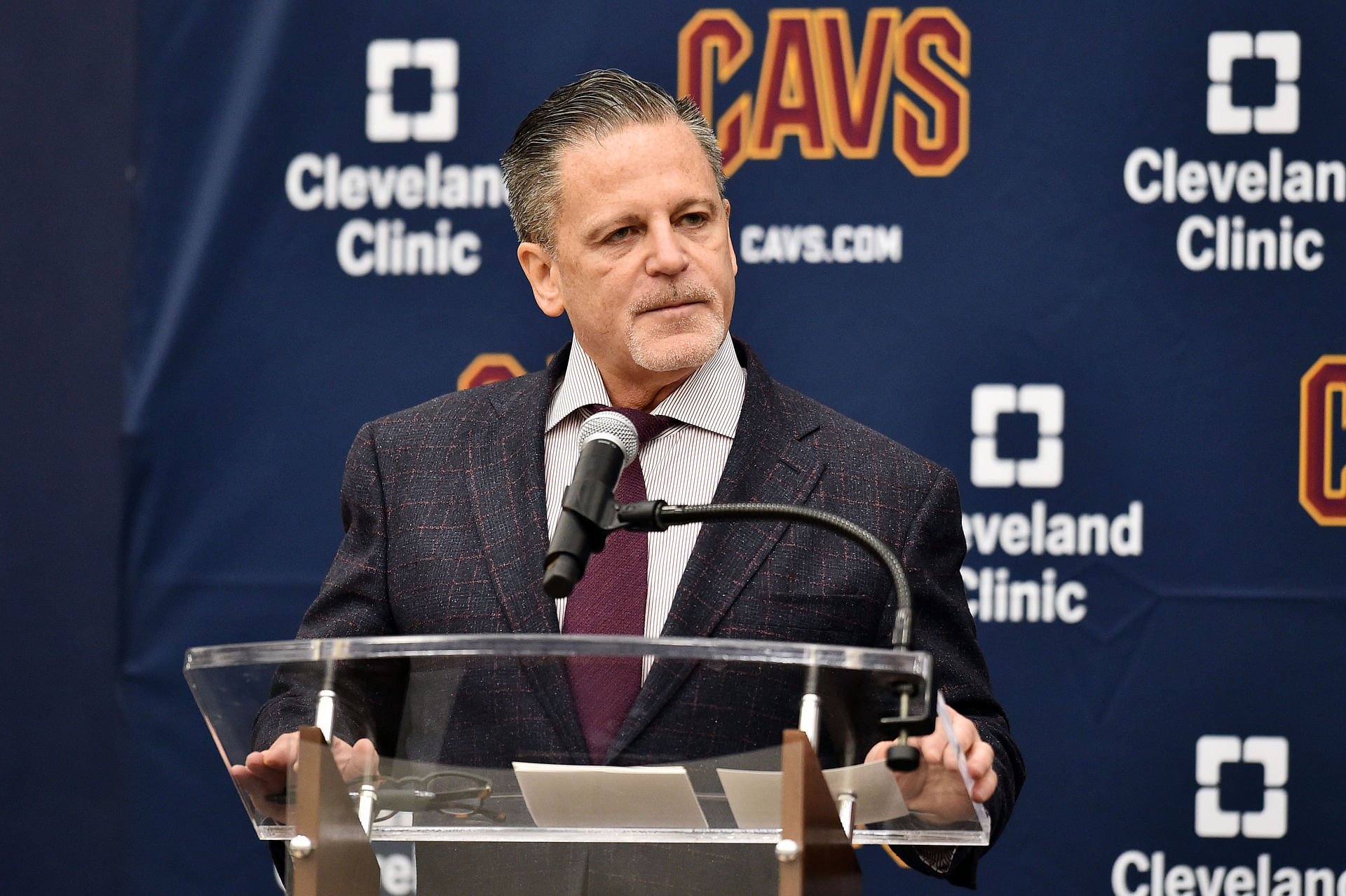
Why Dan Gilbert Owner of the Cleveland Cavaliers Matters to Investors
Dan Gilbert’s influence as the owner of the Cleveland Cavaliers transcends sports, serving as a bellwether for investors interested in the nexus of private equity, urban development, and fintech scalability. By leveraging his success w...
Dan Gilbert’s influence as the owner of the Cleveland Cavaliers transcends sports, serving as a bellwether for investors interested in the nexus of private equity, urban development, and fintech scalability. By leveraging his success with Rocket Mortgage and his aggressive investment in the Rock Family of Companies, Gilbert provides a blueprint for how institutional-grade discipline transforms distressed assets into catalysts for broader capital appreciation and regional economic growth.
Contents
The Intersection of Sports Ownership and Real Estate Value
For the modern investor, the Cleveland Cavaliers are not merely a sports franchise; they represent the anchor of a significant real estate and hospitality ecosystem. When Dan Gilbert acquired the team in 2005, his intent was never siloed within the confines of basketball operations. Instead, the team functioned as the cornerstone of a "district strategy."
Investors look at Gilbert’s model because it demonstrates the "Stadium Effect" in practice. By controlling the arena and investing heavily in the surrounding urban infrastructure in downtown Cleveland, Gilbert effectively increased the valuation of his own real estate holdings. This integrated approach minimizes the volatility often found in pure-play professional sports investments. For investors, this serves as a case study in how to leverage "trophy assets" to de-risk broader urban development projects. When evaluating similar opportunities, professionals examine whether an owner has the capital stack and the long-term vision to own the environment around the asset, not just the asset itself.
Rocket Mortgage and the FinTech Catalyst
Dan Gilbert’s primary source of wealth—Rocket Mortgage (formerly Quicken Loans)—matters to investors because it redefined the scalability of high-friction financial services. By digitizing the mortgage process, Gilbert pioneered the model of "platform-based lending."
Investors analyze his ownership of the Cavaliers through the lens of his fintech successes because it highlights his methodology: take an opaque, inefficient, and slow-moving industry and apply high-velocity technology and consumer-centric marketing. This same philosophy is applied to the Cavaliers, where data analytics, fan engagement technology, and integrated ticketing/hospitality systems are utilized to maximize average revenue per user (ARPU). For an investor, Gilbert is the embodiment of the "operator-owner" who insists on technological transformation at every level of his portfolio.
Capital Allocation and the Rock Family of Companies
The Rock Family of Companies, the umbrella entity for Gilbert’s business interests, functions similarly to a private equity firm. Investors monitor this portfolio because it provides insight into how a centralized leadership team manages diverse assets, ranging from digital services to commercial real estate.
The importance here lies in diversification and hedging. While the sports franchise serves as a high-visibility marketing engine, the ancillary businesses provide steady cash flow and technological infrastructure. Investors who follow Gilbert are often looking for clues on how to build a resilient balance sheet. His strategy highlights three key areas:
- Vertical Integration: Owning the service providers that support the core business.
- Geographic Concentration: Focusing investment in specific municipalities to maximize political and economic influence.
- Brand Equity: Using high-profile ventures like the NBA to drive trust in consumer-facing financial products.
Comparison of Ownership Models in Professional Sports
Investors often compare the "Gilbert Model" against other popular sports ownership structures to determine which provides the best long-term risk-adjusted return.
| Model Type | Primary Driver | Risk Profile | Investment Focus |
|---|---|---|---|
| The Gilbert Model | Urban/Tech Ecosystem | Moderate-High | Real Estate & Fintech Synergy |
| Institutional/Hedge Fund | Media Rights & ROI | Low-Moderate | Quarterly Profitability |
| State-Backed Sovereign | Geopolitical Soft Power | Low | Cultural Impact & Prestige |
| Legacy Family Office | Generational Wealth | Low | Long-Term Capital Preservation |
The Gilbert Model is distinct because it prioritizes active operational management and urban revitalization. While an institutional investor might view the Cavaliers as a line item to be optimized for media rights, Gilbert views the team as a platform to drive foot traffic, attract corporate tenants, and build a localized brand that bolsters his mortgage business.
The Role of Strategic Urban Revitalization
Investors who track Dan Gilbert often focus on his approach to urban renewal as an investment strategy. By pouring capital into downtown Cleveland, he successfully created an environment where his corporate employees—specifically those at Rocket Mortgage—would want to live and work.
This is a critical lesson for investors in commercial real estate: the "talent-first" investment approach. By creating a lifestyle-focused urban core around his business interests, Gilbert essentially subsidized his company’s ability to attract top-tier tech talent, a commodity that is otherwise difficult to retain in mid-sized markets. This strategy turns the franchise owner into a city-builder, creating a defensive moat around his investments that competitors in other cities struggle to replicate.
Potential Risks and Limitations
While the Gilbert approach offers a compelling roadmap, investors must weigh the potential pitfalls.
Over-Concentration Risk
The most significant risk is geographic concentration. By tying his sports ownership so closely to the success of downtown Cleveland, Gilbert has created a portfolio that is hypersensitive to the regional economic health of that specific area. An investor looking to replicate this strategy must have an exit plan for when municipal incentives or local economic conditions shift.
The Cyclicality of Professional Sports
Sports teams are subject to the vagaries of professional leagues, salary caps, and, crucially, performance. While the arena itself generates steady revenue, the value of the team is intrinsically tied to its brand, which can suffer during prolonged periods of poor performance. Investors must distinguish between the asset's "utility value" (the real estate) and its "speculative value" (the team brand).
Frequently Asked Questions
Why does Dan Gilbert’s background in finance make his sports ownership unique? Gilbert’s financial background means he treats the Cavaliers as a performance-driven company. He applies data-heavy metrics to decision-making, which contrasts with traditional owners who might manage teams based on legacy or personal interest.
How does owning the Cavaliers help Gilbert’s mortgage business? The Cavaliers provide massive brand visibility and local community engagement, which creates trust and "top-of-mind" awareness for Rocket Mortgage among consumers, particularly in the Midwest region.
What should investors look for when mimicking the "Gilbert Model"? Investors should look for assets that can be surrounded by a "micro-economy." If you can control the surrounding real estate, the entertainment venue, and the services provided to the end-user, you can capture value at every stage of the transaction.
Is it common for sports owners to be so active in real estate development? While becoming more common, Gilbert was an early adopter of the "stadium-anchored district" model. Many modern owners now look at his successes as the standard for maximizing the land-use efficiency of urban stadiums.
Strategic Conclusion
Dan Gilbert’s importance to investors lies in his ability to collapse the distance between digital financial services and physical assets. He serves as a high-profile example of how to build a self-reinforcing business ecosystem. For those analyzing his moves, the takeaway is clear: successful modern ownership is not about the asset itself, but about the ecosystem built around the asset to drive utility, retention, and brand loyalty. Investors should focus on opportunities that offer this multi-layered synergy rather than singular, isolated returns.
Image Gallery