Fixed Income Investment Types Overview and Key Considerations
Fixed income investments serve as foundational components of a well-balanced portfolio by providing predictable periodic income, capital preservation, and lower volatility compared to equities. This overview examines major debt securit...
Fixed income investments serve as foundational components of a well-balanced portfolio by providing predictable periodic income, capital preservation, and lower volatility compared to equities. This overview examines major debt security categories—such as government bonds, municipal securities, and corporate debt—while analyzing crucial factors like interest rate risk, credit quality, yield dynamics, and portfolio allocation strategies for investors navigating modern financial markets.
Contents
Understanding Fixed Income: Mechanics and Core Purposes
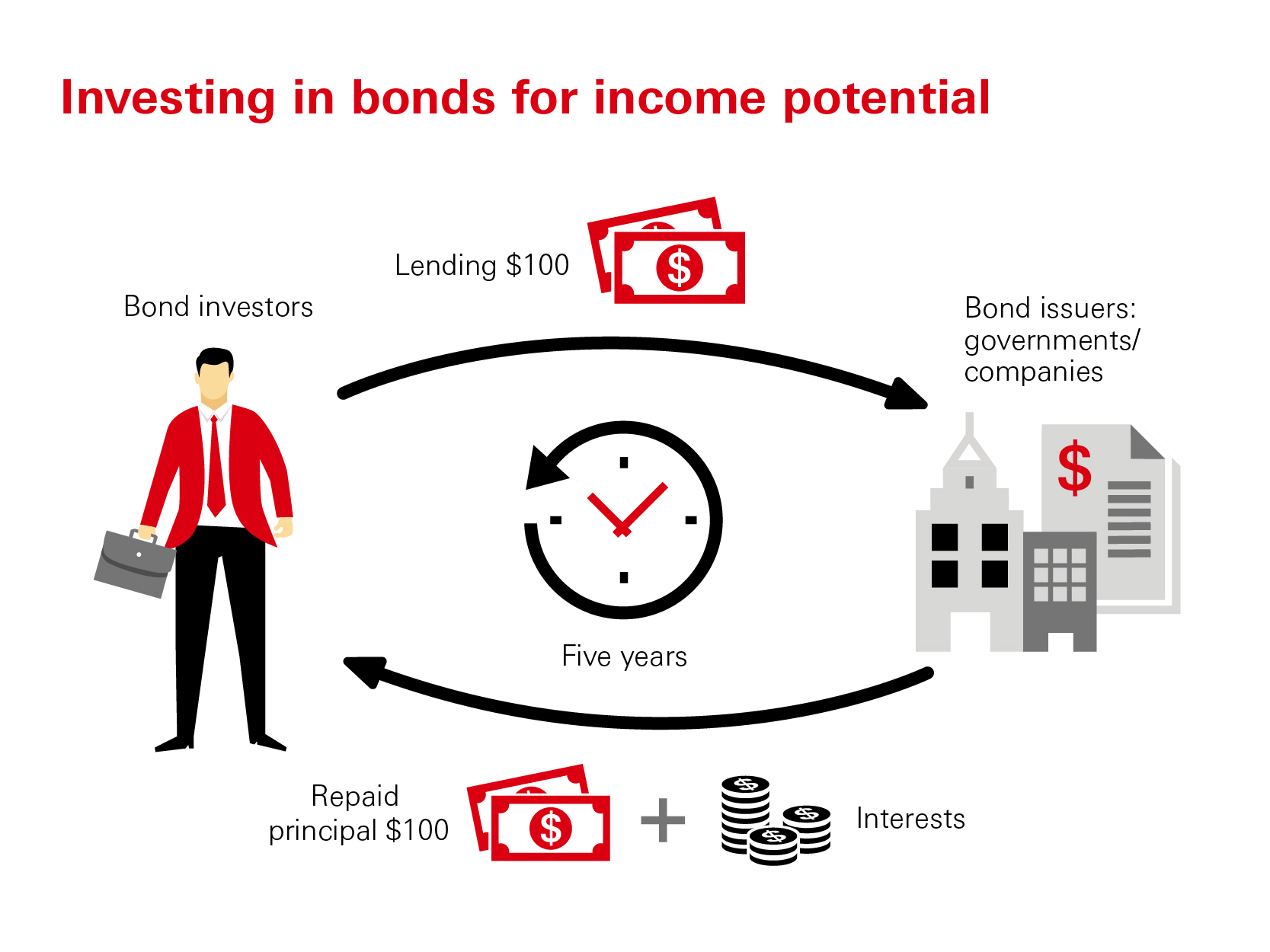
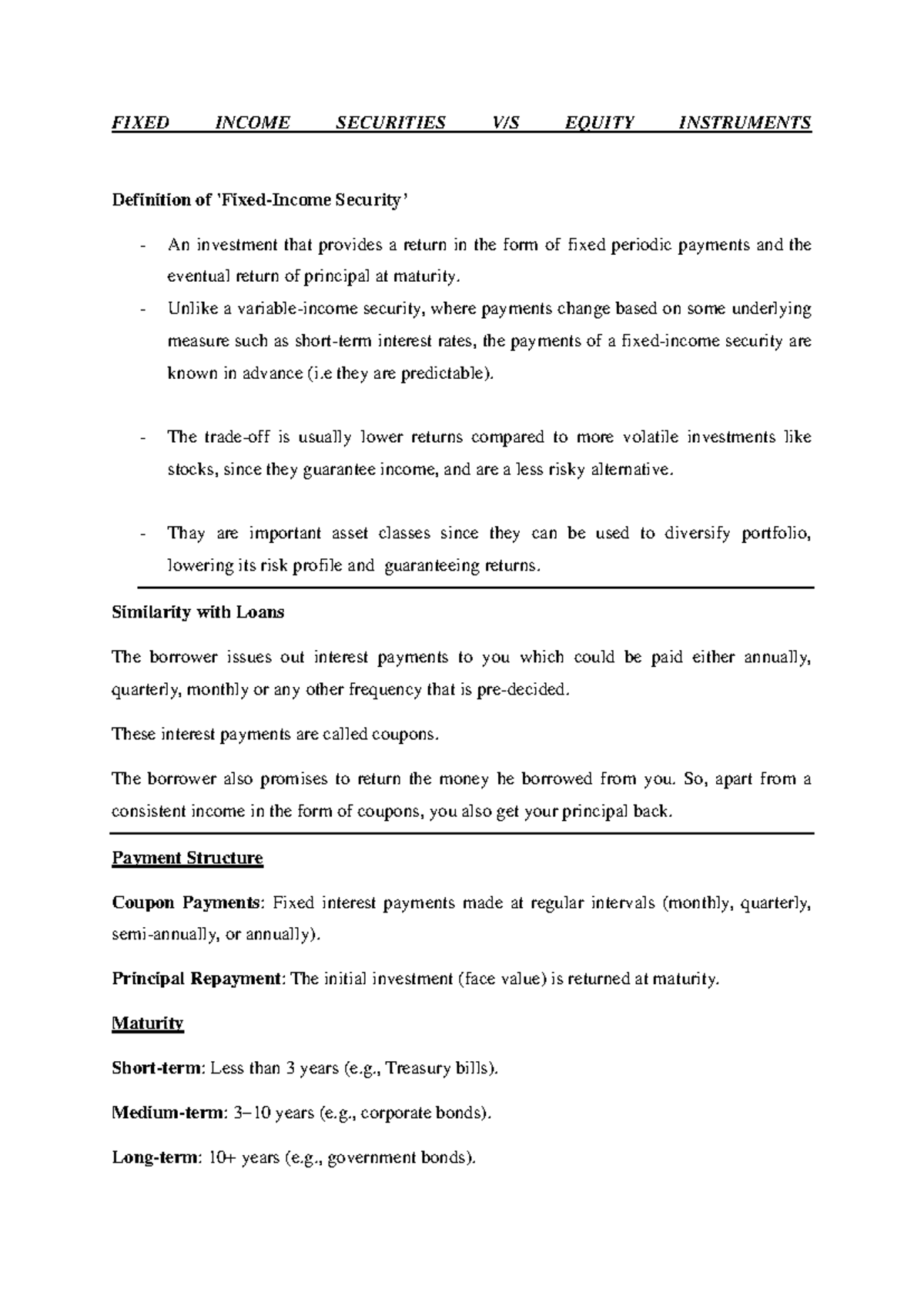
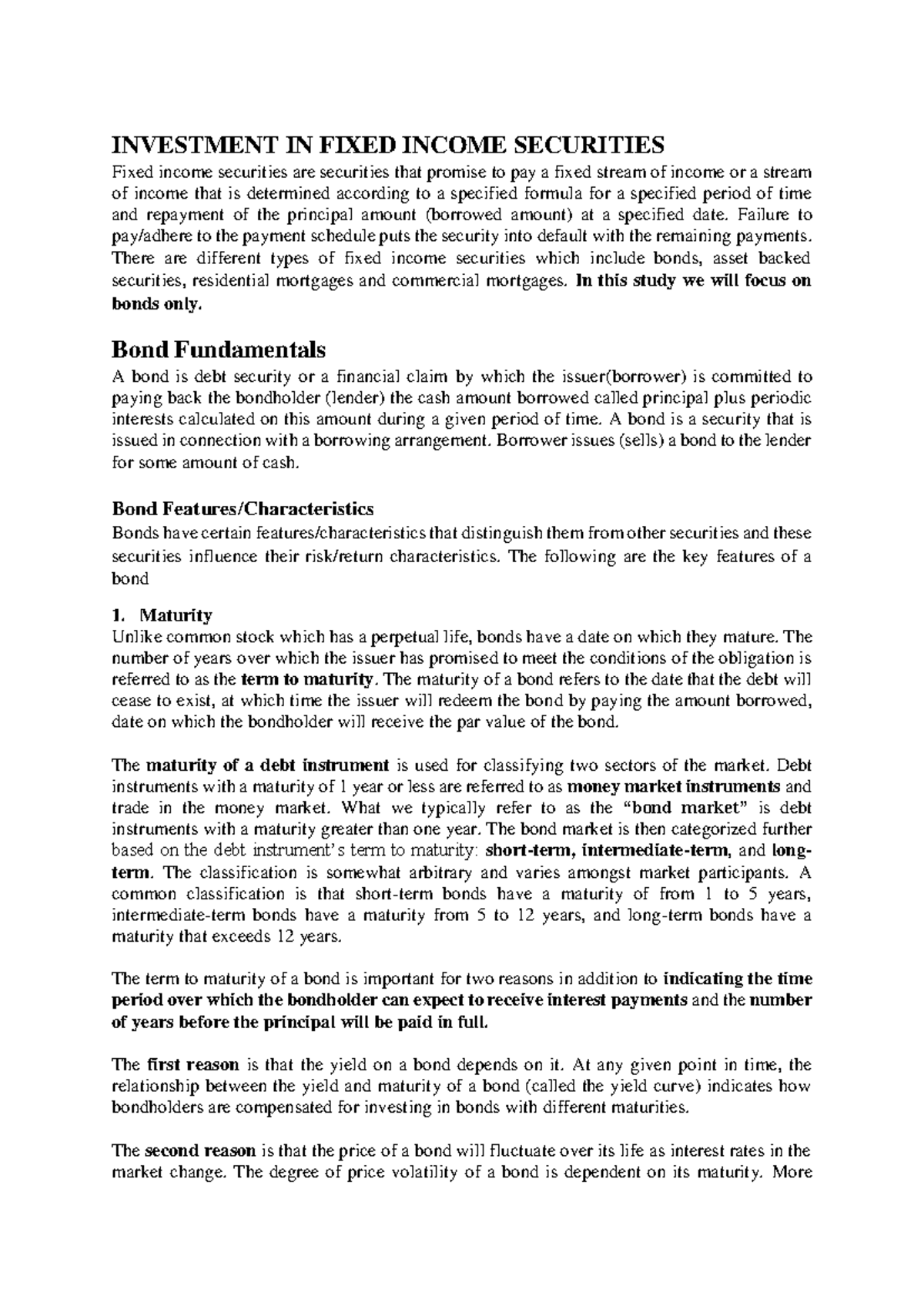
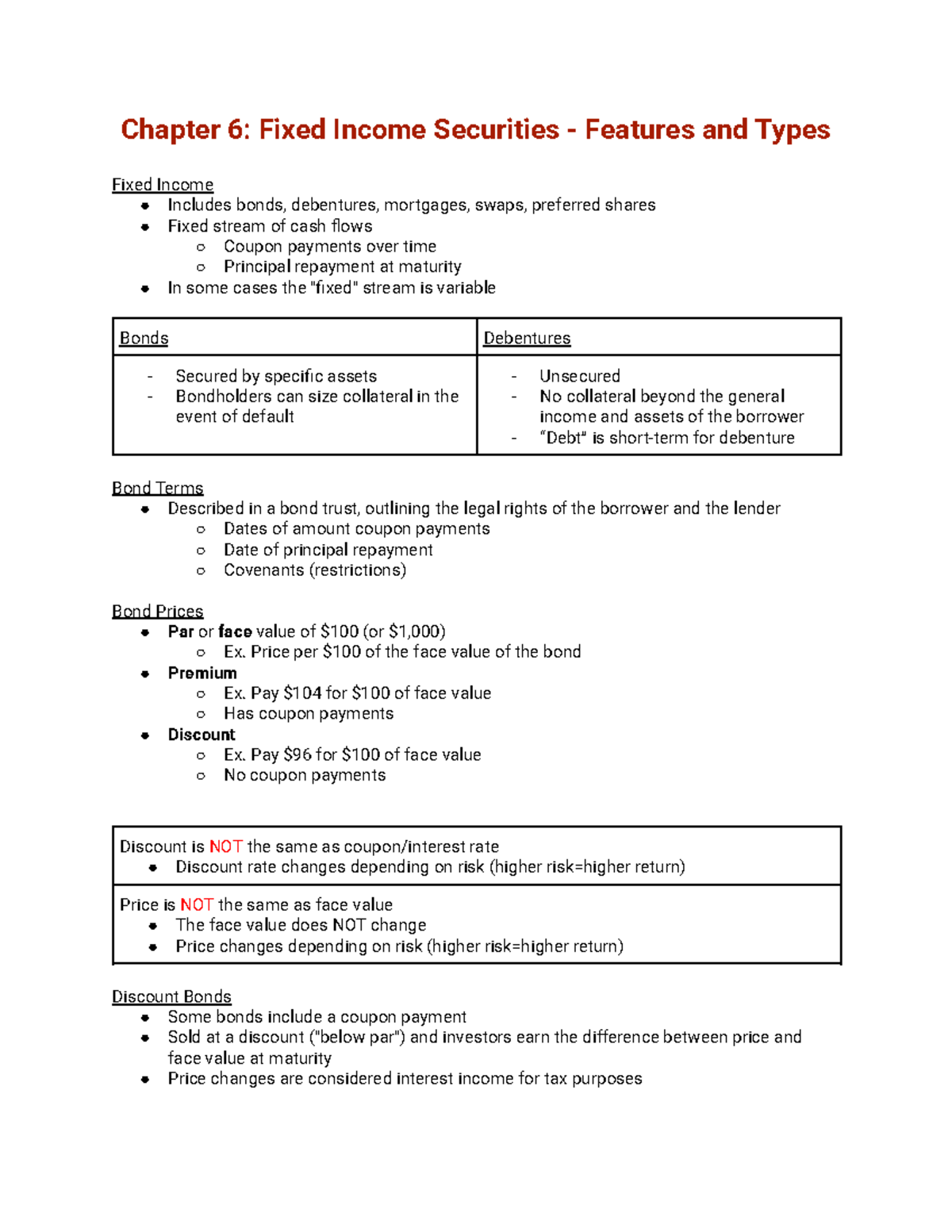
At its core, a fixed income investment represents a loan made by an investor to an entity, which can be a government, a municipality, or a corporation. In exchange for this capital, the borrower promises to make regular interest payments—known as coupon payments—over a specified timeframe and to return the principal amount, or par value, when the security matures. Unlike equities, which confer ownership and a variable claim on earnings, fixed income instruments establish a senior legal obligation that must be fulfilled before shareholders receive dividends.
The primary appeal of fixed income lies in predictability. Investors rely on these cash flows to meet recurring financial obligations, fund retirement lifestyles, or balance the higher risk profiles of growth-oriented assets. However, fixed income is not entirely risk-free. Economic shifts, inflationary pressures, and changes in central bank monetary policies can significantly alter the real purchasing power of fixed payments and the secondary market value of the underlying securities. Understanding these dynamics requires examining the distinct categories of debt instruments available in the marketplace.
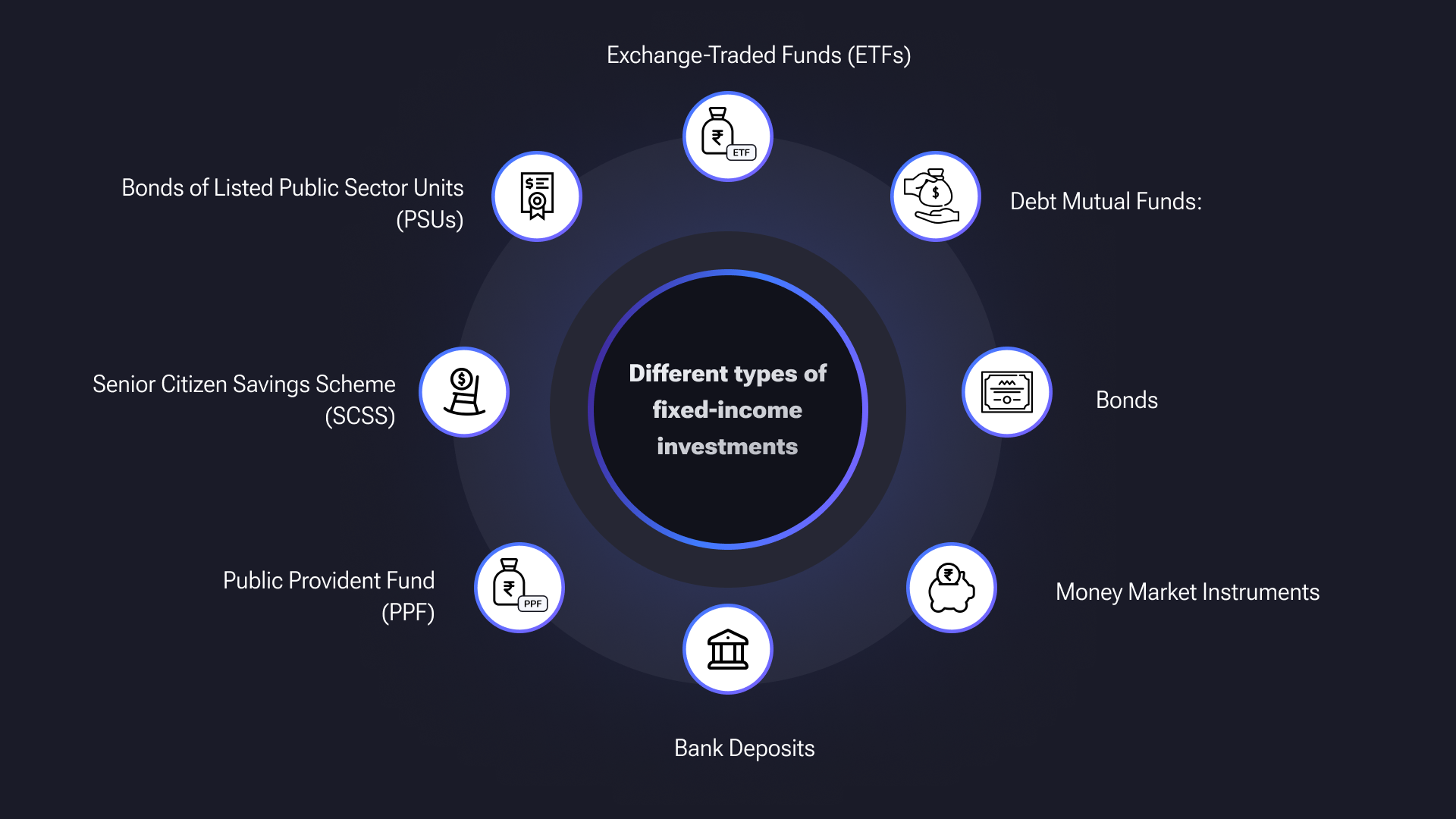
Major Fixed Income Investment Types
Different issuers structure their debt obligations to meet specific borrowing needs, resulting in a diverse ecosystem of fixed income products. Each category carries distinct risk-reward profiles, tax advantages, and structural characteristics.
U.S. Treasury Securities
Issued by the federal government, U.S. Treasuries are backed by the full faith and credit of the United States, making them virtually free of default risk. They serve as the benchmark for global interest rates and are categorized by their maturities:
- Treasury Bills (T-Bills): Short-term instruments maturing in one year or less. They do not pay regular coupons; instead, they are sold at a discount to their par value, with the investor receiving the full face value at maturity.
- Treasury Notes (T-Notes): Intermediate-term securities with maturities ranging from two to ten years. They pay semi-annual interest coupons.
- Treasury Bonds (T-Bonds): Long-term instruments with maturities extending up to thirty years, also featuring semi-annual coupon payments.
- Treasury Inflation-Protected Securities (TIPS): Specialized bonds whose principal value adjusts upward with inflation (as measured by the Consumer Price Index) and downward with deflation, ensuring that the purchasing power of the principal is preserved.
Municipal Bonds
Municipal bonds, or "munis," are debt securities issued by state and local governments, agencies, or authorities to finance public projects such as schools, highways, water treatment facilities, and hospitals. A primary advantage of municipal bonds is their tax status: interest income is typically exempt from federal income taxes, and often from state and local taxes if the investor resides in the issuing state. Municipalities generally issue two main types of bonds:
- General Obligation (GO) Bonds: Backed by the full faith, credit, and taxing power of the issuing municipality, making them secure choices backed by tax revenues.
- Revenue Bonds: Secured by specific revenue streams generated by the project the bond is funding, such as toll roads, airports, or utility systems.
Corporate Bonds
Corporations issue bonds to raise capital for expansion, research and development, acquisitions, or refinancing existing debt. Because corporations carry higher default risk than sovereign entities, they typically offer higher yields to compensate investors. Corporate debt is broadly segmented into two credit tiers:
- Investment-Grade Bonds: Issued by financially stable companies with high credit ratings (typically BBB-/Baa3 or higher by major agencies like Standard & Poor's, Moody's, and Fitch). These offer moderate yields with lower default probability.
- High-Yield (Junk) Bonds: Issued by companies with lower credit ratings or higher leverage. These instruments offer substantially higher coupon rates to attract investors willing to assume greater credit risk.
Agency Securities and Certificates of Deposit (CDs)
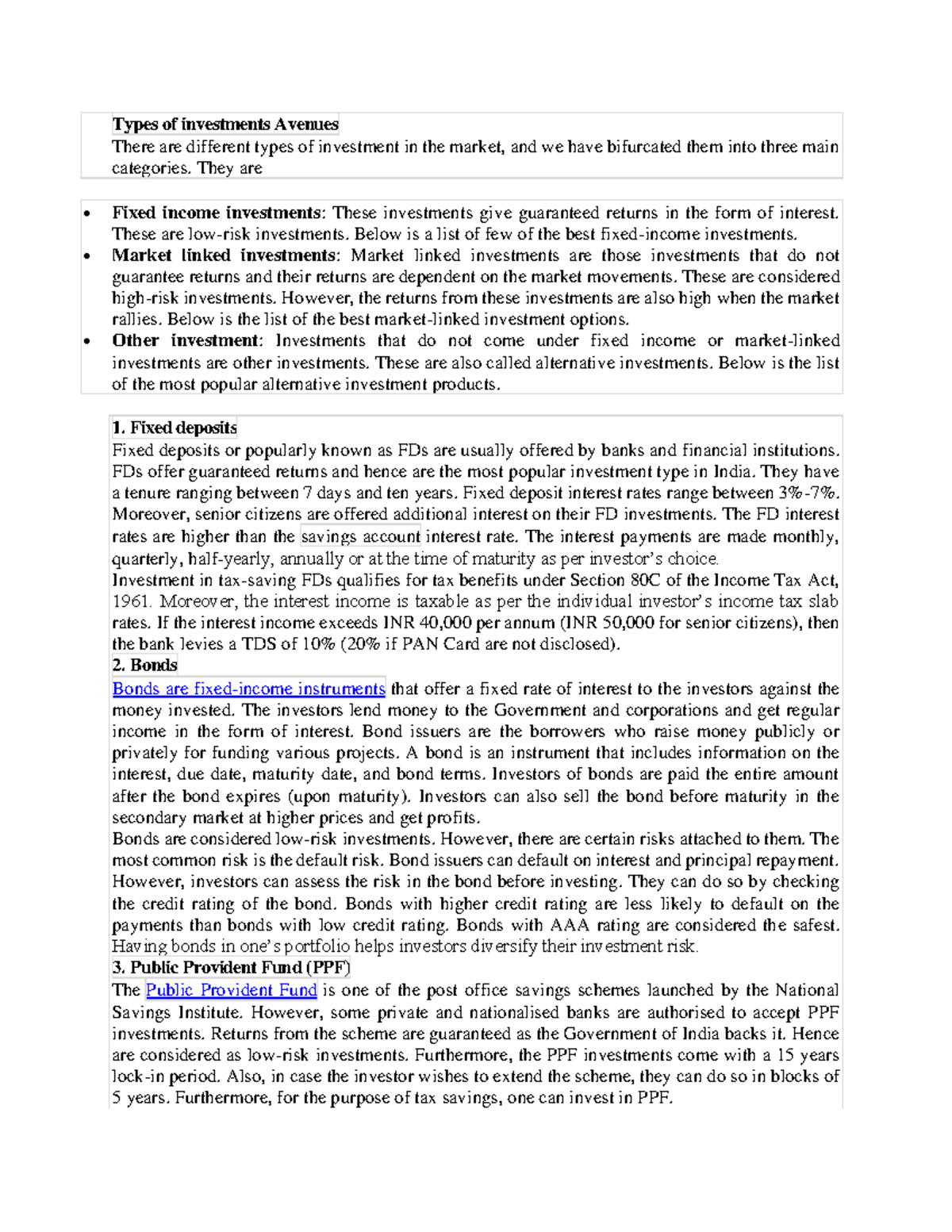
Government-sponsored enterprises (GSEs) like Fannie Mae and Freddie Mac issue agency securities to support specific sectors, primarily housing finance. While not direct obligations of the U.S. government, they carry implied backing that keeps their yields slightly above Treasuries. Additionally, Certificates of Deposit (CDs) offered by banks function similarly to fixed income instruments, providing a fixed interest rate over a set term and enjoying federal deposit insurance up to statutory limits.
| Fixed Income Type | Issuer | Default Risk | Tax Advantages | Typical Use Case |
|---|---|---|---|---|
| U.S. Treasuries | Federal Government | Lowest (Sovereign) | State/Local tax exempt | Capital preservation, benchmark safe haven |
| Municipal Bonds | State & Local Governments | Low to Moderate | Federal (and often state) tax-exempt | Tax-advantaged income for high earners |
| Investment-Grade Corporate | Corporations | Moderate | Fully taxable | Enhanced yield with manageable credit risk |
| High-Yield Corporate | Corporations (Higher Risk) | Higher | Fully taxable | Aggressive income generation, equity-like returns |
Key Considerations and Risks in Fixed Income Investing
Evaluating fixed income products requires looking beyond headline yield figures. Several interconnected economic and structural factors influence the actual performance and safety of debt portfolios.
Interest Rate Risk and Duration
Interest rate risk is the potential for investment values to decline when market interest rates rise. There is an inverse relationship between bond prices and interest rates: when new bonds enter the market with higher coupon rates, existing bonds trading at lower rates lose secondary market appeal and drop in price.
Duration is the mathematical measure of a bond's price sensitivity to interest rate changes, expressed in years. A bond or bond fund with a duration of seven years will theoretically see its market value drop by approximately 7% if interest rates rise by 1%. Understanding duration helps investors align their portfolio sensitivity with their specific investment horizons.
Credit Risk and Ratings
Credit risk is the possibility that the issuer will default on its obligation to make timely interest payments or return the principal at maturity. Rating agencies evaluate issuer balance sheets, cash flow stability, and debt loads to assign letter grades. While investment-grade bonds provide steady reliability, high-yield bonds require rigorous fundamental credit analysis because economic downturns disproportionately affect financially strained corporations.
Inflation Risk (Purchasing Power Risk)
Fixed income investments pay fixed nominal cash flows. If the rate of inflation outpaces the yield of a bond, the investor's real purchasing power declines over time. For example, a 10-year bond yielding 3% in an environment where inflation averages 4% results in a negative real return. Investors often utilize TIPS or short-duration instruments to mitigate the corrosive effects of unexpected inflation spikes.
Liquidity and Reinvestment Risk
Liquidity risk refers to the ease with which an investor can buy or sell a security in the secondary market without causing a drastic price movement. While U.S. Treasuries are exceptionally liquid, certain corporate bonds or smaller municipal issues trade infrequently, potentially incurring higher transaction costs. Reinvestment risk arises when short-term bonds mature or high-coupon bonds are called by the issuer, forcing the investor to reinvest capital in a lower interest rate environment.
Portfolio Strategies and Implementation
Constructing an effective fixed income allocation involves blending different instruments to match individual liquidity needs, tax brackets, and risk tolerances. Two primary structural strategies govern professional portfolio management:
- Laddering: Purchasing bonds with staggered maturity dates (e.g., maturing every year for five years). As each bond matures, the principal is reinvested in a new long-term bond at the end of the ladder. This strategy smooths out interest rate fluctuations, provides regular liquidity, and captures varying yield curve environments.
- Barbell Strategy: Allocating capital to short-term and long-term maturities while bypassing intermediate bonds. This approach captures the high current income of long-term debt while maintaining liquidity through short-term holdings.
Investors must also weigh the trade-offs of holding individual bonds versus bond mutual funds or Exchange-Traded Funds (ETFs). Individual bonds held to maturity guarantee the return of principal (barring default), whereas bond funds hold a continuously rolling portfolio of debt that lacks a fixed maturity date, exposing the fund's net asset value to ongoing interest rate fluctuations.
Frequently Asked Questions
What happens to my bond if interest rates rise after I buy it?
If you hold an individual bond to maturity, you will continue to receive your scheduled semi-annual coupon payments and your full principal back, regardless of where market interest rates go. However, if you need to sell the bond on the secondary market before maturity, its market price will likely have dropped to compensate buyers for the lower coupon rate compared to newly issued debt.
Are municipal bond yields always better than taxable corporate bonds?
Not necessarily. To determine whether a municipal bond provides a better return than a taxable corporate bond, investors calculate the tax-equivalent yield. This formula compares the tax-free municipal yield against your specific marginal income tax bracket. For investors in lower tax brackets, taxable corporate bonds or Treasuries often provide higher after-tax returns than municipal debt.
What is the difference between a bond's coupon rate and its yield to maturity?
The coupon rate is the fixed annual interest payment expressed as a percentage of the bond's par value, set when the bond is issued. The Yield to Maturity (YTM) is a more comprehensive metric that accounts for the current market price of the bond, the remaining coupon payments, and the capital gain or loss realized when the bond reaches its par value at maturity.
How does credit risk affect bond pricing?
When rating agencies downgrade an issuer's creditworthiness, or when market sentiment suggests a higher probability of default, investors demand a higher yield to offset the added risk. Because bond prices move inversely to yields, a deterioration in credit quality causes the market price of existing bonds to fall immediately.
Can fixed income investments lose money?
Yes. While fixed income is generally less volatile than equities, investors can lose money in several ways: through capital losses if they sell bonds before maturity in a rising-rate environment, through credit defaults where issuers fail to pay, or through negative real returns when inflation exceeds the investment yield.
Conclusion and Next Actions
Fixed income investments remain essential for capital preservation, income generation, and risk mitigation. Navigating this asset class successfully requires assessing how duration, credit quality, and tax implications align with your financial goals. Begin by reviewing your current asset allocation, evaluating your tax bracket to determine the viability of municipal securities, and considering a laddered maturity approach to manage interest rate exposure effectively.
Image Gallery