Comprehensive Guide to Credit Union Pre-Approval for Car Loans in 2026
Obtaining a credit union pre-approval for a car loan involves securing a conditional commitment for a specific loan amount and interest rate before visiting a dealership. This process establishes your budget, locks in competitive membe...
Obtaining a credit union pre-approval for a car loan involves securing a conditional commitment for a specific loan amount and interest rate before visiting a dealership. This process establishes your budget, locks in competitive member-only rates, and transforms you into a "cash buyer" during price negotiations, providing significant leverage over dealer-financed alternatives.
Contents
Why Choose a Credit Union for Your Auto Loan Pre-Approval?
As we navigate the financial landscape of 2026, credit unions continue to outpace traditional commercial banks in member satisfaction and interest rate competitiveness. Unlike banks, which are beholden to shareholders, credit unions are member-owned, not-for-profit cooperatives. This fundamental structure means that surplus earnings are returned to members in the form of lower loan rates, higher savings yields, and reduced fees.
When you seek a pre-approval from a credit union, you are tapping into a localized, community-focused ecosystem. Credit unions often provide more flexible underwriting criteria than large national banks. While a "big box" bank might rely solely on automated credit scoring algorithms, credit unions are frequently more willing to consider a member's overall history with the institution, making them an excellent choice for first-time buyers or those rebuilding their credit profiles.
Furthermore, credit unions are historically more transparent regarding their "buy-rate" (the actual interest rate the lender offers). In contrast, dealerships often add a "markup" to the interest rates provided by their partner lenders as a source of profit. By arriving at the lot with a credit union pre-approval in hand, you effectively bypass this hidden cost.
The Step-by-Step Process of Getting Pre-Approved
Securing a pre-approval is a proactive measure that should occur at least two to four weeks before you plan to purchase a vehicle. Following a systematic approach ensures that you have the necessary documentation and credit standing to secure the best possible terms.
1. Confirm or Establish Membership
The first prerequisite for a credit union car loan is membership. Most credit unions have specific "fields of membership," which might be based on your employer, your geographic location, your school, or your participation in certain associations. In 2026, many credit unions have expanded their digital footprints, allowing users to join through national advocacy groups for a small one-time fee. Once you are a member—usually requiring a small deposit into a share savings account—you can apply for a loan.
2. Review Your Credit Health
Before the credit union performs a "hard pull" on your credit report, you should review your own files. Under the Fair Credit Reporting Act, you are entitled to free disclosures from the major bureaus. Check for errors, such as incorrectly reported late payments or accounts that do not belong to you. A higher credit score directly correlates to a lower Annual Percentage Rate (APR), which can save you thousands of dollars over the life of a five-year loan.
3. Submit the Formal Application
The application process for a credit union pre-approval car loan is now largely digital. You will need to provide:
- Personal Identification: A valid driver’s license or government-issued ID.
- Proof of Income: Recent pay stubs, W-2 forms, or tax returns (especially for self-employed individuals).
- Employment History: Details of your current and previous employers.
- Financial Obligations: Information regarding your current rent or mortgage payments and other outstanding debts.
4. Receive and Verify Your Pre-Approval Letter
Once approved, the credit union will issue a pre-approval letter. This document is not just a "maybe"; it is a firm offer valid for a specific period—typically 30 to 60 days. It will state the maximum amount you can borrow, the interest rate, and the required down payment. It may also include "stipulations," such as a requirement that the vehicle be no more than seven years old or have fewer than 100,000 miles.
Understanding the Difference: Pre-Approval vs. Pre-Qualification
It is a common mistake to use the terms "pre-qualification" and "pre-approval" interchangeably, but in the realm of 2026 auto lending, the distinction is critical.
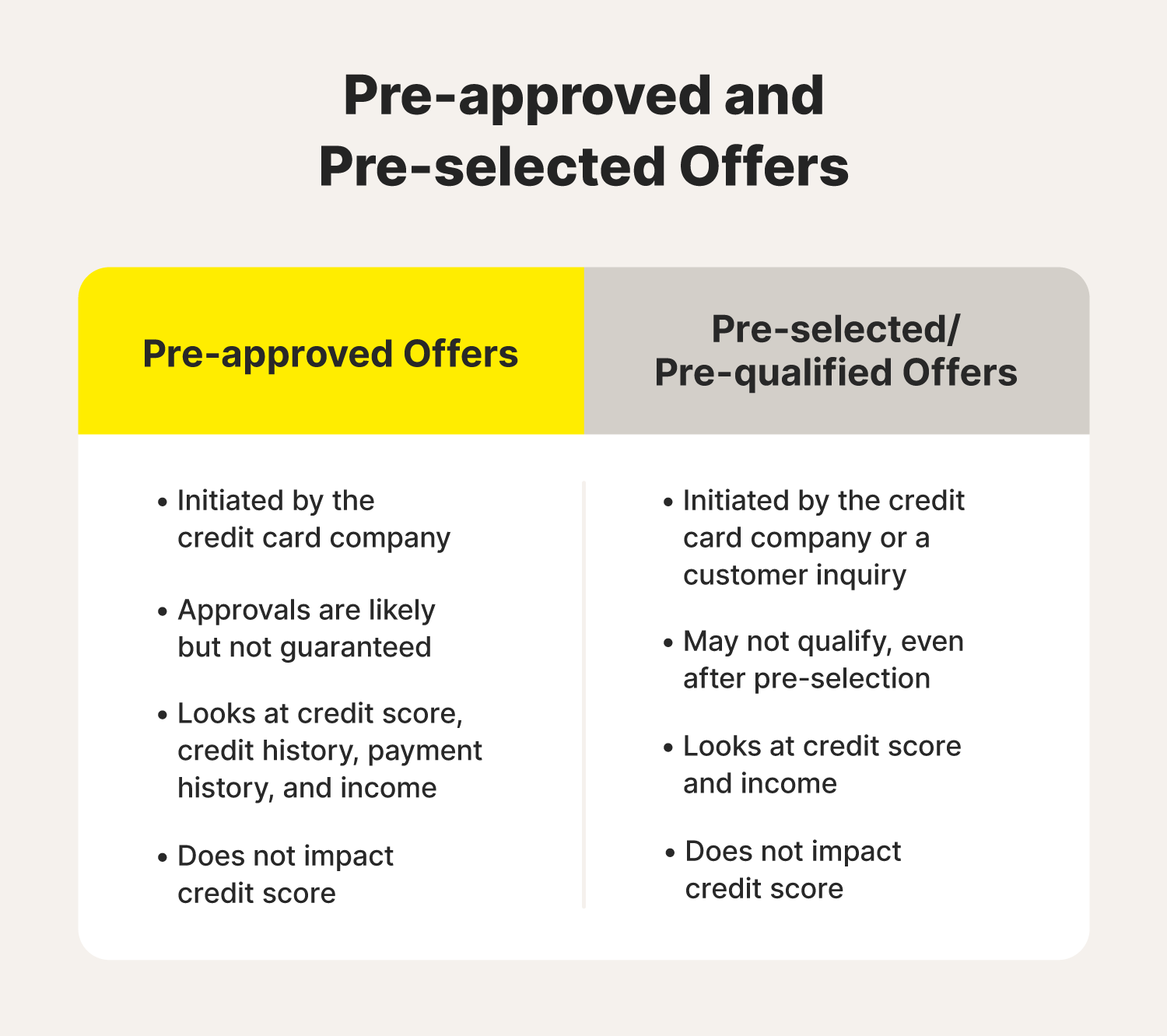
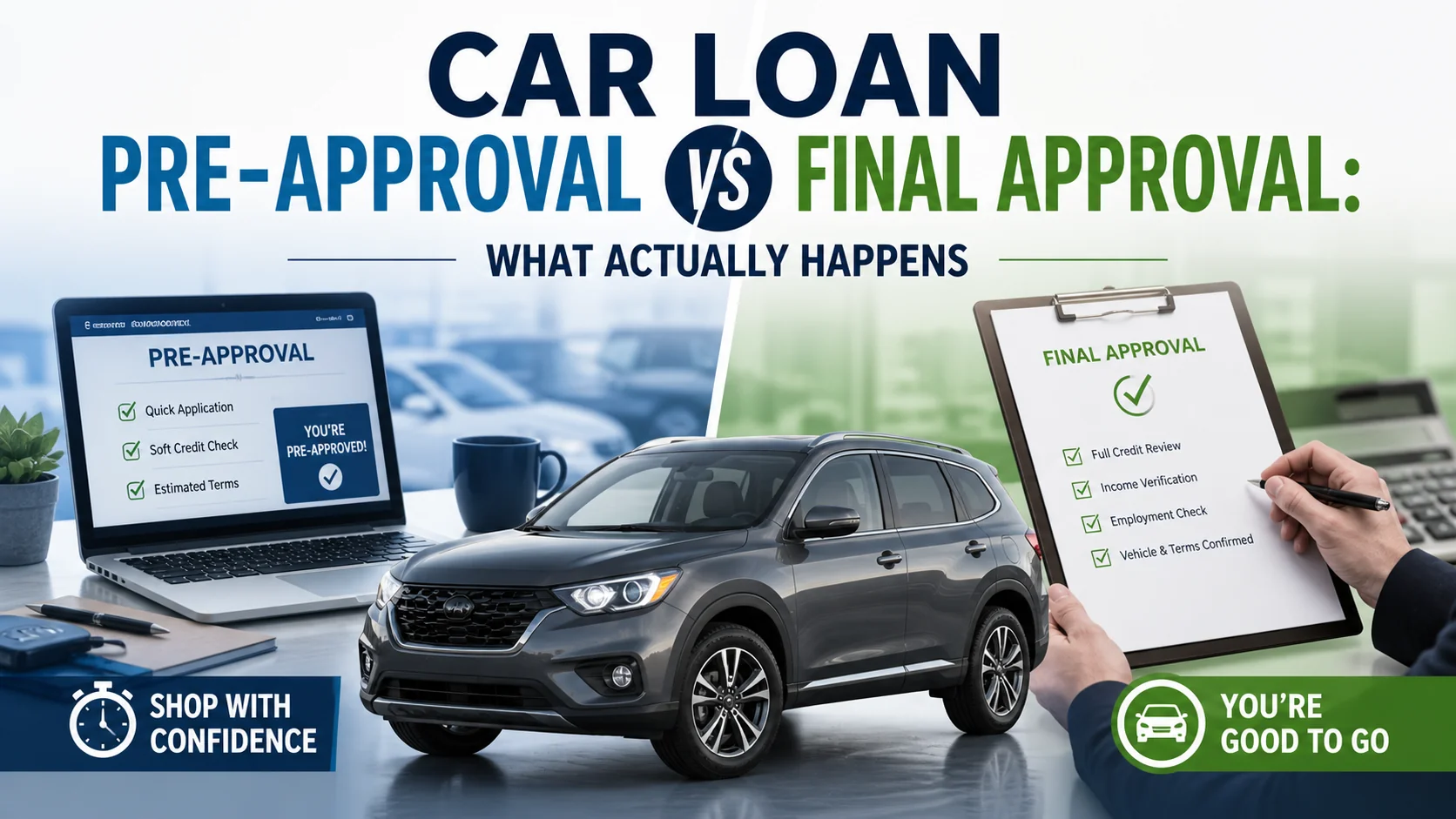
- Pre-Qualification: This is a preliminary assessment based on self-reported data and a "soft" credit pull, which does not affect your credit score. It gives you a ballpark idea of what you might qualify for but carries very little weight at a dealership.
- Pre-Approval: This is a formal commitment. The lender has verified your income and conducted a "hard" credit inquiry. When you show a dealership a pre-approval letter from a credit union, it proves that the funding is already secured, pending a valuation of the specific vehicle you choose.
Comparing Lending Sources in 2026
To understand the value of a credit union, it is helpful to compare them against other common vehicle financing avenues.
| Feature | Credit Union | Traditional Bank | Online/Fintech Lender | Dealer Financing |
|---|---|---|---|---|
| Typical APR | Lowest (Non-profit) | Moderate | Competitive | Highest (includes markups) |
| Approval Speed | 24–48 Hours | 24–72 Hours | Near Instant | Immediate |
| Personalized Service | High | Low to Moderate | Minimal | High (Sales-driven) |
| Credit Requirements | Flexible | Stringent | Variable/Algorithmic | Very Flexible (but costly) |
| Membership Needed | Yes | No | No | No |
How Pre-Approval Empowers Your Negotiation
The primary advantage of a credit union pre-approval car loan is the psychological and financial shift it creates at the dealership. Dealerships often make more profit on the "back-end" (financing and insurance) than on the "front-end" (the actual sale price of the car).
When you walk in with a pre-approval, you effectively remove the financing variable from the initial negotiation. You can focus entirely on the out-the-door price of the vehicle. If the dealer wants you to use their financing, they must beat your credit union's rate. This forces the dealer to offer their "buy-rate" without the typical markup, potentially saving you a full percentage point or more on your APR.
Additionally, a pre-approval letter prevents "payment-based selling." Salespeople often ask, "What do you want your monthly payment to be?" This allows them to stretch the loan term (e.g., to 84 months) to meet a monthly goal while charging a much higher total interest cost. With a pre-approval, you already know your term and rate, keeping the focus on the vehicle's total cost.
Common Mistakes to Avoid
Even with a pre-approval, certain pitfalls can derail your car-buying experience:
- Ignoring the Expiration Date: Pre-approvals are not permanent. If your letter expires before you find a car, the credit union will likely need to pull your credit again, which could result in a slight dip in your score.
- Overspending the Pre-Approved Amount: Just because you are approved for $40,000 does not mean you should spend $40,000. Remember to factor in taxes, title fees, and registration, which can add 8% to 10% to the final price.
- Failing to Check Vehicle Restrictions: Some credit unions have strict rules about salvaged titles, specific brands, or older high-mileage vehicles. Ensure the car you want meets the lender’s criteria before signing a purchase agreement.
- Multiple Hard Inquiries over Time: While credit scoring models generally group auto loan inquiries made within a 14-to-45-day window as a single event, dragging your search out over several months can lead to multiple score-damaging "hard" pulls.
The Role of NCUA Insurance
One of the most important aspects of working with a credit union is the security of your funds. Similar to the FDIC for banks, the National Credit Union Administration (NCUA) provides insurance for credit union members. Your deposits (including the shares you hold to maintain membership) are insured up to at least $250,000. This regulatory oversight ensures that your financial relationship is backed by the full faith and credit of the United States government.
FAQs
Can I get a car loan pre-approval from a credit union if I am not yet a member?
Yes, most credit unions allow you to apply for membership and a car loan pre-approval simultaneously. You will typically need to open a basic savings account with a small deposit (often $5 to $25) to establish membership. If your loan is approved, the membership becomes active, and the loan is funded through that account.
How long does a credit union pre-approval last?
Most credit union pre-approvals are valid for 30 to 60 days. This timeframe is designed to give you enough time to shop for a vehicle without the lender's financial risk changing significantly. If you exceed this window, you may need to submit updated income documentation or undergo a new credit check.
Will getting a pre-approval hurt my credit score?
A pre-approval involves a "hard" credit inquiry, which may lower your credit score by a few points (typically fewer than five). However, if you are shopping around with multiple lenders for the same type of loan, credit bureaus treat these as a single inquiry as long as they occur within a short window (usually 14 to 45 days).
Can I use a credit union pre-approval for a private party sale?
It depends on the credit union's specific policies. Many credit unions do offer financing for private party sales, but the process is more rigorous than buying from a licensed dealer. The credit union will likely require a vehicle inspection, a clean title transfer in their presence, and a direct payment to the seller or the seller's lienholder.
What happens if the car I want costs more than my pre-approved amount?
If the vehicle price exceeds your pre-approval limit, you must cover the difference with a larger down payment or ask the credit union to re-evaluate your application for a higher limit. Note that a higher loan amount may change your Debt-to-Income (DTI) ratio, which could potentially impact the interest rate offered.
Practical Recommendation
Before visiting any dealership, apply for a pre-approval from at least two local credit unions. This not only ensures you have the lowest possible rate but also provides a "fallback" option if one institution has more restrictive vehicle requirements. Once you receive your pre-approval letter, keep the specific interest rate and maximum loan amount confidential until you have negotiated the final sale price of the vehicle. This strategy ensures that your financing remains a tool for savings rather than a distraction during price negotiations.
Disclaimer: This information is for educational purposes only and does not constitute professional financial advice. Interest rates, eligibility requirements, and lending terms are subject to change based on market conditions and individual creditworthiness.
Image Gallery