How Asset Allocation Models by Age Work
Asset allocation models by age operate by dynamically adjusting the balance between equities, fixed income, and cash equivalents as an investor grows older, systematically shifting from aggressive growth strategies toward capital prese...
Asset allocation models by age operate by dynamically adjusting the balance between equities, fixed income, and cash equivalents as an investor grows older, systematically shifting from aggressive growth strategies toward capital preservation and income generation. This time-tested framework forms the backbone of modern retirement planning, automating portfolio adjustments to mitigate market risk while maintaining long-term purchasing power.
Contents
Understanding the Core Principles of Asset Allocation
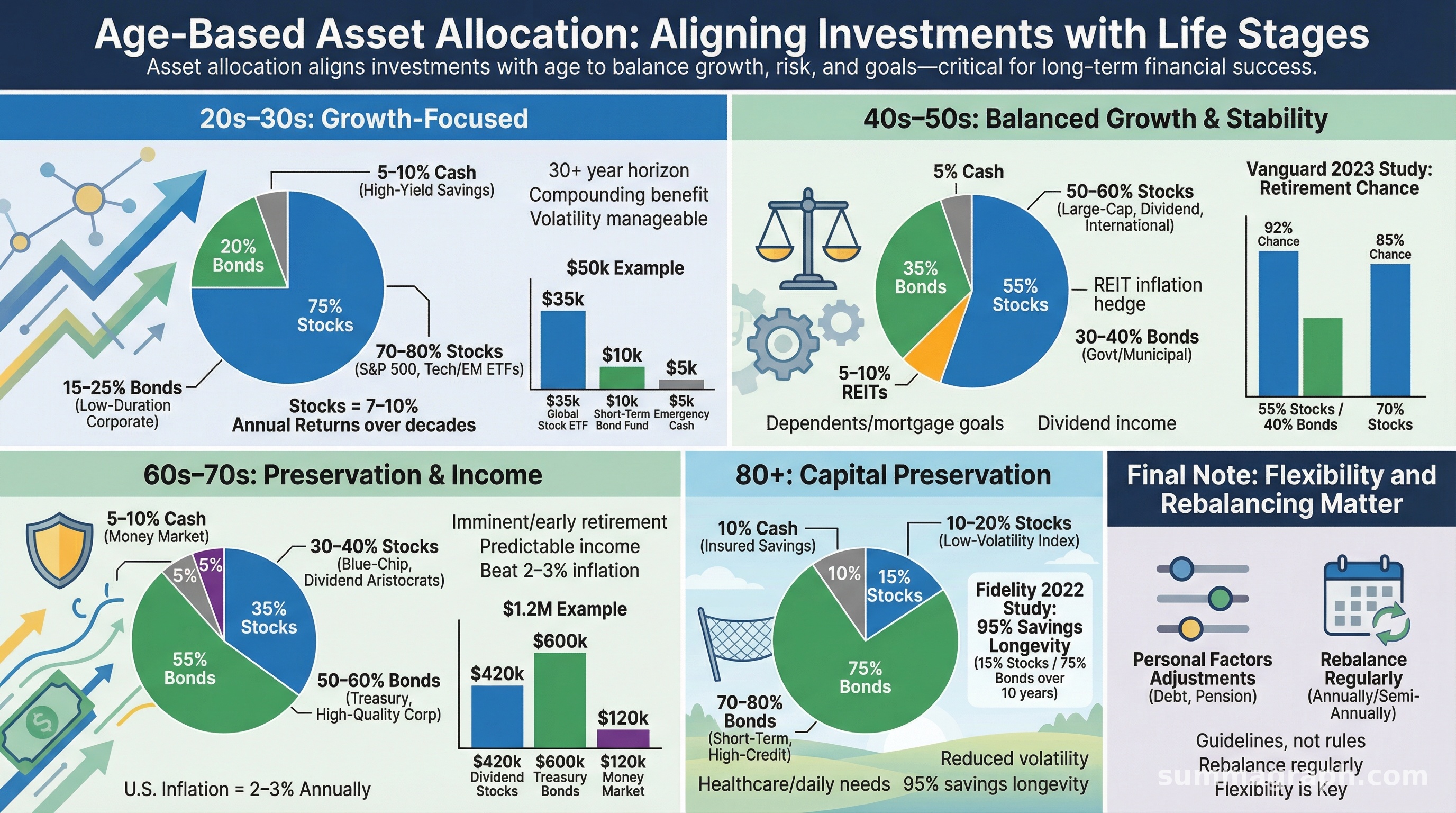
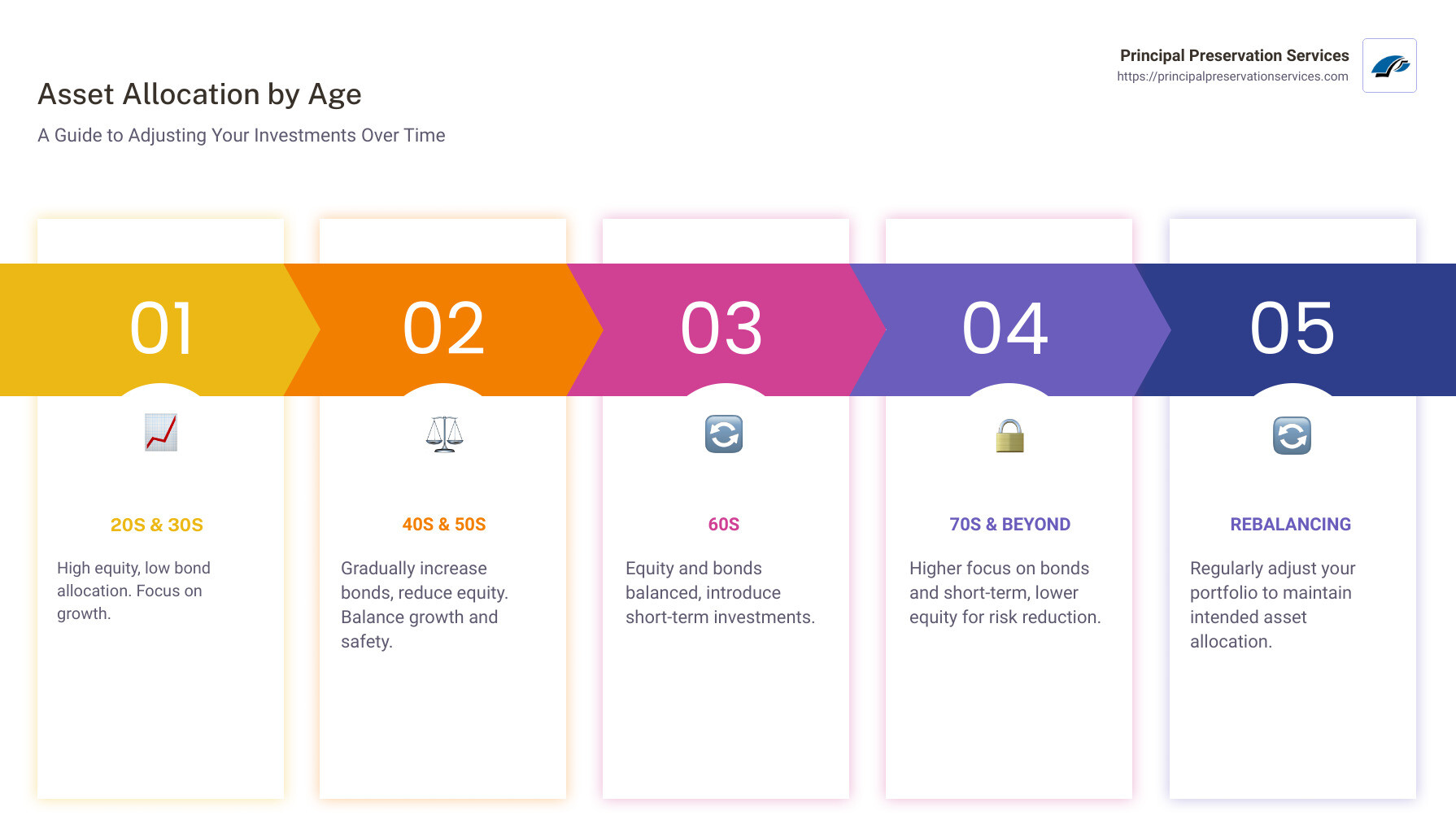
At its most fundamental level, asset allocation is the practice of dividing an investment portfolio among different asset categories, such as stocks, bonds, and cash. Each asset class has different levels of return and risk, so they will behave differently over time. When structured by age, these strategies acknowledge that an investor's risk tolerance, time horizon, and financial goals evolve across various stages of life.
The primary mechanism driving these models is the trade-off between growth and volatility. Younger investors possess a long investment horizon, allowing them to absorb severe market downturns and benefit from long-term compounding returns. Conversely, investors nearing or in retirement have a compressed time horizon. A sudden market correction close to the withdrawal phase can permanently impair portfolio longevity, making capital preservation paramount.
The Time Horizon Factor
An investor’s time horizon is the total amount of time they expect to hold investments before needing to withdraw funds. This factor heavily dictates how much risk a portfolio can structurally withstand.
- Long-Term Horizons (20–40 years): Temporary market crashes are merely noise. A prolonged downturn provides an opportunity to buy equities at discounted prices through dollar-cost averaging.
- Medium-Term Horizons (10–20 years): The portfolio begins a transitional phase, balancing the need for capital appreciation with the necessity of buffering against volatility.
- Short-Term Horizons (0–10 years): Capital protection takes precedence. The portfolio shifts away from volatile equities and toward stable income-producing assets.
Traditional Rules of Thumb Versus Modern Models
Historically, financial planners relied on simple heuristics to determine equity exposure based on chronological age. While these rough formulas provided a basic starting point, modern portfolio theory and behavioral finance have refined these models significantly.
The "100 Minus Age" Rule
The most famous traditional heuristic is the "100 minus your age" rule. Under this formula, if an investor is 30 years old, 70% of their portfolio should be allocated to stocks ($100 - 30 = 70$), with the remaining 30% in bonds. If that same investor reaches age 70, the equity allocation drops to 30%.
The Updated "110 or 120 Minus Age" Rule
As global life expectancies rose and historical equity returns outperformed fixed-income investments over long periods, financial advisors noted that the traditional 100 rule often left portfolios overly conservative. Consequently, many institutions updated the baseline to 110 minus age or 120 minus age. For a 40-year-old using a 120-minus model, equity allocation starts at 80%, allowing for enhanced long-term growth potential to combat inflation.
| Investor Age | Traditional 100-Minus Rule (Equity %) | Modern 120-Minus Rule (Equity %) | Suggested Core Focus |
|---|---|---|---|
| 25 | 75% | 95% | Aggressive wealth accumulation |
| 40 | 60% | 80% | Balanced growth and accumulation |
| 55 | 45% | 65% | Transition toward capital preservation |
| 70 | 30% | 50% | Income generation and risk mitigation |
How Target-Date Funds Automate Age-Based Allocation
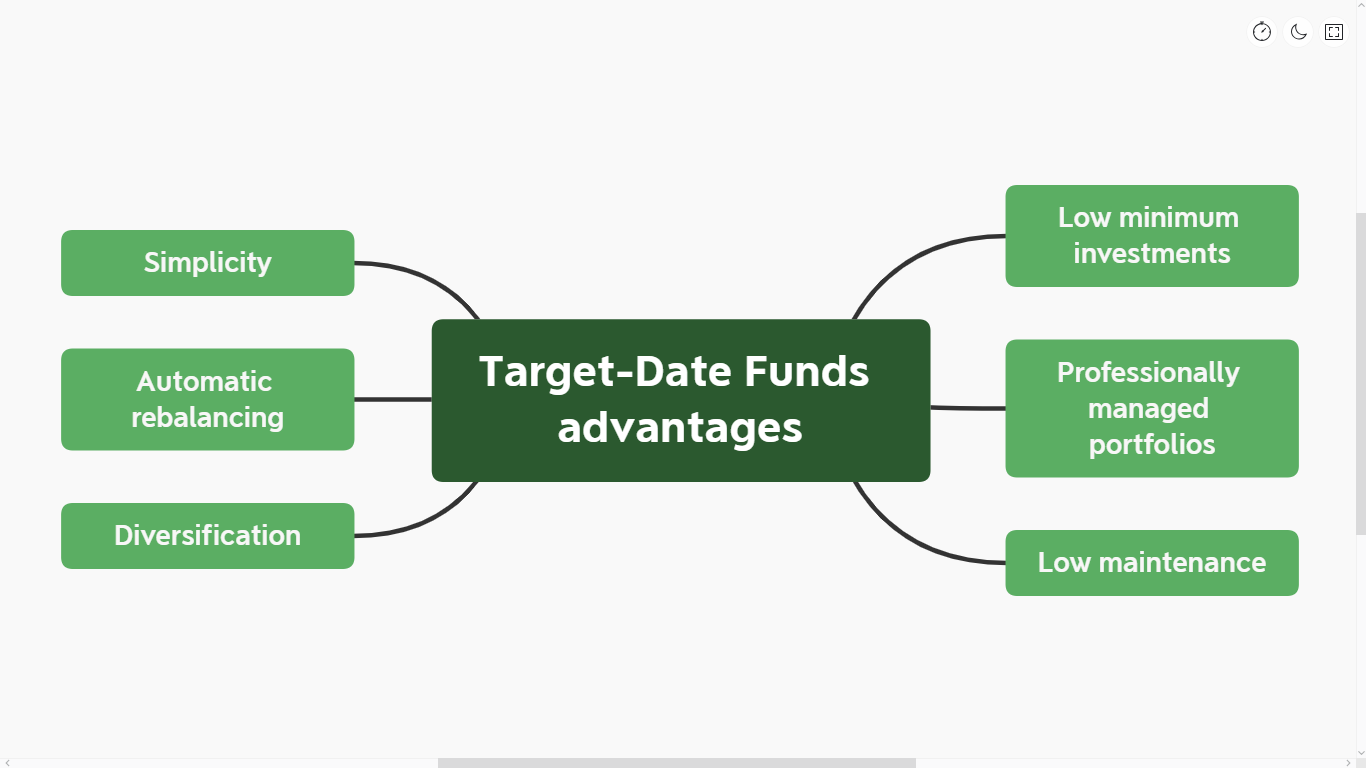
Manually rebalancing a portfolio every year to match a shifting age formula can be tedious and prone to emotional interference. To solve this, asset managers developed target-date funds (TDFs), which serve as turnkey solutions embedded with automated age-based allocation models.
A target-date fund is a mutual fund or exchange-traded fund (ETF) designed for a specific retirement year, such as 2055 or 2065. As the target year approaches, the fund’s underlying portfolio automatically shifts its asset mix along a predetermined trajectory known as a glide path.
Anatomy of a Glide Path
The glide path is the mathematical formula mapping out how a fund's asset allocation changes over time. Glide paths generally fall into two categories:
- To-Retirement Glide Paths: These funds reach their most conservative asset allocation precisely on the target retirement date. The assumption is that the investor will immediately begin drawing down capital or shifting into bespoke fixed-income streams upon retirement.
- Through-Retirement Glide Paths: These funds continue to adjust their asset mix past the target date, flattening out only years into retirement. This approach protects retirees against longevity risk—the danger of outliving their savings—by maintaining a modest equity allocation well into their seventies and eighties.
The Mechanics of Rebalancing Across Life Stages
An age-based model is not a static construct; it requires ongoing maintenance to ensure the portfolio does not drift away from its target risk profile due to market movements. For example, during a prolonged bull market, equities may grow to represent 90% of a portfolio where the age-based model dictates only 75%.
Rebalancing Triggers
- Calendar-Based Rebalancing: Reviewing and adjusting the portfolio at fixed intervals, such as annually or semi-annually.
- Threshold-Based Rebalancing: Adjusting the portfolio whenever an asset class deviates by a specific percentage (e.g., 5% or more) from its target weight.
Tax Implications of Rebalancing
Executing trades to rebalance a taxable brokerage account can trigger capital gains taxes, eroding net returns. To minimize tax burdens, investors typically execute rebalancing strategies within tax-advantaged accounts such as traditional IRAs, Roth IRAs, or employer-sponsored 401(k) plans, where transactions do not trigger immediate taxable events.
Limitations and Criticisms of Age-Based Models
While age-based asset allocation models provide a structured, disciplined framework for long-term investing, they are not universally appropriate. Critics and financial planners highlight several inherent limitations:
- The Chronological Fallacy: Chronological age is an imperfect proxy for financial capacity. A 55-year-old with substantial inherited wealth, a defined-benefit pension, and zero debt has a vastly different risk capacity than a 55-year-old with minimal savings and unstable employment, yet standard age-based models would assign them identical asset allocations.
- Neglecting Personal Risk Tolerance: Psychological resilience to market volatility varies wildly. An aggressive age-based model may assign an 80% equity weight to a 25-year-old, but if that investor panics and sells during a market crash, the model fails in practice.
- Low Interest Rate Environments: Traditional models assume bonds provide a stable income and a reliable cushion during stock market declines. In prolonged low-interest-rate eras, fixed-income yields may fail to outpace inflation, forcing models to adapt by incorporating alternative assets like real estate investment trusts (REITs) or commodities.
Frequently Asked Questions
What happens if I start using an age-based allocation model late in life?
If you adopt an age-based model later in life, your portfolio may immediately shift into a more conservative posture than required to meet your long-term goals. In such cases, a blended approach that accounts for your specific shortfall and total accumulated wealth is often necessary, rather than following a rigid age formula blindly.
Do age-based models account for non-retirement assets like real estate?
Standard off-the-shelf age-based models generally only account for the capital invested within that specific portfolio or account. They do not automatically factor in outside assets like primary residences, private business equity, or pensions. Investors must manually adjust their portfolio risk if they hold significant non-liquid wealth elsewhere.
Are target-date funds the same as dynamic asset allocation models?
Target-date funds are a specific wrapper that utilizes a dynamic glide path based on age. However, dynamic asset allocation can also be executed independently through periodic manual portfolio reviews, separately managed accounts (SMAs), or automated robo-advisor platforms.
How do robo-advisors handle asset allocation by age?
Robo-advisors utilize algorithmic questionnaires during onboarding to assess both chronological age and personal risk tolerance. They then construct a customized portfolio and automatically execute rebalancing and age-based glide paths digitally, typically for a low management fee.
Next Steps for Implementing an Age-Based Strategy
To apply these principles effectively, begin by auditing your current investment accounts to determine your aggregate asset mix across equities, fixed income, and cash. Compare your current equity percentage against modern benchmarks (such as 120 minus your age) while evaluating your personal risk tolerance, job stability, and non-portfolio assets. If you prefer a hands-off approach, consider consolidating retirement assets into a low-cost target-date fund that matches your expected retirement year. Alternatively, set an annual calendar reminder to manually rebalance your portfolio back to your target asset weights.
Image Gallery