The Real Case Behind Psycho: Unraveling the Fact and Fiction of Ed Gein
Alfred Hitchcock’s 1960 masterpiece Psycho is widely considered the foundation of the modern slasher genre, yet its psychological terror is rooted in documented reality. The film, adapted from the 1959 novel by Robert Bloch, draws sign...
Alfred Hitchcock’s 1960 masterpiece Psycho is widely considered the foundation of the modern slasher genre, yet its psychological terror is rooted in documented reality. The film, adapted from the 1959 novel by Robert Bloch, draws significant inspiration from the horrific crimes of Ed Gein, a Wisconsin handyman whose discovery in 1957 shocked the nation. While Norman Bates is a fictional character, the parallels between his isolated life, his mother fixation, and his gruesome transgressions mirror the genuine criminal history of Gein, who committed acts of grave robbery and murder that fundamentally altered American pop culture.
Contents
The Origin Story: Robert Bloch and the Wisconsin Horror
To understand the connection between Psycho and reality, one must first look at the author, Robert Bloch. Living in Weyauwega, Wisconsin, at the time of Ed Gein’s arrest in Plainfield, Bloch was uniquely positioned to witness the fallout of the investigation. When the local police discovered the home of the quiet, unassuming Gein filled with human remains—including masks made from skin, chairs upholstered with human hide, and various organs stored in the refrigerator—the narrative of the "monster next door" became a cultural phenomenon.
Bloch, a writer of horror and pulp fiction, did not aim to write a direct biography of Gein. Instead, he distilled the essential elements of the case: the social isolation, the suffocating influence of a domineering mother, and the cognitive dissonance of a man who appeared harmless to his neighbors but harbored a depraved internal life. In the transition from novel to screenplay, Hitchcock and writer Joseph Stefano further refined these elements, focusing on the cinematic potential of the dual personality—the polite, soft-spoken Norman and the murderous, mother-obsessed persona.
Ed Gein: The Man Behind the Myth
Edward Theodore Gein was born in 1906 and raised in a household dominated by his fanatically religious mother, Augusta. Augusta Gein instilled in her son an intense fear of the world and a pathological hatred of women, whom she viewed as sinful. After her death in 1945, Gein was left entirely alone on the family farm. He began to exhibit signs of extreme mental instability, leading to his eventual descent into grave robbing at local cemeteries.
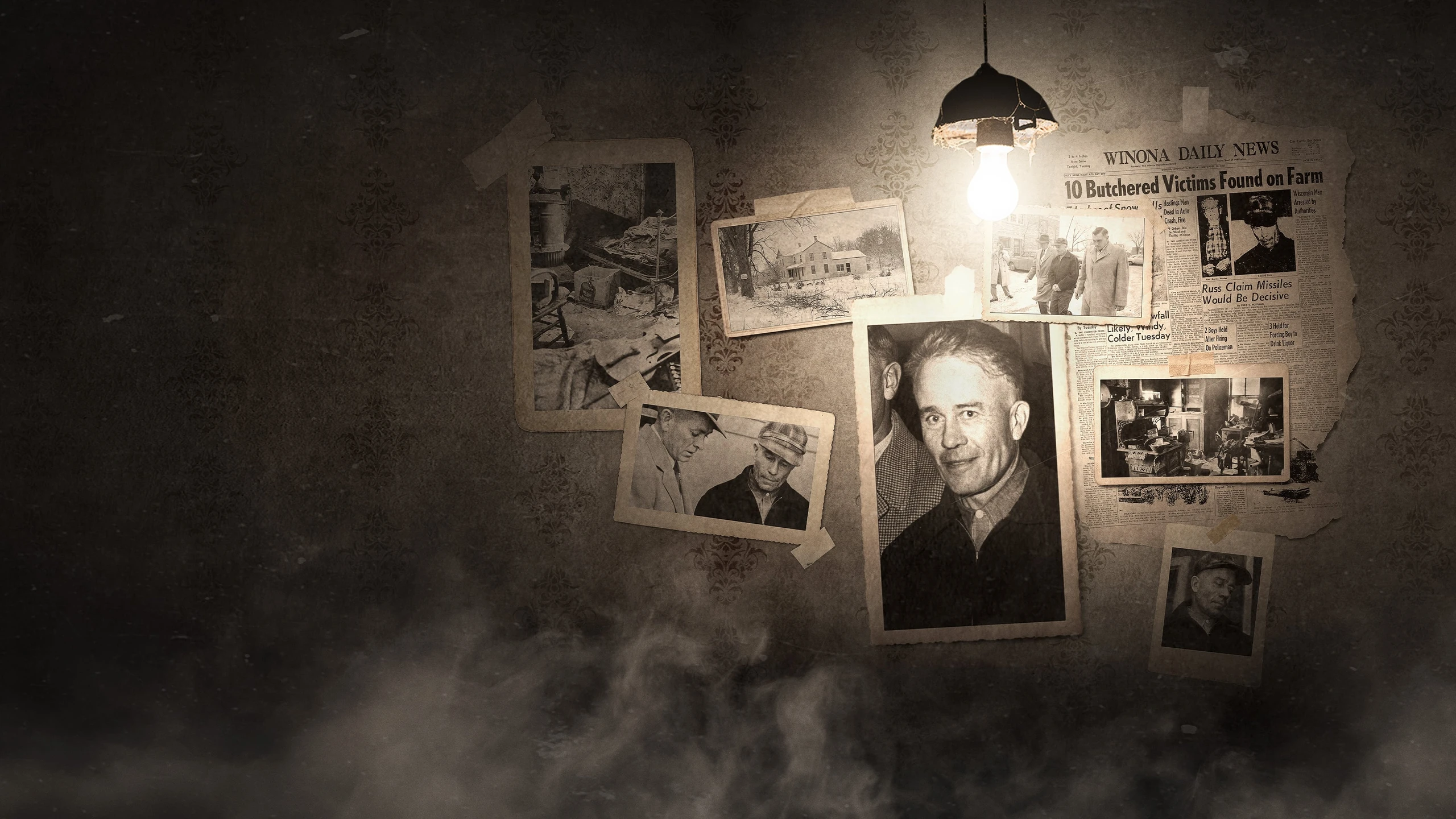
The authorities did not initially realize the scale of his crimes until the 1957 disappearance of Bernice Worden, a local shopkeeper. Upon searching Gein's property for evidence, investigators unearthed a scene of "human taxidermy." Gein confessed to the murder of two women—Worden and Mary Hogan—and admitted to the desecration of numerous graves. Unlike the fictional Norman Bates, who was a serial killer motivated by a clear psychosexual conflict, Gein’s actions were categorized by psychologists of the era as a manifestation of extreme psychosis, necrophilia, and a total detachment from reality.
Comparative Analysis: Norman Bates vs. Ed Gein
While Psycho borrows the atmosphere of the Gein case, it departs significantly from the actual forensic evidence. Comparing the two requires separating the artistic intent of the film from the clinical reality of the crimes.
| Feature | Norman Bates (Fictional) | Ed Gein (Historical) |
|---|---|---|
| Primary Motivation | Mother-fixation/Dissociative Identity | Severe mental illness/Necrophilia |
| Crimes | Murder of motel guests | Grave robbing and targeted murders |
| Family Status | Dominated by a controlling mother | Dominated by a deceased, religious mother |
| Public Persona | Charming, polite motel proprietor | Socially awkward, reclusive handyman |
| Outcome | Institutionalized in a mental hospital | Institutionalized for life (found unfit to stand trial) |
The Psychological Construct of the Mother
The most profound link between the two is the concept of the "internalized parent." In Psycho, Norman Bates maintains the illusion that his mother, Norma, is alive and living in the house. His dissociative identity disorder forces him to adopt her personality to punish himself for his desires. Ed Gein, conversely, suffered from a profound obsession with his mother, which evolved into a desire to "become" her. He crafted a "woman suit" from human skin in a distorted effort to inhabit her essence, a detail that served as the primary inspiration for the character of Buffalo Bill in Thomas Harris’s The Silence of the Lambs, rather than Norman Bates himself.
The Setting and Isolation
Hitchcock’s use of the isolated Bates Motel serves as a cinematic metaphor for Gein’s remote farm. In the 1950s, the "isolated bachelor" archetype was a trope in American horror, but the Gein case provided a specific, terrifying validation for it. By placing the motel away from the main highway, Hitchcock tapped into the public's emerging fear that a seemingly mundane individual, living in complete seclusion, could be capable of unthinkable violence.
Legacy and Impact on Cinema
The realization that Psycho was based on a real case fundamentally changed the trajectory of the horror genre. Before 1960, horror films were largely defined by the supernatural—vampires, werewolves, and laboratory-born monsters. By grounding the fear in the reality of human pathology, Psycho introduced the "psychological horror" subgenre.
Critics and audiences alike were disturbed because they recognized the danger was not an external force but an internal, human one. The psychiatric examination of the killer at the end of the film—a hallmark of the script—mirrors the real-world fascination with the psychiatric evaluation of men like Ed Gein. It validated the audience's fear by suggesting that anyone, living behind a polite mask, could potentially harbor the same darkness.
Frequently Asked Questions
Did Ed Gein ever manage a motel?
No. Ed Gein was a local handyman who worked sporadically on farms and around his small town of Plainfield. The "motel" aspect of Psycho was a creative choice by Robert Bloch to create a setting where strangers would be forced to interact with the protagonist.
Was Norman Bates' mother really a killer?
In the film Psycho, the mother character is a psychological projection. Norman kills his mother and her lover years before the events of the movie, then adopts her personality. In reality, Ed Gein’s mother died of natural causes (specifically a series of strokes), and it was the grief and obsession following her death that triggered Gein's decline.
How much of the Psycho film script is historically accurate?
Very little. While the atmosphere of the film—the isolation, the skin-mask tropes, and the mother obsession—is heavily inspired by the Gein case, the plot, characters, and specific events of the film are entirely fictional. It is an interpretation of the feeling of the Gein case rather than a docudrama.
Why is the Gein case still relevant today?
The Ed Gein case remains a foundational study in criminal psychology and pop culture. It established the template for the "disturbed loner" killer, influencing characters across decades of media, from Psycho to The Texas Chain Saw Massacre and The Silence of the Lambs. It serves as a historical marker for when horror shifted from supernatural folklore to the study of the fractured human psyche.
Was the house in Psycho a real house?
The iconic house featured in Psycho was a set built on the Universal Studios lot in Hollywood. It was designed to resemble Victorian architecture, specifically the style of houses common in rural areas, to evoke the sense of a weathered, decaying structure similar to the real Gein farmhouse.
Final Perspective
When approaching the history of Psycho, it is essential to distinguish between the exploitation of true crime and the narrative artistry of Hitchcock. The film functions as an exploration of the human mind under extreme duress, utilizing the horror of the Gein case as a springboard for a deeper examination of identity and repression. While the gruesome facts of the Plainfield murders provide the macabre DNA of the film, Psycho stands as a work of fiction that mastered the art of suspense, proving that the most terrifying monsters are often those that reside within the confines of our own minds. Understanding the real case allows viewers to appreciate the craft behind the screen, transforming a simple "slasher" story into a sophisticated study of psychological dissolution.
Image Gallery