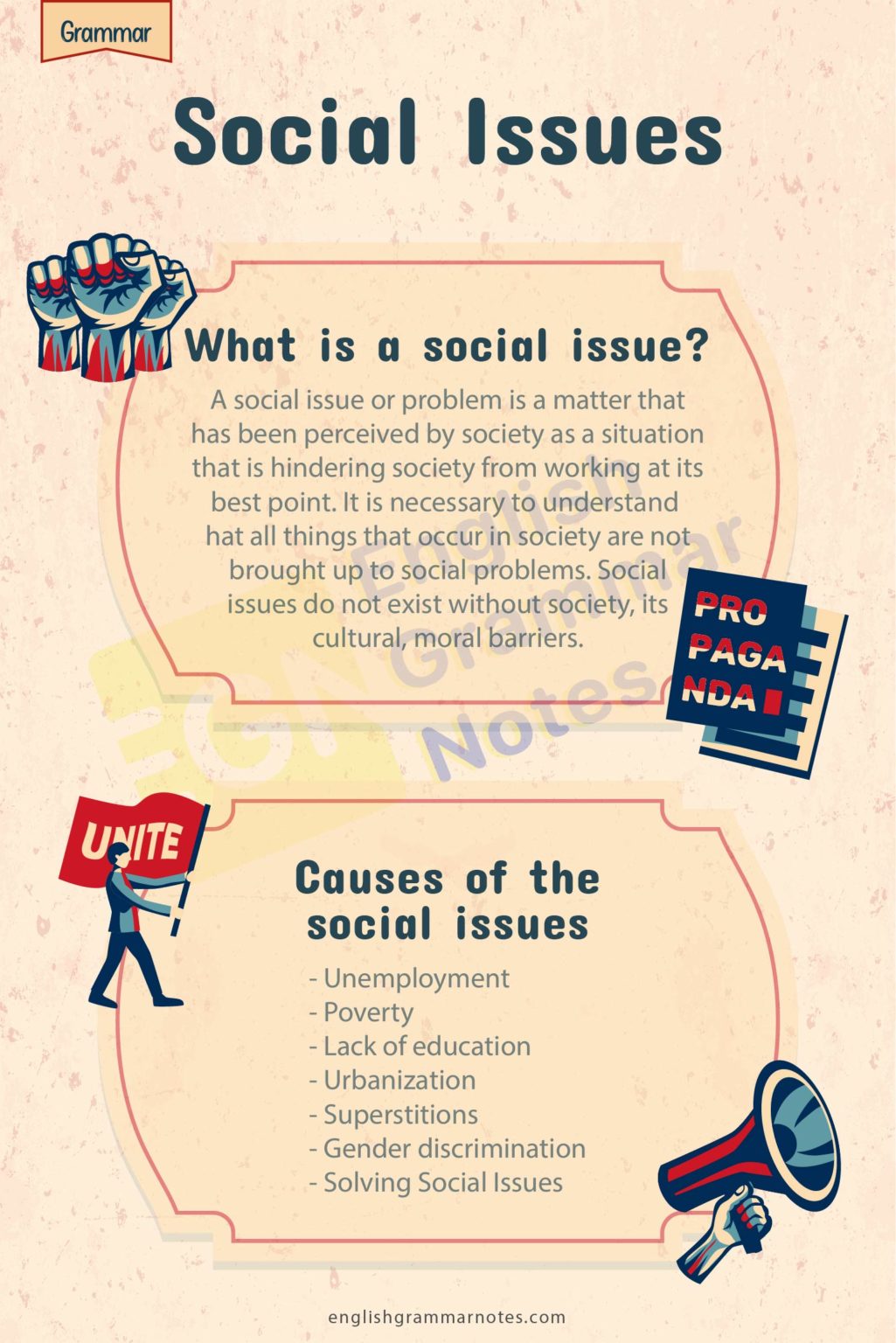
What is a Social Issue? Definition, Criteria, and Modern Examples in 2026
A social issue is a condition or behavior that has negative consequences for a large number of people and is recognized by society as a problem that requires a collective solution. Unlike personal troubles, which are limited to an indi...
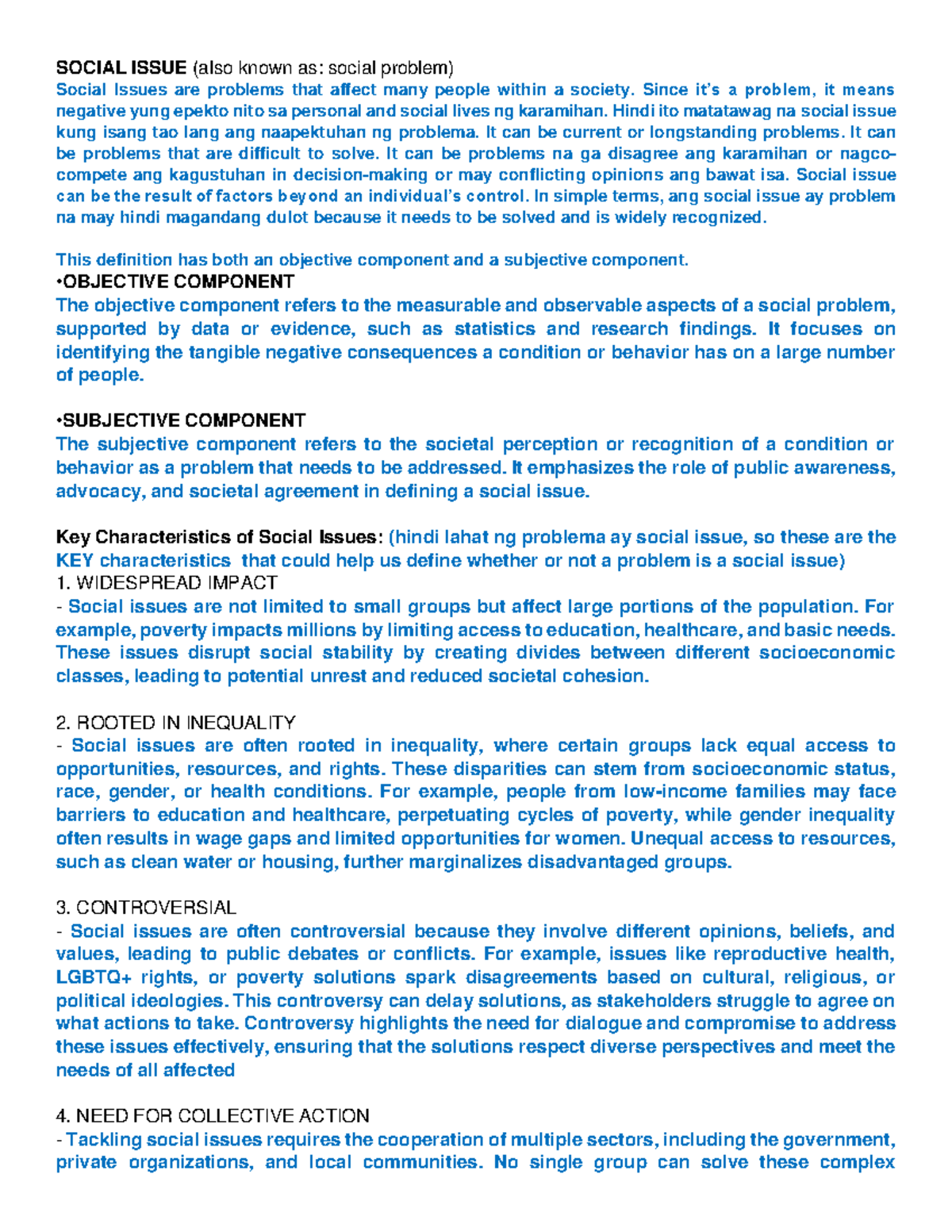
A social issue is a condition or behavior that has negative consequences for a large number of people and is recognized by society as a problem that requires a collective solution. Unlike personal troubles, which are limited to an individual’s immediate environment, social issues are rooted in the structural or systemic failures of a community or nation.
Contents
Understanding what constitutes a social issue requires a shift in perspective—moving from the individual "biography" to the broader "history" of a society. When an issue affects thousands or millions of people simultaneously, it ceases to be a private misfortune and becomes a public concern that necessitates policy changes, cultural shifts, or institutional reform. As we navigate the complexities of 2026, the definition of social issues continues to evolve, encompassing everything from economic disparities to the ethical implications of emerging technologies.
The Sociological Framework: Personal Troubles vs. Public Issues
To accurately identify a social issue example, one must first distinguish between a personal trouble and a public issue. This distinction was famously articulated by sociologist C. Wright Mills in his 1959 work, The Sociological Imagination. Mills argued that while individuals often experience their problems as private matters, these problems are frequently the result of larger social forces.
A personal trouble is a private matter where an individual's values feel threatened. For instance, if one person in a city of one million is unemployed, that is a personal trouble. For that individual, the solution lies in their character, skills, or immediate opportunities. However, when a significant percentage of a nation's workforce is unemployed, it becomes a social issue. In this scenario, the cause is not individual laziness or lack of skill; rather, it is a collapse in the economic structure, a shift in industry, or a failure of educational systems to adapt to market needs.
In 2026, this framework remains the gold standard for social analysis. Identifying a social issue involves looking for patterns. If a problem persists across different demographics, geographies, and economic classes, it likely has a systemic origin. Recognizing this is the first step toward creating sustainable, large-scale change.
Key Characteristics of a Social Issue
Not every problem experienced by a group is automatically classified as a social issue. Sociologists typically look for several defining characteristics:
- Objective Reality: There must be empirical evidence—data, statistics, or documented events—showing that a condition exists and causes harm. For example, rising global temperatures are an objective reality supported by climate data.
- Subjective Perception: A significant number of people, or influential groups (such as policymakers or activists), must define the condition as a problem. Something might be objectively harmful for decades (like smoking) but only becomes a social issue once society perceives it as such and demands action.
- Large-Scale Impact: The issue must affect a substantial segment of the population. While a local neighborhood dispute is a problem, it is not a "social issue" until it reflects a broader pattern, such as urban decay or systemic housing shortages.
- Collective Responsibility: Social issues are generally perceived as problems that individuals cannot solve on their own. They require collective action, such as legislation, social movements, or international treaties.
Comprehensive Examples of Social Issues in 2026
To understand the breadth of these challenges, we must examine specific examples across various domains of human life. The following categories illustrate how social issues manifest in the current landscape of 2026.
Economic Inequality and the Wealth Gap
Economic inequality is perhaps the most pervasive social issue example. It refers to the unequal distribution of assets and income within a population. In 2026, the gap between the ultra-wealthy and the working class has reached a historical peak in many developed nations.
This is not merely an issue of some people having more money than others; it is a social issue because it limits social mobility. When the cost of living—specifically housing and education—outpaces wage growth, the "American Dream" or its international equivalents become unattainable for the majority. This leads to secondary social issues, such as increased crime rates, poor public health outcomes, and political polarization.
The Digital Divide and AI Displacement
As we move further into the 2020s, technology has birthed new social issues. The digital divide refers to the gap between those who have access to high-speed internet and modern computing devices and those who do not. In a world where healthcare, education, and job applications are handled almost exclusively online, those without access are effectively barred from participating in society.
Furthermore, in 2026, the rapid integration of Artificial Intelligence (AI) into the workforce has created a social issue regarding technological unemployment. When AI can perform tasks previously held by millions of clerical, creative, and administrative workers, society faces a systemic challenge: how to support a displaced workforce and redefine the meaning of labor.
Climate Change and Environmental Justice
Environmental issues are no longer just "scientific" problems; they are profound social issues. Climate change affects human migration patterns, food security, and public health.
A specific subset of this is environmental justice. This refers to the fact that marginalized communities—often low-income or minority groups—are disproportionately affected by environmental hazards. Whether it is the placement of toxic waste sites or the lack of green spaces in urban "heat islands," the environment is a social issue because the harm is not distributed equally.
Healthcare Access and Mental Health Stigma
Healthcare remains a contentious social issue globally. In 2026, the debate often centers on whether healthcare is a fundamental human right or a market-based service. When millions of people cannot afford life-saving medication or preventative care, it creates a systemic burden on the economy and reduces the overall quality of life for the nation.
Additionally, mental health has transitioned from a private struggle to a prominent social issue. The widespread increase in anxiety and depression—compounded by the isolation of the early 2020s and the pressures of social media—has forced governments to view mental wellness as a public health crisis rather than an individual failing.
| Social Issue Category | Objective Example (The "What") | Social Consequence (The "Why") |
|---|---|---|
| Economic | Income Stagnation vs. Inflation | Reduced social mobility and increased poverty rates. |
| Environmental | Rising Sea Levels | Forced migration and displacement of coastal populations. |
| Technological | Algorithmic Bias in Hiring | Perpetuation of systemic discrimination via "black box" software. |
| Healthcare | High Cost of Prescription Drugs | Increased mortality rates and chronic illness in low-income brackets. |
| Educational | The Achievement Gap | Long-term economic disadvantage for specific demographic groups. |
Why Social Issues Persist: The Role of Social Institutions
Social issues are often "wicked problems," meaning they are difficult to solve because they are interconnected with other problems. They are sustained by social institutions—such as the government, the legal system, the family, and the media—which may intentionally or unintentionally preserve the status quo.
For example, the social issue of mass incarceration is not just about crime rates; it is tied to the legal system’s sentencing laws, the economic incentives of private prisons, and the lack of social services in impoverished areas. To solve the issue of mass incarceration, one must address the educational system, the job market, and the healthcare system (specifically addiction services) simultaneously.
In 2026, we also see the role of media fragmentation as a social issue. When a society cannot agree on basic facts because different groups consume entirely different information streams, it becomes nearly impossible to reach a consensus on how to solve other social issues. This "crisis of truth" is a foundational problem that prevents collective action.
How to Analyze a Social Issue
When you encounter a potential social issue example, you can use the following steps to evaluate its depth and impact:
- Identify the affected demographic: Who is suffering from this condition? Is it a specific race, age group, or geographic region?
- Trace the historical roots: Has this always been a problem, or did a specific policy or economic shift trigger it?
- Examine the power dynamics: Who benefits from the current situation? Often, social issues persist because they serve the interests of a powerful minority.
- Evaluate existing solutions: Are current interventions focusing on the symptoms (individual help) or the cause (systemic change)?
Frequently Asked Questions
Can an issue be both a personal trouble and a social issue?
Yes. In fact, most social issues are experienced by individuals as personal troubles. If you cannot afford your rent, it is a personal trouble. However, if 40% of the people in your city are spending more than half their income on rent, it is a social issue. The personal experience is the "symptom," while the social issue is the "disease."
Who decides what is considered a "social issue"?
The definition of a social issue is often a product of social construction. This means that activists, journalists, researchers, and politicians play a role in "framing" a condition as a problem. For example, for many years, domestic violence was considered a private "family matter." It only became a social issue when feminist movements in the 20th century successfully lobbied for it to be recognized as a public crime requiring police and legal intervention.
Is poverty a social issue or an individual failure?
Sociological research consistently shows that poverty is a social issue. While individual choices can lead to poverty, the rate of poverty in a society is determined by structural factors like the availability of living-wage jobs, access to quality education, and the strength of the social safety net. In 2026, many people who work full-time jobs still live below the poverty line, proving that "hard work" alone is not always a cure for systemic economic imbalances.
How do social issues change over time?
Social issues evolve as values and technology change. In the 19th century, child labor was a common practice and not widely seen as a social issue. As society began to value childhood education and protection, it became a major social concern leading to new laws. Conversely, issues like "the digital divide" didn't exist 50 years ago but are critical concerns today.
Are social issues the same in every country?
No. While some issues like climate change are global, many social issues are specific to a nation's history and culture. For example, the social issue of "caste discrimination" is specific to certain South Asian contexts, while the "gun violence epidemic" is a social issue particularly prominent in the United States compared to other developed nations.
Practical Next Steps for Engagement
Understanding social issues is the prerequisite for meaningful civic engagement. If you are looking to address a social issue in 2026, the most effective next step is to move beyond "awareness" and toward "advocacy."
Start by identifying a single issue that aligns with your values. Research the organizations that are working on the structural level—those lobbying for legislative change or providing systemic resources—rather than just those offering temporary relief. Whether it is supporting a local land trust to fight the housing crisis or advocating for data privacy laws to address tech ethics, collective action remains the only proven method for resolving the issues that affect us all.
Image Gallery