Average Net Worth of the Top 1 Percent in the United States
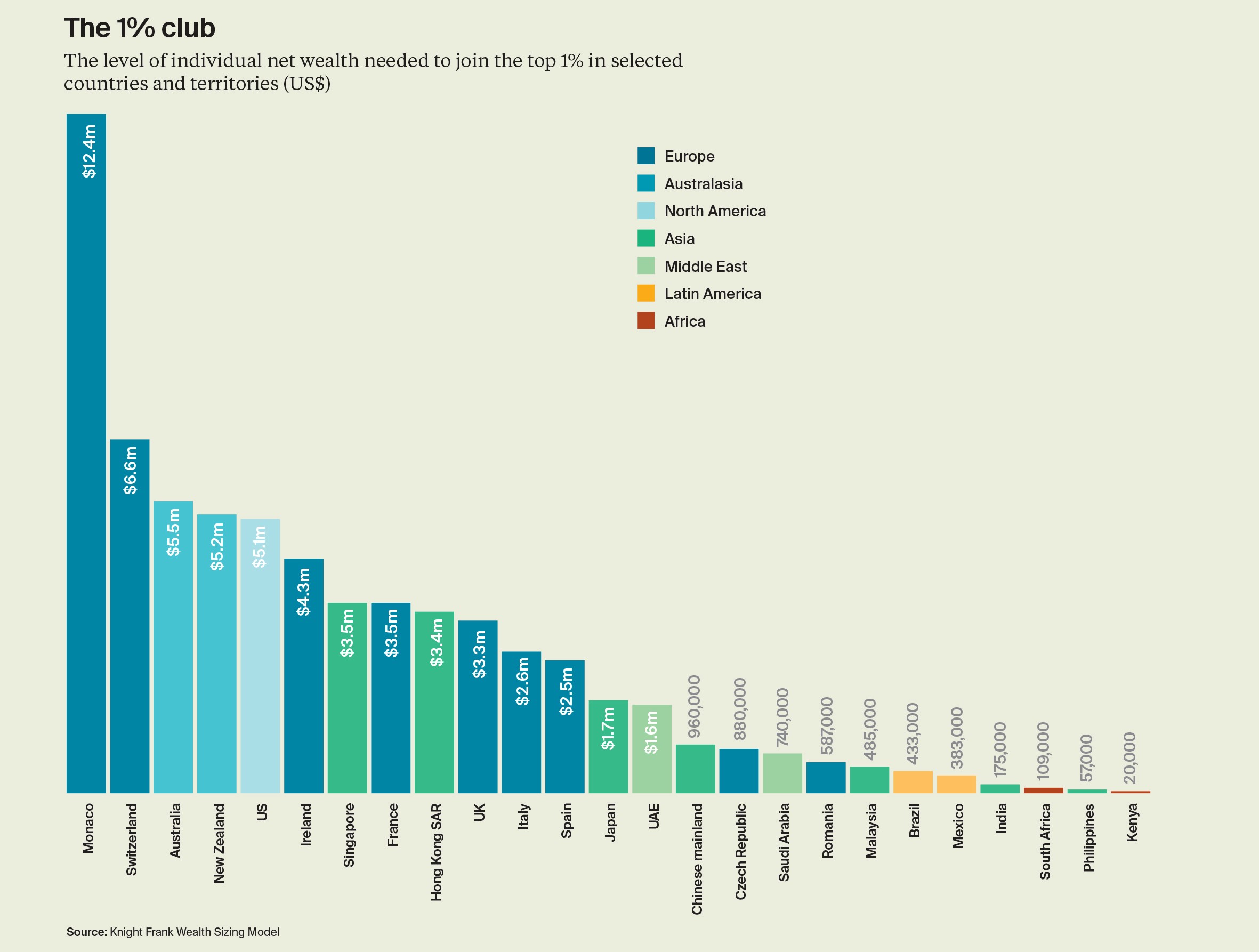
As of 2026, the average net worth of a household in the top 1 percent of the United States is approximately $14.2 million. While the entry threshold to join this elite group is significantly lower—currently requiring a minimum net wort...
As of 2026, the average net worth of a household in the top 1 percent of the United States is approximately $14.2 million. While the entry threshold to join this elite group is significantly lower—currently requiring a minimum net worth of roughly $6.3 million—the extremely high valuations of the top 0.1 percent skew the overall average for the group upward.
Contents
Defining the Top 1 Percent in 2026
To understand the financial landscape of the top 1 percent, one must distinguish between the "average" (mean) net worth and the "threshold" (minimum) net worth. In the United States, wealth distribution is heavily weighted at the very top. While millions of Americans hold the "1 percent" title, the gap between someone at the bottom of that bracket and someone at the very top is vast.
Net worth is calculated by taking the total value of all assets—including primary residences, investment real estate, retirement accounts, brokerage portfolios, and private business equity—and subtracting all liabilities, such as mortgages, student loans, and commercial debt. By 2026, the cumulative wealth of this group has continued to grow, fueled by a decade of asset price appreciation and the compounding nature of equity-based compensation.
The Federal Reserve’s Distributional Financial Accounts indicate that the top 1 percent now holds approximately 30% to 32% of all household wealth in the United States. This concentration of capital has remained relatively stable over the last three years, though the nominal dollar amounts have increased due to inflationary pressures and the continued dominance of the technology and energy sectors in the public markets.
Threshold vs. Average: The Wealth Gap Within the Elite
When people ask what it takes to be in the top 1 percent, they are usually looking for the entry threshold. However, the "average" net worth provides a better picture of the group's collective economic power.
| Wealth Tier | 2026 Entry Threshold (Estimated) | 2026 Average Net Worth (Estimated) |
|---|---|---|
| Top 0.1% | $34,500,000 | $82,000,000 |
| Top 1% | $6,300,000 | $14,200,000 |
| Top 5% | $2,900,000 | $5,100,000 |
| Top 10% | $1,800,000 | $3,400,000 |
The data shows a "hockey stick" curve. The jump from the top 10% to the top 1% is significant, but the jump from the top 1% to the top 0.1% is astronomical. This is why the average net worth of the 1 percent ($14.2 million) is more than double the entry threshold ($6.3 million). The presence of billionaires and multi-decamillionaires within the top 1 percent pulls the mean average far away from the median.
The Composition of Wealth for the Top 1 Percent
The way the top 1 percent holds their wealth differs fundamentally from the bottom 90 percent of the population. For the majority of Americans, the primary residence represents the largest portion of their net worth. For the top 1 percent, the primary residence is often a negligible percentage of their total balance sheet.
Corporate Equities and Mutual Funds
Publicly traded stocks and mutual funds constitute the largest share of assets for this group. Unlike wage earners who rely on income, the top 1 percent relies on capital appreciation. By 2026, the integration of generative AI into industrial and service sectors has driven significant equity gains, disproportionately benefiting those with large brokerage holdings.
Private Business Equity
A defining characteristic of the American 1 percent is business ownership. This includes founders of successful startups, partners in law or medical firms, and owners of mid-sized manufacturing or service companies. Private equity is often the least liquid but most valuable part of their portfolio. Because these assets are not traded on public exchanges, their value is often estimated based on earnings multiples, which have remained high in the 2026 fiscal climate.
Investment Real Estate
While the primary home is a standard asset, the top 1 percent frequently holds diversified real estate portfolios. This includes commercial properties, multi-family residential units, and REITs (Real Estate Investment Trusts). These assets provide a dual benefit: steady cash flow through rents and long-term capital appreciation, often with favorable tax treatment through depreciation.
Economic Drivers Influencing 2026 Valuations
Several macroeconomic factors have contributed to the current average net worth figures seen in 2026. Understanding these drivers helps explain why the "price of admission" to the 1 percent continues to rise.
First, inflationary adjustments have pushed nominal values higher. While the real purchasing power may not have grown at the same rate as the dollar figures, the nominal net worth required to maintain a 1 percent status has climbed from roughly $5.8 million in 2023 to $6.3 million in 2026.
Second, the intergenerational transfer of wealth is in full effect. As the "Great Wealth Transfer" continues, trillions of dollars are moving from Baby Boomers to Gen X and Millennials. This transfer often consolidates wealth within families already in the top decile, sustaining the net worth of the top 1 percent even as individual career earnings might fluctuate.
Third, tax policy and capital gains remain pivotal. Despite various legislative attempts to increase the tax burden on high-net-worth individuals, the fundamental structure of taxing capital gains at a lower rate than ordinary income has allowed the top 1 percent to reinvest a larger portion of their returns, leading to exponential growth over time.
Demographics and Professional Backgrounds
The "who" of the top 1 percent has shifted slightly leading into 2026. While traditional industries like finance, medicine, and law remain well-represented, there is an increasing presence of specialized technical consultants and "solopreneurs" who leverage high-scale digital platforms.
- Age: The average age of a person in the top 1 percent remains high, typically between 45 and 65. This reflects the time required for compound interest to work and for business equity to mature.
- Education: Higher education remains a strong corollary. Over 90% of the top 1 percent hold at least a bachelor’s degree, with a significant majority holding advanced degrees (MBA, JD, MD, or PhD).
- Geography: Wealth remains concentrated in traditional hubs such as New York, San Francisco, and London, but 2026 has seen a continued "decentralization" of the 1 percent. High-net-worth individuals have increasingly migrated to states with no income tax, such as Florida, Texas, and Wyoming, bringing their capital with them.
The Role of Debt in High-Net-Worth Portfolios
It is a common misconception that the top 1 percent are debt-free. In reality, they often carry significant debt, but it is "strategic debt." This includes low-interest securities-backed lines of credit (SBLOCs) or commercial mortgages. By borrowing against their assets rather than selling them, they avoid triggering capital gains taxes while maintaining liquidity for new investments. In 2026, with interest rates stabilizing after the volatility of the early 2020s, the use of leverage remains a primary tool for maintaining and growing net worth within this bracket.
How to Calculate Your Path to the Top 1 Percent
For those aiming to reach the $6.3 million threshold, the calculation must be rigorous. It is not enough to have a high salary; one must convert that income into appreciating assets.
- Audit Assets: List all bank accounts, retirement accounts (401k, IRA), brokerage accounts, home equity, and business valuations.
- Audit Liabilities: Subtract mortgages, auto loans, credit card balances, and any business-related debt.
- Calculate the Gap: If your current net worth is $1 million, you must bridge a $5.3 million gap to reach the 1 percent entry point.
- Factor in Growth: At a 7% annual return, money doubles every ten years. Reaching the top 1 percent is often a 20-to-30-year compounding journey rather than a short-term sprint.
Frequently Asked Questions
What is the difference between wealth and income for the top 1 percent? Wealth (net worth) is the total value of what you own minus what you owe. Income is the flow of money you receive annually. Many people in the top 1 percent by income (earning over ~$850,000 per year) are not yet in the top 1 percent by wealth because they have not had enough time to accumulate $6.3 million in assets. Conversely, some retired individuals have a net worth in the top 1 percent but have very little annual "income."
Does the top 1 percent include the value of a primary residence? Yes, standard net worth calculations by the Federal Reserve and major financial institutions include home equity. However, some "investment-ready" net worth definitions (like those used for Accredited Investor status) may exclude the primary residence to focus purely on liquid or investable capital.
How has the top 1 percent changed since 2020? Since 2020, the entry threshold has increased by nearly 40% in nominal terms. This was driven by the rapid rise in home prices and the stock market's recovery and subsequent growth. The "average" has also shifted higher as the wealthiest individuals saw their tech-heavy portfolios reach new all-time highs by 2026.
Is it harder to get into the top 1 percent now than in the past? In nominal dollar terms, yes. The threshold is higher than ever. However, the tools for wealth creation—such as low-cost index funds, global digital markets, and access to venture capital—are more accessible to the general public than they were thirty years ago. The barrier is less about "access" and more about the "scale" of capital required to outpace inflation.
What percentage of the top 1 percent is inherited wealth? As of 2026, approximately 25-30% of the top 1 percent's wealth is attributed to inheritance, while the remainder is considered "self-made" through business ownership, executive compensation, and professional services. However, many "self-made" individuals started with significant educational or social advantages.
Next Steps for Financial Tracking
To accurately track your progress toward these benchmarks, it is recommended to use a comprehensive net worth tracker or consult with a fee-only financial advisor. Focus on increasing your "savings rate" and shifting your allocation from cash to appreciating assets. As the threshold for the top 1 percent continues to move, consistent participation in equity markets remains the most proven path for long-term wealth accumulation.
Image Gallery