Charge Off Duration: How Long It Stays on Your Credit Report
A charge-off typically remains on your credit report for seven years from the date the account first became delinquent and was never brought current. This duration is governed by the Fair Credit Reporting Act (FCRA). While the debt rem...
A charge-off typically remains on your credit report for seven years from the date the account first became delinquent and was never brought current. This duration is governed by the Fair Credit Reporting Act (FCRA). While the debt remains legally owed, the negative entry must be removed automatically after this seven-year window expires.
Contents
Understanding the Charge-Off Status in 2026
To manage your financial profile effectively in 2026, it is essential to understand that a "charge-off" is a specific accounting status. When a creditor labels an account as a charge-off, they are essentially declaring that the debt is unlikely to be collected. This usually occurs after 120 to 180 days of non-payment. However, this does not mean the debt is forgiven or that your obligation to pay has vanished. Instead, the creditor moves the account from their "accounts receivable" to a loss column for tax and internal accounting purposes.
The presence of a charge-off is one of the most damaging entries a consumer can face. It signals to future lenders that you not only missed payments but failed to resolve the debt for an extended period. In the current lending environment of 2026, automated underwriting systems are programmed to flag these entries immediately, often leading to automatic denials for premium credit products, mortgages, or auto loans.
The Accounting vs. Reporting Distinction
There is often confusion between a "write-off" and a "charge-off." In the context of consumer credit, they are functionally the same. The creditor "writes off" the balance as a loss, but the consumer remains legally liable for the total amount plus any accrued interest or fees allowed by the original contract. The entry on your credit report serves as a historical record of this financial failure, designed to inform other participants in the credit ecosystem of the risk involved in lending to you.
The 7-Year Rule: How the Timeline is Calculated
The duration a charge-off stays on your credit report is strictly regulated by the Fair Credit Reporting Act (FCRA). Specifically, Section 605 of the FCRA dictates that most negative information must be removed after seven years. However, the exact starting point of this clock is frequently misunderstood.
The Date of First Delinquency (DOFD)
The seven-year reporting window is tied to the Date of First Delinquency (DOFD). This is the date when the very first payment was missed in the series of missed payments that led directly to the charge-off. If you missed a payment in January and never made another payment before the account was charged off in June, the seven-year clock starts from January, not June.
It is important to note that the FCRA allows for an additional 180-day buffer. Technically, the law states that the reporting period begins 180 days after the delinquency, and the information can remain for seven years from that point. In practice, most credit bureaus (Equifax, Experian, and TransUnion) simplify this by removing the entry seven years from the original DOFD to stay well within compliance limits.
Does the Clock Ever Reset?
A common fear among consumers is that making a payment or acknowledging the debt will "reset" the seven-year credit reporting clock. Under the FCRA, the reporting clock for a charge-off cannot be reset by a payment or by the debt being sold to a collection agency. Even if a debt collector purchases the account in 2026, they must use the original DOFD from the original creditor to determine when the entry must be removed from your report.
However, a payment can reset the Statute of Limitations (SOL) for a lawsuit. The SOL is a state-level law that determines how long a creditor has the legal right to sue you for a debt. It is vital to distinguish between credit reporting duration (federal law) and the statute of limitations (state law).
Impact on Credit Scores and Future Lending
A charge-off can cause a significant drop in your credit score, often 100 points or more depending on your starting score. Because payment history accounts for 35% of your FICO score, a charge-off represents a major failure in the most important scoring category.
| Feature | Late Payment (30-90 Days) | Charge-Off | Collection Account |
|---|---|---|---|
| Credit Score Impact | Moderate to High | Very High | Very High |
| Duration on Report | 7 Years | 7 Years | 7 Years |
| Legal Liability | High | High | High (unless past SOL) |
| Status Update | Can be brought current | Reported as "Paid" or "Unpaid" | Reported as "Paid" or "Unpaid" |
| Lender Perception | Temporary struggle | Severe credit risk | Third-party involvement |
As the charge-off ages, its impact on your score gradually diminishes. A charge-off from five years ago will hurt your score less than one reported three months ago. This is due to the "recency" factor in credit scoring models like FICO 10 and VantageScore 4.0. Nonetheless, even an old charge-off can prevent you from obtaining the best interest rates in 2026.
Paid vs. Unpaid Charge-Offs
When you look at your credit report, a charge-off will be listed with a specific status. While both paid and unpaid charge-offs are negative, they are viewed differently by human underwriters and certain scoring models.
- Unpaid Charge-Off: The balance still shows as owed. This negatively impacts your "credit utilization" ratio because the balance is counted against your total available credit, but the limit is often reported as zero.
- Paid Charge-Off: The account status is updated to "Paid" or "Paid for less than full balance." This does not remove the charge-off from your report, but it stops the balance from negatively impacting your utilization.
- Settled Charge-Off: You and the creditor agreed on a lump sum payment lower than the original debt. The account is marked as "Settled" with a $0 balance.
In 2026, many mortgage lenders require all outstanding charge-offs and collections to be paid or settled before they will approve a home loan. Paying the debt demonstrates a good-faith effort to rectify your financial obligations, even if it doesn't immediately result in a significant score increase.
How to Remove a Charge-Off from Your Credit Report
There are only a few legitimate ways to remove a charge-off before the seven-year period expires. Be wary of "credit repair" companies making impossible promises; the process is rooted in the accuracy of the data.
1. Dispute Inaccurate Information
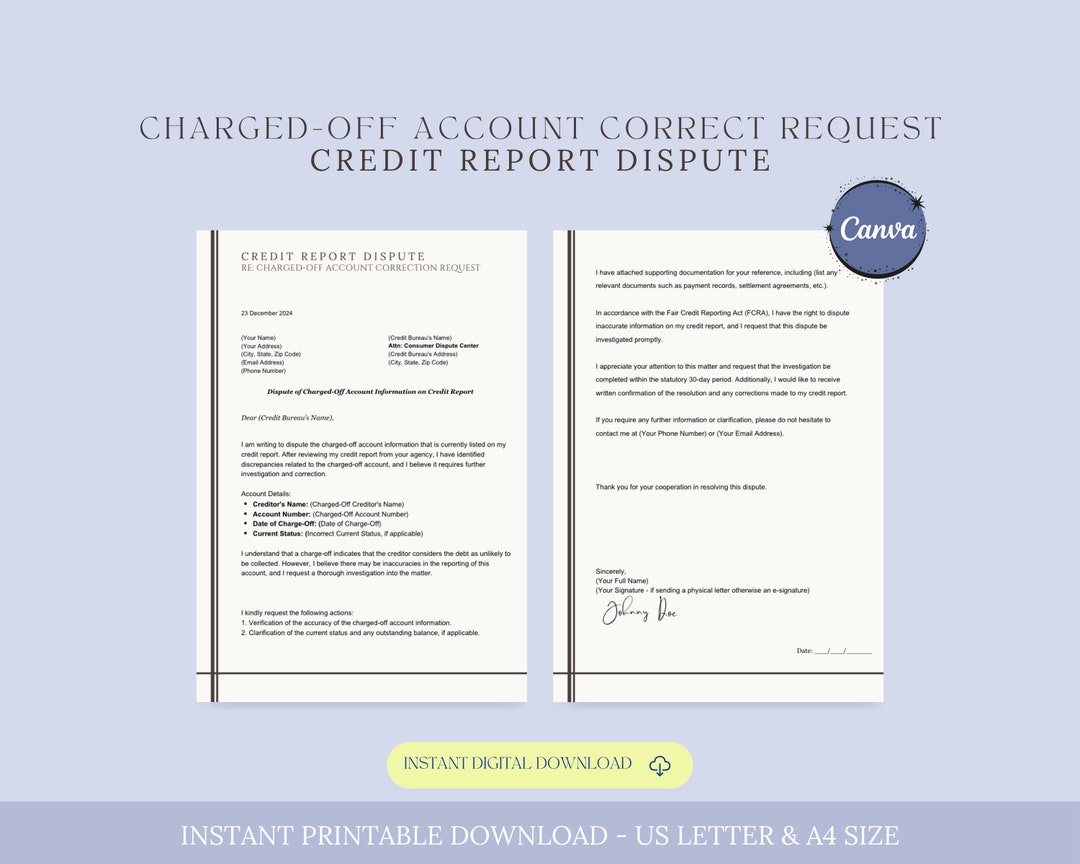
Under the FCRA, creditors and credit bureaus are required to report 100% accurate information. If any detail of the charge-off is incorrect—such as the balance, the Date of First Delinquency, or the account ownership—you have the right to dispute it. If the creditor cannot verify the accuracy of the reported data within 30 days, the credit bureau must remove the entry.
- Check the DOFD: Ensure the "Date of First Delinquency" matches your records. If they are using a later date, they are illegally extending the reporting period.
- Verify Balances: If the debt was sold to a collector, the original creditor must report a $0 balance. If both the original creditor and the collector show an active balance, this is a reporting error.
2. "Pay for Delete" Agreements
This is a negotiation tactic where you offer to pay the debt in full in exchange for the creditor removing the charge-off from your credit report. While many large banks have internal policies against this, some smaller creditors or collection agencies may agree to it. It is critical to get this agreement in writing before making a payment. Note that credit bureaus generally discourage this practice, as it undermines the "completeness" of the credit history.
3. Goodwill Letters
If you have paid the debt and have a generally good history otherwise, you can send a "Goodwill Letter" to the creditor. In this letter, you explain the circumstances that led to the delinquency (such as a medical emergency or job loss) and ask them to remove the entry as a gesture of goodwill. While not guaranteed, this is sometimes successful for consumers with a long-standing relationship with the institution.
Legal and Tax Implications of a Charge-Off
Dealing with a charge-off involves more than just credit scores; there are legal and tax considerations that remain relevant in 2026.
The Statute of Limitations (SOL)
As mentioned, the SOL is the period during which a creditor can sue you to obtain a court judgment for the debt. This varies by state and by the type of contract (e.g., written vs. oral). If the SOL has expired, the debt is "time-barred." While you still technically owe the money, the creditor cannot use the court system to force payment. You should consult with a legal professional or your state's attorney general's office to find the specific SOL for your jurisdiction.
Tax Liability (Form 1099-C)
If a creditor settles a charge-off for $600 or more less than the original balance, or if they formally "cancel" the debt, the IRS may consider the forgiven amount as taxable income. You may receive a Form 1099-C (Cancellation of Debt). According to IRS guidelines, you must report this amount on your tax return unless you qualify for an insolvency exclusion.
FAQs About Charge-Off Duration
Does paying a charge-off reset the 7-year clock?
No. The seven-year reporting period is based on the Date of First Delinquency. Making a payment changes the status of the account (e.g., from "Unpaid" to "Paid"), but it does not allow the creditor to keep the negative mark on your report for another seven years.
Can a charge-off be removed after 7 years?
Yes, removal should be automatic. However, it is wise to monitor your reports via AnnualCreditReport.com to ensure the bureaus have actually purged the data. If it remains after seven years and 180 days, you should file a dispute immediately to have it removed.
What is a "Zombie Debt"?
"Zombie debt" refers to old debts that are past the statute of limitations or even past the credit reporting limit, which are bought by aggressive debt buyers for pennies on the dollar. These collectors may try to trick you into making a payment to "reactivate" the debt's legal status. Always verify the age of a debt before responding to a collector.
Is a charge-off worse than a bankruptcy?
Generally, a single charge-off is less damaging than a full Chapter 7 or Chapter 13 bankruptcy. Bankruptcy clears most of your debts but stays on your report for 7 to 10 years and affects all your accounts, whereas a charge-off is isolated to one specific account.
Practical Next Actions
If you are currently dealing with a charge-off in 2026, your first step should be to pull your official credit reports from all three bureaus. Verify the Date of First Delinquency to determine exactly when the entry is scheduled to drop off. If the debt is relatively new, consider negotiating a settlement to stop further collection efforts and potential lawsuits. If the debt is nearly seven years old, it may be more strategic to wait for the automatic removal while focusing on building positive credit through secured cards or credit-builder loans.
Disclaimer: This article is for informational purposes only and does not constitute legal or financial advice. Laws regarding credit reporting and debt collection can vary by jurisdiction. For specific legal advice, consult with a qualified attorney or a certified financial planner.
Image Gallery