Why Term Life Insurance Beats Whole Life for Most Families in 2026
Term life insurance is the superior choice for most families because it provides maximum death benefit protection at the lowest possible cost during the years of highest financial vulnerability. By covering specific periods of risk—suc...
Term life insurance is the superior choice for most families because it provides maximum death benefit protection at the lowest possible cost during the years of highest financial vulnerability. By covering specific periods of risk—such as mortgage years or child-rearing—families can secure their future affordably while investing their surplus income into higher-yielding assets.
Contents
The debate between term life and whole life insurance is one of the most enduring discussions in personal finance. As we navigate the economic landscape of 2026, the necessity of efficient capital allocation has never been higher. For the average household balancing a mortgage, education costs, and retirement planning, the choice of life insurance isn't just about a death benefit; it is about protecting the family's standard of living without overpaying for unnecessary features.
Disclaimer: This article is for informational purposes only and does not constitute professional financial, legal, or tax advice. Life insurance needs vary significantly based on individual circumstances and local regulations. Consult with a licensed financial advisor or insurance professional before making a purchase.
The Core Philosophy: Protection vs. Savings
To understand why term life insurance is the preferred vehicle for the vast majority of families, one must first distinguish between the two primary types of coverage.
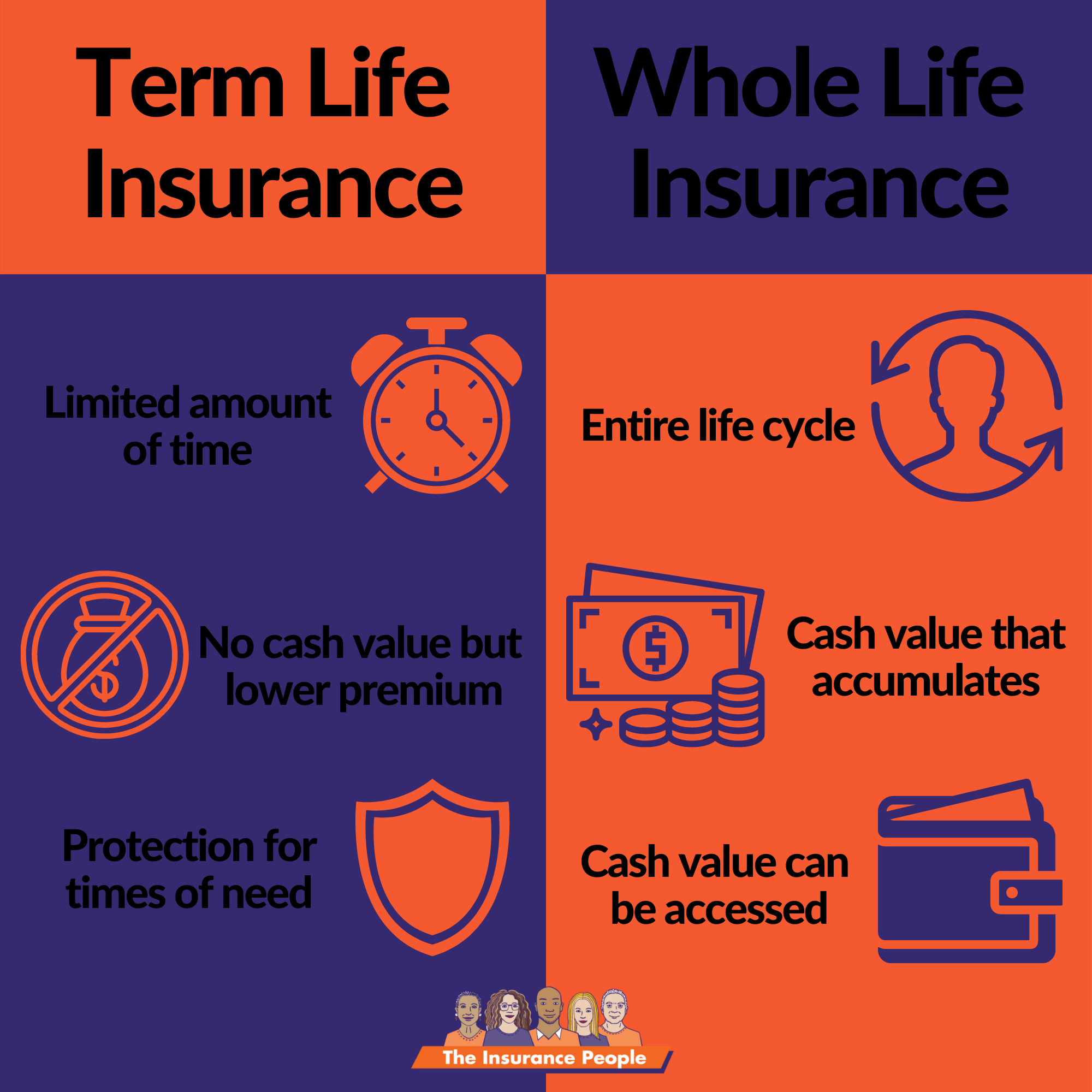
Term life insurance is "pure" insurance. It is designed for one purpose: to pay a specific amount of money to your beneficiaries if you pass away during the policy's term (typically 10, 20, or 30 years). It carries no cash value, no investment component, and no complex surrender rules. Once the term expires, the coverage ends unless you renew it or convert it, usually at a higher cost.
Whole life insurance, a form of permanent life insurance, provides coverage for your entire life, provided premiums are paid. It includes a "cash value" component that grows over time on a tax-deferred basis. A portion of every premium payment goes toward the cost of insurance, while another portion is funneled into this savings account.
For most families, the "permanent" nature of whole life is an expensive solution to a temporary problem. Most financial obligations—raising children, paying off a home, and building a retirement nest egg—have an expiration date. Once the children are independent and the mortgage is cleared, the catastrophic financial need for a multi-million dollar death benefit often diminishes.
The Massive Premium Disparity
The most immediate reason term life beats whole life is the cost of entry. In 2026, the premium for a whole life policy can be 10 to 15 times more expensive than a term life policy for the same amount of death benefit.
For a healthy 35-year-old individual, a $1,000,000 20-year term policy might cost approximately $500 to $700 per year. In contrast, a $1,000,000 whole life policy could easily cost $8,000 to $12,000 per year.
This price gap is significant for a family budget. When a family chooses whole life, they often end up "under-insured" because they cannot afford the high premiums required to reach the necessary death benefit. A family might need $1,000,000 in coverage but settle for a $100,000 whole life policy simply because the $1,000,000 whole life premium is $1,000 a month. This leaves the family dangerously exposed in the event of a breadwinner’s death.
The Impact of High Commissions and Fees
Whole life insurance policies are complex financial products that require significant administrative overhead and pay high commissions to the agents who sell them. It is common for the first year (and sometimes part of the second year) of whole life premiums to go entirely toward the agent’s commission and the insurance company’s marketing costs. This is why whole life policies often have zero or very little cash value in the first few years. Term life, by contrast, is a commodity product with lower commissions and straightforward pricing.
The Myth of the Cash Value Investment
Proponents of whole life insurance often market it as a "forced savings plan" or a safe investment vehicle. However, when analyzed against traditional investment accounts, the cash value in a whole life policy often underperforms.
- Low Internal Rates of Return: While whole life policies may offer a "guaranteed" return, that return is applied only to the cash value portion of the premium, not the total premium paid. After accounting for the high cost of insurance and administrative fees, the actual internal rate of return (IRR) on a whole life policy is often significantly lower than what a diversified portfolio of low-cost index funds would provide over the same period.
- Lack of Transparency: It is notoriously difficult to calculate the exact return on a whole life policy. Annual statements are often opaque, and the "dividends" paid by mutual insurance companies are technically a return of overpaid premiums, not a capital gain in the traditional sense.
- The "You Can't Keep Both" Rule: This is perhaps the most misunderstood aspect of whole life insurance. If you die while the policy is in force, the insurance company pays the death benefit to your beneficiaries, but they usually keep the cash value. Your family does not receive the $1,000,000 death benefit plus the $200,000 you saved in the cash value account. In essence, you are paying extra for a savings account that disappears when the insurance is actually used.
Matching Coverage to the Financial Lifecycle
Life insurance is meant to replace income and cover liabilities. For most families, these liabilities follow a predictable curve known as the "Theory of Decreasing Responsibility."
- Years 1–20: High debt (mortgage), high expenses (childcare, education), and low accumulated wealth. This is when the need for a large death benefit is critical.
- Years 20–40: Debt is reduced, children become self-sufficient, and retirement accounts grow. The need for life insurance decreases because the family has "self-insured" through accumulated assets.
Term life insurance allows a family to buy a large amount of coverage when they need it most. For example, a "laddering" strategy can be used where a parent buys a 30-year policy to cover the mortgage and a 20-year policy to cover the children’s college years. As the 20-year policy expires, the family’s total premium burden drops, matching their decreasing need for protection.
The "Buy Term and Invest the Difference" (BTID) Strategy
The most effective alternative to whole life is the Buy Term and Invest the Difference (BTID) strategy. The logic is simple: Buy a low-cost term policy to get the necessary death benefit, and then take the thousands of dollars you saved by not buying whole life and invest it in a brokerage account, 401(k), or IRA.
A Comparative Example (2026 Projections)
Consider two families, both needing $1,000,000 in coverage:
| Feature | Family A (Whole Life) | Family B (Term + Investing) |
|---|---|---|
| Monthly Premium | $850 | $50 (Term) + $800 (Investment) |
| Death Benefit | $1,000,000 | $1,000,000 (from Term) |
| Liquidity | Restricted (via policy loans) | High (Brokerage/Savings) |
| Asset Growth | 3–4% (Est. Cash Value Growth) | 7–8% (Est. Market Growth) |
| Outcome at 30 Years | $350,000 Cash Value | ~$950,000 (Invested Capital) |
Note: Market returns are not guaranteed and are subject to volatility. Figures are illustrative based on 2026 market expectations.
In this scenario, Family B ends the 30-year period with nearly triple the liquid wealth of Family A. Furthermore, if a member of Family B passes away in year 25, the survivors get the $1,000,000 insurance payout and the $600,000+ they have accumulated in their investment account. Family A’s survivors would generally only receive the $1,000,000.
When Whole Life Actually Makes Sense
While term life is the better choice for "most" families, whole life is not without its uses. It serves specific niches, primarily for the wealthy or those with unique medical/legal needs:
- Estate Liquidity: For individuals with estates valued above the federal estate tax exemption (which remains a significant concern in 2026), whole life can provide the liquid cash necessary to pay estate taxes so that heirs don't have to sell off illiquid assets like a family business or real estate.
- Special Needs Planning: For families with a child who will require lifelong care, a "second-to-die" whole life policy can ensure that a trust is funded to care for that child regardless of when the parents pass away.
- High-Net-Worth Diversification: For individuals who have already maxed out all other tax-advantaged accounts (401k, IRA, HSA, etc.), the tax-deferred growth of whole life cash value can serve as a conservative "bond-like" alternative in a massive portfolio.
For the middle-class family trying to pay for braces and save for a down payment, these scenarios rarely apply.
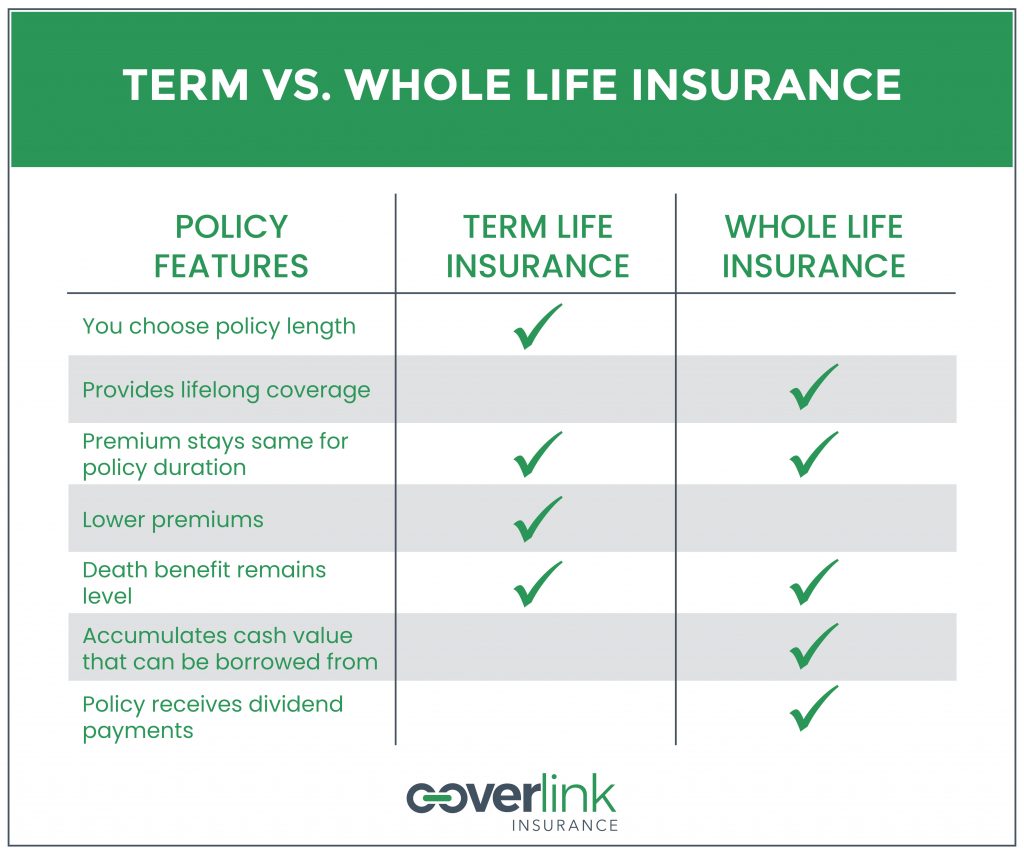
Comparison Table: Term vs. Whole Life (2026)
| Feature | Term Life Insurance | Whole Life Insurance |
|---|---|---|
| Duration | Fixed period (10, 20, or 30 years) | Permanent (Life of the insured) |
| Monthly Cost | Very Low ($20 - $100 typical) | Very High ($400 - $1,500+ typical) |
| Cash Value | None | Grows over time (guaranteed) |
| Complexity | Simple, easy to compare | Highly complex, many variables |
| Death Benefit | Fixed for the term | Can grow if dividends are reinvested |
| Flexibility | Easy to cancel or let expire | High surrender charges in early years |
| Primary Goal | Family protection & income replacement | Estate planning & tax-sheltered savings |
Common Pitfalls and How to Avoid Them
When shopping for life insurance in 2026, families should be wary of several common mistakes:
- Buying Too Little Coverage: Many people follow a "10x income" rule of thumb, but in 2026, with rising costs of education and healthcare, a more detailed "DIME" analysis (Debt, Income, Mortgage, Education) is recommended.
- Waiting Too Long: Life insurance rates are based on age and health. Locking in a 30-year term policy in your 20s or early 30s is significantly cheaper than waiting until your 40s.
- Relying Solely on Employer Policies: Most employer-provided life insurance is only 1x or 2x your salary. Furthermore, if you leave the job, the coverage usually ends. A private term policy ensures you are covered regardless of your employment status.
- Succumbing to Sunk Cost Fallacy: If you already have a whole life policy and realize it’s a poor fit, many people hesitate to cancel it because of the premiums already paid. However, continuing to pay into a sub-optimal vehicle often costs more in "opportunity cost" over the long term.
Frequently Asked Questions
What happens when my term life policy ends?
When the term ends, the coverage simply ceases. You no longer owe premiums, and the insurance company no longer owes a death benefit. By the time a 20 or 30-year policy ends, most families have reached a point where they have significant savings and no longer need the insurance. If you still need coverage, you may be able to renew it annually (at a much higher rate) or convert it to a permanent policy if your contract includes a conversion rider.
Can I convert a term policy to a whole life policy later?
Yes, many term policies include a "conversion rider." This allows you to turn your term policy into a permanent policy without undergoing a new medical exam. This is a valuable feature if you develop a health condition during the term that would make it impossible to get a new policy elsewhere.
Is whole life insurance a "scam"?
No, it is a legitimate financial product. However, it is frequently "mis-sold" to people for whom it is a poor mathematical fit. It is an expensive tool designed for permanent needs, but it is often marketed to families who only have temporary needs. The "scam" aspect usually refers to the aggressive sales tactics and high commissions rather than the product's legality.
How much term life insurance do I actually need?
A common recommendation is to aim for 10 to 15 times your annual gross income. However, a better approach is to calculate your specific needs: your remaining mortgage balance, the total cost of your children’s future college tuition, and the amount of money your spouse would need to live comfortably without your salary for 20 years.
Does term life insurance have any tax benefits?
The primary tax benefit of all life insurance, including term, is that the death benefit is generally paid to beneficiaries tax-free. Unlike a 401(k) or IRA withdrawal, the $1,000,000 your family receives from a term policy is not subject to federal income tax, providing a clean and immediate financial cushion.
Practical Next Actions
If you are currently evaluating your insurance needs, start by calculating your "Total Financial Obligation." Use a DIME worksheet to find your number. Once you have that number, get quotes for a term life policy that matches the length of your longest debt (usually your mortgage).
For most, the goal should be to maximize protection while minimizing monthly outflow. By choosing term life and aggressively investing the savings into tax-advantaged retirement accounts, you create a dual-pathway to security: immediate protection through the policy and long-term independence through your own growing wealth.
Image Gallery