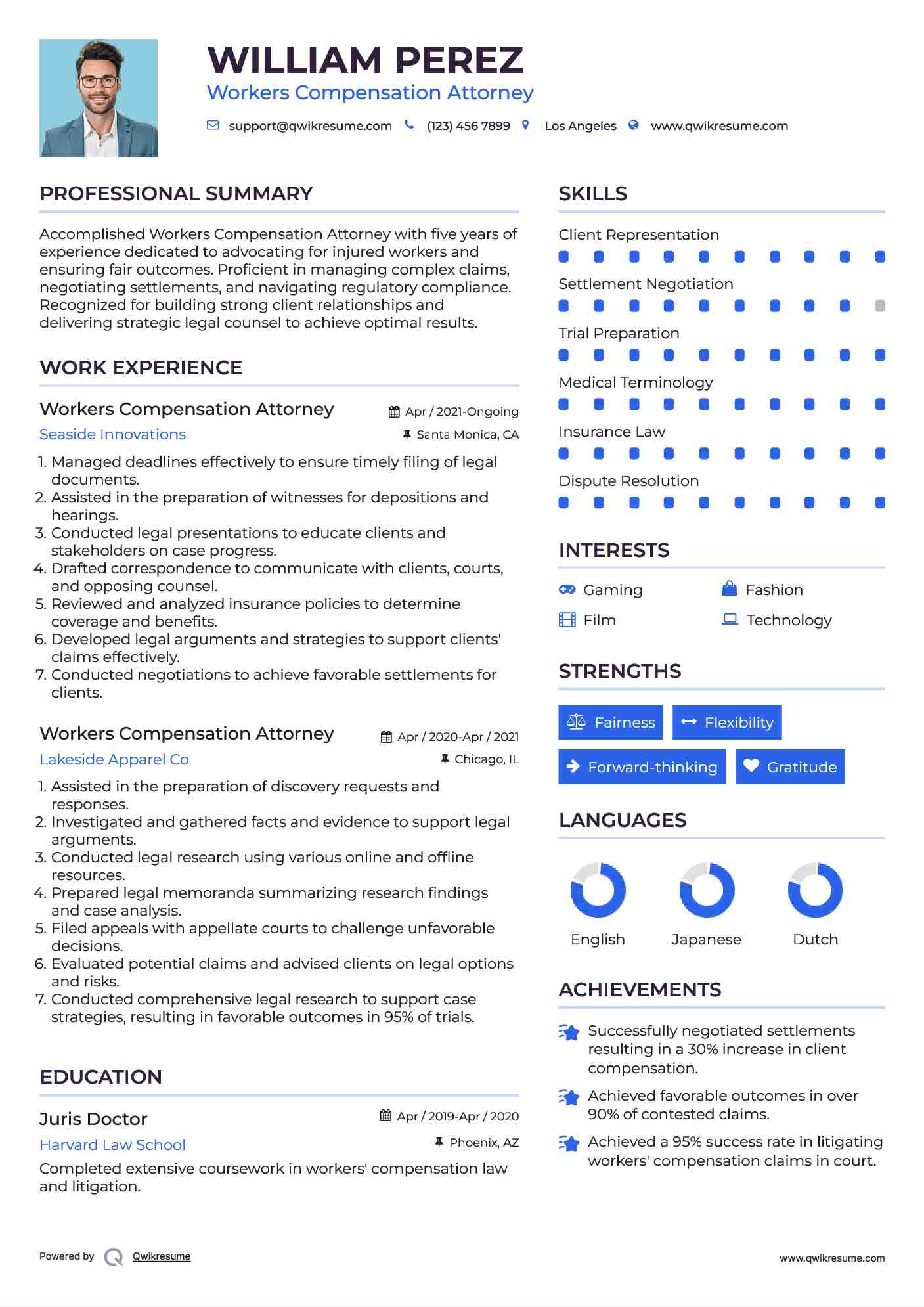
Understanding the Role of a King Workers Compensation Attorney
When an employee suffers a job-related injury or illness, navigating the complex regulatory landscape of the workers’ compensation system can be overwhelming. A King workers compensation attorney provides essential legal advocacy, help...
When an employee suffers a job-related injury or illness, navigating the complex regulatory landscape of the workers’ compensation system can be overwhelming. A King workers compensation attorney provides essential legal advocacy, helping claimants secure necessary medical benefits, manage disputes with insurance carriers, and ensure compliance with state-specific filing deadlines and procedural requirements.
Contents
The Scope of Workers’ Compensation Representation
Workers’ compensation is a specialized area of law designed to provide a "no-fault" safety net for employees who are injured on the job or develop occupational illnesses. Because this system is intended to be a replacement for traditional personal injury litigation, it operates under its own unique set of rules, administrative hearings, and medical-legal evaluations.
A qualified attorney operating within this niche focuses on the intersection of employment law, insurance regulation, and medical documentation. Their role is not merely to "win a case" in the traditional sense, but to maximize the value of a claim by ensuring that all relevant medical history is presented, impairment ratings are accurate, and benefits are calculated correctly based on the injured worker's average weekly wage.
When to Engage Legal Counsel
While some workplace injuries are straightforward—minor cuts or temporary sprains that heal quickly—other claims involve complex medical recovery or insurance resistance. Legal representation becomes particularly critical in the following scenarios:
- Denied Claims: If an insurance carrier denies your claim, asserting that the injury did not occur "in the course and scope" of employment, an attorney is necessary to challenge this denial through administrative appeals.
- Permanent Disability Ratings: If a doctor concludes that you have a permanent impairment, the insurance company may offer a settlement that undervalues your long-term loss of earning capacity. An attorney can contest these ratings.
- Pre-existing Condition Complications: Insurance carriers frequently attempt to shift the blame for an injury onto a pre-existing health condition. Legal counsel helps to prove that the work event at least partially caused or significantly aggravated the underlying condition.
- Retaliatory Actions: If you face termination, harassment, or demotion for filing a workers' compensation claim, you may have grounds for a separate civil action for retaliatory discharge.
The Life Cycle of a Workers’ Compensation Claim
Understanding the procedural stages of a claim is vital for any worker. While specific jurisdictional rules vary, most claims follow a standard trajectory.
1. Incident Reporting and Filing
Immediate reporting is the first step in protecting your rights. In most states, there is a rigid statutory deadline for notifying an employer about an injury. Failure to meet this deadline can result in the total forfeiture of your right to file a claim. An attorney ensures that the formal notice is documented correctly and that the claim is filed with the state board or regulatory agency.
2. Medical Treatment and Management
You must follow the "panel of physicians" or the carrier’s authorized medical provider list in many jurisdictions. However, you are also entitled to clear medical records. Your attorney coordinates with your medical providers to ensure that the descriptions of your physical limitations are accurate and that your treatment plan is adequately funded by the workers’ compensation policy.
3. Benefit Calculation
Benefits are generally divided into two categories: medical benefits and indemnity (wage replacement) benefits. Indemnity benefits are calculated based on your earnings history. An attorney will audit these calculations to ensure that non-salary income, such as bonuses or overtime, is appropriately factored into your average weekly wage.
4. Maximum Medical Improvement (MMI)
MMI is the point at which your condition has stabilized and is not expected to improve further with additional medical treatment. Once MMI is reached, you are assessed for a permanent partial disability rating, which forms the basis for any final settlement or long-term disability award.
Comparison of Claims Processes
| Feature | Unrepresented Claimant | Represented Claimant |
|---|---|---|
| Initial Filing | Potential for administrative error | Procedural compliance assured |
| Medical Records | Managed by insurance carrier | Monitored for clinical accuracy |
| Claim Denials | Often leads to dropped claims | Resolved via formal litigation |
| Settlement Offers | Typically lower initial valuation | Negotiated based on case precedent |
| Hearing Presence | Requires self-advocacy | Legal representation provided |
Common Pitfalls for Injured Workers
One of the most frequent mistakes workers make is failing to understand the distinction between "medical advice" and "insurance adjuster advice." Insurance adjusters, while often professional, are ultimately representatives of the entity paying for the claim. Their goal is to mitigate costs, which can sometimes come at the expense of your comprehensive recovery.
Another common pitfall is the social media trap. Insurance investigators often monitor the public social media activity of claimants. Photos showing physical activity that contradicts an alleged injury can be used to discredit a witness’s testimony during a hearing. An experienced attorney will advise you on how to manage your privacy and digital footprint during the duration of your claim.
Navigating Permanent Partial Disability (PPD)
The transition from temporary total disability to permanent partial disability (PPD) is a high-stakes period. At this stage, the insurance carrier will often propose a "lump sum" settlement to close the case permanently.
Accepting a lump sum requires careful consideration. Once a claim is settled, you typically cannot reopen it, even if your medical condition deteriorates. An attorney will conduct a "cost-benefit analysis" to determine if the settlement is sufficient to cover anticipated future medical costs, including potential surgical interventions, physical therapy, and pharmacological needs.
Frequently Asked Questions
Do I need an attorney if my employer admits the injury occurred?
Even if the employer is cooperative, the insurance carrier may still dispute the duration of benefits or the necessity of specific medical procedures. Legal counsel ensures that your long-term interests are protected, even in friendly employer-employee relationships.
What are the standard attorney fees for workers' compensation?
In most jurisdictions, workers' compensation attorneys operate on a contingency fee basis, meaning they only receive payment if they secure benefits for you. These fees are usually capped by state law as a percentage of the settlement or the benefit award.
Can I change my doctor if I am unhappy with the care?
Yes, but the process is highly regulated. In many states, you have a one-time right to change your physician from a provided panel. An attorney can facilitate this request to ensure you are seen by a doctor who provides an unbiased assessment of your injuries.
What if my injury happened because I was careless?
The workers’ compensation system is largely a "no-fault" system. Even if your own actions contributed to the accident, you are generally still entitled to benefits, provided the incident occurred within the scope of your employment.
Can I be fired for filing a claim?
While an employer cannot legally fire you in retaliation for filing a workers' compensation claim, they can still terminate employment for unrelated reasons, such as layoffs or performance issues. If you suspect your termination was retaliatory, you should consult an attorney immediately to discuss your rights under employment law.
What happens if I go back to work at a lower pay rate?
You may be entitled to "partial disability" benefits, which are designed to bridge the gap between your pre-injury wages and your current lower earnings, provided the loss of income is a direct result of your work-related physical restrictions.
Next Steps for Claimants
If you are currently managing a work-related injury, your immediate next action should be to organize your medical documentation and the written notice of injury provided to your employer. Gather all correspondence from the insurance carrier and keep a chronological log of all appointments, lost wages, and discussions regarding your recovery.
If you encounter any difficulty in obtaining treatment, receive a formal notice of claim denial, or are asked to sign a "full and final" settlement document, seek a consultation with a licensed workers compensation attorney in your jurisdiction before signing any paperwork. Legal advocacy is most effective when initiated early, allowing your representative to build a robust evidentiary file that supports the full extent of your claim.
Image Gallery