Understanding the Uncertainty of a Beaker in Laboratory Measurements
The uncertainty of a beaker refers to the inherent margin of error in its volume graduations, typically valued at ±5% to ±10% of the total capacity. Because beakers are designed for mixing, stirring, and heating rather than precise vol...
The uncertainty of a beaker refers to the inherent margin of error in its volume graduations, typically valued at ±5% to ±10% of the total capacity. Because beakers are designed for mixing, stirring, and heating rather than precise volumetric measurement, they possess high systematic uncertainty and should never be used for tasks requiring high analytical accuracy.
Contents
The Role and Function of Beakers in the Modern Laboratory
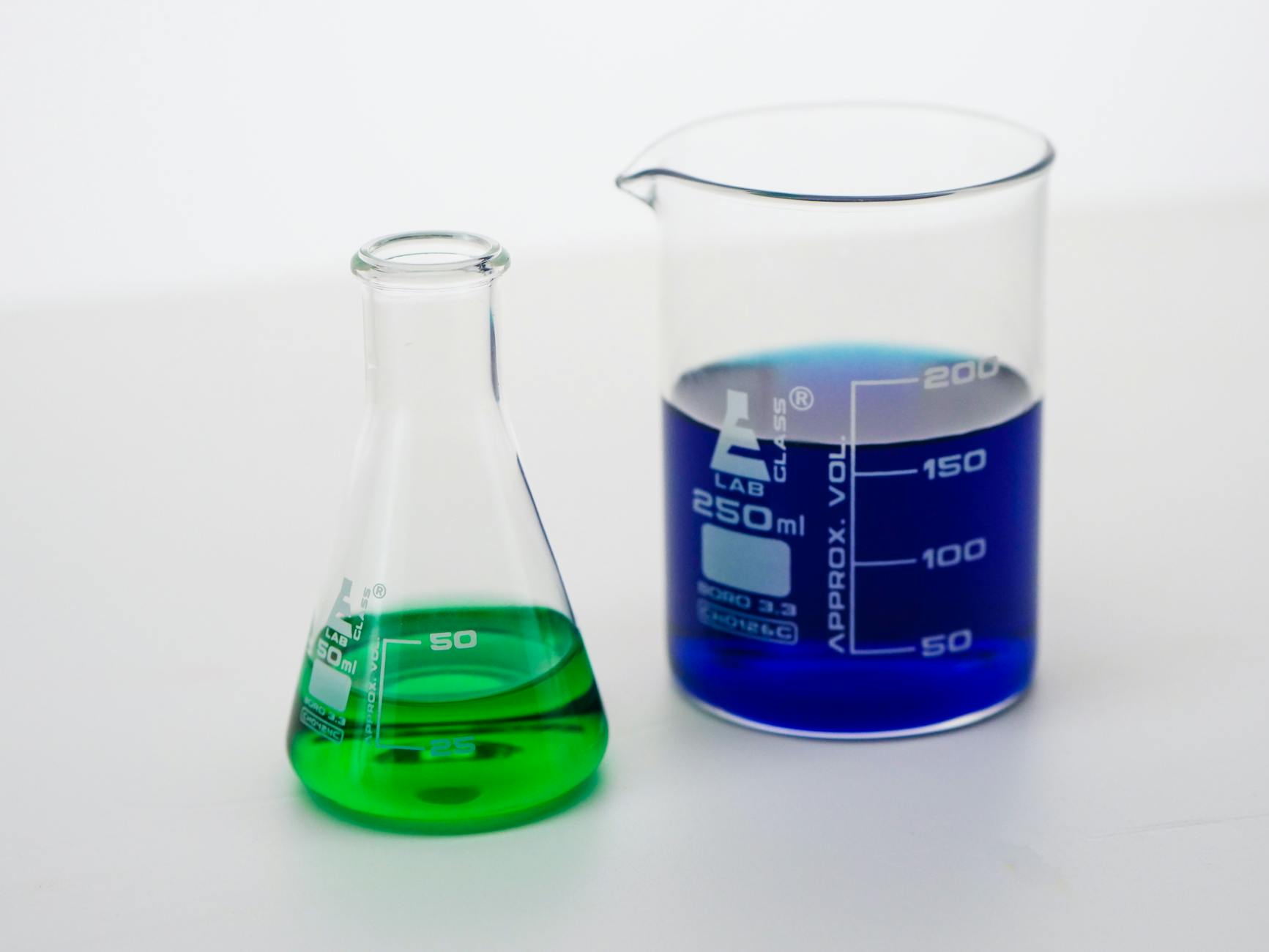
In the laboratory environment of 2026, despite the proliferation of digital sensors and automated liquid handling systems, the glass beaker remains a fundamental tool. However, its role is often misunderstood by students and entry-level technicians. A beaker is primarily a decorative and functional vessel for containment. It is manufactured from borosilicate glass 3.3, a material chosen for its low coefficient of thermal expansion and high resistance to chemical attack.
When we discuss the "uncertainty" of a beaker, we are addressing the statistical range within which the true volume of a liquid resides when filled to a specific marking. Unlike volumetric flasks or pipettes, which are calibrated to extreme tolerances, beakers are mass-produced with printed scales. These scales provide a rough estimate, or a "ballpark" figure, which is sufficient for preparing a water bath or mixing non-critical reagents, but wholly inadequate for creating standard solutions or performing titrations.
Understanding this uncertainty is critical for quality control. In any experimental procedure, the cumulative uncertainty of the equipment dictates the reliability of the final result. If a scientist uses a beaker to measure a primary reactant, the high uncertainty of that vessel becomes a "bottleneck" in the data's precision, regardless of how advanced the subsequent analytical instruments might be.
Defining Measurement Uncertainty in Volumetric Glassware
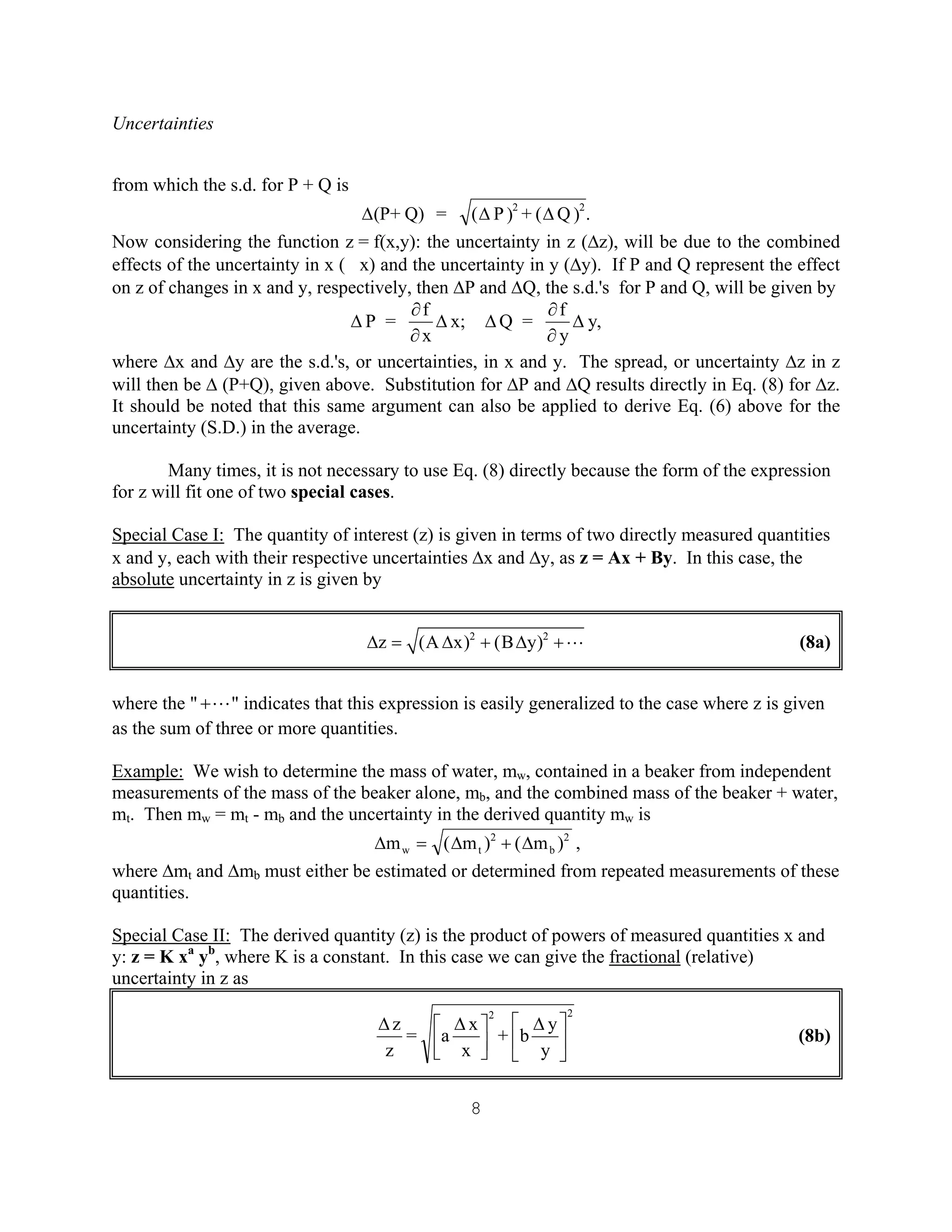
To understand why a beaker is inherently uncertain, one must first grasp the broader concepts of measurement uncertainty as defined by international standards like the ISO/IEC Guide 98-3 (GUM: Guide to the Expression of Uncertainty in Measurement). Uncertainty is not a "mistake"; rather, it is a quantifiable doubt about the result of a measurement.
In laboratory glassware, uncertainty is categorized into two primary types:
- Type A Uncertainty: This is evaluated by statistical analysis of a series of observations. If you were to fill a beaker to the 100mL mark 50 times and weigh the water each time, the variation in those weights (after correcting for density) would provide a Type A evaluation.
- Type B Uncertainty: This is based on scientific judgment or information provided by the manufacturer. For beakers, the printed ±5% or ±10% mark is a Type B uncertainty. It is a fixed limit established during the manufacturing process.
Beakers are classified as "To Contain" (TC) vessels, meaning the markings indicate the volume of liquid held within the vessel. However, because they lack the refined neck of a volumetric flask, the surface area of the liquid at the graduation mark is large. A minor deviation in the height of the liquid level translates to a significant volume error.
The Geometric and Physical Origins of Beaker Uncertainty
The primary reason for a beaker's high uncertainty is its geometry. Most beakers are cylindrical or slightly tapered with a wide diameter. To understand the impact of this shape on uncertainty, consider the formula for the volume of a cylinder: $V = \pi r^2 h$.
In a wide vessel like a beaker, the radius ($r$) is large. Therefore, even a tiny error in the height ($h$) of the liquid—caused by the thickness of the printed line or a slight tilt of the head (parallax)—is multiplied by the square of the large radius. In contrast, a graduated cylinder or a volumetric flask has a much smaller radius at the measurement point, which minimizes the volume displacement caused by small errors in height.
The Meniscus and Reading Errors
The meniscus is the curve seen at the top of a liquid in response to its container. In borosilicate glass, water forms a concave meniscus. Standard laboratory practice dictates reading the bottom of the meniscus at eye level. In a beaker, the width of the vessel makes it difficult to judge the exact bottom of the meniscus against the relatively thick graduation lines. This "readability error" is a major component of the overall uncertainty budget.
Manufacturing Tolerances
Unlike Class A volumetric glassware, which must meet strict tolerances defined by ASTM E288 or ISO 1042, beakers are often manufactured to lower standards. The graduation marks are frequently silkscreened onto the glass rather than etched. If the screen is slightly misaligned during production, every measurement taken with that beaker will have a consistent systematic error. In 2026, while manufacturing precision has improved, the intended use of the beaker remains "approximate," and manufacturers do not invest the resources required to calibrate these vessels to high precision.
Quantifying the Uncertainty: Absolute vs. Relative
When working in a lab, you must be able to convert the manufacturer’s percentage uncertainty into a usable value.
- Absolute Uncertainty: This is the margin of error expressed in the same units as the measurement. If a 250mL beaker has a stated uncertainty of ±5%, the absolute uncertainty is $250 \times 0.05 = \pm 12.5\text{ mL}$. This means a liquid filled to the 250mL line could actually be anywhere between 237.5mL and 262.5mL.
- Relative Uncertainty: This is the absolute uncertainty divided by the measured volume, often expressed as a percentage. It allows scientists to compare the precision of different tools.
For a beaker, the relative uncertainty remains constant (e.g., 5%), but the absolute uncertainty increases as you use larger vessels. This is why using a 1000mL beaker to measure 100mL of liquid is a significant error in laboratory technique; the markings on the larger vessel are even less precise than those on a smaller one.
Comparing Volumetric Glassware Uncertainty
To visualize where the beaker stands in the hierarchy of laboratory precision, the following table compares common 250mL vessels. Note that "Class A" refers to high-precision glassware calibrated to national standards, while "Class B" or "General Purpose" refers to standard laboratory grade.
| Vessel Type (250mL) | Typical Uncertainty (Absolute) | Relative Uncertainty (%) | Primary Purpose |
|---|---|---|---|
| Beaker (General) | ±12.5 mL | 5.0% | Mixing, heating, storage |
| Graduated Cylinder (Class B) | ±2.0 mL | 0.8% | General volume measurement |
| Graduated Cylinder (Class A) | ±1.0 mL | 0.4% | Precise volume measurement |
| Volumetric Flask (Class A) | ±0.12 mL | 0.048% | Preparing standard solutions |
| Transfer Pipette (Class A) | ±0.03 mL | 0.012% | Highly precise fluid transfer |
As the table illustrates, a Class A volumetric flask is over 100 times more precise than a standard beaker of the same volume. Using a beaker for quantitative analysis in 2026 would be considered a breach of standard operating procedures (SOP) in almost any regulated laboratory.
External Factors Influencing Beaker Accuracy
Beyond the inherent uncertainty of the vessel itself, several environmental and human factors can further degrade the accuracy of a beaker measurement.
Parallax Error
Parallax occurs when the user's eye is not level with the graduation mark. If you look down at the beaker, the volume will appear lower than it actually is; if you look up, it will appear higher. Because beakers have a wide diameter, the "ghosting" effect of the graduation line on the far side of the glass is more pronounced, making parallax error harder to avoid than in narrower vessels.
Thermal Expansion and Contraction
While borosilicate glass 3.3 is famous for its thermal shock resistance, it still expands and contracts. Most laboratory glassware is calibrated at 20°C (68°F). If you are measuring a boiling liquid in a beaker, the volume of the glass container will have increased slightly, and the density of the liquid will have decreased significantly. While the beaker's own uncertainty is already so high that thermal expansion of the glass is often negligible, the change in liquid density is not.
Cleanliness and Surface Tension
The presence of residues or "grease" on the inner wall of a beaker can change the shape of the meniscus. If the glass is not chemically clean, the liquid may not "wet" the surface evenly, leading to an irregular meniscus that is impossible to read accurately. In precision work, this is a fatal flaw, but even in a beaker, it can push the measurement outside the ±5% tolerance.
Practical Best Practices for 2026
Given the high uncertainty of beakers, their use should be strictly controlled within a professional or educational laboratory setting. Follow these guidelines to ensure data integrity:
- Never Use Beakers for Standards: If a protocol requires a "standard solution," always use a volumetric flask. The uncertainty of a beaker is too high to ensure the molarity of the resulting solution.
- Observe the "Rule of Tenths": If possible, use a measuring device with an uncertainty ten times smaller than the required precision of your experiment. If you need to be accurate within 1mL, a beaker (with ±12.5mL uncertainty) is inappropriate.
- Use the Smallest Vessel Possible: To minimize absolute uncertainty, choose the smallest beaker that can safely hold your volume. Measuring 40mL in a 50mL beaker is marginally more reliable than measuring 40mL in a 600mL beaker.
- Verify with Mass: In modern labs, the most common way to bypass beaker uncertainty is to use a calibrated analytical balance. By weighing the beaker empty and then filled, and correcting for the density of the liquid at the current temperature, you can achieve precision far exceeding the printed lines on the glass.
Frequently Asked Questions
Is the uncertainty of a plastic beaker different from a glass one?
Yes, generally plastic beakers (made from polypropylene or PMP) have slightly higher uncertainties or more frequent graduation errors due to the injection molding process. Additionally, plastic can deform over time or under high heat, whereas glass remains rigid until it reaches its softening point.
Can I calibrate a beaker to make it more certain?
While you can "calibrate" a specific beaker by marking it based on mass-volume conversions, the wide neck still makes the reading error too high for precision work. It is more efficient to simply use a graduated cylinder or a flask designed for accuracy.
Does the uncertainty of a beaker change with different liquids?
The inherent uncertainty of the markings does not change, but your ability to read the volume does. Opaque liquids, highly viscous fluids, or liquids with different surface tensions (like mercury or oils) will form different menisci, which can increase the "readability" component of the total uncertainty.
Why do manufacturers bother putting marks on beakers at all?
The marks provide a "safe fill" limit and allow for "approximate" measurements where precision is irrelevant, such as adding 500mL of water to a heating bath or estimated dilution where the final concentration is not being measured quantitatively.
Is the uncertainty the same for all brands of beakers?
Most reputable manufacturers (such as Pyrex, Kimax, or Duran) adhere to the ±5% standard for their borosilicate beakers. Off-brand or decorative glassware may have no stated uncertainty and can be off by 15% or more. Always check for the "graduation range" or "approximate volumes" disclaimer on the vessel.
Final Recommendation
When conducting laboratory work, always treat the graduation marks on a beaker as a rough guide rather than a precise measurement. If your procedure requires an accuracy better than 10%, you must transition to a graduated cylinder or, ideally, a Class A volumetric flask. For all quantitative calculations, rely on the stated uncertainty of your equipment to determine the significant figures and the reliability of your final results.
Image Gallery