Mastering the Art of Deception: How 5 on 5 Flag Football Trick Plays Work
5 on 5 flag football trick plays work by exploiting defensive "eye-discipline" through misdirection, hidden ball transfers, and unconventional passing sequences. By forcing defenders to react to a diversion, offensive teams create open...
5 on 5 flag football trick plays work by exploiting defensive "eye-discipline" through misdirection, hidden ball transfers, and unconventional passing sequences. By forcing defenders to react to a diversion, offensive teams create open lanes or mismatches, turning a high-speed, no-contact environment into a tactical chess match where timing is everything.
Contents
The Foundation of Deception in 5v5 Flag Football
In the 2026 flag football landscape, from recreational leagues to competitive tournaments, the 5v5 format is defined by space and speed. Unlike traditional 11v11 football, there is no offensive line to provide a pocket. The quarterback often has a limited time to throw—governed by a rushing clock or a live rusher starting seven yards back—making the margin for error razor-thin. Trick plays are not just "gimmicks"; they are calculated strategic tools used to reset the defensive tempo.
How these plays work depends on a concept called defensive over-pursuit. Because there are fewer players on the field, every defender has a massive amount of territory to cover. When a defense sees a convincing fake or a sudden change in ball direction, their instinct is to sprint toward the perceived threat. Trick plays capitalize on this instinct by showing the defense one "truth" while executing another. For a trick play to succeed in 5v5, it must be grounded in the team’s standard "bread and butter" looks, ensuring the deception remains indistinguishable from a routine play until the trap is sprung.
The Mechanics of Misdirection: Why Trick Plays Succeed
To understand how these plays work technically, one must look at the three primary mechanics of flag football deception: the fake hand-off, the lateral, and the "second thrower" concept.
The Psychology of Eye-Discipline
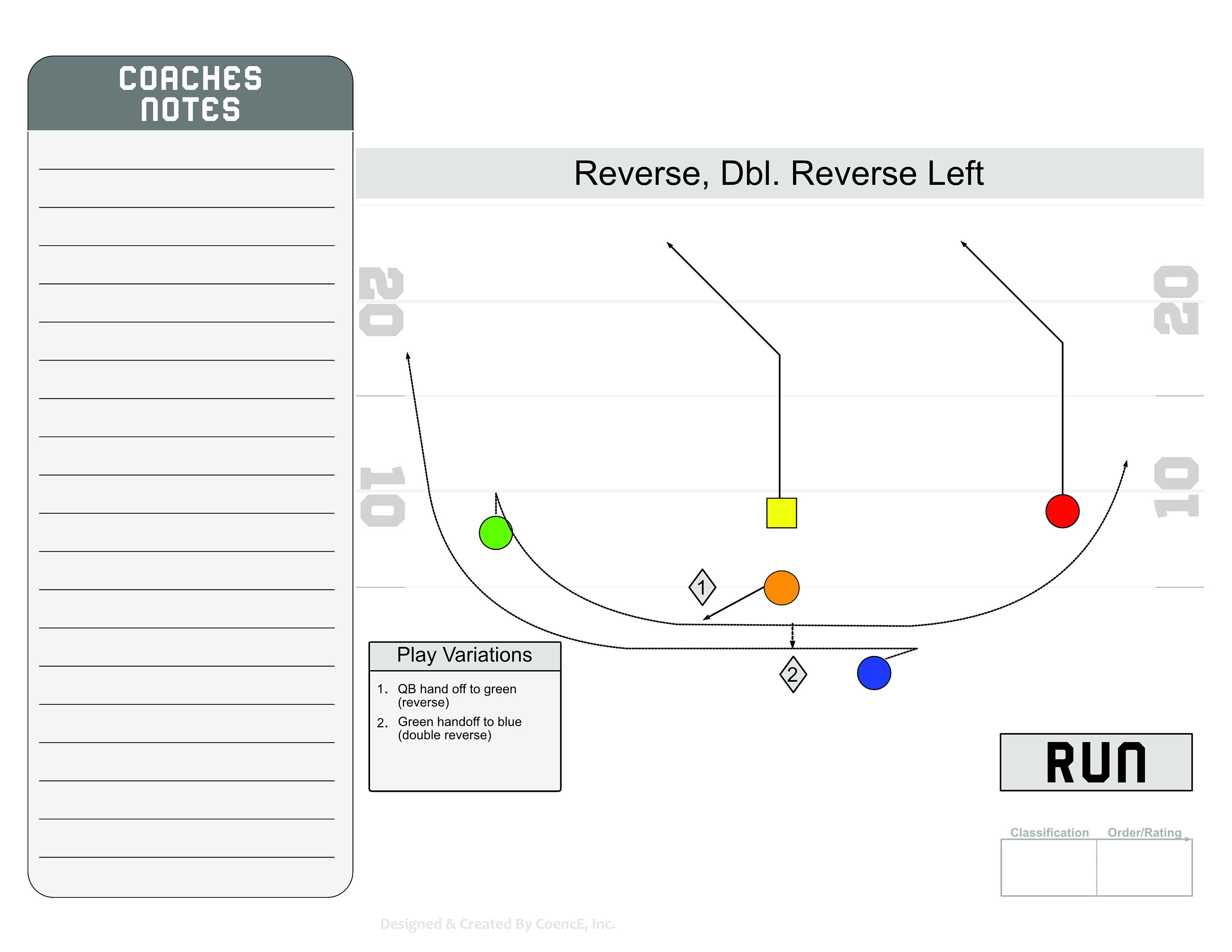
In 5v5, defenders are taught to read the quarterback’s eyes and the hips of the primary ball carrier. Trick plays aim to "break" this discipline. For example, in a Double Pass, the defense sees a lateral to a receiver and immediately assumes the play has transitioned into a run or a short-gain scenario. Defenders pull their eyes away from the secondary receivers to "swarm" the ball. By the time they realize the receiver is actually a second passer, the coverage is blown.
The Timing of the "Rush"
Most 5v5 leagues, such as those governed by NFL FLAG rules in 2026, allow a defender to rush the quarterback if they start seven yards from the line of scrimmage. Trick plays often use this rusher’s momentum against them. A well-timed trick play, like a Center Sneak, involves the center snapping the ball and then appearing to be an inactive blocker, only to slip into the flat once the rusher has committed to a path toward the quarterback.
Ball Security and Pitch Mechanics
Technically, a trick play often fails not because the deception didn't work, but because of a mechanical error during a lateral or pitch. In 5v5, a dropped lateral is usually a "dead ball" at the spot, meaning the risk of a turnover is low, but the risk of a lost down and zero yardage is high. Successful execution requires "soft hands" and a "basketball-style" chest pass rather than a wild heave, ensuring the ball reaches the second playmaker in stride.
Iconic 5v5 Trick Plays and Their Technical Execution
While there are hundreds of variations, a few core designs represent the peak of 5v5 strategy. These plays are designed to handle specific defensive alignments, such as Man-to-Man or Zone.
1. The Flea Flicker (Modified for 5v5)
In the 5v5 version of the Flea Flicker, the quarterback hands the ball off to a running back (or a receiver in motion). The ball carrier runs toward the line of scrimmage, drawing the defenders in. Just before crossing the line, the carrier pitches the ball backward to the quarterback.
- How it works: It forces the safeties to "bite" on the run. In 5v5, safeties are often the last line of defense; if they step up even three yards, a fast receiver can get behind them for a touchdown.
- Risk: The quarterback is vulnerable to a secondary rusher if the play takes too long to develop.
2. The Hook and Lateral
This is a classic "timing" play. The quarterback throws a 5-to-8-yard "hook" or "hitch" route to a receiver. As the receiver catches the ball and turns, another player (usually a trailing receiver or the center) streaks past them. The first receiver pitches the ball to the second player in one fluid motion.
- How it works: Defenders are coached to "break on the ball." When the first catch is made, the defender closes the gap to pull the flag. The lateral catches them in a stationary or downward-lunging position, while the second runner is at full speed.
- Technical requirement: The pitch must be a "no-look" or "feel" play, requiring hours of practice to master the spacing.
3. The Statue of Liberty
The quarterback drops back and holds the ball behind their back with one hand while faking a pump-pass with the other. A receiver or running back coming across the formation takes the ball out of the quarterback's stationary hand.
- How it works: This play specifically targets the "rusher." If the rusher is over-aggressive, they will jump to block the fake pass, leaving a wide-open lane for the runner.
- Key Detail: The quarterback’s "acting" is the most important part. A convincing fake eyes-downfield look is what pulls the defense out of position.
Strategic Comparison of 5v5 Trick Play Types
The following table compares the most common 5v5 trick play categories based on their technical requirements and ideal usage scenarios for the 2026 season.
| Play Name | Complexity | Primary Target | Ideal Field Zone | Risk Level |
|---|---|---|---|---|
| Double Pass | High | Defensive Safeties | Mid-field | High (Incomplete pass) |
| Hook & Lateral | Medium | Cornerbacks | 1st Down Line | Medium (Timing errors) |
| Center Sneak | Low | The Rusher | Red Zone | Low (Safe completion) |
| Flea Flicker | High | Entire Secondary | Long Yardage | High (Sack potential) |
| The "Philly" Special | Very High | Man-to-Man Defenses | Goal Line | Very High (Complexity) |
The Role of the Center in Trick Play Design
In 5v5 flag football, the center is an eligible receiver. This is the most underutilized technical advantage in trick play design. Most amateur defenses ignore the center after the snap, assuming they are merely a stationary point.
The "Delayed Center Leak" works by having the center snap the ball and remain still for two seconds (often pretending to "watch" the play). As the quarterback scrambles to one side, the center "leaks" out to the opposite side. Because the defense is focused on the scrambling QB and the primary receivers, the center often finds themselves in a 10-yard radius of empty space. This works because it exploits the "Zone-of-Indifference," a technical term for the area defenders vacate when they think a play has moved past them.
Defensive Counter-measures: Spotting the Trick
To understand how trick plays work, one must also understand why they fail. Experienced coaches in 2026 teach a "Pass-First, Run-Second" mentality.
- Stay "Deepest of the Deep": Safeties are taught that if they are the last defender, they must never let a player get behind them, regardless of what the quarterback is doing with their hands.
- Rushing Lane Integrity: The rusher is taught not to leave their feet. If a rusher stays on the ground, they can react to a lateral or a "Statue of Liberty" much faster than if they are caught in mid-air trying to swat a fake pass.
- Communication: Trick plays rely on silence and confusion. A defense that talks—calling out "Reverse!" or "Ball back!"—can neutralize the psychological advantage of a trick play instantly.
Common Mistakes in Executing Trick Plays
Even the most brilliant play design will fail if technical fundamentals are ignored. The most common errors include:
- Over-complication: A play that requires four laterals is four times as likely to end in a dead ball. The best trick plays involve a single point of deception.
- Poor Spacing: In 5v5, the field is narrow. If two receivers are within five yards of each other during a trick play, one defender can effectively cover both. Maintaining "vertical and horizontal stretch" is vital.
- Telegraphing the Move: Players often get excited when a trick play is called. A receiver might line up slightly differently or look at the quarterback more intensely. Technical SEO and sports analysis both agree: consistency in "pre-snap" behavior is essential for high-level success.
Frequently Asked Questions
Why are trick plays more common in 5v5 than in 11v11?
In 5v5, the lack of a traditional offensive line means the quarterback cannot simply wait for a play to develop. Trick plays provide a way to create artificial time and space that doesn't exist in standard formations. Additionally, with only five defenders, one successful fake can remove 20% of the defense from the play, creating a much larger advantage than in 11v11.
Can the quarterback catch a pass in 5v5 trick plays?
Yes, in most 2026 5v5 rulesets, the quarterback is eligible to catch a pass as long as the ball has been legally handed off or pitched to another player behind the line of scrimmage. This is the basis for the "Philly Special" style plays where the QB becomes the target.
What is the "No-Run Zone" and how does it affect trick plays?
Many 5v5 leagues have a "No-Run Zone" within five yards of the end zone or the first-down marker. In these zones, the ball carrier cannot run the ball across the line; the play must be a forward pass. This limits trick plays to "Double Pass" or "Hook and Lateral" variations, as "Reverse" or "Statue of Liberty" runs are illegal in these areas.
Does a lateral count as a pass in 5v5?
Technically, a lateral (a sideways or backward toss) is not a forward pass. In leagues with a "one forward pass" rule, you can execute multiple laterals and still throw a forward pass, provided the ball has not crossed the line of scrimmage.
How do I know when to call a trick play?
The best time to call a trick play is when the defense is playing "aggressive" or "reactive." If the defense is consistently "biting" on your initial movements or if the rusher is consistently getting close to the QB, a trick play can punish that aggression.
Practical Recommendation for Coaches and Players
To successfully implement trick plays into your 2026 5v5 flag football strategy, start with one "Misdirection" play and one "Delayed" play. Do not attempt to install an entire playbook of "tricks." Instead, master the Double Pass (Misdirection) and the Center Leak (Delayed). Ensure your team can execute these plays at full speed during practice before trying them in a game. Remember that the "trick" is only 10% of the play; the other 90% is the same fundamental catching, throwing, and flag-pulling that wins standard downs.
Image Gallery