Understanding the Environment of Hong Kong: Biodiversity, Air Quality, and Conservation Frameworks
The environment of Hong Kong is characterized by a striking dual landscape, balancing one of the world's most densely populated urban centers with vast, protected natural ecosystems. Over 40% of its land area is preserved within statut...
The environment of Hong Kong is characterized by a striking dual landscape, balancing one of the world's most densely populated urban centers with vast, protected natural ecosystems. Over 40% of its land area is preserved within statutory country parks, harboring remarkable subtropical biodiversity alongside significant environmental challenges, including regional air pollution, municipal waste management, and coastal ecosystem pressure.
Contents
The Ecological and Physical Geography of Hong Kong
Hong Kong’s total land area of approximately 1,114 square kilometers encompasses Hong Kong Island, the Kowloon Peninsula, the New Territories, and over 260 outlying islands. Despite its global reputation as a concrete metropolis dominated by high-rise financial hubs, the territory's topography is predominantly hilly to mountainous, with steep slopes defining much of the terrain. This rugged physical structure historically constrained urbanization to coastal plains and reclaimed land, inadvertently preserving extensive hilly hinterlands from intensive construction.
| Hong Kong Land Utilization |
|---|
| Protected Country Parks & Special Areas: ~40% |
| Woodland, Shrubland, & Grassland: ~25% |
| Built-up Urban & Developed Areas: ~24% |
| Agriculture & Aquaculture: ~5% |
| Water Bodies & Wetlands: ~6% |
The territory experiences a humid subtropical climate strongly influenced by the Asian monsoon cycle. Winters are mild and relatively dry, while summers are hot, humid, and subject to heavy rainfall and occasional tropical cyclones (typhoons). This climatic dynamic, combined with varied marine and terrestrial habitats, supports an exceptionally high level of biological diversity relative to the city's small geographical footprint.
The Country Parks System and Statutory Protection
The cornerstone of Hong Kong's natural conservation strategy is the Country Parks Ordinance, enacted in 1976. Administered by the Agriculture, Fisheries and Conservation Department (AFCD), this legislative framework established a network of protected spaces designed to conserve wildlife, provide outdoor recreation, and protect vital water catchment areas.
Today, Hong Kong contains 24 designated Country Parks and 22 Special Areas, encompassing roughly 440 square kilometers. These reserves act as natural carbon sinks, buffer zones against urban heat island effects, and critical habitats for endemic and threatened species. Major parks such as Tai Mo Shan Country Park, Sai Kung East Country Park, and Lantau South Country Park serve as statutory barriers against uninhibited urban sprawl.
Terrestrial and Marine Biodiversity
Despite intense anthropogenic activity, Hong Kong harbors a richer variety of wildlife than many larger temperate regions. The territory contains over 3,300 species of vascular plants, more than 550 species of birds (representing over one-third of China's total avian diversity), 55 species of terrestrial mammals, over 100 species of reptiles, and 25 species of amphibians.
Critical Species and Ecological Reserves
- Avian Wildlife & Wetlands: The Mai Po Inner Deep Bay Wetland was designated as a Wetland of International Importance under the Ramsar Convention in 1995. Covering approximately 1,500 hectares of intertidal mudflats, mangroves, and traditional fishponds (gei wais), it serves as a critical stopover and wintering site for tens of thousands of migratory waterbirds along the East Asian-Australasian Flyway, including the critically endangered Black-faced Spoonbill (Platalea minor).
- Endemic & Threatened Fauna: Hong Kong supports localized species such as Romer’s Tree Frog (Liuixalus romeri), the Hong Kong Newt (Cynops hkongensis), and the Chinese Pangolin (Manis pentadactyla).
- Marine Ecosystems: The surrounding waters lie at the transition zone between tropical and temperate oceanic currents. Hong Kong’s waters host over 80 species of hard corals—more than the entire Mediterranean Sea—concentrated largely in eastern marine parks like Hoi Ha Wan and Tung Ping Chau.
| Key Conservation Hotspots |
|---|
| 1. Mai Po Inner Deep Bay (Ramsar Wetland Site) |
| 2. Hoi Ha Wan Marine Park (Coral Communities) |
| 3. Tai Mo Shan Country Park (Upland Habitat) |
| 4. Sha Chau & Lung Kwu Chau (Cetacean Reserve) |
Marine Conservation and Cetacean Habitats
The western waters of Hong Kong, particularly around the Pearl River Estuary, serve as a primary habitat for the Indo-Pacific Humpback Dolphin (Sousa chinensis), locally referred to as the Chinese pink dolphin, as well as the Indo-Pacific Finless Porpoise (Neophocaena phocaenoides).
These populations face severe cumulative impacts from heavy maritime traffic, underwater noise pollution, coastal infrastructure reclamation (such as the Hong Kong-Zhuhai-Macao Bridge and airport expansion projects), and marine debris. In response, the government established designated marine parks—including the Sha Chau and Lung Kwu Chau Marine Park and the South Lantau Marine Park—to restrict vessel speeds and commercial fishing activities in vital habitats.
Environmental Challenges: Air Quality, Waste, and Urban Intensity
Air Quality Dynamics and Transboundary Pollution
Air pollution in Hong Kong originates from two primary sources: local emissions generated by domestic transportation and power plants, and transboundary air pollution originating from the broader Pearl River Delta (PRD) industrial region within Guangdong province.
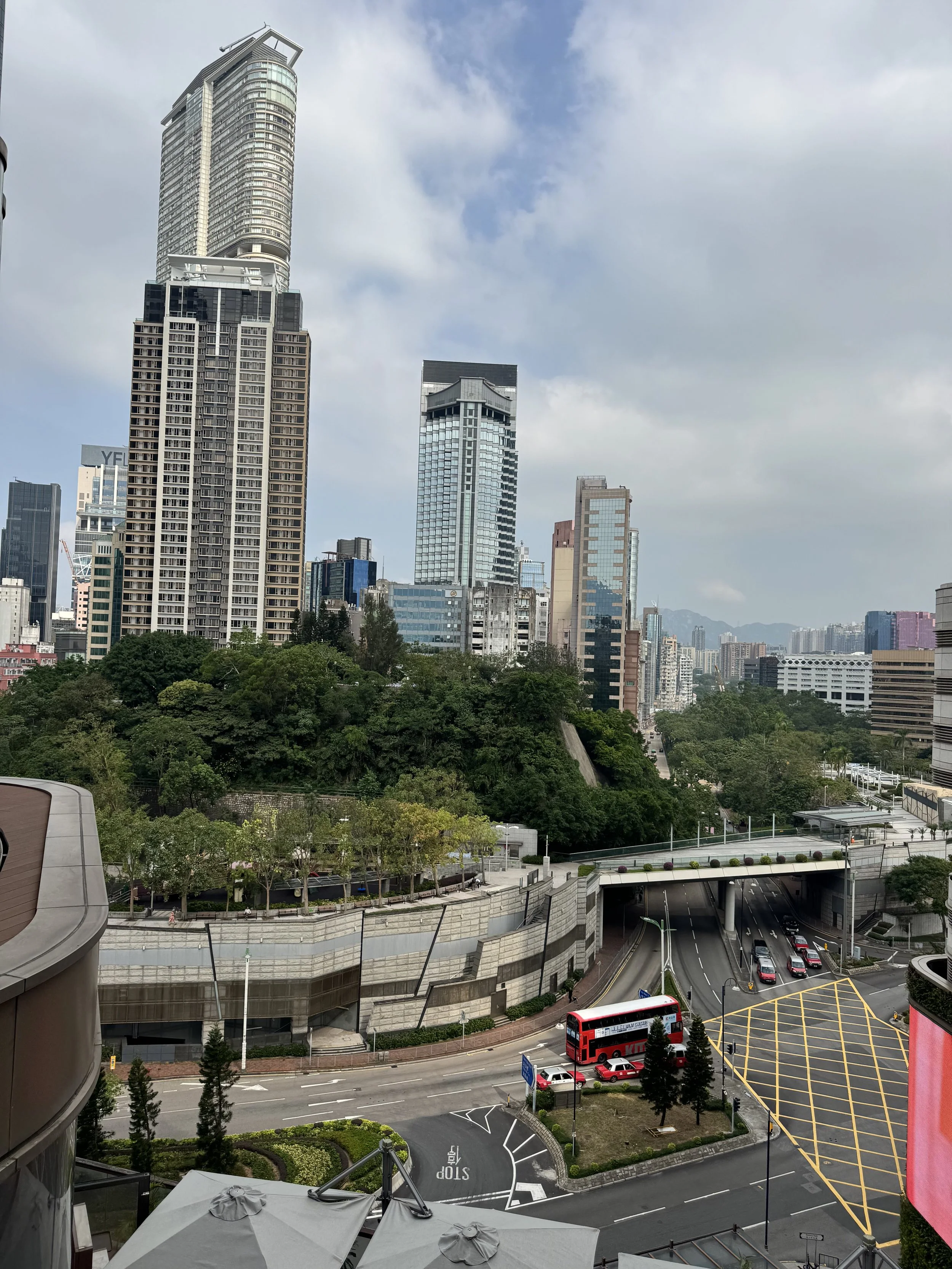
Local air pollutants include nitrogen oxides ($\text{NO}x$), respirable suspended particulates ($\text{PM}{10}$), fine suspended particulates ($\text{PM}_{2.5}$), and volatile organic compounds ($\text{VOCs}$). Local roadside pollution remains acute in high-density urban corridors due to street-canyon effects created by tall skyscrapers, which trap vehicular exhaust from commercial diesel buses and goods vehicles.
- Urban Air Quality Impacts (PM2.5, NOx, Ozone)
- Local Sources (Road Transport, Power Plants)
- Transboundary Industrial Emissions (PRD Region)
To combat regional smog, the Hong Kong Environmental Protection Department (EPD) collaborates with Guangdong authorities through joint regional monitoring networks. Hong Kong has introduced stringent fuel standards, retrofitted power plants to utilize natural gas over coal, and implemented aggressive electric vehicle (EV) incentive programs aiming to cease the new registration of fuel-propelled private cars by 2035.
Municipal Waste Management Infrastructure
Solid waste management represents one of Hong Kong's most urgent environmental challenges. With limited land area, the city historically relied almost entirely on land disposal. The three primary strategic landfills—the North New Territories (NENT), West New Territories (WENT), and South New Territories (SENT) landfills—have operated near maximum capacity for years.
To transition away from landfill reliance, the HKSAR Government initiated major infrastructure projects focused on waste reduction, resource recovery, and modern waste-to-energy transformation:
- Integrated Waste Management Facilities (I·PARK 1): Built on an artificial island off Shek Kwu Chau, this facility utilizes advanced moving-grate incineration technology to treat municipal solid waste, significantly reducing waste volume while exporting electricity to the grid.
- Organic Waste Treatment Facilities (O·PARK1 and O·PARK2): Specialized anaerobic digestion plants designed to convert collected commercial and household food waste into biogas for energy production and nutrient-rich digestate for agriculture.
- Community Recycling Network (GREEN@HONG KONG): An expanded network of recycling stores, stations, and spots designed to improve public collection rates for plastics, glass bottles, small electronics, and paper products.
Climate Change Adaptation and Net-Zero Strategy
As a low-lying coastal metropolis, Hong Kong is exceptionally vulnerable to climate change impacts, including rising sea levels, extreme precipitation events, storm surges, and intense heatwaves.
Climate Action Plan 2050
The HKSAR Government's Hong Kong Climate Action Plan 2050 sets an explicit goal to achieve carbon neutrality before 2050, accompanied by an interim target to reduce total carbon emissions by 50% from 2005 levels before 2035. The strategy focuses on four major decarbonization pillars:
- Net-Zero Electricity Generation: Phasing out coal-fired power generation and replacing it with natural gas, regional zero-carbon energy imports, and renewable sources.
- Energy Efficiency & Green Buildings: Buildings account for approximately 90% of Hong Kong's total electricity consumption. The government mandates strict energy audits and promotes green building standards via the BEAM Plus assessment scheme.
- Green Transport: Promoting zero-emission public transit, expanding the charging network, and electrifying commercial fleets.
- Waste Reduction: Expanding waste incineration capabilities to eliminate reliance on raw municipal waste landfilling.
Stormwater and Flood Management
To manage monsoon downpours and severe typhoon storm surges, the Drainage Services Department (DSD) constructed world-class flood prevention infrastructure. This includes large-scale underground stormwater storage tanks (such as the Happy Valley Underground Stormwater Storage Scheme) and deep flood-proof drainage tunnels (like the Hong Kong West Drainage Tunnel), which intercept surface runoff from mountain slopes and route it directly to the sea, bypassing vulnerable low-lying urban areas.
Regulatory Framework & Environmental Metrics
Environmental protection in Hong Kong is regulated under a comprehensive body of statutory law enforced primarily by the Environmental Protection Department (EPD) and the Agriculture, Fisheries and Conservation Department (AFCD). Key governing legislation includes the Environmental Impact Assessment (EIA) Ordinance (Cap. 499), which legally mandates that major development projects evaluate and mitigate potential ecological, acoustic, and hydrological impacts prior to construction.
| Environmental Domain | Key Governing Legislation / Framework | Dominant Environmental Pressure | Primary Mitigation Strategy / Target |
|---|---|---|---|
| Terrestrial Conservation | Country Parks Ordinance (Cap. 208); Forests and Countryside Ordinance (Cap. 96) | Habitat fragmentation, illegal poaching, hill fires | Statutory protection of 40%+ land area; AFCD ecological monitoring |
| Air Quality | Air Pollution Control Ordinance (Cap. 311) | Roadside $\text{NO}_x$, regional photochemical smog ($\text{O}_3$) | Power plant fuel switching, EV transition by 2035, PRD regional joint controls |
| Marine Environment | Marine Parks Ordinance (Cap. 476); Wild Animals Protection Ordinance (Cap. 170) | Coastal reclamation, intense marine traffic, pollution | Marine park designations, acoustic monitoring, water quality control zones |
| Waste Management | Waste Disposal Ordinance (Cap. 354) | Landfill capacity exhaustion, high daily per-capita MSW | I·PARK waste-to-energy facilities, O·PARK food digestion, municipal waste charging |
| Climate & Energy | Hong Kong Climate Action Plan 2050 | Urban heat island effect, extreme weather, coastal inundation | Carbon neutrality by 2050; coal phase-out; green building mandates |
Frequently Asked Questions
What percentage of Hong Kong is protected natural countryside?
Approximately 40% of Hong Kong’s total land area is statutorily protected within 24 Country Parks and 22 Special Areas under the Country Parks Ordinance. This designation limits urban development and preserves natural habitats, watersheds, and biodiversity.
What are the main sources of air pollution in Hong Kong?
Air pollution stems from local motor vehicle emissions (particularly roadside diesel exhaust), domestic power plants, and transboundary industrial and vehicular emissions from the Pearl River Delta region. Microclimatic effects in dense urban street canyons often trap these emissions at street level.
How does Hong Kong manage municipal solid waste without land for new landfills?
Hong Kong is shifting from reliance on landfills to integrated waste management solutions. This includes large-scale waste-to-energy incinerators (such as I·PARK 1), organic waste anaerobic digestion facilities (O·PARK), expanded community recycling networks (GREEN@HONG KONG), and statutory waste-reduction regulations.
What endangered marine species live in Hong Kong waters?
The primary endangered marine mammals in Hong Kong waters are the Indo-Pacific Humpback Dolphin (Chinese pink dolphin) and the Indo-Pacific Finless Porpoise. Additionally, Hong Kong's waters support diverse hard coral species, sea turtles, and localized estuarine fish populations.
What is Hong Kong's strategy to reach carbon neutrality?
Under the Climate Action Plan 2050, Hong Kong aims to achieve carbon neutrality before 2050. The strategy centers on phasing out coal for electricity, improving building energy efficiency, transitioning to electric vehicles, expanding local waste-to-energy infrastructure, and enhancing regional zero-carbon energy cooperation.
Actionable Recommendations for Residents, Businesses, and Visitors
Navigating and protecting Hong Kong’s environmental landscape requires active participation across sectors.
- For Residents: Participate in community recycling schemes through the GREEN@HONG KONG network, separate food waste for O·PARK collection points, and utilize public transit—such as the Mass Transit Railway (MTR)—to help minimize personal carbon footprints and urban roadside emissions.
- For Commercial Enterprises: Align corporate facilities with BEAM Plus green building standards, conduct statutory energy audits under the Buildings Energy Efficiency Ordinance, and implement waste management programs to comply with evolving corporate sustainability standards.
- For Visitors & Hikers: When exploring country parks, adhere strictly to "Leave No Trace" principles. Stay on designated trails to prevent soil erosion, carry out all trash, avoid feeding wild animals (such as macaques and wild boars), and observe fire safety rules to prevent hill fires during dry months.
Image Gallery