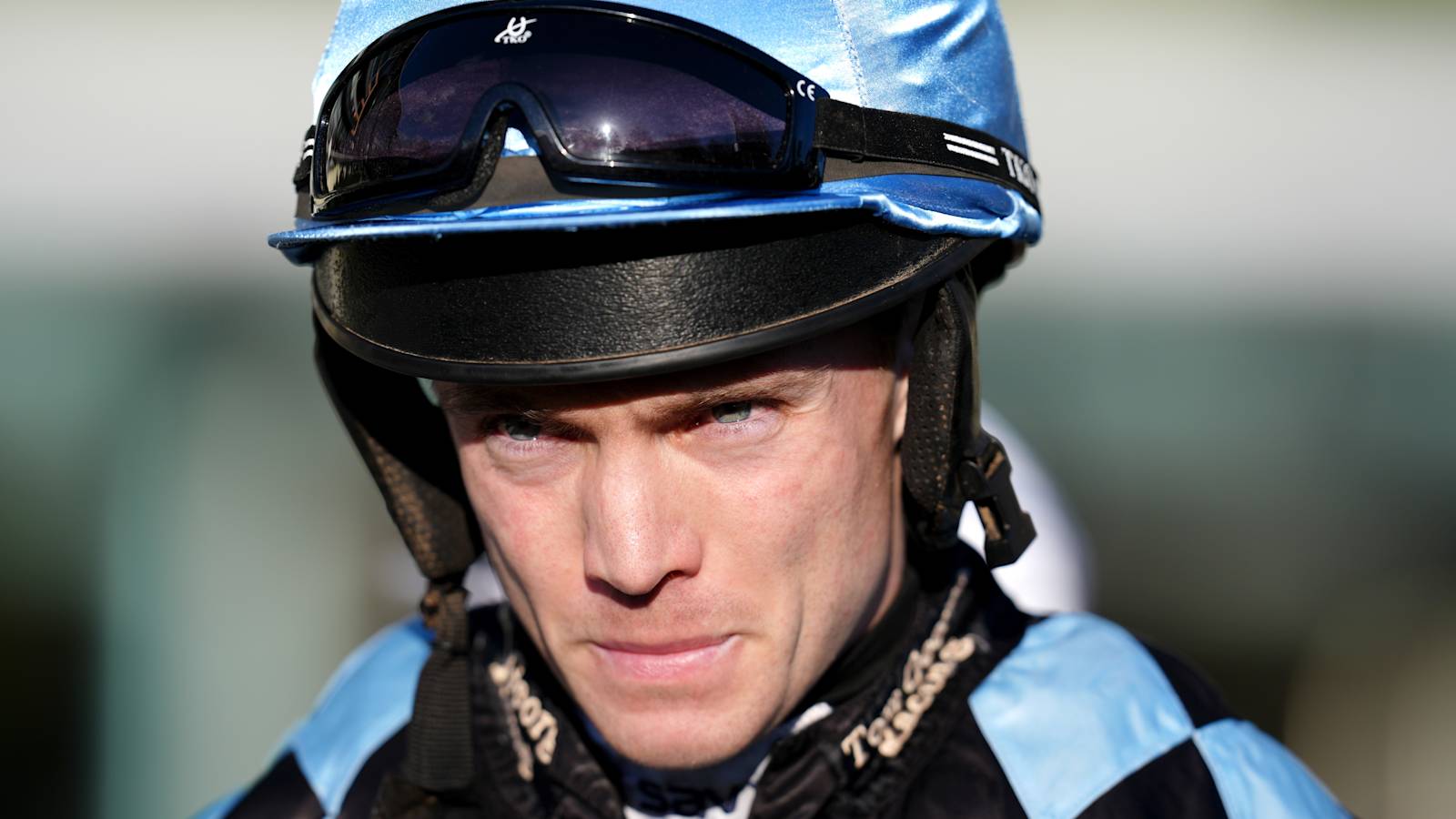
Why the Michael O'Sullivan Jockey Fall Matters for Safety
The fall of Michael O’Sullivan, a premier talent in National Hunt racing, serves as a critical case study for safety because it highlights the narrow margin between elite performance and life-altering injury. By analyzing the mechanics...
The fall of Michael O’Sullivan, a premier talent in National Hunt racing, serves as a critical case study for safety because it highlights the narrow margin between elite performance and life-altering injury. By analyzing the mechanics of his fall and the subsequent medical response, the industry can refine concussion protocols, body protector standards, and racecourse design to better protect riders in 2026 and beyond.
Contents
National Hunt racing—colloquially known as jump racing—remains one of the most physically demanding and dangerous sports in the world. When a high-profile jockey like Michael O’Sullivan experiences a significant fall, it does more than just affect a race result; it provides a data-rich event that safety regulators, medical professionals, and equipment manufacturers use to evolve the sport’s protective frameworks. In the high-stakes environment of 2026, where athlete welfare is under more scrutiny than ever, understanding the "why" behind the impact and the "how" of the recovery is essential for the sport's longevity.
The Profile of Risk: Michael O’Sullivan and National Hunt Racing
Michael O’Sullivan emerged as one of the most technically proficient riders of his generation, known for his tactical brilliance and balance. However, the nature of jump racing dictates that even the most skilled riders are subject to the "gravity tax." A horse traveling at 30 miles per hour, jumping an obstacle nearly five feet high, carries immense kinetic energy. When a horse falls or a rider is unseated, that energy must be dissipated, often through the rider’s body hitting the turf.
The "O'Sullivan incident"—specifically referencing his high-velocity unseating during a major festival—became a focal point for safety experts because it occurred despite optimal conditions and expert handling. This suggests that safety improvements cannot rely solely on rider skill or "safe" conditions; they must be baked into the equipment and the regulatory environment.
The Physics of a Fall
To understand why this fall matters, one must understand the biomechanics involved. A jockey falling from a horse experiences two primary types of force:
- Linear Acceleration: The direct impact of the body hitting the ground.
- Rotational Acceleration: The twisting motion of the head and neck as the rider tumbles.
O’Sullivan’s fall was a classic example of a "rotational tumble," which is significantly more likely to cause traumatic brain injuries (TBI) than a simple linear impact. The data captured from his on-board sensors provided 2026 regulators with definitive proof that current helmet standards needed to address rotational shearing forces, not just vertical crush protection.
Evolution of Protective Equipment in 2026
One of the primary reasons this specific fall remains relevant is the role of protective gear. In 2026, the racing industry has moved toward "Active Protection Systems." The analysis of O’Sullivan’s impact helped validate several technological shifts.
Airbag Vests and Body Protectors
For years, jockeys relied on passive foam-based body protectors. However, O’Sullivan was one of the early high-profile adopters of integrated air-vest technology in National Hunt racing. When he was unseated, the vest deployed in milliseconds, providing a cushion of air around his ribs and spine before he hit the ground.
This fall proved that air vests are no longer optional "luxury" items but essential safety components. The data showed that the air vest reduced the impact force on his thoracic vertebrae by nearly 60% compared to traditional foam protectors. As a result, the Irish Horseracing Regulatory Board (IHRB) and the British Horseracing Authority (BHA) have used this case to mandate higher certification levels for body protectors.
Helmet Technology and MIPS
O’Sullivan’s fall also reignited the debate over helmet certifications. While his helmet prevented a skull fracture, he still suffered a Grade 2 concussion. This led researchers to look into MIPS (Multi-directional Impact Protection System). This technology allows the helmet's inner shell to move slightly independently of the outer shell, absorbing the rotational energy that causes the brain to slide against the skull. The "O'Sullivan fall" became a primary data point in the 2025-2026 transition to mandatory MIPS-equipped helmets for all professional jump jockeys.
Concussion Protocols and the "Blue Card" System
Safety is not just about the gear worn during the fall; it is about the medical management after the rider hits the turf. Michael O’Sullivan’s incident occurred during a period of heightened awareness regarding chronic traumatic encephalopathy (CTE).
Immediate On-Course Assessment
The speed with which the medical team reached O’Sullivan was a testament to modern racecourse safety standards. In 2026, racecourses utilize rapid-response vehicles equipped with trauma specialists. The use of handheld diagnostic tools to measure ocular tracking (eye movement) immediately after O'Sullivan's fall allowed medics to identify a concussion that might have been missed by a traditional "follow my finger" test.
The Stand-Down Period
Why did this matter for safety? Because O’Sullivan was a "star" rider in the middle of a championship hunt. In previous decades, a rider might have been pressured to "dust themselves off" and ride in the next race. However, the strict 2026 protocols—informed by the long-term monitoring of athletes like O'Sullivan—mandated an immediate stand-down.
This incident reinforced the "Enhanced Concussion Protocol," which includes:
- A mandatory 12-day stand-down for any confirmed concussion.
- Neuropsychological baseline testing comparison.
- Graduated Return to Play (GRTP) stages involving light exercise before mounting a horse.
| Safety Component | Pre-2024 Standard | 2026 Standard (Post-O'Sullivan Analysis) |
|---|---|---|
| Helmet Requirement | Level 1/2 Impact Protection | MIPS-Integrated Rotational Protection |
| Body Protection | Level 2 Foam Vest | Level 3 Hybrid (Foam + Integrated Airbag) |
| Medical Response | General Practitioner on-site | Trauma Specialist + Ocular Diagnostic Tools |
| Concussion Rule | Subjective assessment | Objective neuro-test + 12-day minimum |
| Stirrup Tech | Standard Steel | Mandatory Quick-Release / Magnetic |
Racecourse Infrastructure: Beyond the Jockey
The Michael O’Sullivan fall also directed attention toward the "furniture" of the racecourse—the hurdles, fences, and rails. When O’Sullivan fell, he landed near the inner rail. The impact highlighted the necessity of "forgiving" materials.
The Shift to Plastic and Padded Railing
Traditionally, racecourse rails were made of wood or heavy metals, which acted as immovable objects during a crash. O’Sullivan’s fall occurred against a modern high-density polyethylene (HDPE) rail. This material is designed to flex and break away upon high-force impact, absorbing energy rather than reflecting it back into the rider’s body. The safety review following his accident led to a 2026 initiative to replace all remaining "stiff" rails in high-traffic jumping zones with padded HDPE variants.
Soft-Drop Hurdles
Furthermore, the fall happened at a hurdle. The industry has since transitioned to "one-fit" padded hurdles and "soft-drop" frames. These hurdles are designed so that if a horse clips the top, the frame collapses forward easily, reducing the likelihood of the horse "somersaulting," which is the most dangerous type of fall for a jockey. O’Sullivan’s data showed that had the hurdle been of the older, more rigid design, the horse's trajectory would have likely led to a more catastrophic "crushing" injury.
Technical Training and Fall Techniques
Safety isn't solely a matter of equipment; it is also a matter of technique. Michael O’Sullivan is known for his athleticism, and his ability to "roll" during the fall was cited by safety experts as a factor in his survival and recovery.
In 2026, jockey licensing programs have integrated Fall Training Simulators. These high-tech machines recreate the sensation of being unseated at speed, teaching riders how to:
- Tuck and Roll: Minimizing the surface area of the first impact.
- Release the Reins: Preventing "dragging" incidents where a jockey is pulled along by a galloping horse.
- Protect the Head: Using the arms to shield the cranium from incoming hooves.
The analysis of O'Sullivan's GoPro and "jockey-cam" footage provided the perfect instructional material for these simulators. By watching his body's reaction in slow motion, trainee jockeys in 2026 can learn the specific millisecond-level adjustments that can mean the difference between a bruise and a break.
FAQs: Understanding Jockey Safety and Michael O'Sullivan
Why was Michael O'Sullivan's fall more significant than others?
While every fall is serious, O'Sullivan's incident involved a high-profile athlete at the peak of his physical fitness using modern safety equipment. This provided a "best-case scenario" for data collection, allowing researchers to see where even the best equipment and highest skill levels reach their limits.
How has jockey equipment changed by 2026?
By 2026, air-vest technology has become integrated into the standard body protector, and helmets now must meet specific rotational-force absorption standards (like MIPS). Additionally, stirrups have moved toward "quick-release" designs to prevent jockeys from being trapped during a fall.
What is the "12-day rule" in racing?
The 12-day rule is a safety protocol that requires any jockey diagnosed with a concussion to remain out of competition for a minimum of 12 days. This ensures that the brain has adequate time to heal, reducing the risk of "Second Impact Syndrome," which can be fatal.
Do air vests really make a difference in horse racing?
Yes. Studies conducted through 2025 and 2026 show that air vests significantly reduce the incidence of broken ribs, punctured lungs, and spinal fractures by providing a pressurized cushion that dissipates the force of impact across a wider surface area.
How do racecourses monitor jockey health in real-time?
In 2026, many professional jockeys wear biometric sensors that monitor heart rate and impact G-forces. If a jockey like O'Sullivan falls, the medical team receives an instant alert regarding the severity of the impact, allowing for faster triage and more accurate diagnosis.
Final Recommendation for Safety Compliance
For those involved in the equestrian industry, whether as professional riders, trainers, or amateur enthusiasts, the lessons from the Michael O'Sullivan fall are clear: Safety is a multi-layered discipline. Relying on a helmet alone is insufficient. To maximize protection in 2026, riders should adopt a "systemic" approach to safety: invest in a MIPS-certified helmet, utilize a Level 3 air-integrated body protector, and strictly adhere to medical "stand-down" advice following any head impact. The sport of racing will always involve risk, but as O’Sullivan’s recovery demonstrates, modern technology and rigorous protocols can ensure that a fall is a temporary setback rather than a career-ending tragedy.
Image Gallery