Lexus SC400 Horsepower Overview: Evolution of the 1UZ-FE V8
The Lexus SC400’s horsepower varies significantly across its production run from 1992 to 2000. Early models (1992–1995) produced 250 hp. Output increased slightly to 260 hp in 1997, eventually reaching a peak of 290 hp for the 1998–200...
The Lexus SC400’s horsepower varies significantly across its production run from 1992 to 2000. Early models (1992–1995) produced 250 hp. Output increased slightly to 260 hp in 1997, eventually reaching a peak of 290 hp for the 1998–2000 model years after the introduction of VVT-i technology and higher compression ratios.
Contents
The Lexus SC400 remains a landmark vehicle in the luxury grand tourer (GT) segment. When it debuted in the early 1990s, it was designed to challenge the established European elite, offering a blend of Japanese reliability and smooth, V8-powered performance. Central to its identity was the 1UZ-FE engine, a powerplant so robustly engineered that it remains a favorite among enthusiasts and tuners in 2026. To understand the horsepower capabilities of the SC400, one must examine the iterative engineering changes Lexus applied to the 4.0-liter V8 over its nine-year lifespan.
The Heart of the SC400: Understanding the 1UZ-FE V8 Engine
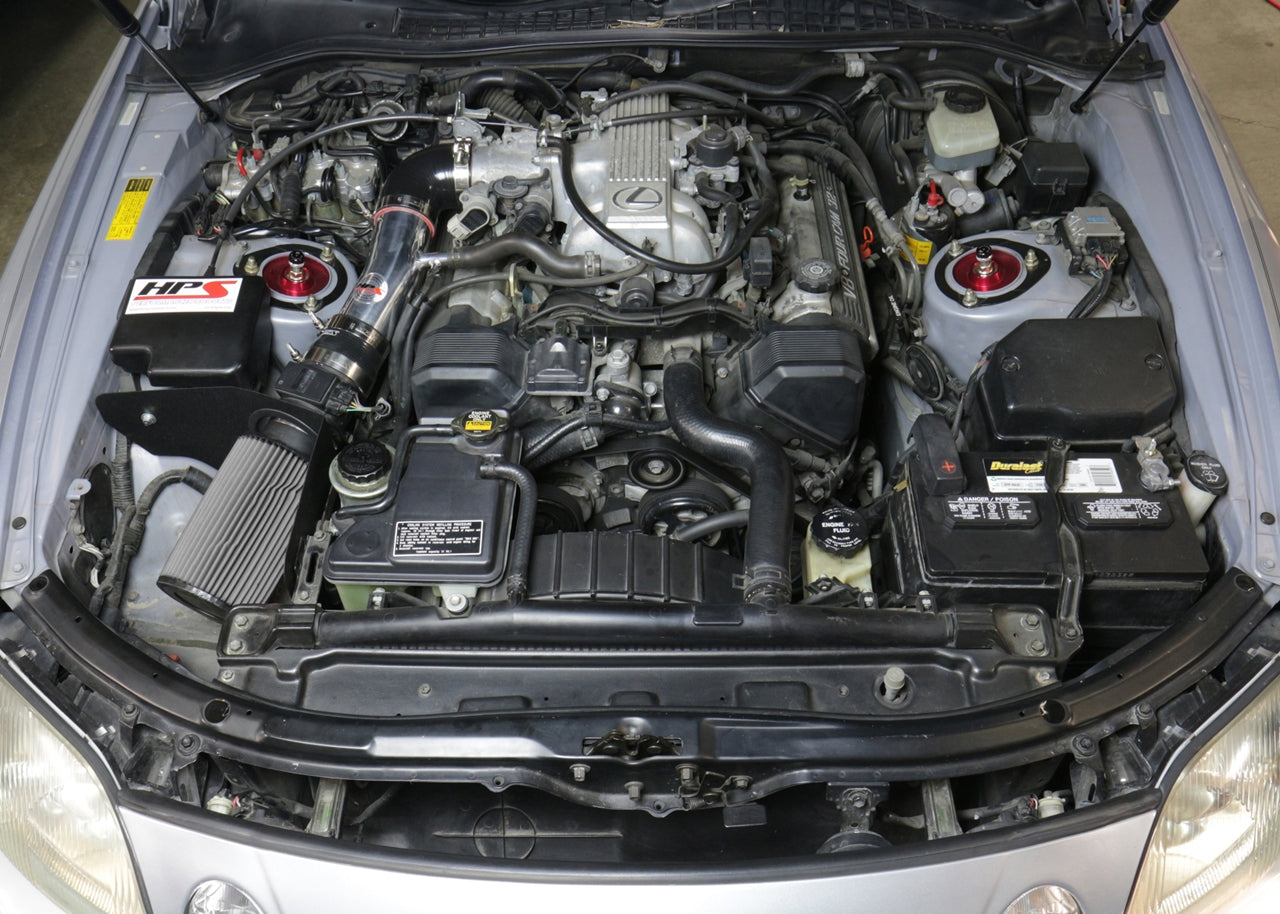
The 1UZ-FE was the first engine in the Toyota/Lexus UZ family. Developed specifically for the flagship LS400 and subsequently the SC400, this 4.0-liter, 32-valve DOHC engine was designed with an "over-engineering" philosophy. Toyota’s goal was to produce a motor that was not only powerful for its time but also exceptionally quiet and vibration-free.
Engineers utilized a 6-bolt main bearing design, a feature typically reserved for high-performance racing engines. This provided the bottom end with immense structural integrity. While the horsepower figures may seem modest by 2026 standards, the 1UZ-FE’s ability to deliver smooth, linear power was revolutionary in the 1990s. The engine's aluminum block and heads kept weight manageable, while the intake manifold design focused on optimizing airflow for a broad torque curve rather than peaky top-end speed.
Chronological Horsepower Breakdown
The production of the Lexus SC400 can be divided into three distinct phases based on engine output and technological implementation.
The Early Years (1992–1995): 250 Horsepower
From its launch in mid-1991 (as a 1992 model) through 1995, the SC400 produced a consistent 250 horsepower at 5,600 RPM and 260 lb-ft of torque at 4,400 RPM. During this era, the engine featured a 10.0:1 compression ratio and a relatively simple electronic fuel injection system.
These early models are often preferred by those looking to perform heavy engine modifications, such as turbocharging or supercharging. The internal components, specifically the connecting rods, were significantly thicker in these pre-1995 versions, allowing them to handle higher levels of boost without immediate failure.
Mid-Cycle Refinements (1996–1997): 260 Horsepower
In 1996, Lexus began making incremental updates to the 1UZ-FE. While the 1996 model often still carries the 250 hp rating in many historical archives, internal refinements to the intake and cooling systems were underway. By 1997, the official rating was bumped to 260 horsepower.
The primary change during this period was an increase in the compression ratio to 10.4:1. This helped the car feel more responsive in the mid-range of the power band. However, the torque remained largely the same, and the car still utilized the 4-speed automatic transmission, which many critics argued masked the engine’s true potential.
The VVT-i Revolution (1998–2000): 290 Horsepower
The most significant leap in performance occurred in 1998. Lexus introduced VVT-i (Variable Valve Timing with intelligence) to the 1UZ-FE. This technology allowed the engine to adjust the timing of the intake valves based on engine load and RPM, resulting in better efficiency and much higher output.
The 1998–2000 SC400 models produced 290 horsepower and 300 lb-ft of torque. Along with the power increase, the compression ratio was bumped further to 10.5:1. To complement this newfound power, Lexus replaced the aging 4-speed automatic with a new 5-speed automatic transmission. This combination significantly improved 0-60 mph times, dropping them from the mid-7-second range to the low-6-second range, making the late-model SC400 a much more formidable grand tourer.
Comparative Specifications Table
The following table summarizes the technical evolution of the SC400's powertrain:
| Model Year | Horsepower (hp) | Torque (lb-ft) | Compression Ratio | Transmission Type | 0-60 MPH (Estimated) |
|---|---|---|---|---|---|
| 1992–1995 | 250 | 260 | 10.0:1 | 4-Speed Automatic | 7.2 - 7.5 Seconds |
| 1996 | 250 | 270 | 10.4:1 | 4-Speed Automatic | 7.1 - 7.3 Seconds |
| 1997 | 260 | 270 | 10.4:1 | 4-Speed Automatic | 6.9 - 7.1 Seconds |
| 1998–2000 | 290 | 300 | 10.5:1 | 5-Speed Automatic | 6.1 - 6.3 Seconds |
Factors Influencing Real-World Power Delivery
While the "paper" horsepower numbers provide a baseline, several factors influenced how that power reached the pavement.
Drivetrain Loss
In 2026, many SC400 enthusiasts emphasize the difference between "brake horsepower" (at the crank) and "wheel horsepower." The SC400 was only available with an automatic transmission. These older torque-converter automatics were notoriously parasitic, often resulting in a 15% to 20% loss of power between the engine and the rear wheels. Consequently, a stock 250 hp early-model SC400 might only put down 200–210 hp on a modern dynamometer.
Vehicle Weight and Luxury Equipment
The SC400 was not a lightweight sports car; it was a luxury GT. With curb weights ranging from 3,570 to 3,650 pounds, the engine had to work against significant mass. Features like heavy power-adjustable leather seats, extensive sound deadening, and a sophisticated (and heavy) multi-link suspension prioritized comfort over raw acceleration.
Aerodynamics
One of the SC400's secret weapons was its drag coefficient (Cd) of approximately 0.31 to 0.32. This sleek profile allowed the car to maintain its top-end performance and fuel efficiency despite having a smaller displacement V8. At highway speeds, the SC400’s horsepower is put to efficient use, allowing for effortless cruising at speeds that would strain lesser vehicles.
Modifying for More Horsepower: Tuning Potential
For owners in 2026 looking to extract more power from the 1UZ-FE, the path depends heavily on the model year.
- Intake and Exhaust: The factory intake and exhaust systems on the SC400 were designed for silence. Replacing these with high-flow alternatives can free up 10–15 hp. The factory "Y-pipe" in the exhaust is a known bottleneck.
- The "N/A" Route: Increasing power without turbocharging is difficult and expensive for the 1UZ. Most enthusiasts find that beyond basic bolt-ons, the cost-to-power ratio is poor unless they move to individual throttle bodies (ITBs).
- Forced Induction: This is where the SC400 shines. The early (1992–1995) engines can handle 400–500 hp on stock internals with a properly tuned turbo or supercharger setup. The later VVT-i engines (1998–2000) have thinner connecting rods that are prone to bending under high boost, making them less ideal for extreme power builds without internal upgrades.
- ECU Management: The factory Lexus ECU is "locked," meaning it cannot be easily remapped. For serious power gains, a standalone engine management system (like a Haltech or Link) is usually required to manage fuel and timing maps effectively.
Maintenance Impact on Engine Output
As these vehicles approach nearly 35 years of age, "neglect" is the biggest killer of horsepower. A car that has not been properly maintained will not produce its factory-rated output.
- Timing Belt and Tensioners: While the early 1UZ is a non-interference engine (meaning the pistons won't hit the valves if the belt snaps), the VVT-i versions are interference engines. A stretched or old belt can also slightly retard timing, leading to sluggish performance.
- Ignition Components: The early models use two distributors and two ignition coils. Worn rotors, caps, or old spark plug wires are common causes of power loss and "hesitation" under load.
- Clogged Catalytic Converters: Over decades, the catalytic converters can become restricted, creating backpressure that "chokes" the V8 and kills high-RPM horsepower.
- Mass Air Flow (MAF) Sensor: The SC400 relies on precise air measurements. A dirty MAF sensor can lead to a lean or rich condition, both of which sap power and reduce fuel economy.
FAQ
Does the Lexus SC400 have a manual transmission option?
No, the SC400 was never offered from the factory with a manual transmission. It was strictly paired with a 4-speed (1992–1997) or 5-speed (1998–2000) automatic. Enthusiasts often perform "manual swaps" using R154 or W58 transmissions from the Toyota Supra or SC300 to better utilize the V8's power.
Which year SC400 is the fastest?
The 1998–2000 models are the fastest in stock form. The combination of 290 horsepower and the more efficient 5-speed automatic transmission significantly improves both 0-60 mph and quarter-mile times compared to the earlier 250 hp and 260 hp versions.
Is the SC400's 1UZ-FE engine reliable?
Yes, it is considered one of the most reliable V8 engines ever built. It is common to find examples with over 300,000 miles still running smoothly. Its robust construction was a point of pride for Lexus during its entry into the luxury market.
How much horsepower can the stock SC400 internals handle?
The early (1992–1995) engines are known to handle roughly 500 crank horsepower with forced induction before the rods become a major concern. The 1998–2000 VVT-i engines are generally limited to around 350–400 hp because of their thinner connecting rods.
Why is the horsepower lower than modern V8s?
In the early 1990s, 250 hp from a 4.0L engine was competitive. For comparison, the 5.0L Mustang of the era produced around 225 hp. Modern V8s use direct injection, higher displacement, and more advanced variable valve timing to achieve much higher figures.
Practical Recommendations
If you are looking to purchase an SC400 in 2026, your choice should be dictated by your goals. For a comfortable, modern-feeling cruiser with the most factory power, seek out a 1998–2000 model with the VVT-i engine. These cars offer the best balance of performance and fuel efficiency.
However, if your goal is to build a high-horsepower project car with a turbocharger or supercharger, the 1992–1995 models are the superior choice due to their beefier internal engine components. Regardless of the year, ensure the timing belt service is documented, and perform a compression test to verify that the 1UZ-FE is still healthy enough to produce its legendary smooth power.
Image Gallery