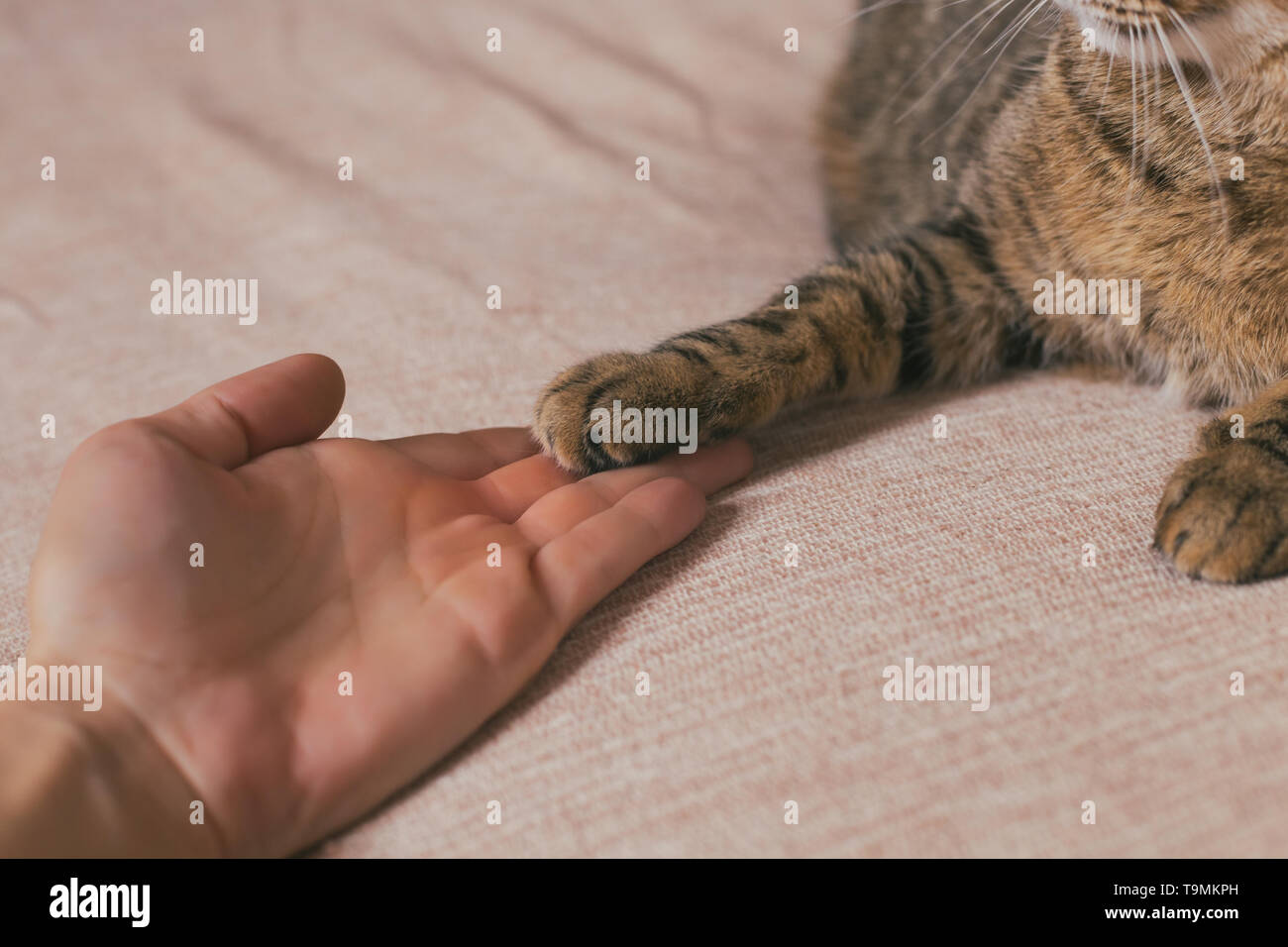
Understanding Feline Paw Preference: The Science of Lateralization in Cats
Research into feline behavior confirms that most cats exhibit a distinct paw preference, also known as laterality, when performing complex motor tasks. While humans are roughly 90% right-handed, cats are more evenly split as a populati...
Research into feline behavior confirms that most cats exhibit a distinct paw preference, also known as laterality, when performing complex motor tasks. While humans are roughly 90% right-handed, cats are more evenly split as a population, though individual cats typically show a strong bias toward using either their left or right paw for reaching and stabilizing.
Contents
The Neurobiology of Feline Laterality
To understand why cats prefer one paw over the other, we must look at the architecture of the feline brain. Laterality—the tendency for some neural functions or cognitive processes to be specialized to one side of the brain or the other—is a fundamental trait in many vertebrate species. In cats, this manifests as a consistent preference for using one limb for "spontaneous" or "forced" challenges.
The motor cortex of a cat is divided into two hemispheres, each controlling the opposite side of the body. When a cat reaches for a piece of food tucked inside a narrow glass, the brain's contralateral hemisphere (the side opposite the paw) is primarily responsible for coordinating that movement. Scientists believe that this hemispheric specialization evolved because it allows the animal to multitask more efficiently. For instance, an animal with a highly lateralized brain can perform a complex motor task with one paw while the other hemisphere remains vigilant for predators or environmental changes.
As of 2026, feline behavioral studies continue to categorize cats into three main groups:
- Right-pawed: Individual cats that consistently use their right front paw.
- Left-pawed: Individual cats that consistently use their left front paw.
- Ambilateral: Cats that show no significant preference, often referred to as "ambidextrous," though this is less common in complex tasks.
The Influence of Gender on Paw Preference
One of the most striking findings in the study of feline laterality is the correlation between a cat’s biological sex and its preferred paw. Multiple longitudinal studies, including landmark research conducted at Queen’s University Belfast, have indicated a clear gender divide in pawedness.
Male cats are significantly more likely to be "left-pawed," while female cats show a strong tendency toward being "right-pawed." This phenomenon is not unique to cats; similar trends have been observed in other mammalian species, including dogs and horses. Researchers hypothesize that prenatal hormones, specifically testosterone, may play a crucial role in shaping the development of the brain's motor pathways before birth.
While this gender bias is strong at a population level, it is not an absolute rule. You will certainly find right-pawed males and left-pawed females. However, the statistical probability remains high enough that gender is considered the single most reliable predictor of feline paw preference outside of direct observation.
Why Do Cats Develop a Preference?
The development of paw preference is generally linked to the complexity of the task at hand. If a cat is simply walking or grooming, you might not notice a significant bias. However, when the task requires fine motor skills—what researchers call "forced choice" tasks—the preference becomes obvious.
Task Complexity and Lateralization
Simple movements, such as taking a step, require less cognitive processing and may not trigger a strong hemispheric bias. Conversely, tasks that require precision, such as "hooking" a piece of kibble out of a jar or batting at a fast-moving string, demand more specialized neural involvement. In these scenarios, the cat defaults to its most "efficient" limb.
Behavioral and Evolutionary Advantages
From an evolutionary perspective, having a dominant paw is advantageous. It leads to faster reaction times and higher success rates in hunting. A cat that doesn't have to "decide" which paw to use to pin down a mouse has a split-second advantage over one that is less lateralized. This efficiency is why strongly lateralized cats—those with a very clear paw preference—often appear more confident and coordinated in their movements.
How to Identify Your Cat’s Leading Paw
Determining whether your cat is a "lefty" or a "righty" requires systematic observation. A single swipe at a toy is not enough to establish a pattern; researchers typically look for a minimum of 50 to 100 repetitions of a behavior to confirm a statistically significant preference.
The Food Reach Test
This is the most common method used in scientific studies.
- Place a small piece of high-value treat inside a narrow glass or a specialized "food puzzle" that is too narrow for the cat’s head.
- Position the container directly in front of the cat.
- Record which paw the cat uses to retrieve the food.
- Repeat this process over several days until you have at least 50 observations.
The First-Step Observation
Pay attention to which paw your cat leads with when navigating obstacles.
- Stair Climbing: When your cat begins to go up a flight of stairs, which paw hits the first step?
- Litter Box Entry: As the cat enters or exits the litter box, which limb is the first to cross the threshold?
- Object Stepping: Place a small obstacle (like a book or a low bar) in a hallway and watch which paw the cat lifts first to clear it.
The Batting Test
Dangle a toy directly above your cat's head at a height where they must reach up to grab it. Note which paw is used to initiate the "hooking" motion. Because this is a high-speed, reactive movement, it is a very strong indicator of motor dominance.
Comparing Feline and Human Handedness
Feline paw preference differs significantly from human handedness in several key metrics. The following table highlights the primary differences as established by current 2026 behavioral data.
| Feature | Human Population | Feline Population |
|---|---|---|
| Dominant Bias | ~90% Right-handed | Balanced split (~40% Right, ~40% Left) |
| Ambilateral Rate | ~1% to 3% | ~20% (Task-dependent) |
| Gender Correlation | Weak/Inconsistent | Strong (Males=Left, Females=Right) |
| Evolutionary Driver | Language/Tool Use | Hunting/Motor Efficiency |
| Genetic Influence | High (Complex Polygenic) | Moderate (Hormonal/Prenatal) |
The Link Between Pawedness and Personality
In the veterinary and behavioral sciences, there is growing interest in how laterality relates to a cat's emotional state. Some research suggests that "ambilateral" cats—those that show no clear paw preference—may process information differently than those with a strong side bias.
Stress and Reactivity
Studies have indicated that cats with a strong paw preference (either left or right) tend to be more confident and less reactive to environmental stressors. In contrast, ambilateral cats may exhibit higher levels of anxiety and a lower tolerance for change. This is thought to be because a lateralized brain is more "organized," whereas a non-lateralized brain might process sensory input across both hemispheres in a way that increases overall arousal and stress.
The Right-Hemisphere Fear Response
In many animals, the right hemisphere of the brain is more involved in processing negative emotions, fear, and "flight" responses. Because the right hemisphere controls the left side of the body, some researchers investigate whether left-pawed cats are more prone to fear-based behaviors. While the evidence is still being refined in 2026, many behaviorists use paw preference as one of several markers to assess a cat's potential temperament when designing enrichment programs.
Common Questions and Misconceptions
Can a cat’s paw preference change over time?
Generally, paw preference is stable once a cat reaches physical maturity. Kittens may appear ambilateral as their nervous systems develop, but by the time they reach one year of age, their preference is usually set. Significant changes in paw usage in an adult cat are rarely a "choice" and are more likely a sign of injury, arthritis, or neurological issues.
Does being left-pawed make a cat smarter?
There is no evidence to suggest that one paw preference is linked to higher intelligence. Intelligence in cats is usually measured by problem-solving abilities and social learning, which appear to be independent of whether the cat is left- or right-dominant. However, a strong preference (of either side) may correlate with better performance on motor-based puzzles.
Should I try to "train" my cat to use a specific paw?
No. Forcing a cat to use their non-dominant paw can lead to frustration and unnecessary stress. Much like forcing a left-handed child to write with their right hand, it interferes with natural neural processing. It is always best to let the cat use the limb that feels most natural to them.
Is paw preference related to "polydactyl" (extra toes) cats?
While polydactyl cats have a different paw structure, their internal brain laterality remains the same. Having extra toes might make certain grips easier, but it does not dictate whether the left or right hemisphere of the brain is dominant for motor tasks.
Practical Implications for Cat Owners
Knowing your cat’s paw preference is more than just a fun fact; it can help you better cater to their needs and understand their behavior.
- Enrichment Placement: If you are using food puzzles or interactive toys, place them in a way that favors your cat's dominant side. For a right-pawed cat, a puzzle positioned slightly to their right may be more engaging.
- Training "High-Five": If you are teaching your cat tricks, start with their dominant paw. They will be more coordinated and likely to succeed, which builds their confidence during the training session.
- Monitoring Health: Because cats are creatures of habit, their paw preference is a baseline. If your "lefty" suddenly starts using their right paw to reach for toys, it is a clinical sign that they may be experiencing pain or reduced range of motion in their preferred limb. This warrants a veterinary consultation.
By observing these subtle physical biases, you gain a deeper insight into your cat's neurological makeup and emotional well-being, fostering a stronger bond through a better understanding of their unique perspective.
Image Gallery