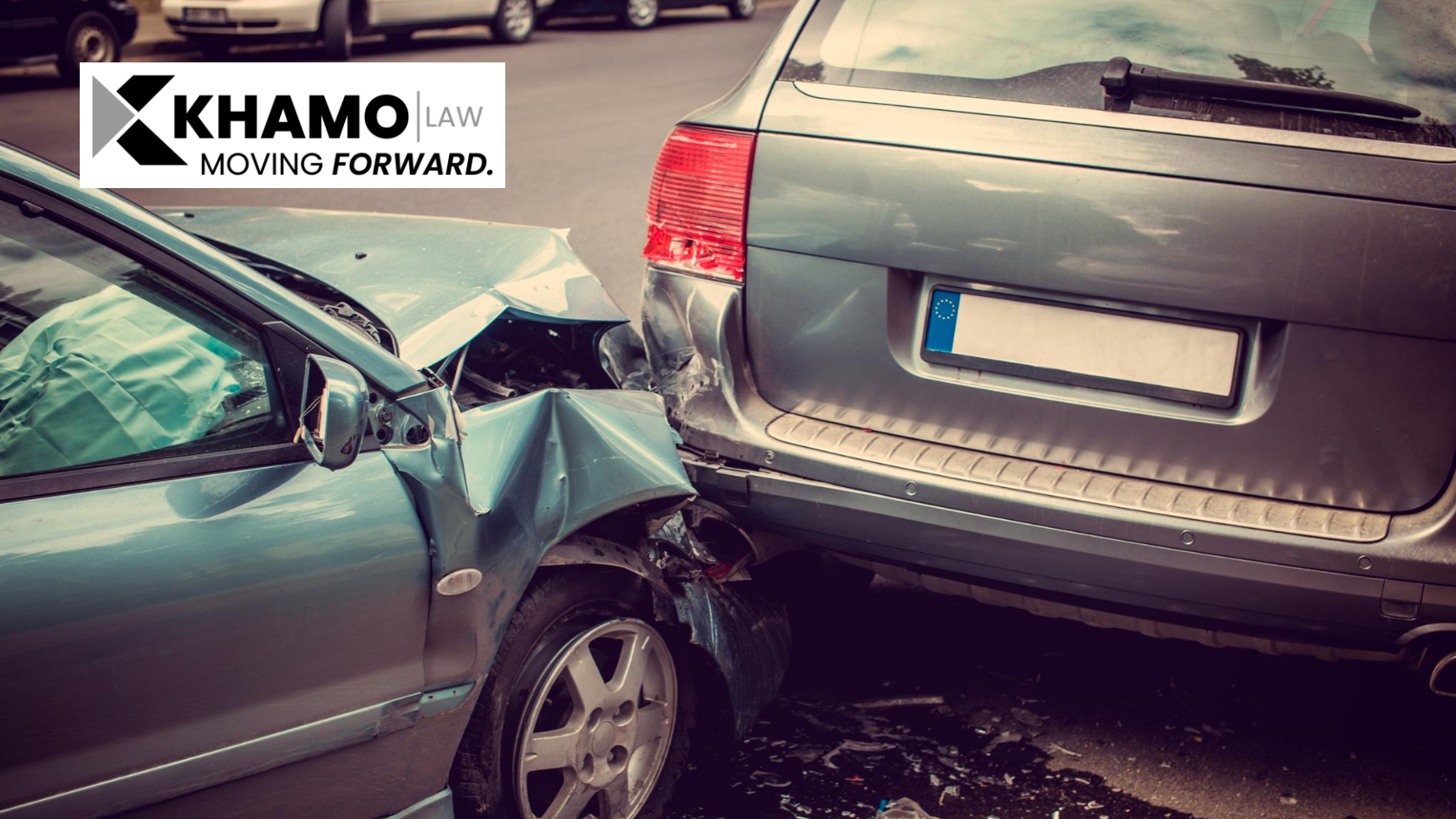
Why You Should Stay After a Crash in Michigan: Legal Duties and Consequences
In Michigan, staying at the scene of a motor vehicle accident is a strict legal requirement under the Michigan Vehicle Code. Whether the crash involves minor property damage or serious physical injury, leaving before fulfilling your le...
In Michigan, staying at the scene of a motor vehicle accident is a strict legal requirement under the Michigan Vehicle Code. Whether the crash involves minor property damage or serious physical injury, leaving before fulfilling your legal duties—such as exchanging information and rendering aid—can result in severe criminal penalties, including imprisonment and the permanent loss of insurance benefits.
Contents
The moments following a car accident are often defined by adrenaline, confusion, and occasionally, panic. However, in the State of Michigan, your actions in the immediate aftermath of a collision carry profound legal and financial weight. Michigan’s No-Fault insurance laws and strict criminal statutes regarding "hit and run" accidents make it imperative that every driver understands their obligations. Failing to remain at the scene is not merely a lapse in judgment; it is a choice that can transform a civil insurance matter into a life-altering felony prosecution.
As of 2026, Michigan law continues to prioritize the safety of accident victims and the accountability of drivers. This guide details why staying at the scene is the most critical decision you can make after a crash, the specific legal requirements you must meet, and the long-term consequences of fleeing.
The Legal Mandate: Michigan Vehicle Code Sections 257.617 - 257.619
Michigan law is explicit about a driver's responsibilities following an accident. These duties are divided based on the severity of the crash, but the underlying requirement remains the same: you must stop and remain at the scene until you have fulfilled specific criteria.
Accidents Involving Serious Injury or Death (MCL 257.617)
If a driver is involved in an accident that results in serious impairment of a body function or death, they are required to stop immediately. The law dictates that the driver must remain at the scene until they have provided their name, address, registration, and driver’s license information to the other party and to a police officer.
Leaving the scene of an accident involving serious injury is a felony in Michigan. If the accident resulted in death, the penalty is even more severe. In 2026, Michigan courts continue to strictly interpret this statute, often viewing the act of fleeing as an aggravating factor that suggests the driver may have been trying to hide intoxication or other criminal behavior.
Accidents Involving Personal Injury (MCL 257.617a)
Even if the injuries do not appear "serious" at the first glance, Michigan law requires drivers to stop for any accident involving personal injury. This is a misdemeanor offense, but it still carries the potential for jail time (up to one year) and significant fines. Because many internal injuries do not manifest symptoms immediately, the safest legal and ethical course of action is to assume injury has occurred whenever a collision involves a person.
Accidents Involving Damage to Vehicles (MCL 257.618)
If the crash only results in damage to a vehicle that is "driven or attended by any person," the driver must stop. Leaving the scene of a "fender bender" is still a misdemeanor. Michigan law does not distinguish between a high-speed collision and a minor parking lot scrape in terms of the initial obligation to stop; if there is damage, you must exchange information.
The Duty to Give Information and Render Aid (MCL 257.619)
Stopping your vehicle is only the first step. To legally "stay" after a crash, you must fulfill the requirements of MCL 257.619. This includes:
- Exchanging Information: You must provide your name and address, the registration number of the vehicle you are driving, and the name and address of the owner of the vehicle.
- Showing Your License: You must exhibit your operator’s or chauffeur’s license to the other driver or the person struck.
- Rendering Reasonable Assistance: This is a critical component of Michigan law. Drivers must provide reasonable assistance to anyone injured, which includes making arrangements for the person to be taken to a hospital or medical facility if it is apparent that treatment is necessary or if the person requests it.
| Crash Scenario | Legal Classification | Maximum Potential Penalty (2026) |
|---|---|---|
| Damage to Vehicle Only | Misdemeanor | Up to 90 days jail; $100 fine |
| Personal Injury | Misdemeanor | Up to 1 year jail; $1,000 fine |
| Serious Impairment/Death | Felony | Up to 5-15 years prison; $5,000-$10,000 fine |
| Death (Driver at Fault) | Felony | Up to 15 years prison |
Michigan’s No-Fault Insurance and the Financial Risk of Leaving
One of the most compelling reasons to stay after a crash in Michigan involves the state’s unique No-Fault insurance system. Michigan's Personal Injury Protection (PIP) benefits provide some of the most comprehensive medical coverage in the United States, but these benefits are tied to the legality of your presence at the scene and your ability to be identified.
Protecting Your PIP Benefits
If you are injured in a car accident, your own No-Fault insurance provider is responsible for paying your medical bills, regardless of who caused the crash. However, if you flee the scene, you complicate your insurance claim significantly. While being a "hit and run" driver doesn't automatically disqualify you from PIP benefits in every scenario, the insurance company may use the illegal act of fleeing as a basis to investigate "fraud" or "intentional acts," which could lead to a denial of coverage.
Uninsured Motorist (UM) Coverage Limitations
If you are the victim of a hit-and-run, you generally rely on your own Uninsured Motorist (UM) coverage to compensate for pain and suffering. If you are the driver who leaves, you effectively forfeit any right to seek compensation from the other party. By remaining at the scene, you ensure that the other driver’s insurance information is documented, allowing you to file a "mini-tort" claim for vehicle damage or a third-party lawsuit for serious injuries.
The "Mini-Tort" Provision
In 2026, Michigan’s mini-tort limit remains at $3,000. This law allows a driver who is not at fault to collect up to $3,000 from the at-fault driver’s insurance to cover vehicle repair costs not covered by their own insurance. If you leave the scene, you cannot collect this money, and you lose the ability to defend yourself if the other driver falsely claims you were at fault.
Criminal Implications: Beyond the Fine
Staying at the scene prevents the Michigan Secretary of State from taking administrative action against your driving privileges. A conviction for leaving the scene of an accident results in six points being added to your driving record. In Michigan, accumulating 12 points within a two-year period triggers a re-examination of your license and potential suspension.
Furthermore, leaving the scene is often used by prosecutors as evidence of a "guilty mind." If a driver leaves the scene and is later found, they may face additional charges such as Obstruction of Justice or Tampering with Evidence. If there is any suspicion of operating while intoxicated (OWI), the act of fleeing does not usually help the driver; rather, it often leads to a more aggressive prosecution and higher bail amounts because the driver is labeled a flight risk.
Immediate Steps to Take After a Crash in Michigan
To ensure you comply with the law and protect your future, follow these steps immediately after a collision:
- Move to Safety: If the vehicles are functional and it is safe to do so, move them to the shoulder to prevent secondary accidents.
- Call 911: In Michigan, you must report an accident to the police if it results in injury, death, or total property damage exceeding $1,000. Since estimating repair costs is difficult on the roadside, calling the police is the safest way to document the event.
- Document the Scene: Use your phone to take photos of the vehicle positions, license plates, and road conditions. Do this before the vehicles are moved if possible.
- Exchange Specifics: Do not just exchange phone numbers. You need the full name, address, insurance provider, and policy number of the other driver.
- Seek Medical Attention: Even if you feel fine, the adrenaline of a crash can mask serious injuries. Visiting a doctor immediately links any discovered injuries to the accident, which is vital for your No-Fault PIP claim.
Common Mistakes: Why Some Drivers Leave
Drivers often flee due to temporary lapses in judgment. Common reasons include driving without a valid license, driving without insurance, or fear of an outstanding warrant. In Michigan, the penalties for these infractions are almost always less severe than the penalties for a felony hit-and-run.
For instance, driving without insurance in Michigan is a misdemeanor, but leaving the scene of an accident causing serious injury is a felony that can result in years of prison time. By staying, you may face a ticket or a minor charge, but you avoid the catastrophic legal consequences of becoming a fugitive.
FAQs
What if I hit an unattended vehicle or property?
Under MCL 257.620, if you hit an unoccupied vehicle or stationary property (like a fence or mailbox), you must stop and take reasonable steps to locate the owner. If you cannot find them, you must report the accident to the nearest police station. Leaving a note is helpful but does not always satisfy the full legal requirement if the damage is significant.
Can I leave if the other driver tells me to?
It is risky to leave even if the other driver says, "Don't worry about it." They may later change their mind, contact the police, and report you for a hit-and-run. Always ensure you have exchanged information and, if there is any damage or injury, wait for a police report to be filed.
What if I left the scene because I was scared for my safety?
Michigan courts occasionally consider "necessity" or "duress" as a defense, but this is extremely rare. If you genuinely feel that the other driver is a physical threat to you, you should drive immediately to the nearest police station and report the accident there. Do not simply go home.
How does the 2026 mini-tort limit affect me?
As of 2026, you can recover up to $3,000 for vehicle damage from the at-fault driver. However, you must be able to identify the at-fault driver to make this claim. If you leave the scene, or if the other driver leaves and you fail to get their information, you will likely have to pay your own collision deductible.
Practical Recommendation
If you are involved in a crash in Michigan, stay put. Even if you believe you are at fault, or even if your paperwork is not in order, the legal protection afforded by remaining at the scene far outweighs the risks of fleeing. Contact a legal professional as soon as possible after the police have been notified to ensure your rights are protected throughout the insurance and potential criminal investigation process.
Image Gallery