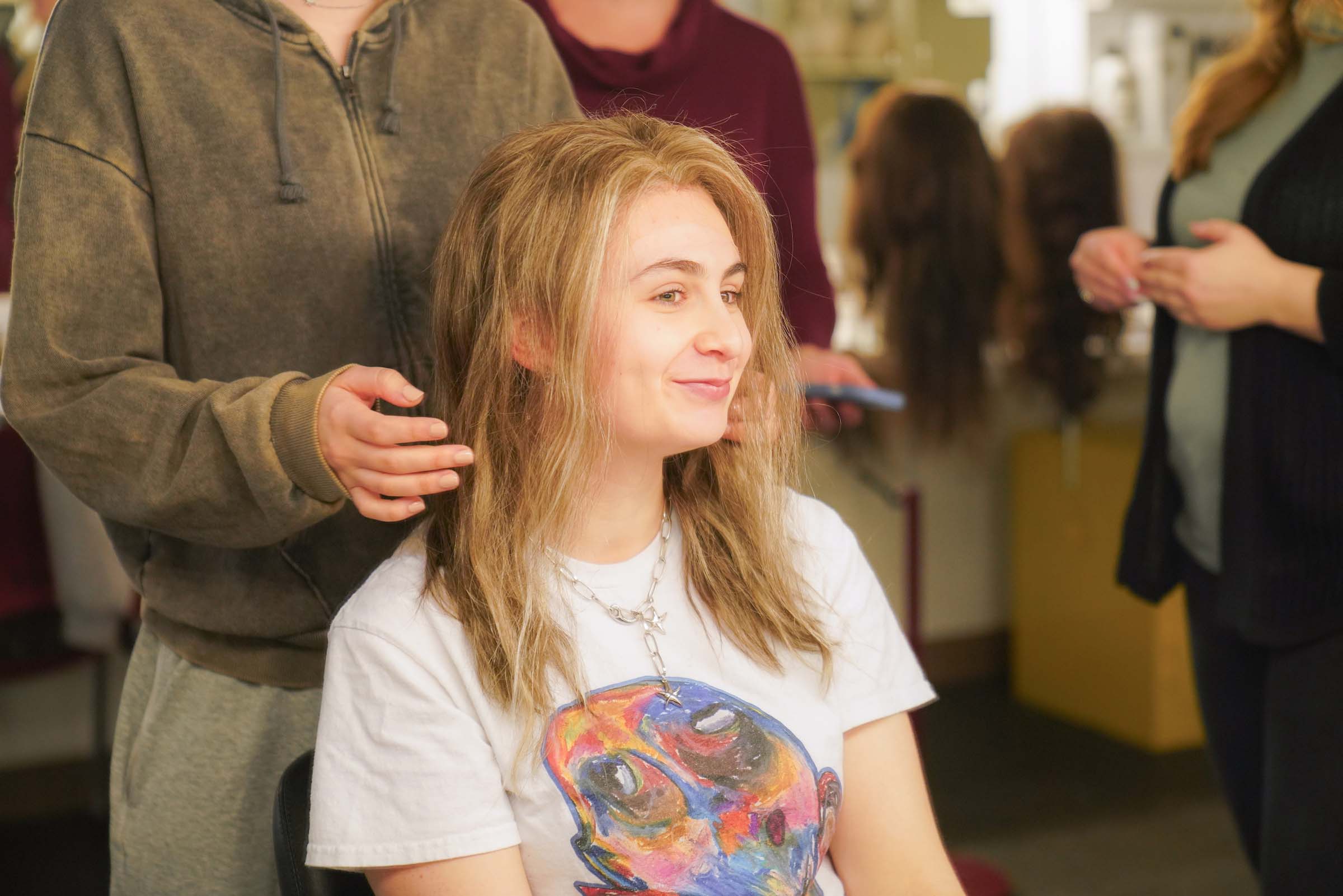
Mastering the Craft of Hair and Makeup in Theatre
The craft of hair and makeup in theatre is the specialized discipline of designing and applying visual transformations that define characters, withstand intense stage lighting, and remain durable throughout a performance. It integrates...
The craft of hair and makeup in theatre is the specialized discipline of designing and applying visual transformations that define characters, withstand intense stage lighting, and remain durable throughout a performance. It integrates historical research, color theory, and structural wig-making to ensure an actor’s appearance communicates their character's narrative to the entire audience.
Contents
The Essential Role of Hair and Makeup in Theatrical Storytelling
In the professional theatre landscape of 2026, hair and makeup are not merely cosmetic additions; they are foundational elements of the visual narrative. Unlike film, where the camera can capture minute details, theatre requires a unique balance of exaggerated features for distant viewing and refined blending for closer audience interactions in "black box" or intimate house settings.
The designer’s primary objective is to support the director’s vision and complement the costume design. This involves a rigorous process of historical research, especially for period pieces. For example, a production set in the 1890s requires an understanding of "Gibson Girl" silhouettes and the specific pompadour hairstyles of the era. However, these must be executed using modern techniques that allow for rapid changes—often occurring in less than 60 seconds during a "quick change" in the wings.
Furthermore, the craft addresses the physiological demands of the performer. Theatrical performers exert significant physical energy, leading to perspiration and heat. The makeup must be formulated to resist moisture and oil, while hair and wigs must be secured with high-tension pins and medical-grade adhesives to prevent displacement during choreography or stunts.
Technical Foundations: Makeup Artistry and Color Theory
Theatrical makeup relies heavily on the interaction between pigments and stage lighting. As of 2026, the shift toward programmable LED lighting in most professional houses has changed the way designers approach color palettes. Traditional greasepaint techniques have evolved to include more high-pigment creams and alcohol-activated palettes that do not wash out under high-intensity discharge or saturated LED washes.
Understanding Lighting Interaction
Lighting designers use gels and color temperatures that can drastically alter how makeup appears. A character wearing a standard "warm" foundation may appear sickly or grey under a blue moonlight wash. Master makeup artists must understand additive and subtractive color mixing to compensate for these shifts.
- Cool Lighting: Often requires warmer undertones in the base makeup to prevent the skin from appearing lifeless.
- Warm Lighting: Can "eat" red tones, requiring deeper contouring and more defined lip and eye lines.
Contouring for the "Third Row and Beyond"
Because the audience is seated at a distance, facial features often flatten under bright lights. The craft involves "exaggerated realism," where highlights and shadows are placed more aggressively than in daily wear. This highlights the bone structure—the brow ridge, cheekbones, and jawline—ensuring that facial expressions remain readable even from the back of the balcony.
The Complexity of Theatrical Wig Making and Styling
Wigs are often the most technically demanding aspect of the craft. In high-budget productions, nearly every principal actor wears a wig. This is done for two reasons: to protect the actor’s natural hair from the daily rigors of heat styling and to ensure character consistency across eight shows a week.
Wig Construction and Ventilating
The gold standard in 2026 remains the hand-tied, lace-front wig. Ventilating is the process of using a small hook to tie individual strands of hair into a fine silk or nylon lace. This creates a realistic hairline that appears to grow directly from the actor's scalp. A single high-quality theatrical wig can take 40 to 60 hours of labor to complete.
Maintenance and Rigging
A "wig run" involves the daily maintenance of these pieces. After every performance, wigs are cleaned of spirit gum (a common adhesive) and sweat. They are placed on canvas blocks—often custom-molded to the actor's head shape using 3D scanning technology—to be re-set and styled. "Rigging" refers to the method of prepping the actor’s natural hair (usually through pin curls or "wraps") to create a flat, secure base for the wig to sit on without adding unnecessary bulk to the head shape.
Specialized Techniques: Prosthetics and Character Effects
For many productions, the craft extends into the realm of SFX (Special Effects). This includes the application of foam latex or silicone prosthetics to alter an actor's anatomy. Whether creating the aged appearance of a character over several decades or the fantastical features of a non-human entity, the technical requirements are immense.
Professional theatrical houses now frequently use alcohol-activated pigments for prosthetics because they are waterproof and do not smudge onto costumes. This is critical in theatre, where costume pieces are often expensive, one-of-a-kind items that cannot be easily laundered between performances.
| Technique | Common Materials | Primary Use | Durability Level |
|---|---|---|---|
| Straight Makeup | Cream/Liquid foundation, setting powder | Enhancing natural features | High (Requires touch-ups) |
| Age Makeup | Highlights, shadows, stipple sponges | Adding years/wrinkles | High (Sweat resistant) |
| Prosthetics | Silicone, Foam Latex, Pros-Aide | Structural changes (nose, chin) | Very High (One-time use) |
| Wig Application | Lace-front wigs, Spirit Gum, Toupee tape | Period/Character hairstyles | High (Requires daily reset) |
| Ventilating | Human/Synthetic hair, ventilating hooks | Creating realistic hairlines | Permanent (Per piece) |
Health, Safety, and Sanitation Standards
In the post-pandemic landscape of 2026, sanitation is the most critical technical requirement for any hair and makeup department. The International Alliance of Theatrical Stage Employees (IATSE) maintains strict guidelines regarding the handling of products to prevent cross-contamination.
- Product Decanting: Makeup should never be applied directly from the original container. Artists use stainless steel spatulas to move products to a palette.
- Disposable Applicators: Single-use mascara wands and sponges are the industry standard to prevent the spread of ocular and skin infections.
- Tool Sterilization: Brushes are cleaned with high-grade isopropyl alcohol or specialized UV-C sterilization cabinets between uses.
- Skin Sensitivity: With the rise of vegan and "clean" beauty standards, designers must vet all ingredients for potential allergens, especially when using adhesives like latex or spirit gum.
The Production Cycle: From Concept to Closing Night
The craft follows a specific workflow that aligns with the broader production schedule. Understanding this timeline is essential for anyone entering the field.
Design and Mock-ups
During the pre-production phase, the designer creates "face sheets" or digital renderings. These documents serve as the blueprint for the entire run. For large ensembles, the designer must create looks that are cohesive across the entire cast.
Tech Week and Dress Rehearsals
"Tech" is the most demanding period for the hair and makeup crew. This is the first time the looks are seen under the actual stage lights and in tandem with the costumes. It is common for a makeup look to be completely redesigned overnight if it does not "read" correctly from the house or if it interferes with a costume collar.
The Running Crew and Maintenance
Once the show opens, the Designer often moves on to the next project, leaving the "Head of Hair and Makeup" to supervise the daily execution. This role involves managing the "run sheet," which tracks every entrance, exit, and change for every actor. They must ensure that every wig is styled exactly as the designer intended and that the "look" does not drift over a long-running engagement.
Career Paths and Educational Requirements
Entering the professional world of theatrical hair and makeup requires a blend of artistic talent and technical certification. Most professional theaters in the United States and Canada require union membership through IATSE, specifically local chapters like 706 (Make-up Artists and Hair Stylists Guild) or 798.
Aspiring artists often pursue a BFA in Costume Design with a concentration in wigs and makeup or attend specialized trade schools focused on cinematic and theatrical arts. Building a portfolio is essential, but in 2026, a portfolio must demonstrate more than just "pretty" makeup; it must show an ability to handle sweat, distance, lighting shifts, and the structural integrity of hairpieces.
Essential Skills for the 2026 Professional
- Wig Styling: Proficiency in roller sets, finger waves, and period-accurate updos.
- Basic Haircutting: The ability to trim natural hair or adjust synthetic wig fibers.
- Speed: Performing complex character transitions in under two minutes.
- Collaboration: Effectively communicating with the United Scenic Artists (USA 829) costume designers.
Common Questions Regarding Theatrical Hair and Makeup
How does theatrical makeup differ from film makeup?
Theatrical makeup is applied with higher contrast and more pigment saturation to compensate for the distance between the performer and the audience. While film makeup focuses on "invisible" blending for 4K and 8K cameras, theatre makeup prioritizes structural definition that remains visible under heavy stage lighting.
Why are wigs used instead of an actor's natural hair?
Wigs provide consistency and protection. An actor’s natural hair cannot withstand the heat of daily styling for a long-running show without significant damage. Additionally, wigs allow for instantaneous character changes that would be impossible with natural hair.
What is the most common adhesive used for theatrical prosthetics?
Pros-Aide is the industry standard in 2026. It is a medical-grade, water-based adhesive that is incredibly strong and sweat-resistant. Unlike traditional spirit gum, it remains flexible on the skin, allowing the actor to maintain a full range of facial expressions.
Do actors do their own makeup in professional theatre?
In many Broadway and regional productions, actors are trained to apply their own "straight" makeup based on the designer's instructions. However, for complex character makeup, prosthetics, or wig application, a dedicated hair and makeup crew is required to perform the work.
How are theatrical wigs cleaned?
Wigs are typically cleaned using a "swish" method in a basin of cool water and specialized wig shampoo. For lace-front wigs, the delicate lace is cleaned daily with 99% isopropyl alcohol to remove adhesive residue and skin oils without damaging the fine mesh.
Practical Next Steps for Aspiring Professionals
For those looking to master the craft of hair and makeup in theatre, the most effective path involves a combination of formal education and hands-on apprenticeship. Start by volunteering in local community theaters or university productions to understand the "backstage rhythm." Invest in a high-quality "starter kit" that includes professional-grade cream palettes (such as those from Ben Nye or Kryolan), a variety of synthetic and natural brushes, and basic wig-styling tools.
Focus on learning the technical mechanics of the face and head. Understanding the underlying bone structure will make your contouring more effective, and learning the anatomy of the scalp will help you secure wigs more comfortably for your actors. Finally, stay informed on union requirements and safety protocols, as these are the hallmarks of a true professional in the theatrical arts.
Image Gallery