Ocean Light Zones Explained
Ocean light zones are distinct vertical layers of the water column categorized by the amount of sunlight they receive. These zones—the Epipelagic, Mesopelagic, Bathypelagic, Abyssopelagic, and Hadalpelagic—determine the distribution of...
Ocean light zones are distinct vertical layers of the water column categorized by the amount of sunlight they receive. These zones—the Epipelagic, Mesopelagic, Bathypelagic, Abyssopelagic, and Hadalpelagic—determine the distribution of marine life, the capacity for photosynthesis, and the extreme physical conditions that organisms must adapt to as depth increases and light vanishes.
Contents
Understanding the stratification of the ocean is essential for marine biology, climate science, and environmental conservation. As we move into 2026, our ability to monitor these zones through advanced autonomous underwater vehicles (AUVs) has revealed that light penetration affects more than just visibility; it dictates the entire energy budget of the planet’s largest ecosystem.
The Physics of Light in Water
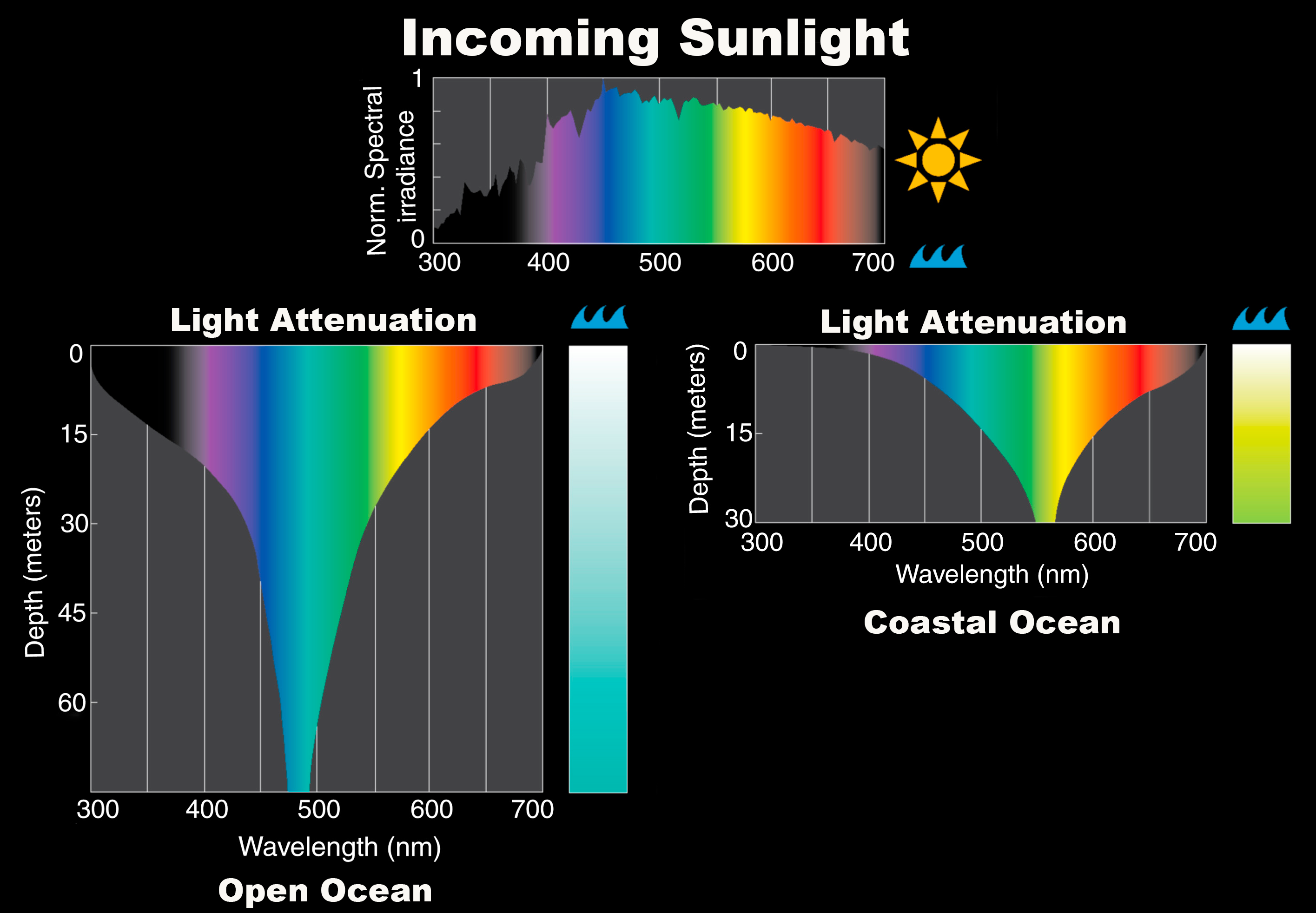
Before examining the specific zones, it is vital to understand why light disappears as we descend. Water is much denser than air, and it absorbs and scatters light energy. This process is known as attenuation. Not all colors of light penetrate the ocean to the same depth.
Sunlight is composed of a spectrum of colors (red, orange, yellow, green, blue, indigo, and violet). Red light has the longest wavelength and the lowest energy, meaning it is absorbed within the first few meters of the surface. This is why many deep-sea creatures are red; in an environment where red light cannot reach, they appear effectively black and invisible to predators. Conversely, blue and violet light have shorter wavelengths and higher energy, allowing them to penetrate much deeper, which gives the ocean its characteristic blue hue.
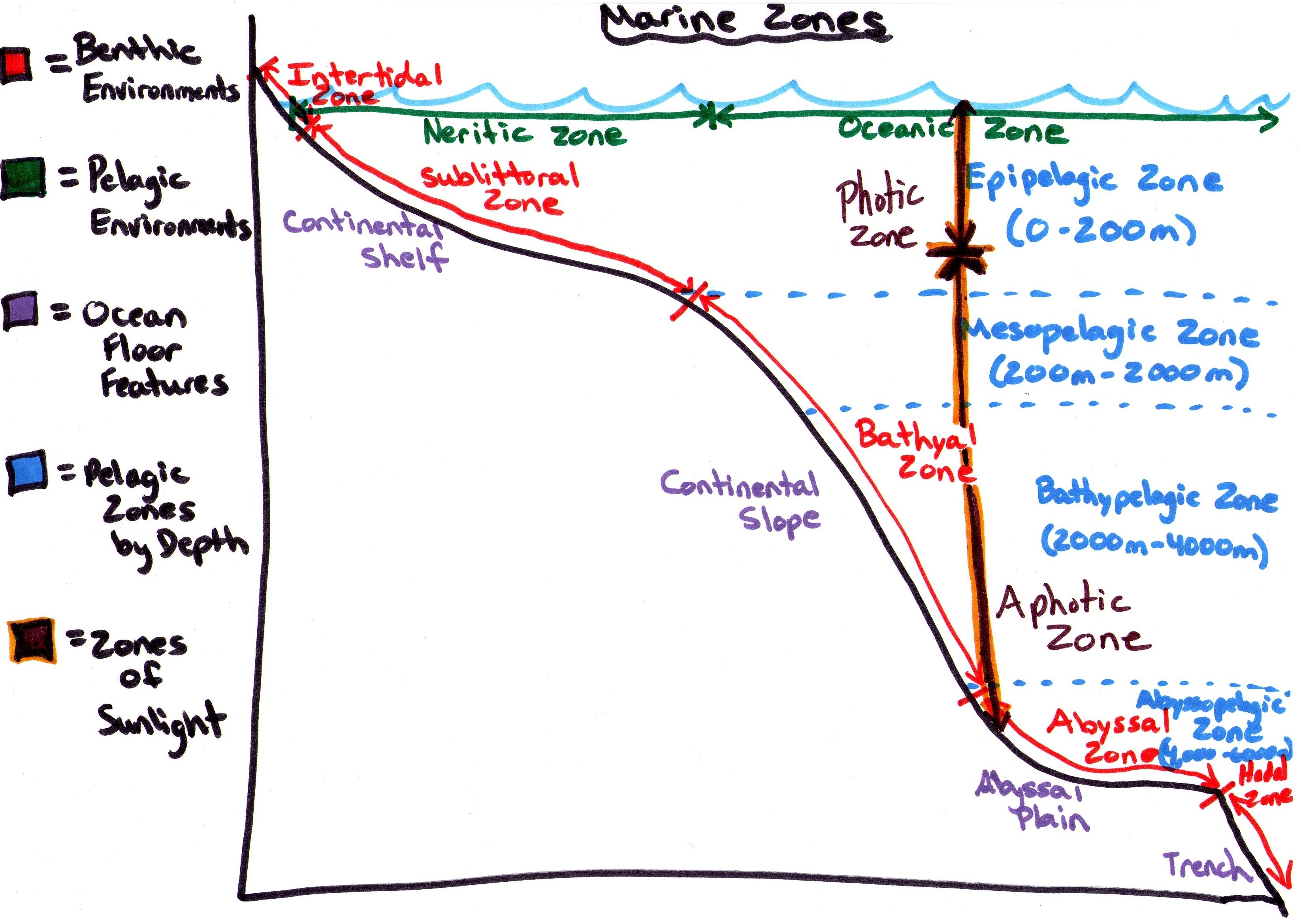
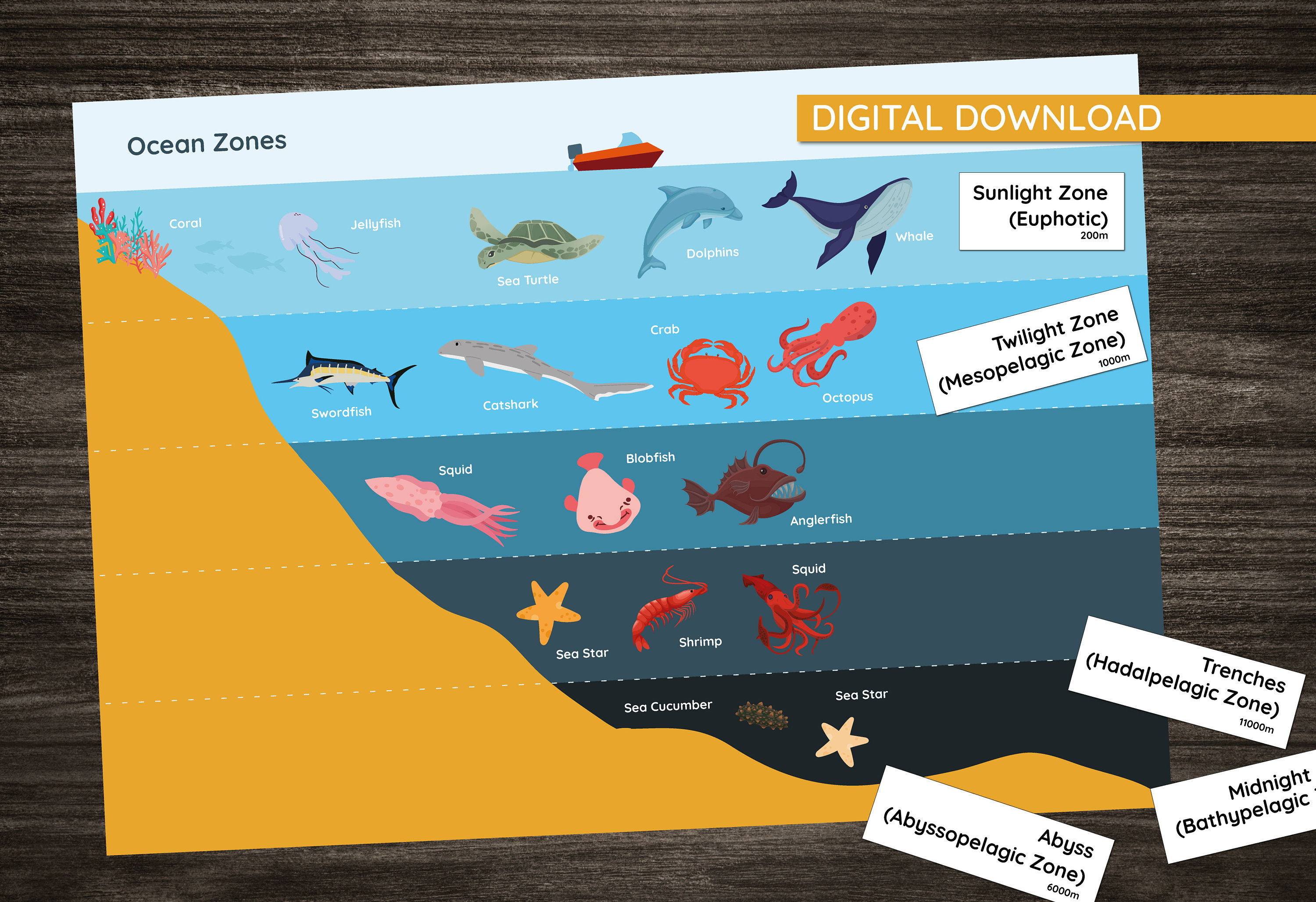
1. The Epipelagic Zone (The Sunlight Zone)
Depth: 0 to 200 meters (0 to 660 feet)
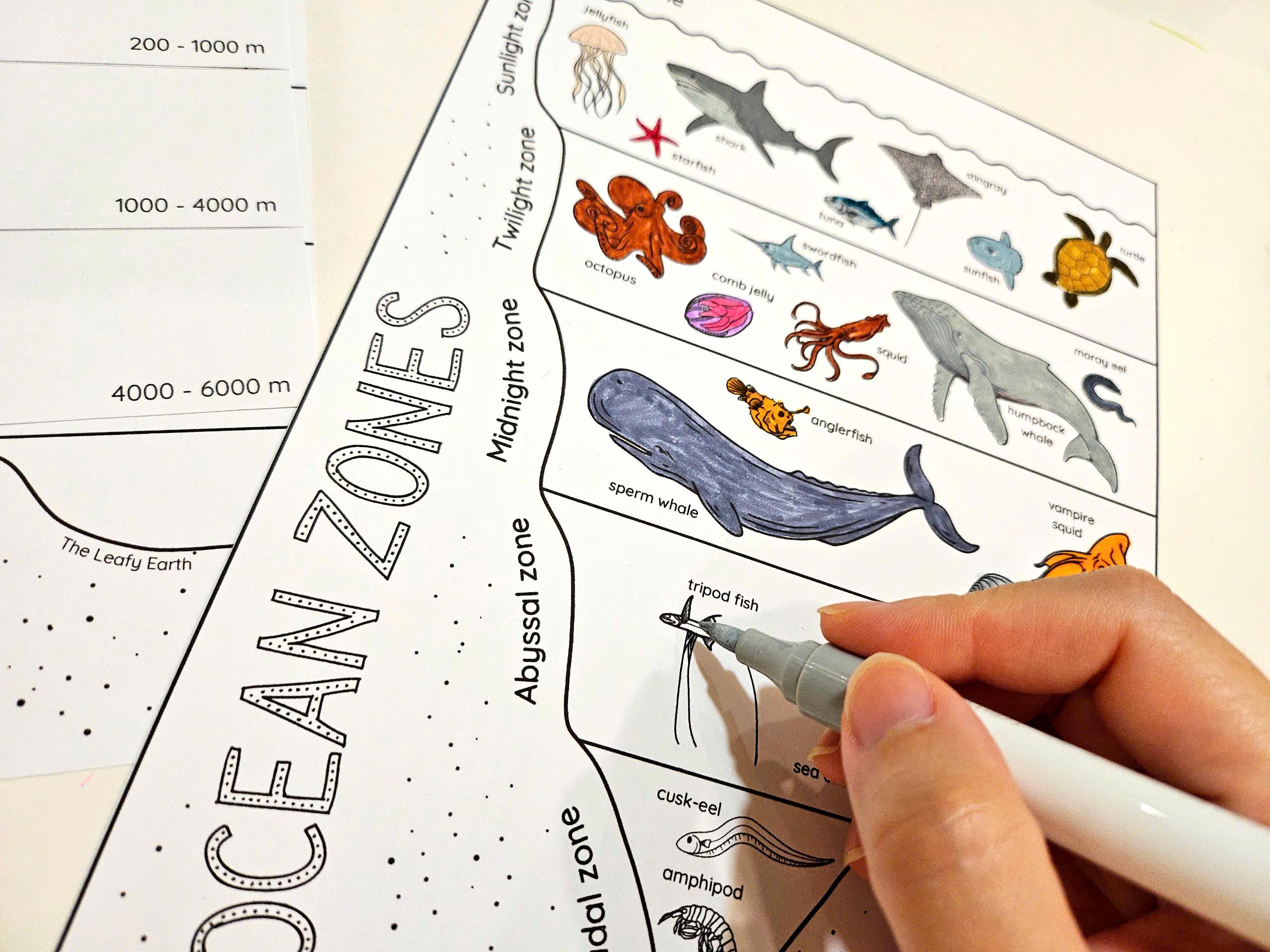
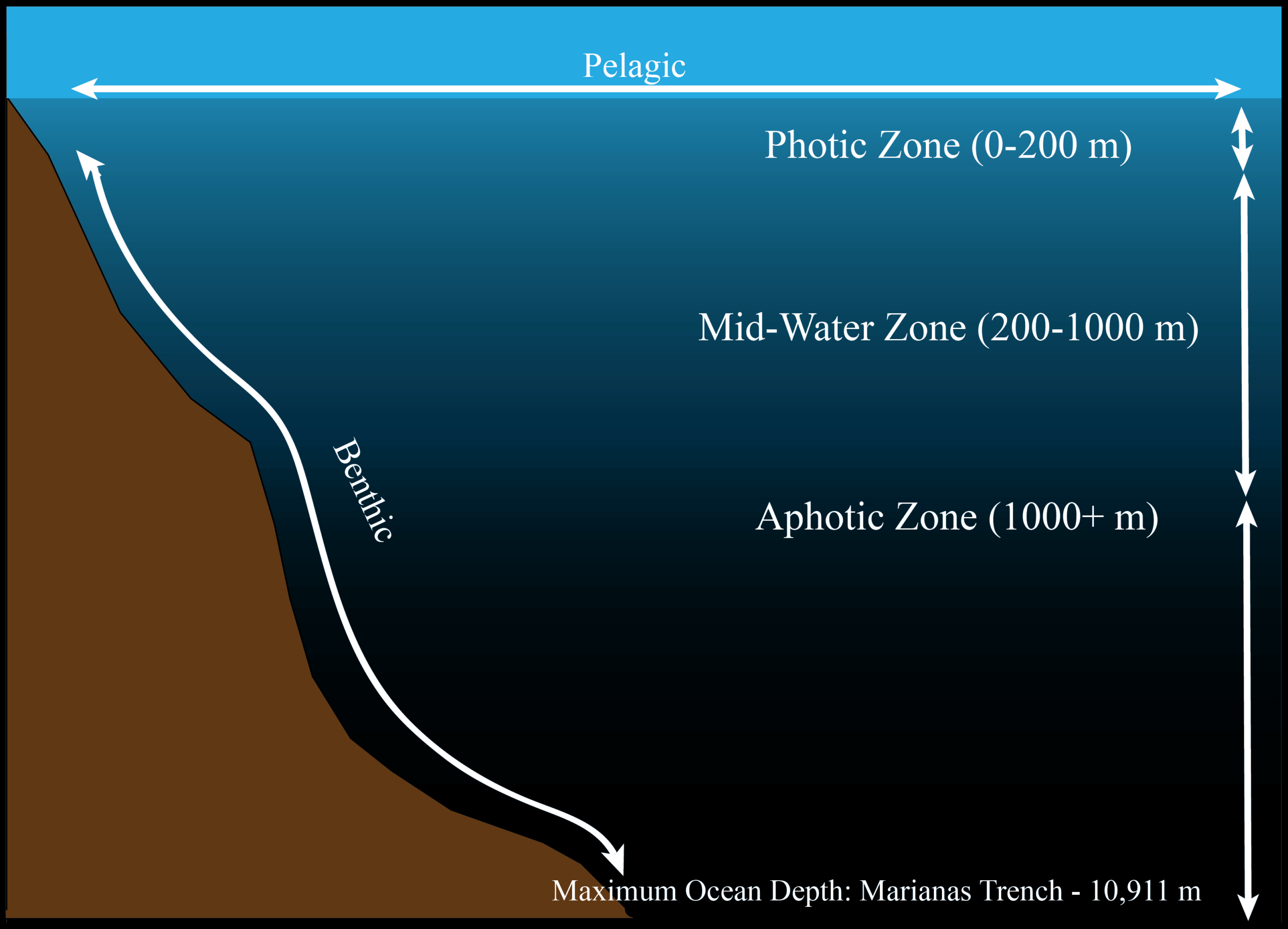
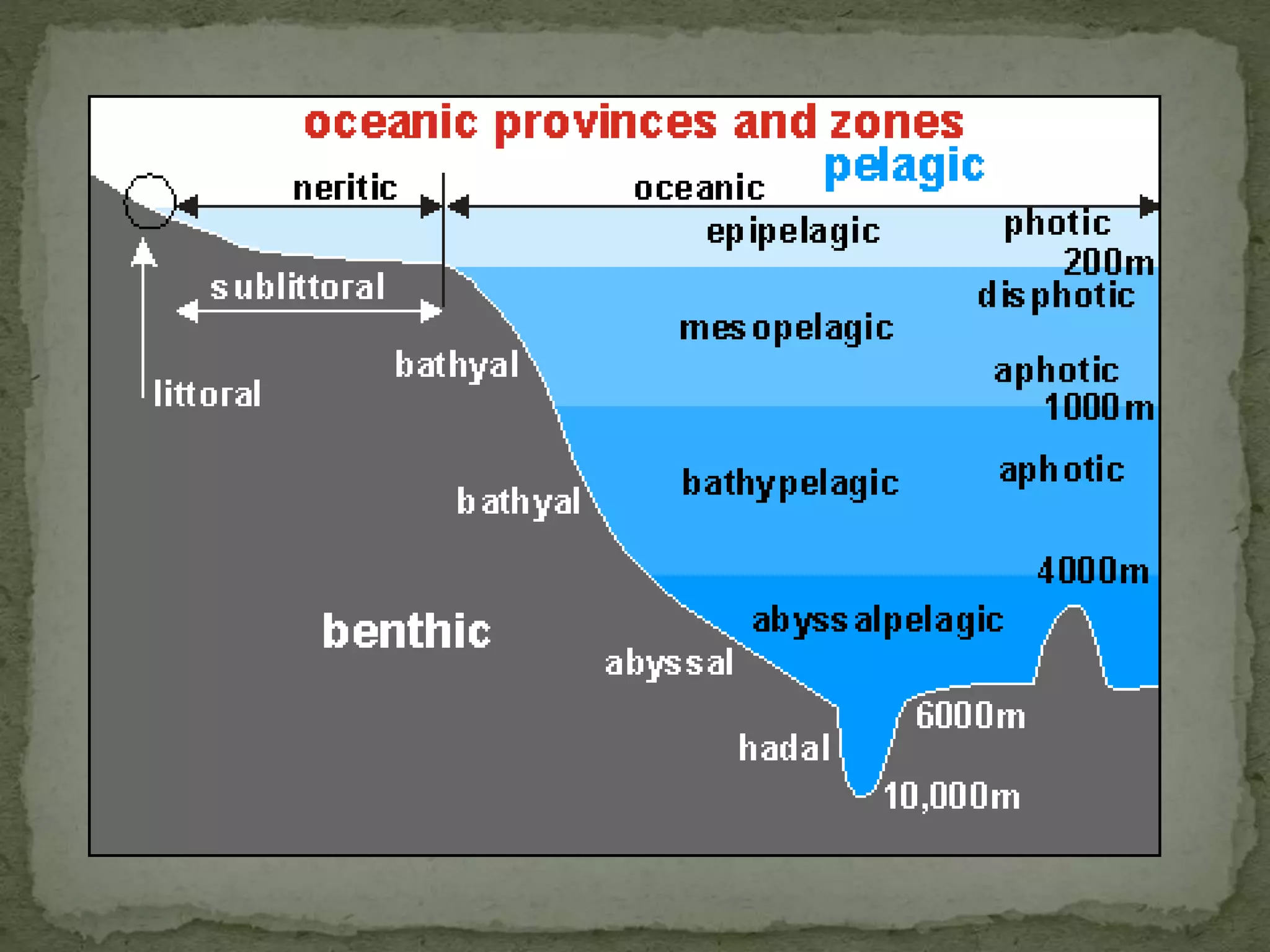
The Epipelagic zone is the topmost layer of the ocean and the only one that receives enough sunlight for photosynthesis to occur. Consequently, it is often referred to as the "photic zone." While it accounts for only about 2% of the ocean’s total volume, it is home to approximately 90% of all marine life.
Primary Production and the Food Web
The foundation of life in the Epipelagic zone is phytoplankton—microscopic organisms that convert sunlight and carbon dioxide into energy. These tiny plants produce over 50% of the world's oxygen. Because of this massive primary production, the Sunlight Zone supports a vast array of life, from small zooplankton and schools of forage fish like sardines to apex predators such as sharks, tuna, and whales.
Environmental Dynamics
Temperature in the Epipelagic zone varies significantly depending on latitude and season. Because this layer interacts directly with the atmosphere, it is subject to wind-driven mixing, which helps distribute nutrients and dissolved gases. However, in 2026, climate monitoring shows that increased surface temperatures are leading to stronger "stratification," where the warm surface layer does not mix well with the cooler, nutrient-rich waters below, potentially limiting the productivity of this zone.
2. The Mesopelagic Zone (The Twilight Zone)
Depth: 200 to 1,000 meters (660 to 3,300 feet)
As we descend past 200 meters, we enter the Mesopelagic zone. Here, light is extremely faint—a perpetual twilight that is insufficient for photosynthesis. Despite the lack of plant life, this zone is teeming with specialized animals that have evolved extraordinary ways to survive in low-light conditions.
The Biological Pump and Vertical Migration
One of the most significant biological events on Earth occurs daily in this zone: Diel Vertical Migration. Every night, trillions of organisms (including lanternfish and krill) swim from the Mesopelagic up to the Epipelagic to feed under the cover of darkness. At dawn, they return to the depths. This movement acts as a "biological pump," transporting carbon from the surface into the deep ocean, which plays a critical role in regulating the Earth's climate.
Adaptations: Vision and Bioluminescence
Creatures in the Twilight Zone often possess large, sensitive eyes to capture the minimal stray photons of sunlight. More interestingly, many organisms produce their own light through a chemical reaction known as bioluminescence. This light is used for:
- Counter-illumination: Using light organs (photophores) on their bellies to match the faint light coming from above, erasing their silhouette from predators lurking below.
- Communication: Signalling potential mates.
- Luring Prey: Using glowing appendages to attract curious smaller fish.
3. The Bathypelagic Zone (The Midnight Zone)
Depth: 1,000 to 4,000 meters (3,300 to 13,100 feet)
In the Bathypelagic zone, the ocean is plunged into absolute darkness. No sunlight reaches this depth. The only light visible is the occasional flicker of bioluminescence. The environment is characterized by near-freezing temperatures (averaging around 4°C or 39°F) and immense hydrostatic pressure.
Survival in the Dark
Because there are no plants, food is scarce. Most inhabitants of the Midnight Zone rely on "marine snow"—a constant drift of organic detritus, such as dead plankton, fecal matter, and decaying carcasses, falling from the upper layers.
The organisms here, such as the anglerfish, gulper eel, and vampire squid, are often described as "alien." They typically have slow metabolisms to conserve energy and possess specialized feeding apparatuses, like highly distensible stomachs and oversized teeth, allowing them to eat whatever crosses their path, regardless of its size.
Physical Pressure
The pressure in the Bathypelagic zone is staggering, reaching up to 5,800 pounds per square inch (psi). Animals here lack air-filled cavities (like swim bladders) that would be crushed; instead, their bodies are composed mostly of water and gelatinous tissue, which is incompressible.
4. The Abyssopelagic Zone (The Abyssal Zone)
Depth: 4,000 to 6,000 meters (13,100 to 19,700 feet)
The name "Abyss" comes from the Greek word meaning "bottomless." This zone encompasses the vast plains of the ocean floor. It is an environment of extreme stability: the temperature never fluctuates, and the darkness is total.
The Benthic Environment
While the water column itself (the pelagic part) is sparsely populated, the seafloor (the benthic part) is home to various invertebrates like sea cucumbers, tripod fish, and brittle stars. These scavengers sift through the thick layer of silt and marine snow that has accumulated over millennia.
Hydrothermal Vents: An Energy Alternative
In certain areas of the Abyssal Zone, particularly near mid-ocean ridges, hydrothermal vents spew superheated, mineral-rich water. Here, life does not depend on sunlight. Instead, bacteria perform chemosynthesis, converting chemicals like hydrogen sulfide into energy. This supports unique ecosystems of giant tube worms, blind shrimp, and specialized crabs that exist entirely independent of the sun.
5. The Hadalpelagic Zone (The Hadal Zone)
Depth: 6,000 meters to the bottom of the deepest trenches (up to approx. 11,000 meters)
The Hadalpelagic zone consists of the deepest V-shaped depressions in the ocean floor, known as trenches. The most famous is the Mariana Trench in the Western Pacific, which reaches a depth of nearly 11,000 meters (36,000 feet) at the Challenger Deep.
Life at the Extreme
Named after Hades, the Greek god of the underworld, this zone was once thought to be sterile. However, 2026 deep-sea expeditions continue to find amphipods, snailfish, and decapod crustaceans living at these depths. The pressure here is over 8 tons per square inch—roughly equivalent to an elephant standing on your thumb.
Organisms in the Hadal zone have unique cellular adaptations, including specialized proteins and lipids that remain fluid and functional under pressure that would solidify the fats in surface-dwelling creatures.
Comparative Summary of Ocean Light Zones
The following table provides a quick reference for the physical characteristics and biological features of each zone.
| Zone | Depth Range | Light Level | Temperature | Primary Food Source |
|---|---|---|---|---|
| Epipelagic | 0 – 200m | Full Sunlight | Variable (Warm/Cold) | Photosynthesis |
| Mesopelagic | 200 – 1,000m | Faint Twilight | 4°C – 20°C | Vertical Migration/Detritus |
| Bathypelagic | 1,000 – 4,000m | None (Aphotic) | ~4°C | Marine Snow |
| Abyssopelagic | 4,000 – 6,000m | None (Aphotic) | 0°C – 3°C | Marine Snow/Chemosynthesis |
| Hadalpelagic | 6,000m+ | None (Aphotic) | 1°C – 4°C | Detritus/Extreme Scavenging |
Frequent Challenges in Deep-Sea Exploration
Exploring these zones is one of the greatest technological challenges in modern science. By 2026, materials science has advanced to create carbon-fiber and ceramic pressure spheres, but several obstacles remain:
- Pressure: Designing hulls that can withstand 1,000 atmospheres of pressure without imploding.
- Communication: Radio waves do not travel well through water. Deep-sea submersibles often rely on acoustic (sound-based) modems or physical fiber-optic tethers.
- Visibility: Beyond 200 meters, researchers must bring their own light. However, powerful floodlights can scare away sensitive deep-sea organisms or blind them.
- Cost: Deploying a research vessel capable of reaching the Abyssal or Hadal zones costs tens of thousands of dollars per day.
FAQ: Common Questions About Ocean Zones
Which ocean zone is the largest by volume?
The Bathypelagic (Midnight) zone is the largest by volume. It encompasses the vast majority of the ocean's water column globally. While the Abyssal zone covers more of the seafloor area, the Bathypelagic represents a massive three-dimensional space that remains one of the least explored regions on Earth.
Why is the Mesopelagic zone called the "Twilight Zone"?
It is called the Twilight Zone because it marks the transition from the brightly lit surface to the total darkness of the deep. There is just enough light for the human eye to see (if looking up toward the surface), but not enough light for plants to grow. This dim environment creates a unique ecological niche where camouflage and bioluminescence are the primary survival strategies.
Can humans survive the pressure in the Abyssal Zone?
Humans cannot survive the pressure of the Abyssal zone without the protection of a specialized, pressurized submersible. Without such equipment, the air in a human's lungs and sinuses would be crushed instantly. However, because our bodies are mostly made of water (which is incompressible), the primary danger to a "fluid-filled" organism is the chemical effect of pressure on proteins and cell membranes, rather than simple "crushing."
Does the Hadalpelagic zone exist everywhere in the ocean?
No. The Hadalpelagic zone only exists in specific geographic locations where tectonic plate activity has created deep trenches. Most of the ocean floor resides in the Abyssopelagic zone (4,000 to 6,000 meters). The Hadal zone represents less than 1% of the total ocean area.
How does climate change affect the deeper light zones?
While the Epipelagic zone experiences the most direct warming, the deeper zones are also affected. Warming surface waters hold less oxygen, and as this water eventually sinks, it can lead to "deoxygenation" in the Mesopelagic and Bathypelagic zones. Additionally, changes in surface plankton productivity directly affect the amount of "marine snow" that reaches the deep, potentially starving the ecosystems below.
Next Steps for Marine Literacy
To further your understanding of ocean light zones, consider exploring real-time data from global oceanographic institutes. Many organizations now offer live-streamed dives from ROVs (Remotely Operated Vehicles) that traverse these zones, providing a firsthand look at the transition from the Sunlight Zone to the Midnight Zone. Understanding these layers is more than an academic exercise; it is the first step in realizing how interconnected the surface world is with the mysterious depths of our blue planet.
Image Gallery