Cloud Access Security Brokers vs Cloud Data Protection Gateways: Choosing the Right Security Architecture
Cloud Access Security Brokers (CASB) provide a broad security layer focused on visibility, compliance, and threat protection across multiple SaaS applications, while Cloud Data Protection Gateways (CDPG) specialize in securing data thr...
Cloud Access Security Brokers (CASB) provide a broad security layer focused on visibility, compliance, and threat protection across multiple SaaS applications, while Cloud Data Protection Gateways (CDPG) specialize in securing data through encryption or tokenization before it ever leaves the corporate network to ensure the cloud provider cannot access plaintext information.
Contents
The rapid migration to cloud-native environments has fundamentally shifted the perimeter of enterprise security. As organizations in 2026 navigate complex hybrid-cloud and multi-cloud strategies, the distinction between Cloud Access Security Brokers (CASB) and Cloud Data Protection Gateways (CDPG) remains a critical technical pivot point. While both technologies aim to secure corporate assets in the cloud, they operate at different layers of the OSI model and address distinct risk profiles.
Understanding the Role of Cloud Access Security Brokers (CASB)
A Cloud Access Security Broker acts as an intermediary policy enforcement point between cloud service consumers and cloud service providers. By 2026, CASBs have evolved from simple "Shadow IT" discovery tools into sophisticated components of the Security Service Edge (SSE) framework. They provide a comprehensive lens through which IT departments can monitor activity and apply security policies across thousands of distinct SaaS, PaaS, and IaaS environments.
The Four Pillars of CASB
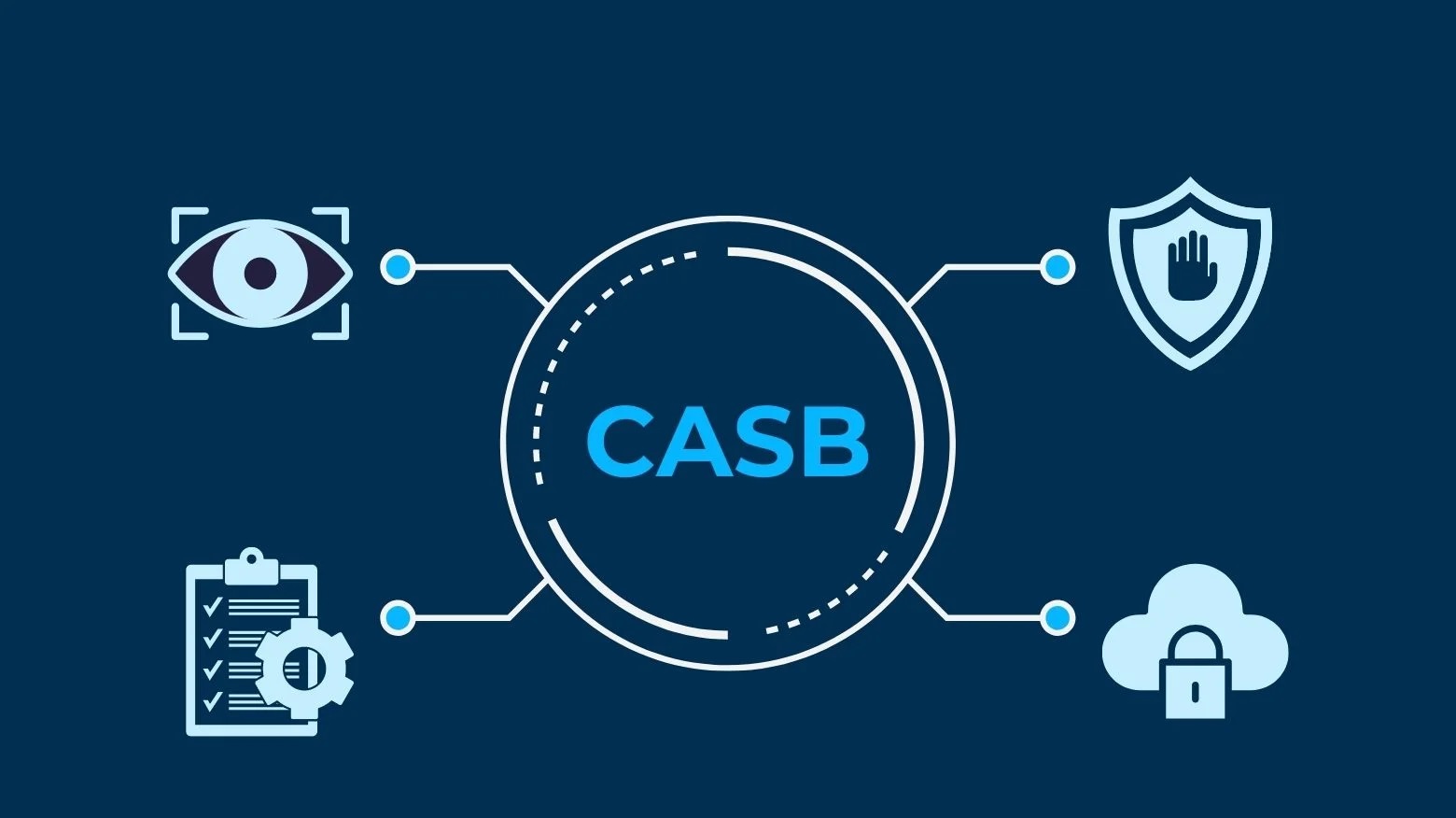
The functionality of a CASB is generally categorized into four core pillars, each addressing a specific challenge of cloud adoption:
- Visibility: This is the foundational capability. CASBs identify "Shadow IT"—unauthorized applications used by employees—by analyzing web logs. They provide a risk score for each application, helping administrators decide whether to sanction or block specific services.
- Compliance: For organizations subject to GDPR, HIPAA, or CCPA, CASBs ensure that data residing in the cloud meets regulatory requirements. They can identify where sensitive data is stored and who has access to it.
- Data Security: This involves Data Loss Prevention (DLP) features. CASBs can scan files for sensitive patterns (like credit card numbers or social security numbers) and prevent them from being shared externally or downloaded to unmanaged devices.
- Threat Protection: CASBs monitor for anomalous behavior that might indicate a compromised account or an insider threat. For example, if a user logs in from New York and then five minutes later from Singapore, the CASB can trigger an automated lockout or MFA challenge.
Deployment Modes: API vs. Proxy
CASBs typically deploy in two ways. API-based CASBs connect directly to the cloud provider’s backend. This allows them to inspect "data at rest" and manage security settings without impacting the user experience or network performance. Proxy-based CASBs (either forward or reverse) sit in the data path, allowing for real-time "data in motion" inspection and the ability to block actions as they happen, such as preventing a "print" command within a web browser.
The Specific Focus of Cloud Data Protection Gateways (CDPG)
Cloud Data Protection Gateways are often viewed as a more specialized, data-centric evolution of the proxy-based CASB. The primary objective of a CDPG is not necessarily to manage the application or the user behavior, but to protect the data itself before it reaches the cloud.
Encryption and Tokenization
The hallmark of a CDPG is its ability to perform field-level encryption or tokenization. When a user enters a sensitive value (like a patient record or a bank account number) into a cloud application, the CDPG intercepts that traffic. It replaces the sensitive data with a token or an encrypted string.
Because the encryption keys or token vaults are stored on-premises (or in a private cloud controlled by the enterprise), the cloud service provider (CSP) only ever sees the obfuscated data. If the CSP is breached, or if a government issues a subpoena to the CSP, the data retrieved is mathematically useless without the keys held by the enterprise.
Sovereignty and Residency
In 2026, data residency laws have become more stringent. CDPGs are the primary tool for organizations that must store data within specific geographic borders but want to use global SaaS platforms. By keeping the "real" data (the keys/vault) in a specific jurisdiction and sending only tokens to the global cloud, organizations can maintain legal compliance while utilizing the efficiency of international cloud services.
Key Differences: CASB vs. CDPG
While there is some overlap, particularly in DLP capabilities, the architectural intent of these two technologies differs significantly. The following table highlights the primary technical and operational distinctions.
| Feature | Cloud Access Security Broker (CASB) | Cloud Data Protection Gateway (CDPG) |
|---|---|---|
| Primary Goal | Visibility, Threat Protection, and Compliance | Data Privacy and Residency (Obfuscation) |
| Data Handling | Inspects data; often leaves it in plaintext unless DLP triggers | Encrypts or tokenizes data by default for specific fields |
| Visibility | High; sees user behavior, app usage, and device health | Medium; focused primarily on data streams and field-level changes |
| Deployment | Multimodal (API, Forward Proxy, Reverse Proxy) | Primarily Inline (Reverse or Forward Proxy) |
| CSP Relationship | Works alongside the CSP's features via APIs | Designed to ensure the CSP cannot read the data |
| Complexity | High operational complexity (policy management) | High technical complexity (integration with app schemas) |
| Impact on App | Minimal (especially in API mode) | Can break application features like "Search" or "Sort" |
Technical Implementation and Integration Challenges
Choosing between a CASB and a CDPG—or deciding to implement both—requires an understanding of the technical trade-offs involved in 2026's cloud landscape.
Breaking Application Functionality
One of the most significant challenges with CDPGs is their impact on application functionality. Cloud applications are designed to index and search plaintext data. If a CDPG encrypts the "Last Name" field in a CRM, the CRM's native search function will fail to find "Smith" because it only sees a string of ciphertext. To solve this, advanced CDPGs use Searchable Encryption or Format Preserving Encryption (FPE), which allows for some level of functionality but often adds significant latency and technical overhead.
CASBs, particularly those using APIs, do not face this issue. Because they interact with the data through the provider's own interfaces, the application remains fully functional. The CASB acts as an auditor rather than a gatekeeper that alters the data structure.
The Rise of Security Service Edge (SSE)
In the current 2026 environment, stand-alone CDPGs are increasingly being integrated into broader Security Service Edge (SSE) platforms. SSE combines CASB, Secure Web Gateway (SWG), and Zero Trust Network Access (ZTNA) into a single cloud-delivered service. For most enterprises, a CASB that offers "Lite" CDPG features—such as integrated tokenization for specific high-risk fields—provides a better balance of security and usability than a dedicated, heavy-duty gateway.
Use Case Scenarios
When to Prioritize CASB
- Shadow IT Discovery: You need to know which unapproved cloud apps your employees are using.
- Malware Protection: You want to prevent the cloud from being used as a distribution point for ransomware.
- Device Management: You need to restrict data downloads to only those laptops managed by your MDM (Mobile Device Management) solution.
- Broad SaaS Portfolio: You use 50+ different SaaS apps and need a unified policy engine.
When to Prioritize CDPG
- Strict Regulatory Requirements: You operate in a sector where the cloud provider is legally prohibited from having "knowledge" of the data.
- Data Residency: You must keep the actual data value within a specific country but want to use a US-based or EU-based SaaS provider.
- High-Value IP Protection: You are storing trade secrets or formulas that, if leaked by the CSP, would end the business.
Troubleshooting and Common Mistakes
A common mistake in 2026 is treating these tools as "set and forget." Cloud providers update their interfaces and schemas constantly. An API-based CASB might lose visibility if a CSP changes its logging format, while a CDPG might "break" a cloud application after a UI update that changes how data fields are submitted.
Another frequent error is failing to manage the encryption keys for a CDPG correctly. If an organization loses its local key vault, the data stored in the cloud becomes permanently unrecoverable. This shifts the risk from "Data Leakage" to "Data Loss," which can be equally catastrophic.
Frequently Asked Questions
Can a CASB also perform encryption like a CDPG?
Yes, many modern CASBs include encryption modules. However, they often perform "Transparent Encryption," where the keys might still be managed by the CASB vendor in the cloud. A true CDPG typically emphasizes enterprise-controlled keys held outside the cloud environment entirely to satisfy maximum privacy requirements.
Does using a CDPG slow down my cloud applications?
Generally, yes. Because a CDPG must intercept, parse, and encrypt/decrypt traffic in real-time, it introduces latency. The amount of latency depends on the complexity of the encryption algorithm and the proximity of the gateway to the user and the cloud data center.
Are CDPGs becoming obsolete with Zero Trust?
Not exactly. While Zero Trust focuses on "never trust, always verify" for access, it doesn't necessarily address the issue of the cloud provider's own access to data. CDPGs remain a vital tool for the "Data Privacy" component of a mature Zero Trust Architecture, specifically addressing the "Data" pillar of the CISA Zero Trust Maturity Model.
How do CASBs handle encrypted traffic?
CASBs use SSL/TLS inspection (man-in-the-middle) to decrypt traffic, inspect it for policy violations, and then re-encrypt it before sending it to the destination. This requires installing a trusted root certificate on the user's device.
Which is more expensive to maintain?
CDPGs often have a higher Total Cost of Ownership (TCO). This is due to the need for constant tuning of application schemas and the high stakes of managing on-premises key infrastructure. CASBs are generally more scalable and easier to manage across a wide range of applications.
Practical Recommendation
For the majority of organizations in 2026, a multimodal CASB integrated into an SSE platform is the recommended starting point. It provides the necessary balance of visibility, threat protection, and ease of use. However, if your organization operates in a highly regulated vertical—such as Swiss banking or specific government intelligence sectors—where the "Trust" in a cloud provider must be mathematically zero, a Cloud Data Protection Gateway is a necessary, albeit complex, addition to your security stack.
Begin by auditing your data sensitivity levels. If your risk can be mitigated by controlling who accesses the cloud, choose a CASB. If your risk can only be mitigated by ensuring the cloud itself cannot see the data, choose a CDPG.
Image Gallery