How Foundation Crack Repair Cost Is Determined
Foundation crack repair cost is determined primarily by crack classification (structural vs. non-structural), the underlying cause of the damage, foundation construction type, required repair methodology, and site accessibility. Minor...
Foundation crack repair cost is determined primarily by crack classification (structural vs. non-structural), the underlying cause of the damage, foundation construction type, required repair methodology, and site accessibility. Minor cosmetic epoxy injections typically range from $300 to $800, whereas major structural remediation requiring underpinning piers or extensive excavation can range from $5,000 to over $25,000.
Contents
Structural vs. Non-Structural Cracks: The Primary Cost Driver
The single largest factor in calculating repair expenses is whether a crack represents a minor cosmetic flaw or a severe structural compromise. Structural engineers and foundation specialists categorize cracks based on direction, width, pattern, and movement history to establish the appropriate fix.
| Non-Structural Cracks (Vertical / Hairline / Shrinkage) | Structural Cracks (Horizontal / Stair-Step / Bowing) |
|---|---|
| - Caused by initial concrete curing- Usually < 1/8 inch wide- Low cost ($300 – $800) | - Caused by soil pressure, settling- Often > 1/4 inch wide- High cost ($2,000 – $25,000+) |
Hairline and Shrinkage Cracks (Non-Structural)
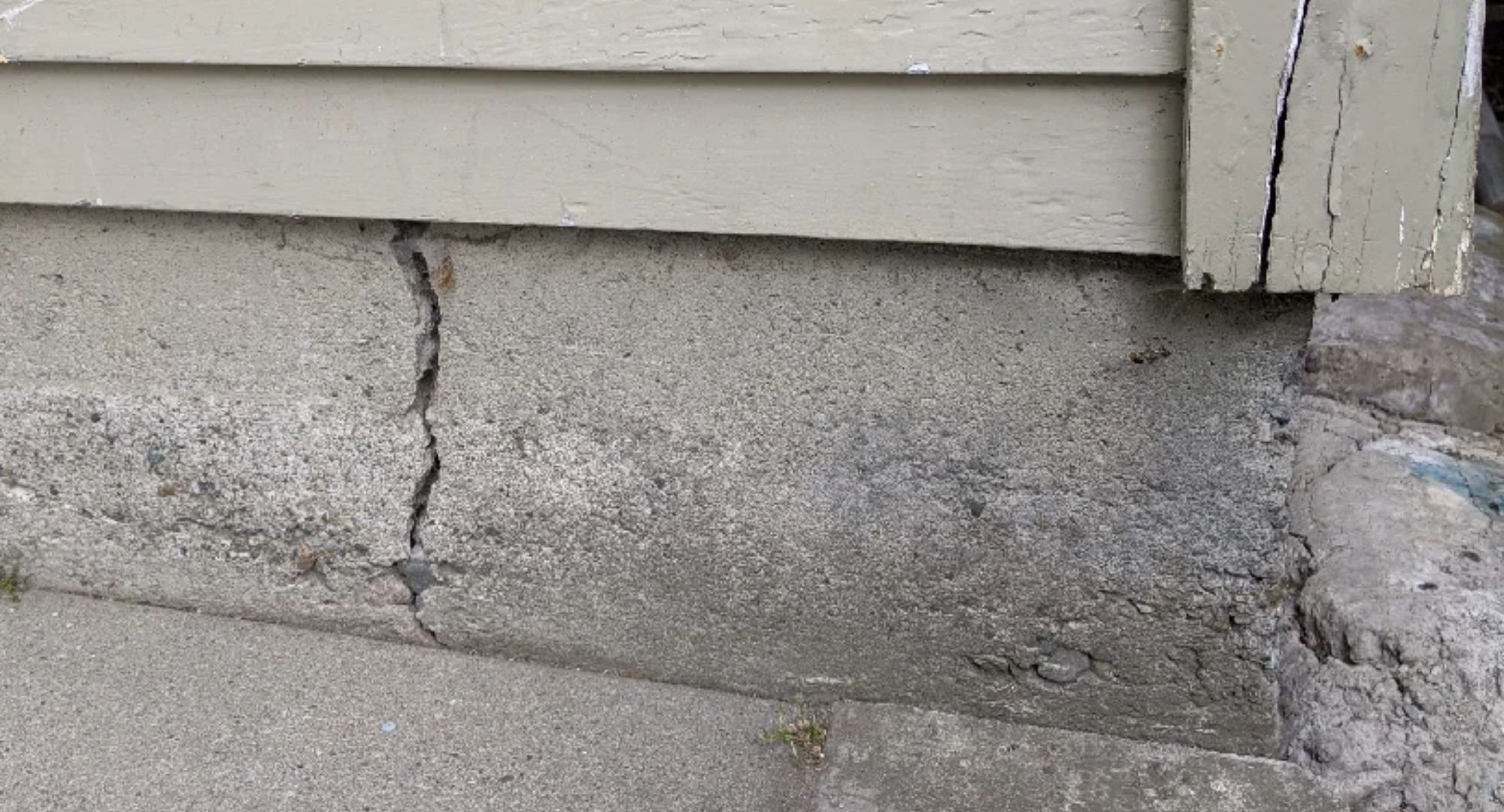
Concrete naturally loses moisture as it cures, leading to minor shrinkage cracks. These hairline fractures are usually vertical or diagonal, under 1/8-inch wide, and confined to localized sections of the concrete wall or slab.
Because shrinkage cracks do not threaten the overall integrity of the structure, repairing them primarily involves sealing the gap to prevent moisture intrusion or radon gas seepage. The labor, material, and time requirements for non-structural repairs are minimal, keeping overall costs relatively low.
Settlement and Pressure Cracks (Structural)
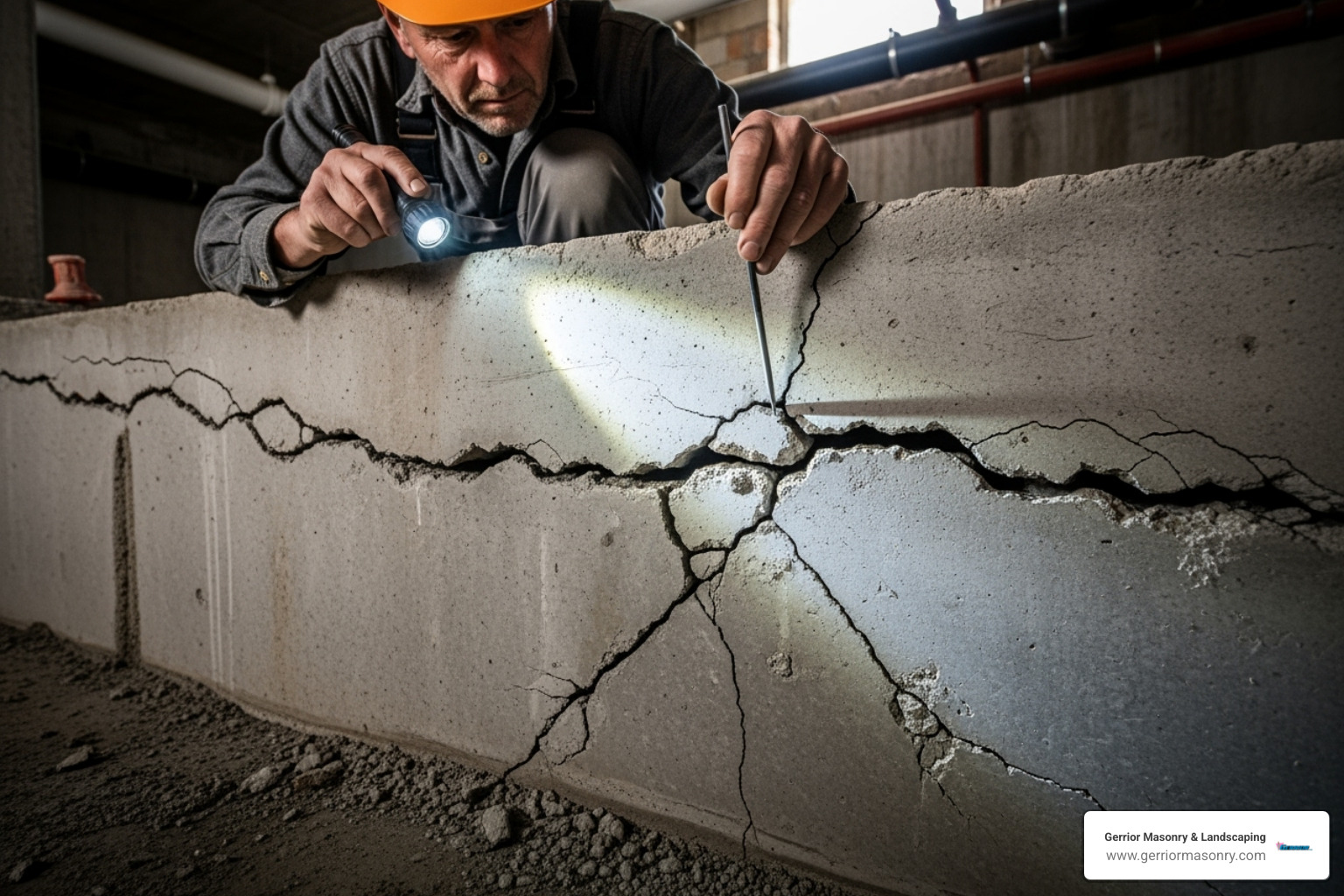
Structural cracks signal ongoing movement, differential settlement, or lateral soil pressure acting against the building envelope. Common indicators include:
- Horizontal cracks along basement walls, which usually stem from heavy hydrostatic pressure or frost heaving pushing the wall inward.
- Stair-step cracks in brick veneer or concrete block foundations, pointing to unequal soil settlement beneath the footings.
- Continuous diagonal cracks wider than 1/4 inch or wider at the top than the bottom, indicating differential settlement.
Addressing structural damage requires stabilizing the underlying framing or footings before sealing the visible crack. Contractors must use specialized equipment, heavy structural hardware, and engineered solutions, drastically increasing material and labor costs.
Core Factors Influencing Foundation Repair Pricing
Beyond basic crack classification, estimators evaluate several mechanical, geographical, and architectural variables when calculating a final quote.
1. Repair Methodology and Materials
The chosen technical solution directly correlates with the repair price. Injecting a basic expanding polyurethane foam into a dry crack requires basic shop tools and limited materials. Conversely, driving steel push piers down to load-bearing strata demands hydraulic power units, load-testing monitors, and high-strength galvanized steel components.
2. Foundation Type and Site Accessibility
The architectural design of the foundation influences how easily crew members and heavy machinery can access the work area:
- Poured Concrete Basements: Access is generally straightforward from the inside, though finishing materials (drywall, framing) may need removal.
- Crawl Space Foundations: Tight spaces restrict worker movement and limit machine access, often driving up labor hours.
- Slab-on-Grade Foundations: Repairing deep settlement beneath a slab may require drilling through floor finishes or excavating beneath the perimeter, increasing complexity.
- Concrete Block and Stone Foundations: Masonry walls often require customized tie-backs or structural carbon fiber systems rather than simple resin injections.
Obstacles like narrow side yards, dense landscaping, decks, concrete patios, and buried utility lines further restrict equipment usage, forcing contractors to rely on manual labor.
3. Soil Composition and Drainage Issues
Soil mechanics dictate how foundation problems originate and how they must be solved. Expansive clay soils swell significantly when wet and shrink when dry, placing cyclic stresses on concrete footings. Fine silt or uncompacted fill dirt can consolidate over time, causing footings to sink.
If a repair estimate includes remediating the root cause—such as installing interior or exterior French drains, sump pumps, or wall waterproofing membranes—the overall cost increases significantly. Without resolving underlying water issues, crack repairs remain temporary fixes.
4. Engineering Inspections and Permitting
For any structural stabilization project, local building codes generally mandate municipal permits and stamped engineering plans.
- Structural Engineer Fees: An independent structural engineer typically charges between $300 and $1,000 to perform a site evaluation and prepare a scope of work.
- Soil Testing (Geotechnical): If deep piering is required, geotechnical soil borings can add $1,000 to $3,000.
- Building Permits: Local authorities charge permit fees proportional to the estimated job value, adding several hundred dollars to the total budget.
Detailed Cost Breakdown by Repair Technique
The table below outlines common foundation crack repair techniques, their standard applications, and industry-standard cost benchmarks.
| Repair Technique | Primary Use Case | Relative Complexity | Typical Cost Range |
|---|---|---|---|
| Epoxy Injection | Rigid structural sealing of dry concrete vertical cracks | Low to Moderate | $350 – $800 per crack |
| Polyurethane Resin Injection | Flexible water-stop sealing for active leaking cracks | Low | $300 – $750 per crack |
| Carbon Fiber Straps | Reinforcing bowed basement walls against lateral pressure | Moderate | $700 – $1,500 per strap |
| Steel Wall Anchors / I-Beams | Stabilizing severely bowed or tilting basement walls | Moderate to High | $600 – $1,300 per anchor |
| Helical or Push Piers | Underpinning settled footings to restore structural elevation | High | $1,500 – $3,000 per pier |
| Exterior Excavation & Waterproofing | Sealing walls from the outside and relieving hydrostatic head | High | $5,000 – $15,000+ total |
Breakdown of Injection Systems
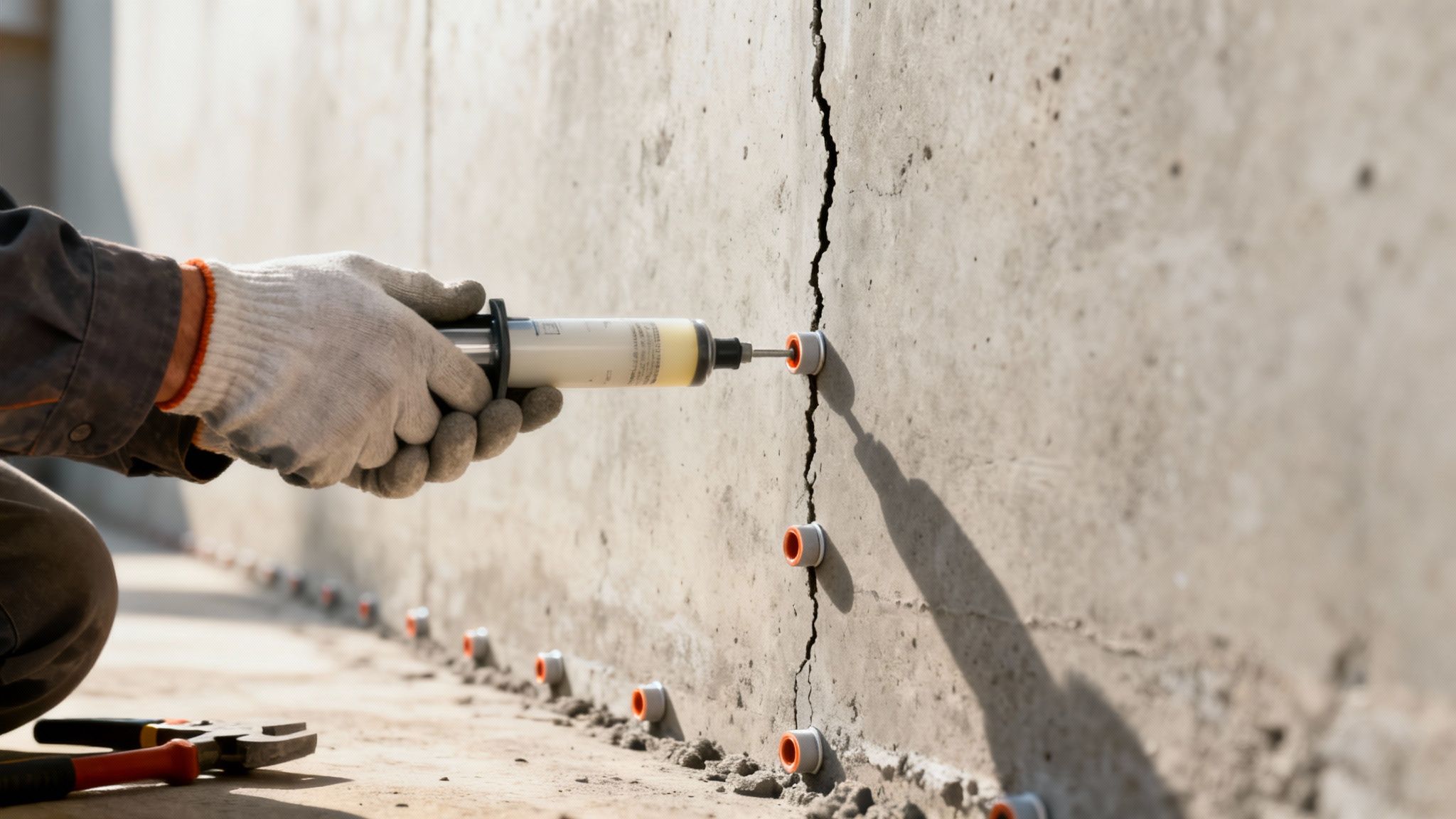
For non-structural or low-movement cracks in poured concrete, injection methods remain the standard approach:
- Epoxy resins form a high-strength bond that restores structural tensile strength across a rigid concrete section.
- Polyurethane foams expand up to 20 times their volume upon contact with water, making them ideal for sealing active leaks in moving joints.
Structural Stabilization Systems
When foundation walls bow inward or footings sink, surface sealants are insufficient. Contractors must implement mechanical stabilization systems:
- Carbon Fiber Reinforcement: High-tensile carbon fiber strips are bonded to the interior basement wall using specialized epoxy. They prevent further inward movement without encroaching on floor space.
- Steel Push and Helical Piers: Hydraulic jacks drive heavy-gauge steel piers deep into the earth until they hit competent bedrock or dense load-bearing soil strata. Hydraulic manifolds then stabilize or lift the foundation footings back toward their original elevation.
Hidden and Indirect Expenses in Foundation Repair
When planning a budget, property owners must account for secondary expenses that arise during structural stabilization projects:
- Landscape and Hardscape Restoration: Exterior excavation damages lawns, flowerbeds, walkways, and paved driveways. Replanting, re-sodding, or repaving after heavy equipment departs can add $1,000 to $5,000 to total project outlays.
- Plumbing and Utility Adjustments: Significant foundation lifting can strain or break underlying sewer lines, gas connections, and water supply pipes. Plumbing line camera inspections ($250–$500) and line repairs are frequently required post-lifting.
- Interior Cosmetic Repair: Realigning settled foundations closes gap cracks in structural walls, but it can also crack existing drywall, warp door frames, or shift floor tiles that were installed while the building was settled.
- Basement Finishing Demolition: Accessing interior perimeter walls often requires tearing out finished basement drywall, insulation, flooring, and custom cabinetry.
How to Evaluate Estimates and Avoid Overpaying
To ensure quotes reflect fair market rates and accurate diagnostic assessments, consider these steps:
Hire an Independent Structural Engineer First
Foundation repair contractors often operate on sales commissions and may propose comprehensive underpinning systems when simpler solutions suffice. Hiring a licensed structural engineer with no financial interest in performing the repair provides an unbiased assessment and a clear scope of work to use when gathering contractor bids.
Verify Warranty Scope and Transferability
Reputable foundation contractors offer long-term warranties ranging from 10 years to lifetime coverage. Pay close attention to:
- Transferability: Does the warranty transfer automatically to future home buyers, and is there a transfer fee?
- Scope: Does the warranty cover labor and materials for further movement, or does it only cover the sealant material itself?
- National vs. Local Backing: Is the warranty underwritten by a franchise system or structural warranty association, ensuring protection even if the local installer goes out of business?
Disclaimer: Structural codes, soil characteristics, and permitting procedures vary by municipality. Homeowners should consult a licensed structural engineer and certified local contractors to obtain precise diagnostic evaluations and project bids.
Frequently Asked Questions
Are vertical foundation cracks always less expensive to fix than horizontal cracks?
Yes, vertical cracks are usually caused by normal concrete shrinkage or minor settling, requiring simple resin injection that costs between $300 and $800. Horizontal cracks indicate high lateral soil pressure pushing against the wall, which requires structural reinforcement such as carbon fiber straps, wall anchors, or steel beams costing several thousand dollars.
Does homeowner insurance cover foundation crack repair costs?
In most cases, standard homeowner insurance policies exclude coverage for foundation crack repairs caused by soil movement, settling, earth movement, or routine wear and tear. Insurance may only cover foundation damage if it stems directly from a covered peril, such as a major plumbing burst or sudden collapse caused by specific covered events.
How many piers are typically required to fix a settling foundation?
The number of piers depends on the footprint of the affected structure, total weight, and the length of the settling wall section. Piers are usually installed every 6 to 8 feet along the compromised section. A standard residential settlement job typically requires between 4 and 10 piers, bringing the underpinning cost to $6,000 to $30,000.
Can I repair a structural foundation crack myself with store-bought epoxy?
DIY injection kits work well for small, non-structural vertical cracks in poured concrete where water seepage is the only concern. However, if a crack is horizontal, wider than 1/4 inch, stair-stepped through brick or block, or accompanied by bowing walls, DIY surface patches will fail to address the underlying structural load issues and could allow further structural damage.
How much does an independent foundation inspection cost before getting repair bids?
An independent structural engineering evaluation typically costs between $300 and $1,000, depending on home size, location, and evaluation complexity. Paying for an independent report prevents over-scoping by contractors and provides a standardized plan for comparing quotes.
Practical Recommendations for Homeowners
When addressing suspected foundation issues, follow this structured approach to manage costs and protect property value:
- Monitor and Document Movement: Measure crack width using a crack monitor gauge and record changes over time alongside seasonal moisture variations.
- Mitigate Water Accumulation Immediately: Extend downspouts at least 5 feet away from the perimeter, adjust soil grading to slope away from walls (minimum 6-inch drop over 10 feet), and ensure gutters are clean. Managing surface water often halts minor movement before costly repairs become necessary.
- Commission a Professional Assessment: If cracks exceed 1/8 inch, run horizontally, or cause doors and windows to stick, hire a licensed structural engineer to draft a formal repair plan.
- Obtain Multiple Itemized Bids: Solicit detailed estimates from at least three licensed, insured foundation repair contractors based strictly on the engineer’s scope of work. Ensure bids separate structural hardware costs from excavation and finishing fees.
Image Gallery