Why the 27 Club Myth Misleads You
The 27 Club myth misleads by creating a false statistical pattern where none exists, attributing a supernatural or "cursed" significance to a specific age. Scientific research confirms there is no spike in musician mortality at age 27;...
The 27 Club myth misleads by creating a false statistical pattern where none exists, attributing a supernatural or "cursed" significance to a specific age. Scientific research confirms there is no spike in musician mortality at age 27; rather, the phenomenon is sustained by confirmation bias and the romanticization of tragic, preventable deaths within the music industry.
Contents
The Origins of a Cultural Phenomenon
The "27 Club" is a cultural trope that lists popular musicians, artists, or actors who died at age 27, often as a result of drug and alcohol abuse or violent means such as homicide or suicide. While the concept began as a series of coincidences, it has morphed into a powerful narrative that shapes how the public perceives the intersection of fame, talent, and tragedy.
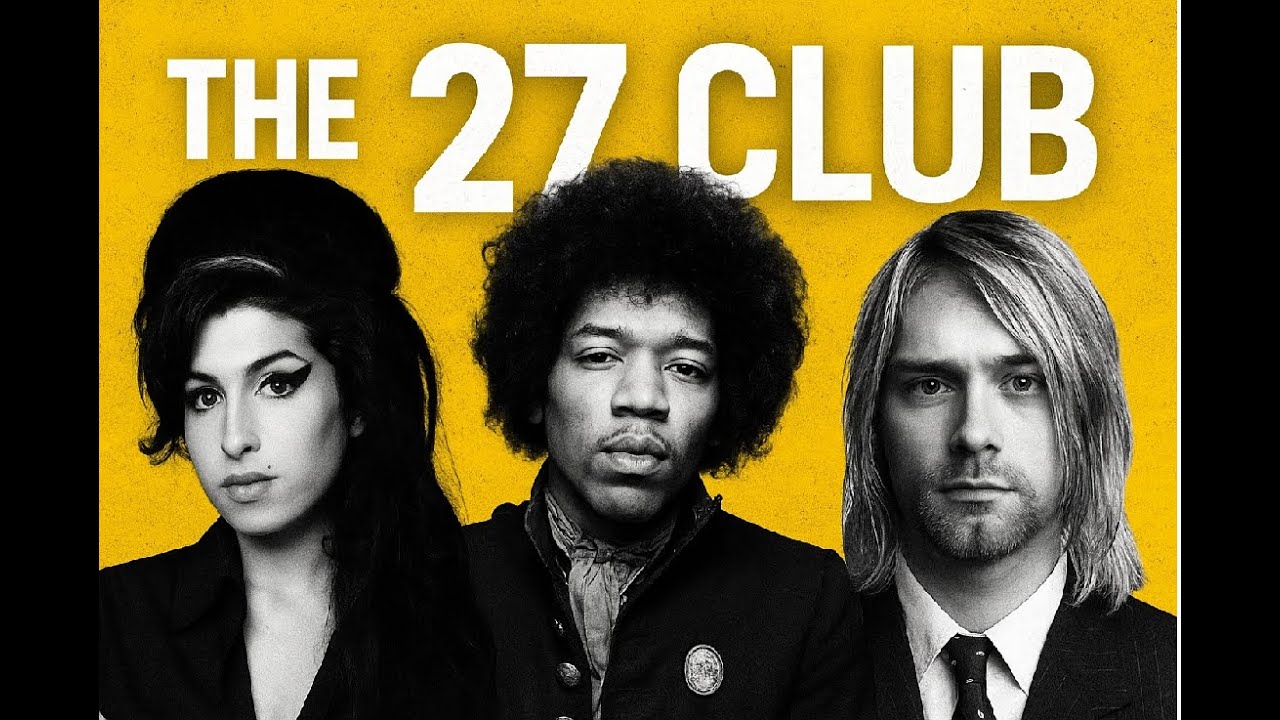
The idea first gained significant traction between 1969 and 1971. In a remarkably short window, the music world lost Brian Jones (Rolling Stones), Jimi Hendrix, Janis Joplin, and Jim Morrison. All were 27 years old. However, the term "27 Club" did not immediately enter the common lexicon. It wasn't until the death of Kurt Cobain in 1994 that the "club" became a household concept. When Cobain died at 27, media outlets and fans drew a direct line back to the icons of the late 1960s, suggesting a mysterious or even predestined pattern.
By the time Amy Winehouse passed away in 2011, also at age 27, the myth was so deeply ingrained that her death was viewed by many through the lens of this "club" rather than as an individual health crisis. This framing is precisely why the myth is so misleading: it replaces clinical reality with folklore.
The Statistical Reality: Deconstructing the 27 Spike
To understand why the 27 Club myth misleads, one must look at the data. In 2011, the British Medical Journal (BMJ) published a comprehensive study led by statistician Adrian Barnett. The research team analyzed the deaths of 1,046 musicians who had a number-one album in the UK between 1956 and 2007.
The findings were definitive: there was no evidence of a peak in death rates at age 27. While the study did find that musicians in their 20s and 30s had a higher mortality rate than the general population—often two to three times higher—this was a broad trend related to lifestyle and occupational hazards, not a specific "curse" tied to a single year of life.
| Age at Death | Notable Musician Examples | Cause Category |
|---|---|---|
| 21 | Sid Vicious, Juice WRLD | Overdose |
| 22 | Buddy Holly, Aaliyah | Accident |
| 24 | Notorious B.I.G., Duane Allman | Violence/Accident |
| 25 | Tupac Shakur, Randy Rhoads | Violence/Accident |
| 26 | Mac Miller, Otis Redding | Overdose/Accident |
| 27 | Jimi Hendrix, Kurt Cobain, Amy Winehouse | Overdose/Suicide |
| 28 | Avicii, Bradley Nowell | Suicide/Overdose |
| 32 | Cass Elliot, Keith Moon | Health/Overdose |
As shown in the table, musicians die at various ages throughout their youth. The focus on 27 is a classic example of confirmation bias. We notice and remember the deaths that occur at age 27 because they fit the established narrative, while we ignore the deaths at 26, 28, or 30 because they do not "belong" to a named phenomenon.
The Psychology of Apophenia and Narrative Framing
The human brain is hardwired to find patterns in random data, a psychological tendency known as apophenia. In the context of the 27 Club, apophenia leads fans and journalists to connect disparate events—a drowning in England, a hotel room overdose in Los Angeles, and a suicide in Seattle—simply because the victims shared the same age.
The myth misleads by providing a narrative structure to senseless tragedy. When a beloved artist dies young, it creates a profound sense of "why?" The 27 Club offers a ready-made answer that feels more significant than the mundane reality of addiction or mental health struggles. By framing these deaths as part of a "club," the culture elevates a tragedy into a legend, which can be dangerously appealing.
This narrative framing also relies on survivorship bias. We do not talk about the "80 Club," even though many more legendary musicians die in their 80s. Because those deaths are expected, they do not trigger the pattern-seeking part of our brains. The 27 Club only "exists" because we have decided to draw a circle around that specific number.
The Dangerous Romanticization of the "Tragic Artist"
Perhaps the most harmful way the 27 Club myth misleads is through the romanticization of the "live fast, die young" lifestyle. By grouping these artists together, the myth creates an aura of inevitability. It suggests that dying at 27 is a rite of passage for the truly talented—a "price" paid for genius.
In reality, the deaths of individuals like Janis Joplin or Amy Winehouse were not inevitable products of their talent. They were the result of untreated substance use disorders and inadequate support systems. When we discuss them as members of a "club," we move the conversation away from harm reduction and mental health resources.
The Impact on Modern Music Culture
As of 2026, the music industry has made strides in acknowledging the mental health pressures of fame, but the 27 Club myth remains a persistent ghost. Younger artists often grow up hearing about the club, which can lead to a self-fulfilling prophecy or a normalization of self-destructive behavior. If an artist believes they are "destined" to burn out, they may be less likely to seek the help that could save their life.
The myth also misleads by ignoring the "late bloomers" or the survivors. Musicians like Keith Richards, Ozzy Osbourne, or Nikki Sixx—who famously survived multiple near-death experiences—are treated as anomalies rather than proof that the "curse" is non-existent.
Media Influence and the "Curse" Narrative
The media plays a central role in perpetuating the 27 Club myth. For decades, music journalists have used the term to add "color" or "depth" to reports on an artist's passing. It is a convenient shorthand that generates clicks and engagement. However, this convenience comes at the cost of accuracy.
When a journalist mentions the 27 Club in an obituary, they are essentially prioritizing a superstition over a factual account of the person's life. This contributes to a cycle where the public is conditioned to look for the age of an artist as soon as a death is announced. If the age is 27, the story becomes about the "club." If the age is any other number, the story focuses on the individual—which is what should happen in every case.
Misidentifying the Risk Factors
The risk factors for musicians are not tied to a chronological year; they are tied to:
- High-stress environments: Constant touring and public scrutiny.
- Accessibility: Ease of access to controlled substances in nightlife and entertainment circles.
- Lack of routine: Irregular sleep patterns and isolation from family.
- Economic pressure: The volatility of the "gig economy" even at high levels of fame.
None of these factors magically peak at age 27. They are constant pressures that can lead to a crisis at any point in an artist's career.
Why 27 Seems Common (The Mathematical Illusion)
If 27 isn't a statistical peak, why does it feel like so many people die at that age? Part of the illusion stems from the typical career arc of a superstar. Many musicians achieve global fame in their early 20s. By the time they have been in the industry for five to seven years—reaching the age of 27—the cumulative effects of the "rock star" lifestyle often reach a breaking point.
However, the "breaking point" is just as likely to happen at 25 or 29. The reason 27 stands out is purely historical luck. Had Brian Jones, Hendrix, and Joplin died at 28, we would likely be talking about the "28 Club" today. The myth misleads you into thinking the number has power, when the power actually lies in the stories we choose to tell and the patterns we choose to emphasize.
Common Mistakes in Understanding the Myth
One common mistake is including artists who do not fit the criteria simply to bolster the myth's perceived validity. For example, some lists include Jean-Michel Basquiat or Anton Yelchin. While their deaths were tragic, their inclusion often ignores the vastly different contexts of their lives and deaths.
Another mistake is the belief that the 27 Club is a "modern" phenomenon. While the specific branding is 20th-century, people have been looking for patterns in the deaths of artists for centuries. The difference is that today, the 27 Club is a global marketing tool, appearing on t-shirts, in documentaries, and across social media platforms, further distorting the reality of the situation.
Frequently Asked Questions
Is there any scientific evidence for the 27 Club?
No. Statistical studies, most notably the 2011 study published in the British Medical Journal, have analyzed thousands of musicians and found no evidence of a statistical spike in mortality at age 27. The number of deaths at 27 is consistent with the surrounding ages (25-30).
Who are the "original" members of the 27 Club?
The myth is generally built around five key figures who died between 1969 and 1971: Brian Jones, Jimi Hendrix, Janis Joplin, and Jim Morrison. Kurt Cobain's death in 1994 is credited with solidifying the concept in modern pop culture.
Why did Kurt Cobain's mother mention a "club"?
After Kurt Cobain's death, his mother, Wendy O'Connor, was quoted saying, "Now he's gone and joined that stupid club." While many interpreted this as a reference to the 27 Club, some biographers suggest she was referring more generally to family members who had died by suicide or the general trend of musicians dying young, rather than a specific age-based group.
Does the 27 Club apply to non-musicians?
While the term originated in the music industry, it has been expanded by fans and media to include actors (like Anton Yelchin), artists (like Jean-Michel Basquiat), and other celebrities. However, this expansion further proves that the "club" is a social construct rather than a biological or occupational reality.
Are musicians more likely to die young than the general public?
Yes. Studies indicate that musicians, particularly those in genres like rock, metal, and hip-hop, often have shorter life expectancies than the general population. This is attributed to lifestyle factors, high stress, and substance availability, but it does not peak at age 27.
Moving Beyond the Myth
To stop being misled by the 27 Club myth, it is essential to treat every artist's death as a unique event rather than a data point in a supernatural pattern. Recognizing the myth for what it is—a combination of confirmation bias, apophenia, and media narrative—allows us to focus on the actual issues facing people in the creative arts.
If you are a fan of music history, focus on the legacy and the work of these artists rather than the age at which they passed. By dismantling the myth, we remove the "glamour" from tragic deaths and can better advocate for the mental health and wellness support that artists truly need to survive and thrive well past their 20s.
Image Gallery