Understanding the Garage Opener Repair Cost for Homeowners
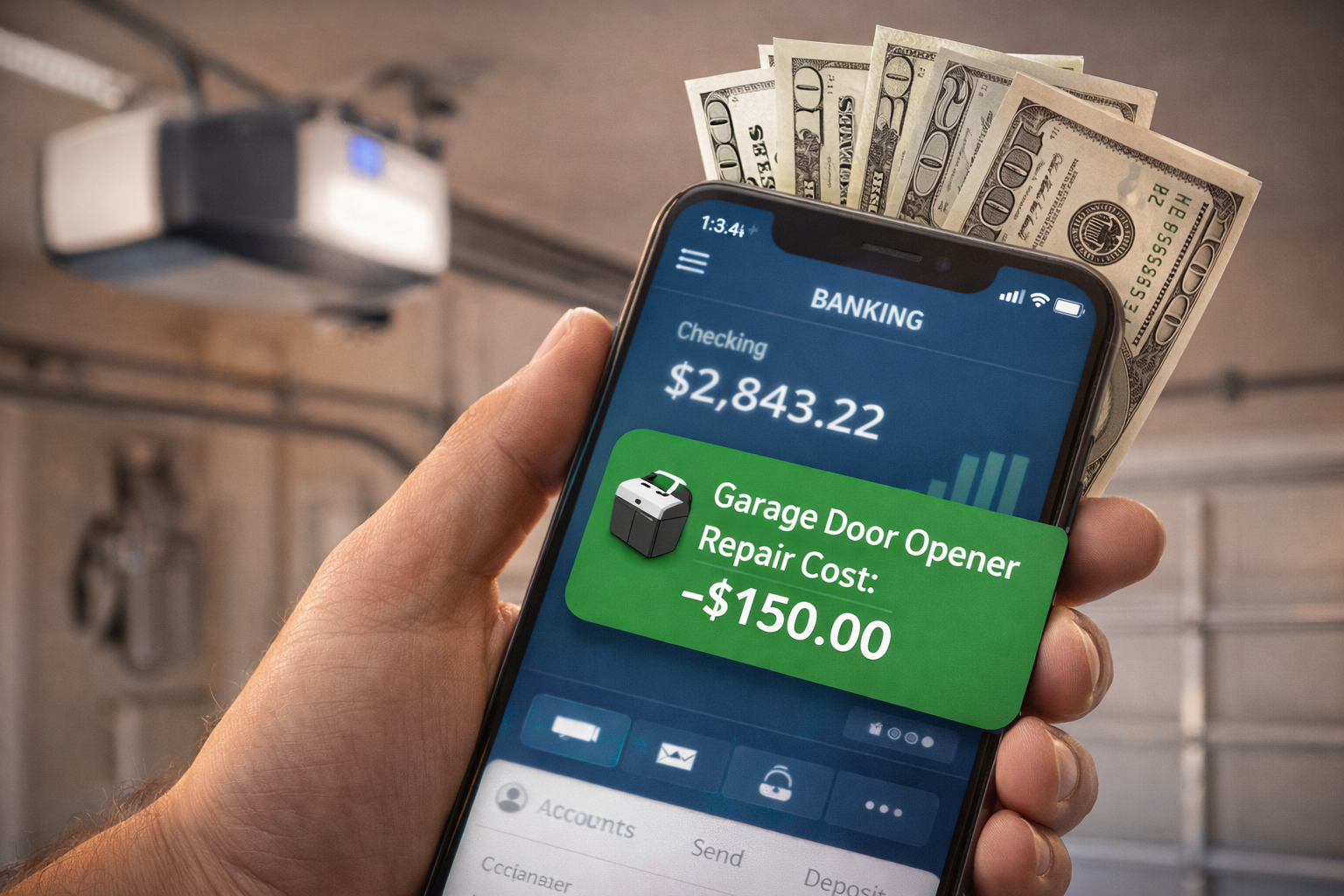
Homeowners can typically expect to pay between $150 and $550 for garage door opener repairs in 2026, with most professional service calls averaging around $250. These costs vary significantly based on the specific component failing—suc...
Homeowners can typically expect to pay between $150 and $550 for garage door opener repairs in 2026, with most professional service calls averaging around $250. These costs vary significantly based on the specific component failing—such as the logic board, safety sensors, or the drive motor—as well as local labor rates and the urgency of the repair.
Contents
Garage door openers are the unsung heroes of home convenience, operating heavy doors multiple times a day under varying temperature conditions. By 2026, the integration of smart home technology and advanced DC motors has made these devices more efficient but also more complex to diagnose and repair. Understanding the breakdown of these costs allows homeowners to make informed decisions between a quick fix and a full system upgrade.
Core Factors Influencing Garage Opener Repair Costs
When assessing the price of a repair, several variables dictate the final invoice. It is rarely a flat fee, as modern openers involve a combination of mechanical hardware and sensitive electronic circuitry.
1. The Type of Drive System
The mechanical method used to lift the door influences both the initial price and the repair cost.
- Chain-Drive Openers: These are the most common and generally the least expensive to repair. However, they are prone to chain stretching and require more frequent lubrication.
- Belt-Drive Openers: Using a steel-reinforced rubber belt, these are quieter but slightly more expensive to service if the belt snaps or the cogged drive gear wears down.
- Screw-Drive and Wall-Mount (Jackshaft) Openers: These systems have fewer moving parts but often require specialized components that can carry a premium price tag in 2026.
2. Labor and Diagnostic Fees
Labor is often the largest portion of a repair bill. Most reputable garage door service companies charge a service call fee (ranging from $75 to $125) which may or may not be applied toward the final repair. In 2026, specialized technicians trained in smart-home integration may command higher hourly rates, particularly in major metropolitan areas.
3. Component Availability and Brand
Mainstream brands like Chamberlain, LiftMaster, and Genie have widely available parts, which keeps costs stable. Proprietary or older "boutique" brands may require parts that are difficult to source, leading to higher shipping costs and longer lead times.
Breakdown of Common Repair Costs by Component
To help homeowners budget, it is essential to look at the specific parts that most frequently fail. The following estimates include both the part cost and the typical labor required for installation.
Logic Board (Circuit Board) Replacement
The logic board is the "brain" of the opener. It manages signal reception from remotes, controls the motor’s travel limits, and integrates with Wi-Fi networks. In 2026, logic boards are more sophisticated than ever. A failure here is often caused by power surges or lightning strikes.
- Estimated Cost: $200 – $350
- Why it costs this much: The board itself is an expensive electronic component, and the technician must re-program all remotes and travel limits after installation.
Safety Sensor Alignment and Replacement
Required by federal law since the early 1990s, safety sensors (photo-eyes) prevent the door from closing on objects. They are vulnerable to being bumped by trash cans or damaged by moisture.
- Estimated Cost: $85 – $175
- Why it costs this much: While the sensors themselves are relatively cheap, labor involves careful wiring and precise alignment to ensure the infrared beam is unbroken.
Drive Gear and Sprocket Kits
If the motor hums but the chain or belt doesn't move, the internal nylon drive gear has likely "stripped." This is a common mechanical failure in AC motors.
- Estimated Cost: $150 – $225
- Why it costs this much: Replacing the gear requires a near-complete teardown of the opener chassis, making it a labor-intensive mechanical repair.
Remote and Keypad Programming
Sometimes the issue isn't the opener itself but the peripherals. Replacing a lost remote or a cracked exterior keypad is a minor expense.
- Estimated Cost: $40 – $110
- Why it costs this much: Universal remotes are affordable, but brand-specific encrypted remotes (often used in 2026 for higher security) cost more.
2026 Garage Opener Repair Cost Comparison Table
| Component | Estimated Parts Cost | Estimated Labor | Total Estimated Cost |
|---|---|---|---|
| Safety Sensors | $40 – $70 | $75 – $100 | $115 – $170 |
| Logic Board | $100 – $200 | $100 – $150 | $200 – $350 |
| Drive Gear/Sprocket | $25 – $50 | $125 – $175 | $150 – $225 |
| Capacitor | $15 – $30 | $75 – $100 | $90 – $130 |
| Trolley/Carriage | $30 – $60 | $100 – $150 | $130 – $210 |
| Wall Console | $40 – $80 | $60 – $90 | $100 – $170 |
The "Repair vs. Replace" Decision Matrix
One of the most common dilemmas for homeowners is deciding when to stop pouring money into an old unit. In 2026, several factors make replacement more attractive than it was a decade ago.
The Age Factor (The 10-Year Rule)
Most garage door openers have a functional lifespan of 10 to 15 years. If your unit is over 12 years old and requires a repair exceeding $200, a full replacement is usually the better financial move. Modern units are significantly quieter, more secure, and come with integrated battery backups—a requirement in many jurisdictions like California under SB-969.
Safety and Security Standards
Older openers lack the "rolling code" technology that prevents hackers from intercepting remote signals. If your current opener uses fixed dip switches, it is a security liability. Furthermore, newer units comply with the latest UL 325 safety standards, providing better protection against entrapment.
Smart Home Integration
By 2026, the ability to monitor your garage door via a smartphone app is standard. If you are paying for a repair on a "dumb" opener, you are missing out on features like auto-close timers, remote delivery access (e.g., Amazon Key), and real-time alerts. A new smart opener installation typically costs $400 to $700, including labor.
Common Troubleshooting Steps Before Calling a Pro
Before committing to a repair bill, homeowners should perform these basic checks. Roughly 20% of service calls are resolved by simple adjustments that do not require specialized tools.
- Check the Power Source: Ensure the opener is plugged in and the circuit breaker hasn't tripped. Openers are sensitive to power flickers.
- Inspect the Safety Sensors: Look for a solid green or amber light on both sensors. If one is blinking, they are misaligned. Wipe the lenses with a soft cloth to remove cobwebs or dust.
- Test the Wall Console: If the remotes don't work but the wall button does, the issue is likely the remote battery or the receiver antenna.
- The "Pull Cord" Test: Pull the emergency release cord and try to lift the door manually. If the door is extremely heavy or stays stuck, the problem is a broken garage door spring, not the opener. Note: Never attempt to repair garage door springs yourself; they are under extreme tension and can be lethal.
Frequently Asked Questions
Is it cheaper to repair or replace a garage door opener?
It is generally cheaper to repair an opener if the unit is less than 8 years old and the repair cost is under $150. However, if the motor or logic board has failed on an older unit, replacement is more cost-effective in the long run because it includes a new warranty and modern safety features.
How much does a technician charge for a diagnostic visit?
In 2026, the standard diagnostic or service fee ranges from $75 to $125. Many companies will waive this fee if you agree to proceed with the recommended repair or a new installation.
Can I replace a garage door opener logic board myself?
Yes, if you are comfortable with basic electronics. Most logic boards are "plug-and-play" or require only a few screws and wire clips. However, you must ensure you purchase the exact part number for your specific model and year, as boards are rarely interchangeable between brands.
Why does my garage door opener hum but not move?
This is usually caused by a blown capacitor or a stripped drive gear. If the motor is an older AC model, the capacitor (which provides the starting torque) may have failed. If it's a mechanical issue, the internal gears have likely worn down from years of friction.
Does homeowners insurance cover garage door opener repairs?
Typically, no. Homeowners insurance covers sudden, accidental damage (like a fire or a vehicle crashing into the garage). It does not cover wear and tear or mechanical failure. However, if your opener was fried by a documented lightning strike, you may be able to file a claim, though the deductible often exceeds the repair cost.
Final Recommendation for Homeowners
When faced with a malfunctioning garage door opener in 2026, your first step should be to verify the age of the unit. If the opener is a modern DC-powered model less than seven years old, a professional repair for a logic board or sensor issue is a sound investment. However, if you are dealing with a noisy, chain-driven AC motor from the early 2010s, use the repair cost as a down payment on a new, ultra-quiet belt-drive system. Always ensure that any professional you hire is licensed and provides a written warranty on both parts and labor to protect your home and your wallet.
Image Gallery