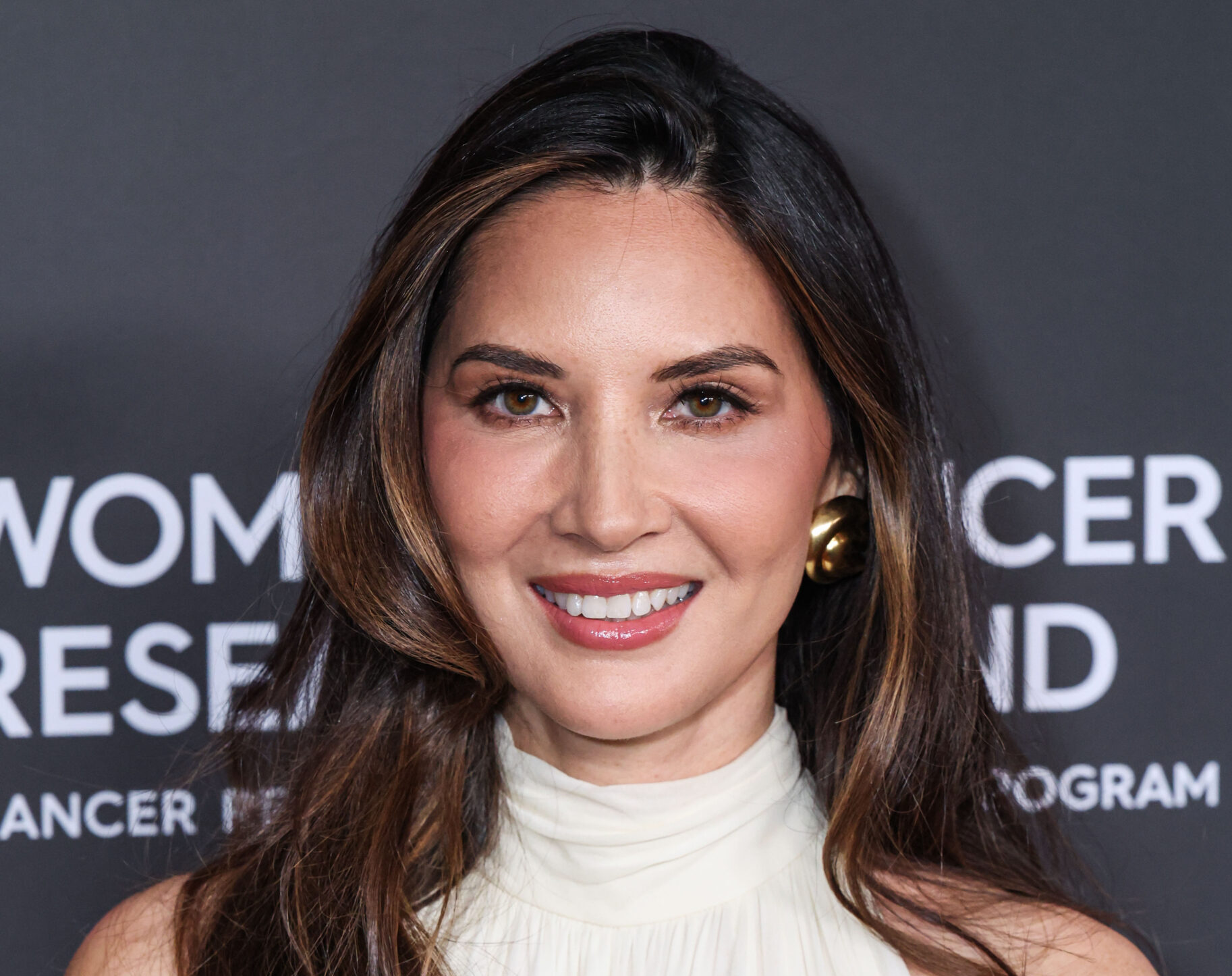
What Did Olivia Munn Say? Her Breast Cancer Journey and Advocacy Explained
Olivia Munn sparked a global conversation about women’s health in early 2024 when she revealed a private, year-long battle with bilateral breast cancer. She detailed her diagnosis with an aggressive "Luminal B" cancer, her decision to...
Olivia Munn sparked a global conversation about women’s health in early 2024 when she revealed a private, year-long battle with bilateral breast cancer. She detailed her diagnosis with an aggressive "Luminal B" cancer, her decision to undergo a double mastectomy and a hysterectomy, and the life-saving importance of the Breast Cancer Risk Assessment Score.
Contents
The actress, known for her roles in The Newsroom and X-Men: Apocalypse, had remained largely out of the public eye throughout much of 2023. When she finally spoke, her message was not just a personal health update but a strategic call to action for women to look beyond standard mammograms and genetic testing. Standing in 2026, the impact of her transparency—often referred to as the "Munn Effect"—continues to influence how medical professionals and patients approach preventative screening.
The 2024 Revelation: A Private Battle Made Public
In March 2024, Olivia Munn shared a detailed post on social media that shocked fans and the entertainment industry alike. She revealed that in February 2023, after a routine mammogram came back clear and she had tested negative for the BRCA gene (the most well-known genetic marker for breast cancer), she was diagnosed with breast cancer in both breasts.
What Munn said most emphatically was that she would not have found the cancer until her next scheduled mammogram—by which time it would have likely progressed significantly—had it not been for her OB-GYN, Dr. Thais Aliabadi. During a routine check-up, Dr. Aliabadi decided to calculate Munn’s Breast Cancer Risk Assessment Score. This calculation, which considers factors like age, family history, and age of first childbirth, placed Munn’s lifetime risk at 37%.
Because that score was above 20%, her medical team ordered an MRI, followed by an ultrasound and a biopsy. The results confirmed that Munn had Luminal B cancer in both breasts. This specific subtype is known for being aggressive and fast-growing, making early detection the critical factor in her survival.
Understanding Luminal B: Why Munn’s Case Was Unique
When Munn spoke about her diagnosis, she brought significant attention to the "Luminal B" subtype. To understand the weight of what she said, it is necessary to look at the technical nature of this cancer. Luminal B is characterized by being estrogen-receptor positive and/or progesterone-receptor positive, but it often grows faster than Luminal A and has a poorer prognosis if not caught early.
Munn explained that she felt "completely fine" and had no palpable lumps. This is the "silent" nature of many aggressive cancers that she warned her audience about. Because her mammogram was clear, she had a false sense of security. Her advocacy highlighted a major gap in public knowledge: the idea that a negative genetic test or a clear mammogram does not mean you are in the clear if other risk factors are present.
The "Munn Effect" and the Risk Assessment Score
One of the most actionable pieces of information Munn provided was the recommendation for the Tyrer-Cuzick model (the Risk Assessment Score). In the years following her announcement, medical clinics reported a surge in women requesting this specific assessment.
The significance of the score lies in its ability to trigger supplemental screening. In 2026, many healthcare providers have integrated these calculators more formally into annual exams. Munn argued that this simple, free tool—which takes only a few minutes to calculate—is a life-saving prerequisite for women who might otherwise fall through the cracks of standard screening protocols.
| Screening Tool | What it Measures | Limitation Mentioned by Munn |
|---|---|---|
| Mammogram | X-ray imaging of breast tissue. | Can miss tumors in dense tissue or early-stage aggressive types. |
| BRCA Genetic Test | Specific mutations (BRCA1/2) linked to high risk. | Only accounts for 5-10% of breast cancers; Munn tested negative. |
| Risk Assessment Score | Statistical lifetime risk based on multiple factors. | Requires a proactive doctor to calculate and interpret. |
| MRI/Ultrasound | Detailed imaging used for high-risk patients. | Typically only covered by insurance if the Risk Score is >20%. |
The Physical Toll: Mastectomies and Reconstruction
In her initial statements and subsequent interviews, Munn was candid about the physical and emotional exhaustion of her treatment. She underwent four surgeries in ten months, including a double mastectomy performed just 30 days after her biopsy.
She spoke openly about the reality of the recovery process, describing days spent in bed "with tubes coming out of her" and the psychological shift of seeing her body changed by surgery. Unlike many public figures who might focus solely on the "warrior" narrative, Munn discussed the fear and the "hollowed-out" feeling that often accompanies such a major medical event. Her willingness to discuss the "reconstruction" phase helped demystify the process for thousands of women facing similar decisions, emphasizing that the goal was survival first, and aesthetic restoration second.
The Hysterectomy and Medically Induced Menopause
Months after her initial announcement, Munn provided a further update that added another layer to her story. To reduce the risk of the cancer returning—as her cancer was hormone-positive—she underwent a full hysterectomy and oophorectomy (removal of the uterus, ovaries, and fallopian tubes).
This decision triggered immediate, medically induced menopause. Munn spoke about the "profound" effects of this transition at a relatively young age (43 at the time). She described symptoms such as:
- Extreme exhaustion and "brain fog."
- Thinning hair and skin changes.
- The emotional weight of losing the ability to carry future children.
By speaking about these "unseen" side effects of cancer treatment, Munn shed light on the long-term reality of survivorship. It wasn't just about "beating" cancer; it was about managing a new hormonal reality for the rest of her life. She noted that while the physical changes were difficult, they were a price she was willing to pay to be present for her son, Malcolm, and her partner, John Mulaney.
Family Life and the Path to Surrogacy
Olivia Munn’s journey was also a story of family resilience. Throughout her treatment, she frequently credited John Mulaney for his unwavering support. In late 2024, the couple surprised the public by announcing the birth of their second child, a daughter named Mei June Mulaney, via gestational surrogate.
Munn was transparent about the fact that her cancer treatment had made it impossible for her to carry another child. She spoke about the process of egg retrieval prior to her hysterectomy, which she called her "last-ditch effort" to expand her family. This part of her story resonated with many in the "cancer community" who face the heartbreaking choice between life-saving treatment and future fertility. Her message was one of hope and the different paths family-building can take following a terminal or chronic diagnosis.
Advocacy and the Legislative Impact
By 2026, the impact of Olivia Munn’s words has transcended social media. She used her platform to advocate for legislative changes regarding insurance coverage for supplemental screenings. She argued that if a Risk Assessment Score indicates a high risk, insurance companies should be mandated to cover MRIs and ultrasounds without the patient having to fight for coverage.
Her testimony and public appearances have been cited in several state-level initiatives aimed at lowering the age of "high-risk" designation and increasing the accessibility of the Tyrer-Cuzick model in low-income clinics. Munn’s core message remains consistent: knowledge is power, but only if that knowledge leads to access.
FAQ: Common Questions About Olivia Munn’s Health Journey
What kind of breast cancer did Olivia Munn have?
Olivia Munn was diagnosed with Luminal B breast cancer in both breasts. This is an aggressive, hormone-receptor-positive form of cancer that typically grows faster than the more common Luminal A subtype. Her diagnosis was particularly notable because it was discovered despite a clear mammogram and a negative BRCA genetic test.
How did Olivia Munn find her cancer if the mammogram was clear?
Her cancer was detected because her OB-GYN, Dr. Thais Aliabadi, calculated her Breast Cancer Risk Assessment Score. Because the score showed a 37% lifetime risk, her doctor was able to justify an MRI, which revealed the tumors that the mammogram had missed.
Did Olivia Munn have a hysterectomy?
Yes. In 2024, Munn revealed she had a full hysterectomy and oophorectomy to remove her uterus and ovaries. This was a preventative measure to stop the production of estrogen, which was fueling her hormone-positive cancer, thereby reducing the risk of recurrence.
Is Olivia Munn still acting?
While Munn took a significant hiatus from acting during her treatment and initial recovery (2023–2024), she has gradually returned to public life and selective projects. In 2025 and 2026, she shifted much of her focus toward health advocacy and executive producing projects that highlight women's health issues.
Who is Olivia Munn’s partner?
Olivia Munn is in a relationship with comedian John Mulaney. They have two children together: a son, Malcolm Hiệp Mulaney, born in 2021, and a daughter, Mei June Mulaney, born via surrogate in 2024.
Moving Forward: Lessons from Munn’s Experience
The primary takeaway from "what Olivia Munn said" is a shift in how individuals should approach preventative health. Her story serves as a reminder that the standard "one-size-fits-all" screening protocol—starting mammograms at age 40 or 45—is not sufficient for everyone.
If you are looking to apply the lessons from Munn’s journey to your own health, the next step is to ask your primary care physician or OB-GYN to calculate your Breast Cancer Risk Assessment Score. This simple calculation is the most direct way to determine if you require supplemental screening like an MRI or ultrasound. Munn’s transparency has provided a roadmap for self-advocacy in the doctor's office, proving that being "proactive" often requires looking at the data behind the diagnosis.
Image Gallery