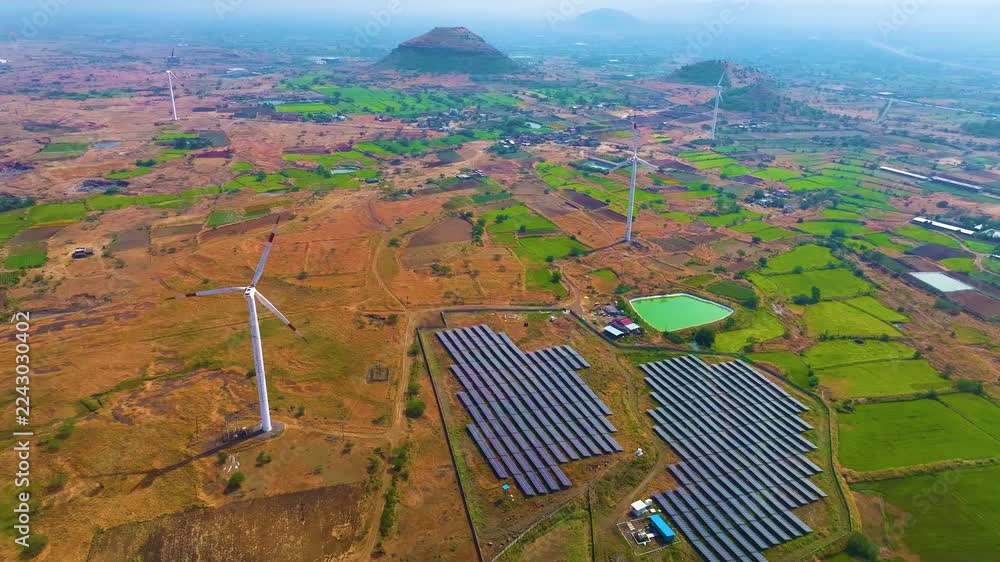
How to Obtain a Grant to Install Renewable Energy Windmill and Solar Panel Systems
To obtain a grant for renewable energy installations in 2026, you must identify eligible federal, state, or private programs, conduct a professional energy audit, and submit a detailed technical proposal. Most applicants utilize the US...
To obtain a grant for renewable energy installations in 2026, you must identify eligible federal, state, or private programs, conduct a professional energy audit, and submit a detailed technical proposal. Most applicants utilize the USDA Rural Energy for America Program (REAP) or state-specific clean energy funds, often pairing them with the federal Investment Tax Credit (ITC) to maximize cost recovery.
Contents
The transition to decentralized renewable energy has accelerated significantly by 2026. For homeowners, farmers, and small business owners, the combination of solar photovoltaic (PV) panels and micro-wind turbines—often referred to as hybrid systems—offers a robust solution for year-round energy independence. However, the "soft costs" of permitting and installation remain high, making grants and financial incentives essential for a viable return on investment. Obtaining these funds requires a methodical approach to documentation, technical validation, and administrative compliance.
Identifying Eligible Grant Programs for Wind and Solar
The landscape of renewable energy funding is divided into three primary categories: federal grants, state-level incentives, and private or non-profit grants. Understanding which bucket your project falls into is the first step toward securing funding.
The USDA Rural Energy for America Program (REAP)
For agricultural producers and small businesses in rural areas, the USDA REAP grant remains the most powerful tool for funding wind and solar projects. In 2026, this program continues to offer significant coverage for total project costs. To qualify, your project must be located in a designated rural area (typically populations under 50,000), and the applicant must derive at least 50% of their gross income from agricultural operations or be a small business meeting SBA size standards.
REAP grants are competitive. The application is scored based on energy generated, environmental benefits, and the financial need of the applicant. In recent years, the USDA has prioritized "underutilized technologies," which often gives wind-solar hybrid systems a slight scoring advantage over standalone solar arrays.
State-Specific Renewable Energy Funds
Many states have established "Green Banks" or Clean Energy Funds that provide direct grants or forgivable loans. For example, programs through agencies like the New York State Energy Research and Development Authority (NYSERDA) or the California Energy Commission (CEC) often provide "block grants" to installers who then pass the savings on to the consumer. These programs are frequently updated based on state legislative cycles, so checking your state’s energy office website is a mandatory prerequisite.
Tribal and Community Grants
The Department of Energy (DOE) Office of Indian Energy provides specific grant opportunities for tribal nations looking to install renewable infrastructure. These grants often cover a higher percentage of project costs—sometimes up to 90%—due to the focus on energy sovereignty and resilience in underserved regions.
The Federal Investment Tax Credit (ITC) vs. Direct Grants
While technically a tax credit rather than a grant, the Investment Tax Credit (ITC) functions as a massive financial offset that can be combined with other grants. Under the provisions maintained through 2026, the ITC allows residential and commercial users to deduct 30% of the cost of installing solar and wind systems from their federal taxes.
For tax-exempt entities (such as non-profits, schools, or local governments), the "Direct Pay" or "Elective Pay" provision allows these organizations to receive the value of the tax credit as a direct refund from the IRS. This effectively turns the tax credit into a grant, making it a critical component of any funding strategy for public or non-profit projects.
Technical Prerequisites: The Energy Audit and Site Assessment
Before applying for any grant, you must prove that your site is suitable for the technology. This is especially true for wind turbines (windmills), which are highly dependent on local topography and average wind speeds.
- Professional Energy Audit: Most grantors, especially the USDA, require a professional energy audit or an "Energy Assessment." This document analyzes your current energy consumption and projects how much the new wind/solar system will offset.
- Wind Speed Verification: Solar potential is relatively easy to calculate using tools like the NREL PVWatts Calculator. Wind, however, is more volatile. You may need to provide historical wind speed data for your specific coordinates to prove that a turbine will actually produce the expected kilowatt-hours (kWh).
- Interconnection Studies: You must contact your local utility company to determine if their grid can handle the "back-feeding" of energy. A letter of intent or a preliminary interconnection agreement is often a required attachment for grant applications.
Step-by-Step Guide to the Application Process
Navigating the bureaucracy of government funding requires precision. Missing a single form or failing to register in the correct database can lead to an immediate disqualification.
Step 1: Register in SAM.gov
If you are applying for any federal grant (including USDA REAP), you must register your business or entity in the System for Award Management (SAM.gov). This process provides you with a Unique Entity ID (UEI). Be aware that registration can take several weeks to process, so this should be your first action item.
Step 2: Secure Competitive Bids
Grantors want to see that you are spending the money wisely. You should obtain at least three written quotes from certified renewable energy installers. Ensure these installers are NABCEP (North American Board of Certified Energy Practitioners) certified for solar or have equivalent accreditation for wind systems. The bids must include a detailed breakdown of equipment, labor, and projected energy production.
Step 3: Complete the Technical Proposal
Your application must go beyond "I want to save money." It needs to address:
- Capacity Factor: How often the system will be generating at peak levels.
- Payback Period: How many years it will take for the energy savings to equal the initial investment.
- Environmental Impact: Reduction in carbon footprint (CO2 equivalent).
- Operational Life: Documentation showing the equipment is rated for at least 20–25 years.
Step 4: Submission and Environmental Review
Once submitted, federal and many state grants undergo a "NEPA Review" (National Environmental Policy Act). This ensures that your wind turbine won't interfere with migratory bird paths or local historical sites. For solar panels, this is usually a formality; for wind turbines, it may require additional biological surveys.
Comparing Grant and Incentive Options
| Program Name | Target Audience | Maximum Funding | Key Requirement |
|---|---|---|---|
| USDA REAP | Rural Small Businesses / Farmers | Up to 50% of project costs | Must be in a rural area |
| Federal ITC (Direct Pay) | Non-profits / Local Govt | 30% of total cost | Tax-exempt status |
| Tribal Energy Grants | Native American Tribes | Variable (up to 90%) | Project on Tribal Land |
| State Clean Energy Funds | Residents / Small Biz | $2,500 - $25,000+ | Varies by state (e.g., NY, CA, MA) |
| Self-Generation Incentive (SGIP) | Commercial / Industrial | Based on kWh storage | Often requires battery backup |
Technical Considerations for Wind-Solar Hybrid Systems
Combining windmills and solar panels—known as a hybrid system—is technically superior because wind and solar production cycles are often complementary. Wind speeds are typically higher at night and during winter months, while solar production peaks during the day and in summer.
However, from a grant perspective, hybrid systems are more complex. You must ensure your inverter system is capable of handling two different types of current (DC from solar and often variable AC from wind). Grant reviewers will look for a "unified power management system" in your technical specs to ensure the components work together efficiently rather than competing for grid access.
Common Pitfalls to Avoid
- Starting Construction Too Early: Almost all grants forbid you from "breaking ground" or even signing a binding purchase agreement before the grant is officially awarded or you have received a "Notice to Proceed." Doing so will void your eligibility.
- Inaccurate Production Estimates: Avoid using "peak" numbers in your application. Use "conservative" or "average" production numbers. If a grant reviewer suspects you are inflating the energy output to make the project look better, they will reject the application.
- Ignoring Zoning and HoAs: For wind turbines especially, local zoning laws regarding "tip-height" (the height of the turbine at its highest blade point) are strict. Ensure you have a conditional use permit or zoning clearance before applying for the grant.
Frequently Asked Questions
Can I get a grant for a residential project in 2026?
Pure "grants" for residential projects are rare at the federal level, but common at the state and local levels. Most homeowners rely on the 30% Federal Investment Tax Credit (ITC). However, low-to-moderate income households may qualify for the Solar for All program, a federal initiative that provides direct subsidies for residential solar and wind installations in disadvantaged communities.
Is it harder to get a grant for wind compared to solar?
Yes, generally. Wind turbines have more moving parts, higher maintenance requirements, and more significant environmental hurdles (noise and avian impact). To successfully obtain a wind grant, you must provide much more rigorous site data and technical justification than you would for a standard solar array.
Can I combine (stack) multiple grants?
In most cases, yes, but with a caveat known as "basis reduction." For example, if you receive a state grant that covers $10,000 of your project, you must subtract that $10,000 from the total cost before calculating your 30% Federal Tax Credit. Always consult a tax professional when "stacking" incentives to ensure compliance with IRS rules.
Do grants cover battery storage?
Yes, as of 2026, most major renewable energy grants and the federal ITC explicitly include "standalone" and "integrated" battery storage. Including a battery in your windmill/solar project can actually improve your grant score, as it increases "grid resiliency"—a major priority for government funding.
What is the average timeline for a grant approval?
Expect a timeline of 6 to 12 months. This includes the time for SAM.gov registration (1 month), site assessment and bidding (2 months), and the agency review period (3-9 months). Patience is a requirement for anyone seeking public funding.
Final Recommendation
Your most successful path to funding a wind and solar project in 2026 is to start with a certified site assessment. Before looking for money, verify that your land actually has the wind resources and solar exposure to justify the equipment. Once verified, prioritize the USDA REAP grant if you are in a rural area, or the State Energy Office programs if you are urban. Always pair these with the Federal ITC to maximize your total financial recovery.
Image Gallery