Choosing Workers Compensation Insurance Companies in Maryland
To choose the right workers' compensation insurance company in Maryland, business owners must evaluate a provider's financial stability (A.M. Best ratings), industry-specific experience, and the quality of their local claims handling....
To choose the right workers' compensation insurance company in Maryland, business owners must evaluate a provider's financial stability (A.M. Best ratings), industry-specific experience, and the quality of their local claims handling. Maryland law requires almost all employers with at least one employee to carry coverage through a private carrier, a self-insurance group, or the state-created Chesapeake Employers’ Insurance Company.
Contents
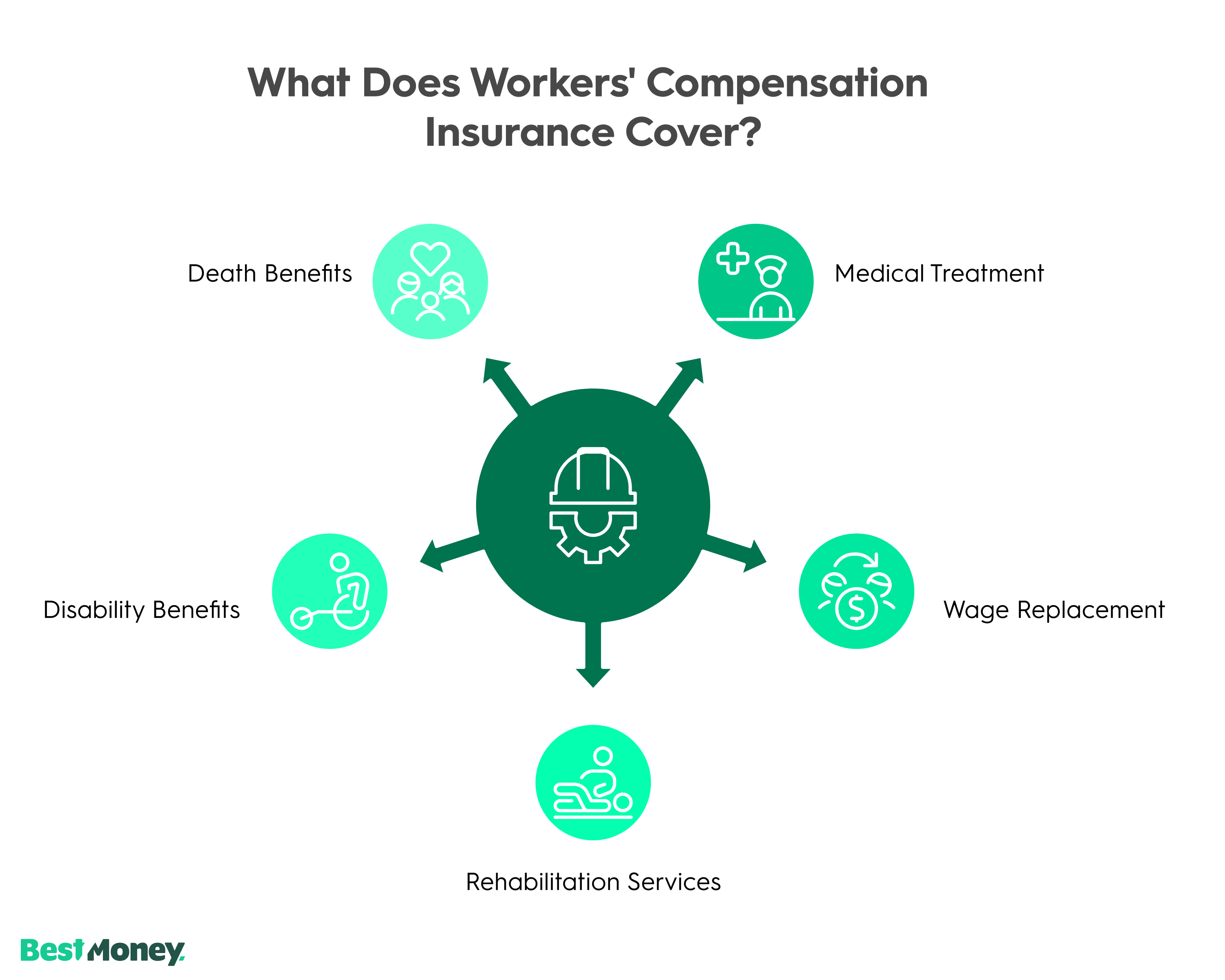
Choosing a workers' compensation carrier is one of the most significant regulatory and financial decisions a Maryland business owner will make. In 2026, the landscape of workplace safety and insurance technology has evolved, but the fundamental legal requirements in the Old Line State remain rigorous. Workers' compensation is a "no-fault" system designed to provide medical expenses and wage replacement to employees injured on the job while protecting employers from costly civil litigation.
However, not all insurance companies offer the same level of service, pricing, or long-term value. Selecting a partner involves more than just finding the lowest premium; it requires an assessment of how the company manages claims, their presence within Maryland’s specific legal jurisdiction, and their ability to help you lower costs over time through loss control.
Understanding Maryland’s Workers’ Compensation Mandates
Before evaluating specific companies, it is vital to understand the legal framework governed by the Maryland Workers’ Compensation Commission (WCC). Under Maryland law, any business with one or more employees—full-time or part-time—is required to provide workers' compensation insurance.
Maryland is unique because it operates as a "competitive" market. Unlike "monopolistic" states where you must buy from a state fund, Maryland allows you to choose from hundreds of private insurance companies. However, the state also maintains Chesapeake Employers’ Insurance Company, which serves as a non-profit, self-supporting entity that acts as a guaranteed source of coverage for Maryland businesses, regardless of their risk profile.
Failure to secure coverage in Maryland is a serious offense. The WCC can levy fines up to $10,000, and corporate officers can be held personally liable for the cost of claims if the business is uninsured. This regulatory pressure makes the selection of a reliable carrier a matter of survival for many small to mid-sized enterprises (SMEs).
Evaluating Carriers: Chesapeake Employers vs. Private Insurers
When beginning your search, you will essentially choose between two paths: the state-created specialist or a national/regional private carrier. Each has distinct advantages depending on your industry and risk history.
Chesapeake Employers’ Insurance Company
Formerly known as IWIF, Chesapeake Employers’ is the largest writer of workers' comp in Maryland. Because they focus exclusively on Maryland, their adjusters and legal teams are deeply familiar with the nuances of Maryland Labor and Employment Article laws.
- Pros: They cannot refuse coverage to a Maryland business (though they can price for risk); they offer extensive local safety resources and have a physical presence across the state.
- Cons: They only operate in Maryland. If your business expands into Virginia, Pennsylvania, or Delaware, you will need to find another solution for those employees.
Private Carriers
National brands like Travelers, The Hartford, Liberty Mutual, and regional players offer workers' compensation as part of a larger commercial package.
- Pros: Competitive pricing for low-risk industries (like retail or tech); ability to bundle workers' comp with General Liability or Commercial Auto policies; multi-state coverage.
- Cons: Some private carriers may "non-renew" or refuse to quote high-risk industries (like roofing or logging); their claims adjusters might be located in a different time zone and handle claims across multiple states, potentially leading to a lack of Maryland-specific expertise.
Key Criteria for Selecting a Provider in 2026
To differentiate between the hundreds of options available, use the following technical and operational criteria.
1. Financial Strength Ratings
Never partner with an insurance company without checking their A.M. Best Financial Strength Rating. This rating assesses the insurer's ability to meet its ongoing insurance policy and contract obligations. Look for an "A-" (Excellent) or higher. A company that is financially unstable may struggle to pay long-tail claims, which could lead to legal complications for your business if the carrier enters receivership.
2. Industry-Specific Expertise and Class Codes
Insurance companies use NCCI (National Council on Compensation Insurance) classification codes to categorize your employees' work. Choosing a company that understands your specific niche is crucial. For example, a carrier that specializes in the construction industry will have better "loss control" (safety) consultants who know exactly what OSHA violations to look for on a Maryland job site compared to a generalist carrier.
3. Claims Management and Return-to-Work Programs
The total cost of your insurance is heavily influenced by how effectively claims are managed. In 2026, top-tier Maryland insurers use advanced case management software to track medical progress.
- Medical Provider Networks: Ask if the carrier has an established network of high-quality doctors in Maryland who specialize in occupational medicine.
- Return-to-Work (RTW): A superior company will help you create a "light duty" program. The faster an employee safely returns to work, even in a limited capacity, the lower the claim cost and the less impact it has on your future premiums.
4. Loss Control and Safety Services
The best insurance company is one that helps you avoid using the insurance in the first place. High-quality carriers provide:
- On-site safety audits.
- Online training modules for employees.
- Safety manuals tailored to Maryland state regulations.
- Analysis of past "near-miss" incidents to prevent future injuries.
Comparison of Maryland Workers' Comp Provider Types
| Feature | Chesapeake Employers' | National Private Carriers | Regional Specialized Carriers |
|---|---|---|---|
| Market Focus | 100% Maryland | National / Multi-State | Mid-Atlantic / Specific Niche |
| Availability | Guaranteed (Market of last resort) | Risk-Dependent | Niche-Dependent |
| Bundling Options | Workers' Comp Only | Full Commercial Packages | Limited Bundling |
| Safety Resources | Strong Local Presence | Extensive Digital Tools | Industry-Specific Experts |
| Best For | High-risk or MD-only firms | Multi-state corporations | Specialized trades (HVAC, etc.) |
Understanding Premium Calculation in Maryland
Your choice of company affects your premium, but so does your business's data. In Maryland, premiums are generally calculated using the formula:
(Payroll / 100) × Class Code Rate × Experience Modifier = Estimated Premium
The Experience Modifier (E-Mod)
The Experience Rating Modifier (E-Mod) is a numerical expression of your claims history compared to other similar businesses. A "1.0" is average. If your E-Mod is 0.85, you get a 15% discount; if it is 1.15, you pay a 15% surcharge. When choosing a company, ask how their safety programs can help you lower your E-Mod over a three-year window.
Maryland-Specific Credits and Discounts
Maryland allows for certain premium adjustments that you should discuss with prospective companies:
- Managed Care Credits: Discounts for using approved managed care organizations for medical treatment.
- Safety Credits: Potential discounts for businesses with formal, written safety programs.
- Schedule Rating: In Maryland, carriers have some flexibility to apply "schedule credits" or "debits" based on their subjective evaluation of your business's risk management practices.
The Role of the Maryland Insurance Broker
While you are choosing an insurance company, you will likely do so through an agent or broker. In Maryland, there are "captive" agents (who work for one company) and "independent" brokers (who represent many).
A skilled Maryland broker will:
- Review your NCCI codes: Ensuring you aren't overpaying because an office worker was misclassified as a field laborer.
- Market your "Risk": They will present your safety data to multiple carriers to find the best fit.
- Audit Support: They help you prepare for the annual payroll audit to ensure you aren't hit with unexpected back-charges at the end of the policy year.
Common Pitfalls to Avoid
- Choosing Solely on Price: A "cheap" carrier that provides poor claims service can end up costing you more in the long run. If a claim lingers or is poorly investigated, your E-Mod will rise, increasing your premiums for the next three years.
- Ignoring Multi-State Needs: If your Maryland-based landscaping crew occasionally does jobs in Northern Virginia, and your Maryland carrier doesn't have "Other States Insurance" coverage (specifically listed in Part 3 of the policy), you may be functionally uninsured in Virginia.
- Neglecting the Audit Process: Every workers' comp policy is based on an estimate of payroll. At the end of the year, the company will audit your actual payroll. If you chose a company with a difficult audit process, you may find yourself in a dispute over "excluded" vs. "included" earnings.
Frequently Asked Questions
Is workers' compensation mandatory for small businesses in Maryland?
Yes. Maryland law requires any business with at least one employee to carry workers' compensation insurance. This includes corporate officers and members of LLCs, although certain officers may elect to exclude themselves from coverage under specific conditions filed with the WCC.
Can I buy workers' comp directly from the state?
Not exactly. While Maryland does not have a state-run agency in the "monopolistic" sense, Chesapeake Employers’ Insurance Company was created by the state to ensure coverage is always available. You can purchase coverage through them or through any licensed private insurer.
What happens if I don't have insurance and an employee gets hurt?
In Maryland, you would be responsible for all medical bills and wage benefits out of pocket. Additionally, the Uninsured Employers’ Fund (UEF) may pay the claim and then sue you for reimbursement, plus a penalty of up to 15% of the award and other statutory fines.
How do I verify if an insurance company is licensed in Maryland?
You can verify a carrier's license through the Maryland Insurance Administration (MIA). This ensures the company is compliant with state regulations and participates in the state's guaranty fund.
Does Maryland allow for self-insurance?
Yes. Large employers or groups of employers in the same industry can apply for self-insurance through the Maryland Workers’ Compensation Commission. This requires proving significant financial assets and obtaining a surety bond to ensure claims can be paid.
Recommendation for Maryland Business Owners
For most Maryland small businesses, the best approach is to contact an independent agent to compare quotes from Chesapeake Employers’ Insurance and at least two national private carriers. If your business is in a high-risk sector (construction, trucking, or manufacturing), prioritize carriers with a local Maryland claims office and robust on-site safety consulting. By 2026 standards, ensure the provider offers a digital portal for easy "Certificate of Insurance" (COI) generation, which is essential for working with Maryland general contractors and government agencies.
Image Gallery