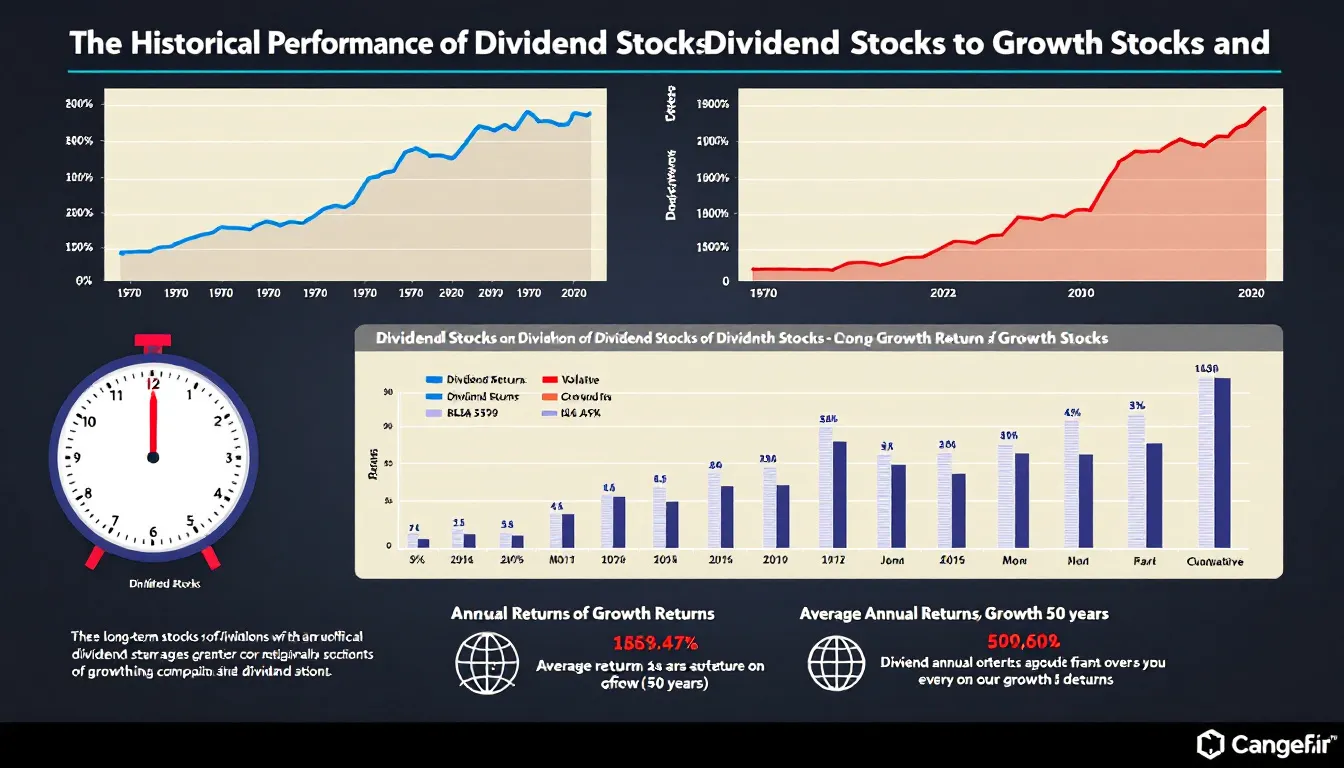
Why High Dividend Stocks on Robinhood Rarely Pay Off
Many retail investors on Robinhood gravitate toward high dividend yields, often overlooking that a sky-high percentage usually signals a "yield trap." These stocks frequently suffer from declining stock prices, unsustainable payout rat...
Many retail investors on Robinhood gravitate toward high dividend yields, often overlooking that a sky-high percentage usually signals a "yield trap." These stocks frequently suffer from declining stock prices, unsustainable payout ratios, and deteriorating fundamentals, resulting in a negative total return that far outweighs the quarterly dividend payments received by the shareholder.
Contents
For years, the "100 Most Popular" list on Robinhood has featured companies with double-digit dividend yields. While these figures appear attractive to those seeking passive income, the reality of the market in 2026 remains unchanged: an abnormally high yield is often a distress signal rather than a generous reward. To understand why these investments so often fail, one must look beyond the simplified interface of retail trading apps and into the mechanics of corporate finance and market efficiency.
The Mechanics of the Yield Trap
A dividend yield is a simple mathematical ratio: the annual dividend per share divided by the current share price. Because the share price is the denominator, there are two ways for the yield to increase. Either the company raises its dividend—a sign of health—or the stock price collapses—a sign of trouble.
On Robinhood, many of the most searched "high yield" stocks are in the latter category. When a company’s business model falters, institutional investors sell their shares, driving the price down. If the company has not yet officially cut its dividend, the yield will mathematically "spike" to 10%, 15%, or even 20%. Retail investors seeing these numbers in their feed often assume they have found a bargain, when in reality, they are catching a falling knife.
By the time the next quarterly report is released, the company often realizes it can no longer afford the payout. When the dividend is eventually cut or suspended to preserve cash, the stock price typically suffers another massive drop. The investor is then left with a devalued asset and no income, the classic definition of a yield trap.
The Robinhood Interface and Behavioral Bias
The design of the Robinhood app, while revolutionary for accessibility, inadvertently encourages certain behaviors that lead investors toward low-quality dividend stocks. The platform emphasizes "Top Movers" and curated lists that often feature volatile stocks.
Retail psychology plays a significant role here. Beginners often view dividends as "free money" and may not realize that a dividend payment is not a bonus added to the share price, but a distribution of the company’s existing value. When a company pays a dividend, its share price typically drops by approximately the amount of the payout on the ex-dividend date.
Furthermore, Robinhood’s simplified data display often lacks the deep fundamental context required to evaluate dividend safety. While the app provides basic stats, it does not prioritize the dividend payout ratio or free cash flow (FCF) trends—the two most critical metrics for determining if a payout is sustainable. Without this context, a 12% yield looks strictly better than a 3% yield, even if the 12% yield is being paid out of borrowed money.
Sustainability Metrics: Payout Ratios and Cash Flow
To determine why a high-yield stock is failing to pay off, an investor must look at how the company is funding those payments. In 2026, with the cost of capital remaining a significant factor for corporate balance sheets, the source of dividend funds is more important than ever.
The Payout Ratio
The payout ratio measures the percentage of earnings a company pays out as dividends. A ratio of 50% to 60% is generally considered healthy for most industries, as it leaves room for the company to reinvest in growth and maintain a "cushion" for economic downturns.
Many high-yield stocks on Robinhood have payout ratios exceeding 90% or even 100%. When a company pays out more than it earns, it is effectively liquidating itself or taking on debt to maintain the illusion of a high yield. This is unsustainable over the long term and almost always leads to a capital loss for the shareholder.
Free Cash Flow vs. Net Income
Earnings can be manipulated by accounting practices, but cash flow is harder to hide. A company might report a profit on paper while actually seeing cash leave the business. If a company’s Free Cash Flow (FCF)—the cash left over after paying for operating expenses and capital expenditures—is lower than the total dividend payout, the dividend is in immediate jeopardy. Many retail-popular stocks in the energy and telecommunications sectors have historically struggled with this discrepancy.
Total Return vs. Yield: The Hidden Cost
The most common reason high dividend stocks on Robinhood "rarely pay off" is that investors focus on yield rather than total return. Total return is the sum of dividend income and capital appreciation (or depreciation).
Consider a hypothetical comparison between a high-yield "trap" and a stable "dividend grower":
| Metric | Stock A (High Yield Trap) | Stock B (Dividend Grower) |
|---|---|---|
| Starting Price | $100.00 | $100.00 |
| Dividend Yield | 12% ($12.00) | 3% ($3.00) |
| Share Price Change | -20% (-$20.00) | +10% (+$10.00) |
| Cash Received | $12.00 | $3.00 |
| Ending Portfolio Value | $92.00 | $113.00 |
| Total Return | -8% | +13% |
In this scenario, which is common among popular Robinhood stocks, the "higher" dividend actually resulted in a net loss of capital. This phenomenon is particularly prevalent in sectors like Mortgage Real Estate Investment Trusts (mREITs) and certain Business Development Companies (BDCs), which are frequently traded on the platform due to their high headline yields.
Sector-Specific Risks Popular on Robinhood
Certain types of entities are structured by law to pay out high dividends, but they carry unique risks that are often misunderstood by retail traders.
Mortgage REITs (mREITs)
Unlike traditional REITs that own physical property, mREITs invest in mortgages and mortgage-backed securities. They use significant leverage (borrowed money) to boost returns. These stocks often show yields between 10% and 15%. However, they are extremely sensitive to interest rate volatility. As we have seen in the market cycles leading up to 2026, sudden shifts in the yield curve can crush the book value of these companies, leading to massive share price drops that wipe out years of dividend income.
Business Development Companies (BDCs)
BDCs lend money to small and mid-sized private companies. While they can provide high yields, they act as a proxy for the credit health of the broader economy. When economic conditions tighten, the default rate on these loans increases. Robinhood users often flock to BDCs during periods of high interest rates, unaware that the high yield is a premium for the significant risk of loan defaults within the BDC’s portfolio.
Legacy Telecommunications and Energy
Older, "incumbent" companies in these sectors often have high yields because their growth has stalled. They pay out dividends because they have no better use for the cash (no new growth projects). However, if their debt loads are too high—a common issue for telecom giants—the dividend becomes a liability that prevents them from modernizing their infrastructure, leading to a slow decline in share price.
The Impact of Inflation and Taxes
Another reason high-yield stocks on Robinhood underperform is the impact of taxes and inflation. Many high-yield distributions are classified as unqualified dividends. Unlike qualified dividends, which are taxed at the lower capital gains rate (0%, 15%, or 20% depending on income), unqualified dividends are taxed as ordinary income. For an investor in a higher tax bracket, a 10% yield could effectively become a 6.5% yield after federal and state taxes.
When you factor in inflation, which has remained a persistent concern in the mid-2020s, the "real" return of these stocks often turns negative. If a stock’s price is stagnant or declining, and the dividend is being eaten by taxes and inflation, the investor is losing purchasing power every year they hold the position.
Common Mistakes When Researching Dividends on Robinhood
- Chasing "Yield on Cost" Fallacy: Some investors hold onto a declining stock because they bought it when the yield was high, hoping it will "return to normal." Markets are forward-looking; the market does not care what price you paid for the stock.
- Ignoring the Ex-Dividend Date: New traders often buy a stock the day before the ex-dividend date just to "capture" the dividend, not realizing the stock price will adjust downward the next morning, often resulting in a net wash or a loss after taxes.
- Over-reliance on Past Data: Robinhood shows historical dividend data, but dividends are never guaranteed. Past payments are not a legal obligation for the company to make future payments.
- Lack of Diversification: Many "income-focused" Robinhood portfolios are heavily concentrated in just two or three high-yield sectors (like REITs and Energy), leaving the investor vulnerable to sector-specific crashes.
Frequently Asked Questions
Why does Robinhood show a high dividend yield if the stock is doing poorly?
The yield shown is a trailing calculation based on the last year of payments relative to the current price. If the price has recently crashed but the company hasn't officially announced a dividend cut yet, the yield will appear artificially high. This is the hallmark of a "yield trap."
Are there any high-yield stocks that are actually safe?
"Safe" is relative. Generally, yields above 7-8% in a standard interest rate environment require extreme scrutiny. Truly safe dividend stocks (often called "Dividend Aristocrats" or "Kings") usually have lower yields, typically between 2% and 5%, but they have a track record of increasing those payments for 25 to 50 consecutive years.
How can I tell if a dividend is about to be cut?
Check the company’s payout ratio and free cash flow in their latest quarterly SEC filings (Form 10-Q). If the payout ratio is consistently over 80% or if free cash flow is lower than the dividend expense, a cut is highly likely. You can find these documents on the SEC EDGAR database.
Should I use Dividend Reinvestment (DRIP) on Robinhood for high-yield stocks?
Dividend reinvestment is a powerful tool for compounding, but using it on a failing stock only increases your exposure to a declining asset. It is often better to take the cash and manually reinvest it into a more stable, growing company.
Does Robinhood charge fees for dividends?
No, Robinhood does not charge fees for receiving dividends or for its automated dividend reinvestment program. However, the standard regulatory fees (SEC and FINRA) apply when you eventually sell the shares. Information on these fees can be found on the FINRA website.
Practical Recommendation for Investors
To achieve better long-term results, shift your focus from High Yield to Dividend Growth. Stocks with a moderate yield (2-4%) that consistently increase their payouts tend to outperform high-yield "traps" in total return. Use Robinhood as an execution tool, but perform your fundamental research using external sources like Morningstar or Yahoo Finance to verify payout ratios and debt-to-equity levels. In 2026, the key to income investing is not finding the highest percentage, but finding the most sustainable one.
Image Gallery