Why Getting on My Nerves Matters for Modern Living
The sensation of things "getting on your nerves" is a physiological warning that your nervous system has reached its capacity for processing stimuli. In 2026, recognizing this state is essential for preventing chronic burnout, as it si...
The sensation of things "getting on your nerves" is a physiological warning that your nervous system has reached its capacity for processing stimuli. In 2026, recognizing this state is essential for preventing chronic burnout, as it signals a transition from a regulated "social engagement" state to a defensive "fight-or-flight" response.
Contents
Understanding the Physiology of "Getting on My Nerves"
When we say something is "getting on our nerves," we are rarely speaking metaphorically. We are describing a state of neurological hyper-vigilance. This sensation occurs primarily within the autonomic nervous system (ANS), specifically when the sympathetic branch becomes overactive. This branch is responsible for mobilizing the body to respond to threats. In a modern context, those "threats" are rarely predatory animals; instead, they are high-frequency notifications, ambient noise, and the cognitive load of multitasking.
The biological mechanism involves the amygdala, the brain's emotional processing center, sending a distress signal to the hypothalamus. This triggers the release of adrenaline and cortisol. In a regulated state, the prefrontal cortex—the part of the brain responsible for logic and impulse control—keeps these signals in check. However, when external pressures are constant, the prefrontal cortex’s ability to "brake" these emotional responses weakens. This is why a small annoyance, like a tapping pen or a slow-loading webpage, can suddenly feel unbearable.
Understanding this biological reality removes the stigma of irritability. It transforms "getting on my nerves" from a personality flaw into a data point. It indicates that your Window of Tolerance—a term coined by Dr. Dan Siegel to describe the zone where we can effectively manage emotions—is narrowing. In 2026, where digital and physical environments overlap more than ever, monitoring this window is a primary survival skill for mental health.
The Modern Stimulus Landscape and Sensory Overload
The environment of 2026 presents unique challenges to the human nervous system that were less prevalent even a decade ago. We live in an era of ambient computing, where smart devices, haptic feedback, and augmented reality (AR) interfaces compete for our limited sensory bandwidth. Every "ping," vibration, or visual pop-up is a micro-stimulus that the brain must process and categorize.
Sensory processing disorder was once a diagnosis primarily associated with neurodivergence, but in the current high-stimulus era, "situational sensory overload" affects a broad segment of the population. When the environment provides more data than the nervous system can integrate, the brain enters a state of sensory defensiveness. In this state, the threshold for what is considered an "irritant" drops significantly.
The physical layout of modern living also contributes. Open-plan offices (which persist despite their known flaws) and high-density urban living create a "noise floor" that is never truly zero. Constant low-level noise forces the brain to engage in active filtering, a cognitively expensive process. When you run out of the energy required to filter out the hum of the refrigerator or the distant traffic, those sounds begin to "get on your nerves." It is a sign of cognitive fatigue, signaling that the brain's executive resources are depleted.
The Role of Polyvagal Theory in Daily Regulation
To understand why this matters for modern living, we must look at Polyvagal Theory, developed by Dr. Stephen Porges. This theory posits that our nervous system has three primary states:
- Ventral Vagal (Social Engagement): We feel safe, connected, and calm.
- Sympathetic (Mobilization): We feel anxious, frustrated, or "on edge."
- Dorsal Vagal (Immobilization): We feel numb, shut down, or depressed.
"Getting on my nerves" is the clinical entry point into the Sympathetic state. It is the "yellow light" of human psychology. If ignored, the body moves further into mobilization, leading to anger or panic. If the stressor continues indefinitely, the system may eventually collapse into the Dorsal Vagal state of burnout or clinical depression.
In 2026, the goal of "wellness" has shifted from achieving a permanent state of zen to developing nervous system flexibility. This means having the ability to recognize when you are moving into a sympathetic state and having the tools to return to ventral vagal regulation. Ignoring the feeling of being "on edge" is essentially ignoring a smoke detector. By the time you "snap," the metaphorical fire has already caused significant damage to your productivity and relationships.
Identifying Symptoms: Acute vs. Chronic Irritability
Recognizing the difference between a bad mood and a dysregulated nervous system is critical for selecting the right intervention.
| Feature | Acute Irritability (Temporary) | Chronic Nervous Exhaustion (Persistent) |
|---|---|---|
| Primary Trigger | Specific event or sensory input (e.g., a loud noise). | General existence; triggers are unpredictable or non-existent. |
| Physical Sensation | Brief muscle tension or localized "tightness." | Persistent fatigue, jaw clenching, or digestive issues. |
| Recovery Time | Usually subsides within 30-60 minutes after the trigger is removed. | Recovery takes days or weeks of dedicated rest. |
| Cognitive Impact | Temporary loss of focus. | Brain fog, memory lapses, and "decision paralysis." |
| Social Response | Short-temperedness with a specific individual. | Withdrawal from all social interactions and "iso-craving." |
| Sleep Quality | May have trouble falling asleep for one night. | Frequent waking; waking up feeling unrefreshed (non-restorative sleep). |
Why Irritability is a Vital Health Metric
In modern medical screenings, "irritability" is increasingly viewed as a "vital sign" similar to blood pressure or heart rate. Chronic activation of the stress response—evidenced by things constantly "getting on your nerves"—has been linked to several systemic health issues:
- Cardiovascular Strain: Chronic sympathetic activation keeps heart rates elevated and restricts blood flow, increasing the risk of hypertension.
- Immune Suppression: Cortisol is an immunosuppressant. If you are constantly "on edge," your body's ability to fight off viral infections is compromised.
- Metabolic Disruption: Stress hormones trigger the release of glucose for quick energy. Constant irritability can lead to insulin resistance and weight gain, particularly in the abdominal area.
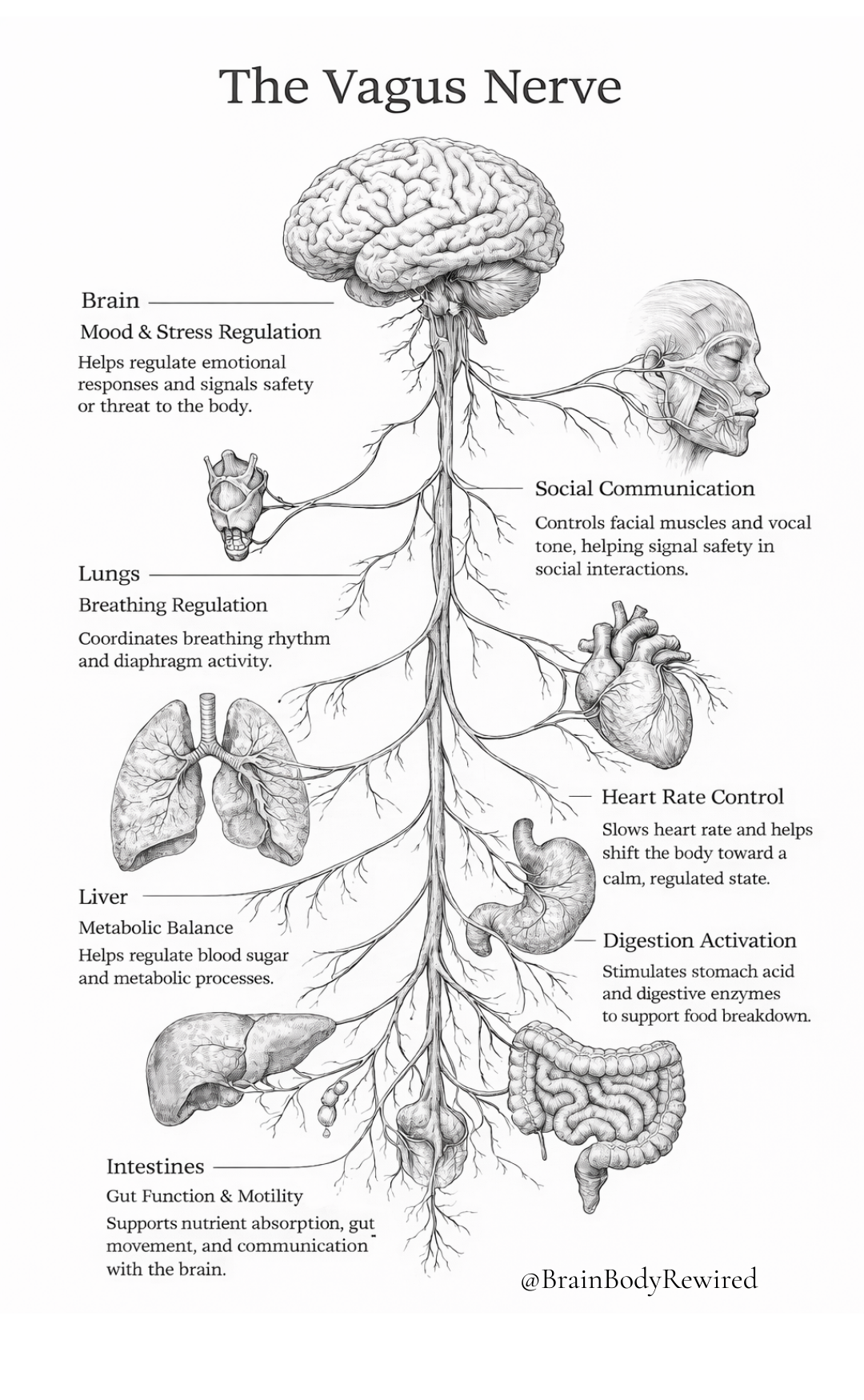
- Gut-Brain Axis: The nervous system and the digestive tract are inextricably linked via the vagus nerve. Nervous system dysregulation often manifests as irritable bowel syndrome (IBS) or other functional gastrointestinal disorders.
By paying attention to when things are "getting on your nerves," you are performing early-stage preventative medicine. It is an indicator that your internal "allostatic load"—the cumulative wear and tear on the body due to chronic stress—is reaching a dangerous level.
Practical Strategies for Nervous System Regulation
Once you acknowledge that "getting on my nerves" is a physiological state, you can apply physiological solutions. Mental willpower is often insufficient to "think" your way out of a dysregulated state; you must instead use the body to influence the brain.
Vagus Nerve Stimulation
The vagus nerve is the main component of the parasympathetic nervous system. You can manually stimulate it through:
- Deep Diaphragmatic Breathing: Focusing on an exhale that is longer than the inhale (e.g., breathe in for 4, out for 6).
- Cold Exposure: Splashing cold water on your face or the back of your neck can trigger the "diving reflex," which slows the heart rate.
- Humming or Chanting: The vibrations of the vocal cords stimulate the vagus nerve as it passes through the throat.
Environmental Hygiene
If your environment is the primary source of irritation, you must practice "sensory dieting." This includes:
- The "No-Notification" Hour: Turning off all haptic and auditory alerts for a set period each day to allow the brain to stop active filtering.
- Visual Decluttering: High levels of visual "noise" in a room (clutter) can subconsciously strain the nervous system.
- Noise-Canceling Technology: Using high-quality ANC (Active Noise Canceling) headphones to create a "silent buffer" in loud environments.
Somatic Experiencing
This involves "shaking out" the stress. Animals in the wild often shake their bodies after a stressful encounter to discharge the sympathetic energy. Humans can do the same through light exercise, dancing, or literally shaking their limbs for 60 seconds to signal to the brain that the "threat" has passed.
Frequently Asked Questions
Why do small sounds bother me more when I am tired?
When you are fatigued, your prefrontal cortex—the "logical" part of the brain—has less energy to regulate the amygdala. This results in a lowered threshold for sensory input. The brain loses its ability to distinguish between background noise and significant threats, causing it to treat every sound as an intrusion.
Is "getting on my nerves" a symptom of anxiety?
Yes, it can be. Irritability is one of the primary diagnostic criteria for Generalized Anxiety Disorder (GAD). However, it is also a standalone symptom of nervous system over-stimulation. If the irritability is accompanied by persistent worry, it may be anxiety-driven; if it is primarily sensory-driven, it may be environmental overstimulation.
Can diet affect how easily things get on my nerves?
Absolutely. High caffeine intake mimics the effects of adrenaline, keeping the nervous system in a "pre-sympathetic" state. Similarly, blood sugar crashes (hypoglycemia) can trigger irritability—often called being "hangry"—because the brain perceives a lack of glucose as a survival threat.
How do I tell someone they are "getting on my nerves" without being rude?
Frame it as a physiological need rather than a personal grievance. Use "I" statements: "My nervous system is feeling a bit overstimulated right now, and I’m having trouble focusing. I need fifteen minutes of quiet to reset so I can be fully present with you."
Does aging make my nerves more sensitive?
Aging can affect sensory processing. The "signal-to-noise" ratio in the brain often changes with age, and the nervous system may take longer to return to a baseline state after a stressful event. This makes the practice of nervous system regulation even more important as we get older.
Recommendation for Next Actions
To effectively manage a modern lifestyle in 2026, start by tracking your "irritability triggers" for one week. Note the time of day, the environment, and your physical state (e.g., hungry, tired, or caffeinated) when you feel things "getting on your nerves." Once you identify the primary patterns—such as mid-afternoon noise or evening digital fatigue—implement one specific somatic or environmental intervention. If irritability persists despite these changes, consider consulting a healthcare professional to rule out underlying hormonal imbalances or chronic nutritional deficiencies.
Image Gallery