Idaho Business Registration System: How It Shapes Your Start Up
The Idaho business registration system, centered on the SOSBiz portal managed by the Secretary of State, provides the essential legal framework for launching a venture. It dictates your startup’s legal structure, liability protections,...
The Idaho business registration system, centered on the SOSBiz portal managed by the Secretary of State, provides the essential legal framework for launching a venture. It dictates your startup’s legal structure, liability protections, and ongoing compliance schedule. By formalizing your entity, the system transforms a private concept into a recognized legal person capable of executing contracts and opening accounts.
Contents
Starting a business in Idaho in 2026 remains a streamlined experience, but the mechanics of the Idaho business registration system do more than just record a name. They define the trajectory of your startup’s governance, tax obligations, and public transparency. Navigating this system requires an understanding of how legal filings translate into operational realities.
The Central Role of SOSBiz in Modern Business Formation
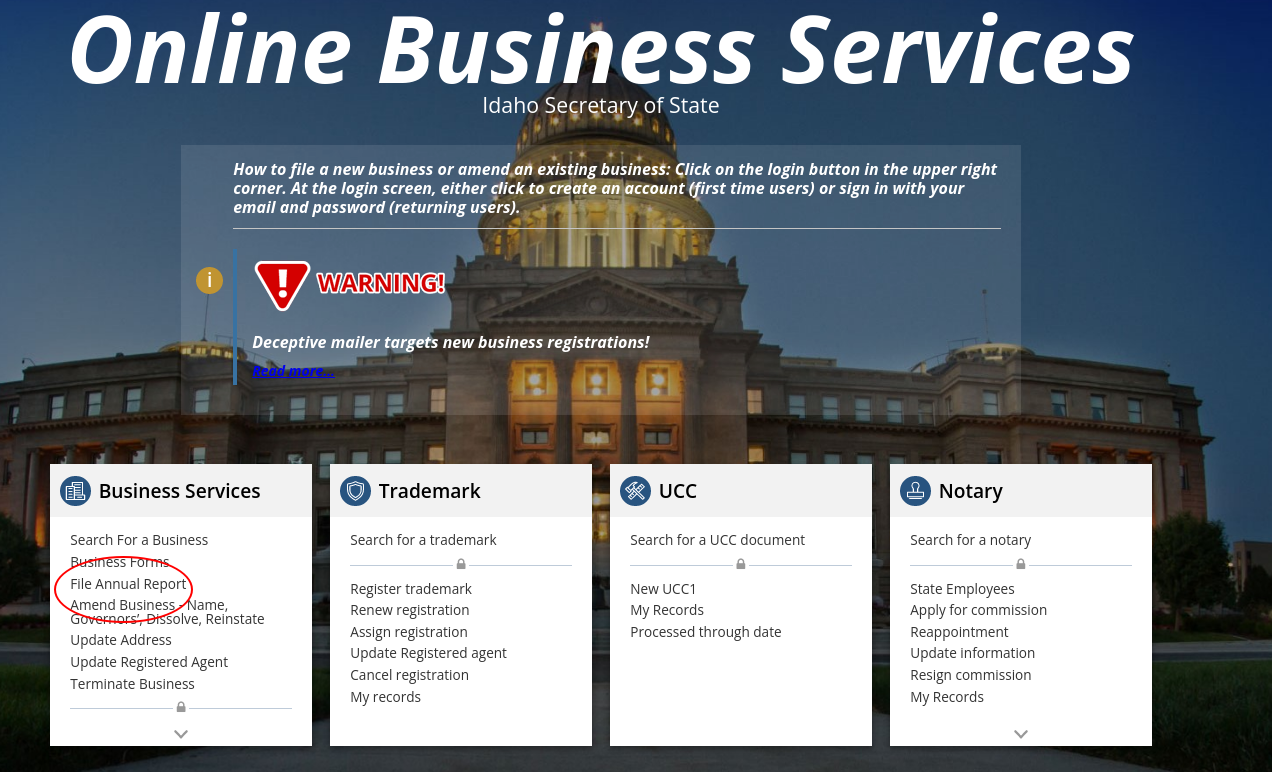
The Secretary of State’s digital platform, SOSBiz, is the heartbeat of the Idaho business registration system. As of 2026, nearly all interactions—from initial name availability searches to filing Articles of Organization—occur through this encrypted portal. The system is designed to reduce the friction of entry for entrepreneurs, but its efficiency necessitates precision.
When you register a business, you are essentially entering into a social contract with the State of Idaho. In exchange for the protections of state law (such as the "corporate veil" that shields personal assets), you agree to maintain a public record of your business’s existence and its primary agents. This transparency is a cornerstone of the Idaho system, shaping your startup by making it searchable to potential investors, creditors, and partners.
The digital nature of the system means that errors made during registration are instantly visible and can be difficult to correct without additional filing fees. This encourages a "measure twice, cut once" approach to business planning. Before even logging into the system, founders must have a clear understanding of their ownership structure and management philosophy.
Strategic Entity Selection: Defining Your Startup’s DNA
The Idaho business registration system offers several entity types, each shaping your startup's future in distinct ways. The choice you make during the registration process is perhaps the most significant decision you will face in the early stages, as it dictates your tax treatment and your personal exposure to business risks.
Limited Liability Company (LLC)
The LLC remains the most popular choice for Idaho startups in 2026. It provides a flexible management structure and "pass-through" taxation, meaning the business's profits or losses are reported on the owners' individual tax returns. The Idaho system treats LLCs with a high degree of deference, allowing owners to draft an Operating Agreement that governs internal affairs without heavy-handed state interference.
Corporations (C-Corp and S-Corp)
For startups aiming for rapid scaling or venture capital funding, the Corporation is the preferred vehicle. The Idaho registration system requires Corporations to adhere to stricter formalities, such as appointing a Board of Directors and holding annual meetings. While the administrative burden is higher, the corporate structure provides a clear path for issuing stock and managing complex investor relations.
Assumed Business Names (DBA)
If you operate as a sole proprietorship but wish to use a brand name other than your own, the Idaho system requires an Assumed Business Name filing. It is important to note that a DBA is not a separate legal entity; it does not provide liability protection. It merely links your personal identity to your trade name in the public record.
The Necessity of the Registered Agent
A unique requirement of the Idaho business registration system is the mandatory designation of a Registered Agent. This individual or entity must have a physical street address within the state of Idaho (no P.O. boxes allowed).
The role of the Registered Agent is to be the official point of contact for "service of process." If your startup is ever involved in legal action, the Registered Agent receives the summons on your behalf. This requirement shapes your startup by ensuring that the state and the public always have a verified way to contact your business.
Many startups choose to use a professional registered agent service rather than listing a home address. This preserves the privacy of the founders and ensures that legal documents are handled by a professional who is available during all standard business hours, which is a strict requirement under Idaho Code.
Step-by-Step Registration Process in 2026
To successfully navigate the registration system, founders should follow a structured sequence. The system is designed to be linear, but missing a prerequisite can stall the entire process.
- Business Name Availability: Use the SOSBiz search tool to ensure your desired name is "distinguishable" from existing entities. Idaho law is strict about name similarities to prevent consumer confusion.
- Entity Selection: Choose between an LLC, Corporation, or Partnership.
- Registered Agent Designation: Secure a physical address and consent from your agent.
- Submission of Formation Documents: For an LLC, this is the "Articles of Organization." For a Corporation, it is the "Articles of Incorporation."
- Payment of Fees: As of 2026, the standard filing fee for most domestic entities is $100 for online submissions, with an additional $20 for manual processing of paper forms.
Once submitted, the Idaho Secretary of State typically processes online filings within 24 to 48 hours. Upon approval, your startup is legally formed, and you will receive a Certificate of Existence.
Financial and Operational Comparison of Idaho Entities
| Entity Type | Formation Cost (Online) | Annual Report Requirement | Liability Protection | Primary Benefit |
|---|---|---|---|---|
| LLC | $100 | Yes (Annual) | High | Flexibility and Tax Simplicity |
| C-Corporation | $100 | Yes (Annual) | High | Institutional Investment Ready |
| S-Corporation | $100* | Yes (Annual) | High | Self-Employment Tax Savings |
| Sole Proprietorship (DBA) | $25 | No | None | Low Cost / Ease of Use |
*Note: S-Corp status is a federal tax designation made with the IRS after state-level incorporation.
Integration with Idaho’s Tax and Labor Systems
Registration with the Secretary of State is only the first half of the equation. The Idaho business registration system is intrinsically linked to the Idaho State Tax Commission and the Idaho Department of Labor.
Once your entity is formed, you must obtain a federal Employer Identification Number (EIN) from the IRS. Following this, you must register with the Idaho State Tax Commission via the TAP (Taxpayer Access Point). This system shapes your startup’s financial operations by:
- Enrolling you for state withholding taxes if you have employees.
- Registering you for sales and use tax permits if you sell taxable goods.
- Assigning your corporate income tax account.
Furthermore, if your startup hires employees, the Idaho Department of Labor requires registration for unemployment insurance. The Idaho registration ecosystem is designed to be a "one-stop" experience, where your initial filing often triggers notifications or requirements across these various agencies.
Maintaining Your Startup: The Annual Report
The Idaho business registration system is not a "set it and forget it" process. To keep your startup in good standing, you must file an Annual Report through SOSBiz.
In Idaho, the annual report is due by the end of your startup’s anniversary month. For example, if you registered on May 15, your report is due by May 31 every subsequent year. There is currently no fee to file an Idaho Annual Report online, but failing to file it will lead to "Administrative Dissolution."
Administrative dissolution is a catastrophic event for a startup. It means your legal entity is terminated by the state, your liability protection vanishes, and your business name becomes available for others to claim. The system uses this requirement to ensure its database remains current and that businesses are still active.
Common Pitfalls in the Idaho System
Even with a streamlined digital portal, entrepreneurs often encounter hurdles that can shape their startup’s early days negatively:
- Generic Business Purposes: While Idaho allows you to state a "general" purpose, being too vague can sometimes cause issues with specialized professional licenses (e.g., engineering or healthcare).
- Physical vs. Mailing Addresses: The system requires a physical address for the Registered Agent but allows a mailing address for the business. Confusing these two can lead to rejected filings.
- Incomplete Operating Agreements: While not filed with the state, the Idaho system assumes your internal governance is handled. Without a solid Operating Agreement, your startup is governed by the "default rules" of the Idaho Uniform Limited Liability Company Act, which may not align with your intentions.
FAQ
How long does it take to register a business in Idaho in 2026?When using the SOSBiz online portal, most registrations are processed within 1 to 2 business days. If you choose to file via paper mail, the process can take 7 to 10 business days depending on the volume of filings at the Secretary of State's office.
Do I need a lawyer to use the Idaho business registration system?No, the system is designed to be accessible to the general public. However, for complex ownership structures or corporations intending to issue multiple classes of stock, consulting with a legal professional is highly recommended to ensure your Articles of Incorporation are customized correctly.
What is the difference between SOSBiz and TAP?SOSBiz is the portal for the Idaho Secretary of State, used for legal formation and maintaining your entity's public record. TAP (Taxpayer Access Point) is managed by the Idaho State Tax Commission and is used for managing state taxes, sales tax permits, and withholding accounts.
Can I change my Registered Agent after I have already registered?Yes. You can update your Registered Agent at any time through the SOSBiz portal by filing a "Statement of Change." There is typically a small filing fee for this update, though it can also be updated for free during your Annual Report filing window.
What happens if I miss the deadline for my Annual Report?The Secretary of State will change your business status to "Delinquent." If the report is not filed within a specified grace period (usually 60 days), the entity will be administratively dissolved. Reinstating a dissolved entity requires a formal application and a $30 reinstatement fee.
Final Recommendation for New Idaho Founders
To maximize the benefits of the Idaho business registration system, founders should prioritize digital accuracy. Begin by securing your EIN from the IRS before completing your state-level tax registration, as the TAP system will require it. Always utilize a professional Registered Agent if you do not maintain a permanent physical office in Idaho, as this ensures you never miss a legal notice. Finally, set a recurring calendar alert for your anniversary month to file your free Annual Report; this simple step is the most important factor in maintaining the legal integrity and liability protection of your startup.
Image Gallery