Comprehensive ETL Tool Overview: Architecture, Features, and Selection Criteria
An ETL tool is an enterprise data integration software application that extracts data from disparate source systems, transforms it into a clean, structured format, and loads it into a target data warehouse, data lake, or analytics plat...
An ETL tool is an enterprise data integration software application that extracts data from disparate source systems, transforms it into a clean, structured format, and loads it into a target data warehouse, data lake, or analytics platform. These systems automate complex data pipelines to replace brittle, custom-coded scripts with managed, scalable infrastructure.
Contents
Understanding the ETL Foundation
Data-driven organizations rely on a continuous influx of operational information to fuel analytics, machine learning models, and executive reporting. However, this information rarely originates in a format suitable for immediate analysis. Source databases, SaaS applications, log files, and IoT devices store records using disparate schemas, varying file formats, and inconsistent update frequencies. Bridging this operational gap requires a rigorous methodology known as Extract, Transform, Load (ETL).
What is ETL?
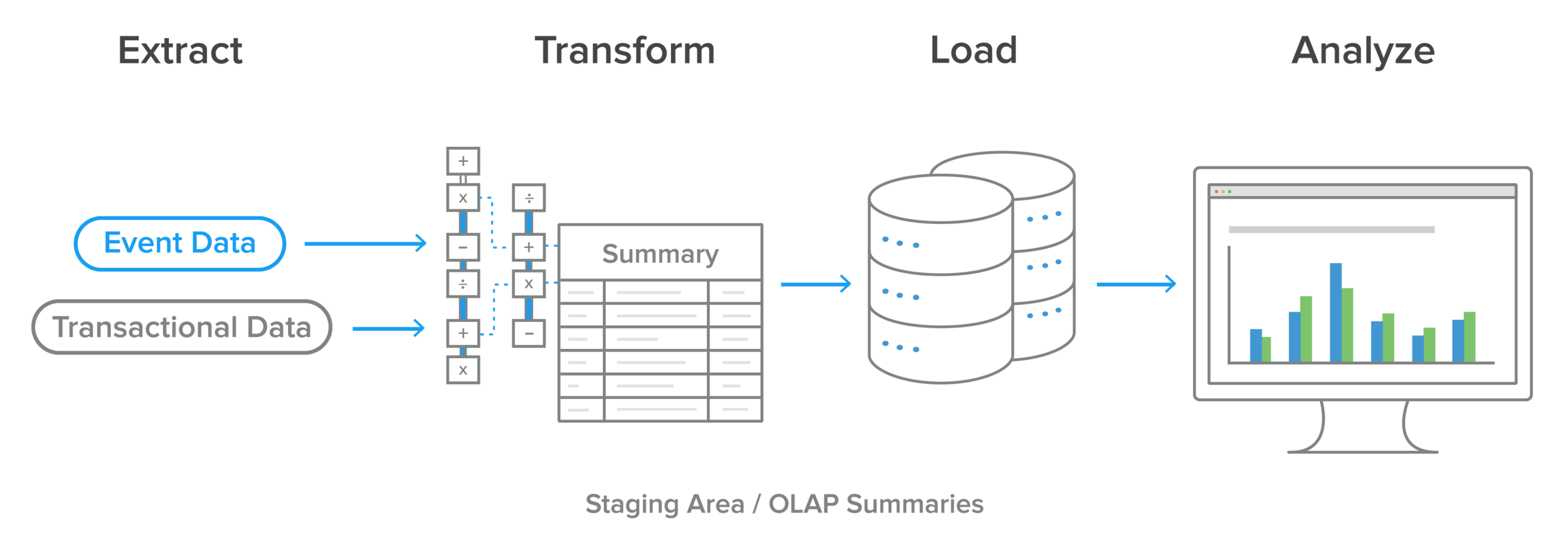
At its core, ETL represents a three-stage architectural pattern designed to consolidate corporate data assets:
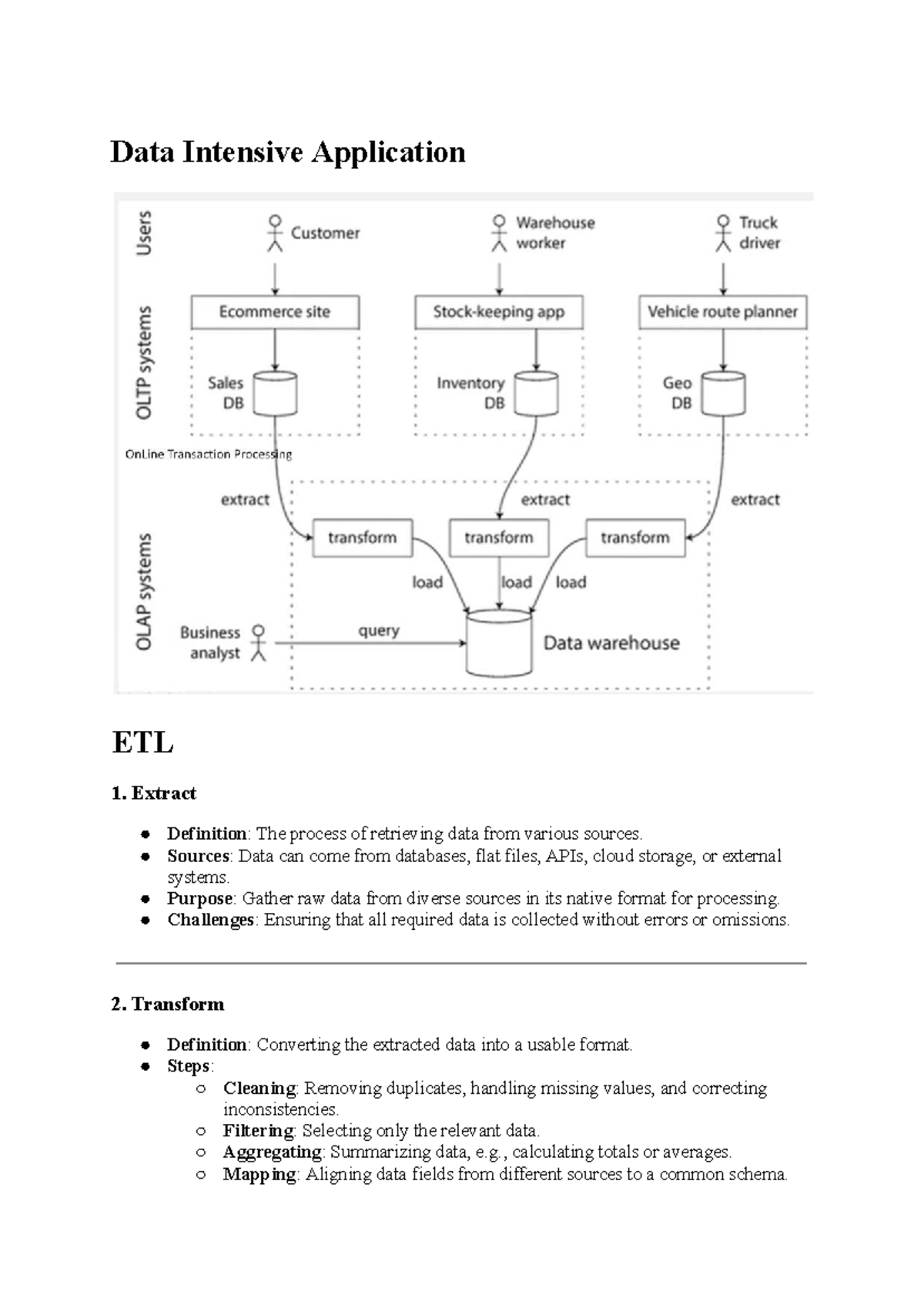
- Extract: The system connects to source environments—such as relational database management systems (RDBMS), customer relationship management (CRM) tools, and enterprise resource planning (ERP) platforms—to retrieve raw records. Extraction can occur via full snapshots or incremental delta loads that capture only recently modified or added rows.
- Transform: The extracted records undergo a series of programmatic alterations to ensure data quality, consistency, and structural alignment. Transformations include deduplication, data type conversion, null-value replacement, string formatting, masking sensitive personally identifiable information (PII), and executing complex business logic joins.
- Load: The finalized, structured datasets are written into a destination environment optimized for analytical querying, such as cloud data warehouses, operational data stores, or data lakes. Loading mechanisms can employ full overwrites or append-only strategies depending on analytical requirements.
The Evolution from Custom Scripts to Modern Platforms
Historically, engineering teams relied on custom-written Python, Bash, or SQL scripts orchestrated via cron jobs to move information between systems. While flexible, these custom codebases introduced severe maintenance burdens. When a SaaS vendor changed an API endpoint, or a source database schema evolved, the custom integration script broke, requiring manual intervention from senior software engineers.
Modern ETL platforms abstract away underlying API complexities, connection management, and error handling. They provide graphical user interfaces (GUIs), declarative configuration files, pre-built connectors, and automated retry mechanisms. This shift allows data engineers to focus on architectural data modeling and governance rather than writing repetitive boilerplate connection code.
Core Architectural Components of Enterprise ETL Tools
To evaluate any ETL platform effectively, technical decision-makers must examine the underlying architecture and capabilities across the complete data lifecycle. Modern data stacks have also popularized ELT (Extract, Load, Transform), where transformation occurs after loading into a cloud data warehouse, leveraging the elastic compute power of platforms like Snowflake, Google BigQuery, or Amazon Redshift. Many modern tools support both paradigms.
Connectivity and Extraction Engines
An integration platform is only as valuable as its connectivity layer. Enterprise environments require robust connectors capable of handling diverse protocols and authentication standards:
- Database Connectors: Native drivers for PostgreSQL, MySQL, Microsoft SQL Server, Oracle, and DB2 supporting Change Data Capture (CDC) via transaction log mining.
- SaaS API Connectors: Pre-built integrations for marketing automation platforms, financial software, and HR systems that handle rate limiting, pagination, and token refreshes automatically.
- File and Stream Connectors: Capabilities to ingest unstructured or semi-structured streams like CSV, JSON, Parquet, Avro, and Apache Kafka real-time event logs.
Transformation and Processing Paradigms
Transformation capabilities dictate how complex an organization's business logic can become before reaching the target warehouse. Tools generally fall into two processing categories:
- Batch Processing: Designed for high-volume, scheduled batch updates occurring hourly, nightly, or weekly. This approach suits historical reporting and bulk financial consolidation.
- Real-Time / Stream Processing: Designed for continuous event ingestion and low-latency processing, critical for fraud detection, user personalization, and operational monitoring.
Orchestration, Monitoring, and Governance
A production data pipeline requires stringent operational oversight. Enterprise solutions incorporate workflow orchestration engines or integrate directly with standards like Apache Airflow. Key operational features include:
- Dependency Management: Defining directed acyclic graphs (DAGs) so downstream tasks execute only after parent extraction and transformation steps complete successfully.
- Alerting and Logging: Automated notifications sent via Slack, PagerDuty, or email upon job failures, timeouts, or data quality threshold violations.
- Lineage Tracking: Visual documentation tracing a data point from its original source through every transformation step to its final destination table.
Comparison of Popular ETL and ELT Tool Categories
The modern data ecosystem features diverse software solutions tailored to different organizational needs, technical skill sets, and infrastructure budgets. Understanding these categories helps technical buyers narrow their selection process.
| Tool Category | Primary Characteristics | Target User | Typical Pricing Model |
|---|---|---|---|
| Cloud-Native ELT | SaaS-managed, zero-maintenance, rapid connector setup, warehouse-centric transformations. | Data Analysts, Analytics Engineers | Consumption-based (monthly active rows or data volume) |
| Traditional Enterprise ETL | On-premise or hybrid deployment, extensive visual drag-and-drop transformations, heavy enterprise governance. | Enterprise Data Engineers, IT Specialists | Core-based licensing, annual software contracts |
| Open-Source Frameworks | Highly customizable, code-first development, active community support, self-hosted infrastructure. | Software Engineers, Data Engineers | Free software (community); paid enterprise tiers for support |
Cloud-Native ELT Platforms
Cloud-native solutions prioritize rapid onboarding and minimal maintenance. These platforms extract data from source APIs and load it directly into cloud data warehouses without requiring external transformation servers. Data transformation is subsequently handled inside the warehouse using tools like dbt (data build tool).
Traditional Enterprise ETL Suites
Legacy and enterprise-grade platforms offer comprehensive visual development environments designed for complex corporate ecosystems. These tools handle mainframe integration, legacy flat files, and stringent compliance requirements out of the box. They often require dedicated infrastructure administrators to manage clusters, memory allocation, and software upgrades.
Open-Source Integration Frameworks
Open-source projects provide complete code-level control over data pipelines. Engineering teams write or configure pipelines using YAML or Python, maintaining absolute ownership over data security, storage, and execution environments. While software licensing fees are zero, organizations must invest internal engineering hours into infrastructure hosting, scaling, and maintenance.
Key Selection Criteria for Choosing an ETL Tool
Selecting the correct integration platform requires balancing technical requirements against organizational resources and long-term data strategy. Decision-makers should evaluate candidates across several distinct dimensions.
1. Source and Destination Compatibility
Audit your existing infrastructure and anticipated future tools. If your organization relies heavily on niche industry databases or custom internal APIs, verify whether the platform offers an SDK for custom connector development or if it relies entirely on a pre-built connector catalog.
2. Total Cost of Ownership (TCO)
Evaluating cost requires looking beyond initial software licensing fees. Consider:
- Infrastructure Costs: Compute and storage required to run self-hosted engines versus managed SaaS fees.
- Engineering Labor: Time spent building and maintaining custom connectors versus configuring pre-built components.
- Data Volume Pricing: Whether consumption models charge by total gigabytes processed or monthly active rows (MAR), and how costs scale during historical backfills.
3. Security, Compliance, and Data Privacy
Data pipelines frequently transport sensitive financial records, health information, and PII. Ensure the platform complies with relevant regulatory frameworks—such as GDPR, HIPAA, SOC 2 Type II, and ISO/IEC 27001. Evaluate whether data is encrypted in transit and at rest, and whether the tool supports on-premise execution for air-gapped or highly regulated environments.
4. Usability and Team Skill Sets
Assess the technical capabilities of your team. A drag-and-drop visual interface empowers less technical data analysts to build pipelines, whereas code-first frameworks like Python-based libraries appeal primarily to software engineers. Choosing a tool misaligned with your team's core competencies leads to adoption bottlenecks and architectural debt.
Common Operational Challenges and Troubleshooting
Implementing automated data pipelines introduces operational failure modes that engineering teams must anticipate and mitigate.
Handling Schema Drift
Schema drift occurs when a source system alters its data structure—such as adding a new column, renaming an existing field, or changing a data type from integer to string. Unhandled schema drift causes ingestion jobs to fail or corrupt downstream analytical tables.
- Mitigation: Choose tools that offer automatic schema evolution features, which proactively update destination table definitions when source changes occur, combined with alerting policies to notify engineers of structural modifications.
Managing API Rate Limits and Pagination
SaaS applications enforce strict rate limits to prevent resource exhaustion. Ingesting large historical datasets can quickly exhaust these allowances, causing extraction jobs to stall or fail.
- Mitigation: Implement exponential backoff retry logic, incremental extraction strategies, and parallelized request threading where supported by the source API.
Pipeline Monitoring and Data Quality Assurance
Silent failures—where a pipeline executes successfully but loads corrupted, zero-value, or duplicate data—pose severe risks to business intelligence.
- Mitigation: Integrate automated data quality testing frameworks (such as Great Expectations or built-in warehouse assertions) that validate row counts, null thresholds, and uniqueness constraints immediately after the load phase completes.
Frequently Asked Questions
What is the difference between ETL and ELT?
ETL (Extract, Transform, Load) transforms data before loading it into the target destination, requiring a dedicated processing server. ELT (Extract, Load, Transform) loads raw data directly into a cloud data warehouse first and utilizes the warehouse's elastic compute engine to execute transformations, offering greater scalability and speed for large datasets.
How do I know if my organization needs an enterprise ETL tool?
You likely need an enterprise ETL tool if your team spends more time maintaining broken custom scripts than analyzing data, if you are integrating dozens of disparate SaaS and database sources, or if compliance and data governance requirements mandate strict lineage tracking and secure encryption standards.
Are open-source ETL tools truly free?
While open-source ETL frameworks do not charge software licensing fees, they are not free to operate. Organizations incur hidden costs associated with cloud infrastructure hosting, server management, monitoring tools, and engineering hours required to maintain, scale, and troubleshoot self-hosted pipelines.
How do modern ETL tools handle real-time streaming data?
Modern streaming-capable tools utilize Change Data Capture (CDC) to monitor database transaction logs or connect to event streaming platforms like Apache Kafka. They capture row-level inserts, updates, and deletes as they occur, pushing them to target warehouses with minimal latency rather than waiting for scheduled batch windows.
What factors drive up the cost of cloud-based ETL tools?
Cloud ETL pricing is typically driven by data volume. High-frequency ingestion schedules, large historical backfills, schema drift handling that triggers full table rescans, and high monthly active row (MAR) counts across numerous SaaS connectors will rapidly increase monthly consumption bills.
Conclusion and Next Actions
Selecting and deploying an ETL tool is a foundational step in establishing a reliable, scalable data architecture. Begin by conducting a thorough audit of your organization's data sources, target warehouses, and analytical use cases. Map out your security and compliance constraints, calculate projected data volumes, and test shortlisted platforms using proof-of-concept projects with representative sample data before committing to long-term enterprise contracts.
Image Gallery