The Rise of Blockchain in IoT Networks: Security, Sovereignty, and Scalability
The integration of blockchain into Internet of Things (IoT) networks transforms how connected devices manage data integrity, device authentication, and automated transactions. By replacing centralized server dependencies with decentral...
The integration of blockchain into Internet of Things (IoT) networks transforms how connected devices manage data integrity, device authentication, and automated transactions. By replacing centralized server dependencies with decentralized distributed ledgers, blockchain technology provides a verifiable, immutable record of device interactions, effectively mitigating risks associated with single points of failure and unauthorized data tampering in massive-scale deployments.
Contents
The Convergence of Decentralization and Connectivity
The rapid expansion of IoT—encompassing everything from smart city infrastructure to industrial telemetry—has created significant security and operational challenges. Traditional IoT architectures rely on a client-server model where a central cloud server manages data collection and device control. While effective for initial scaling, this model creates an attractive target for cyberattacks, as compromising the central server can grant an adversary control over thousands of devices.
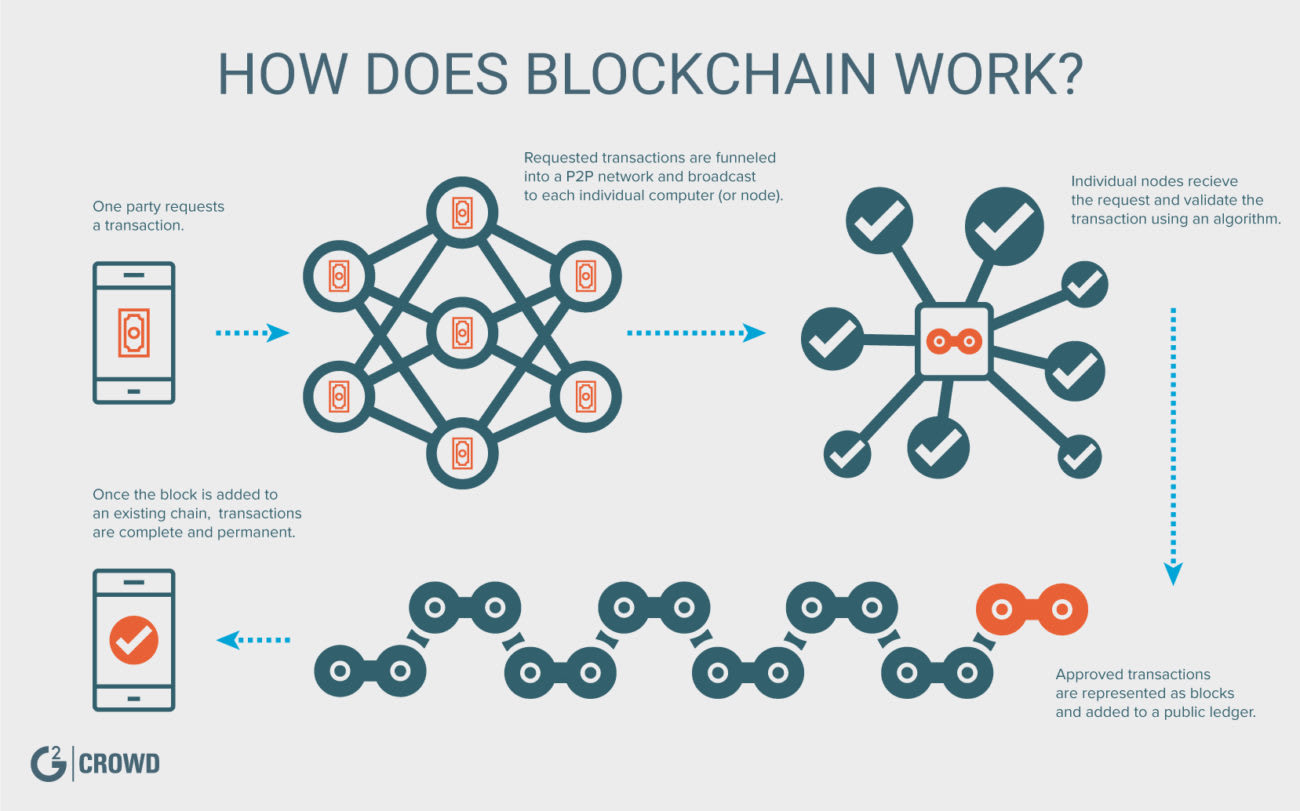
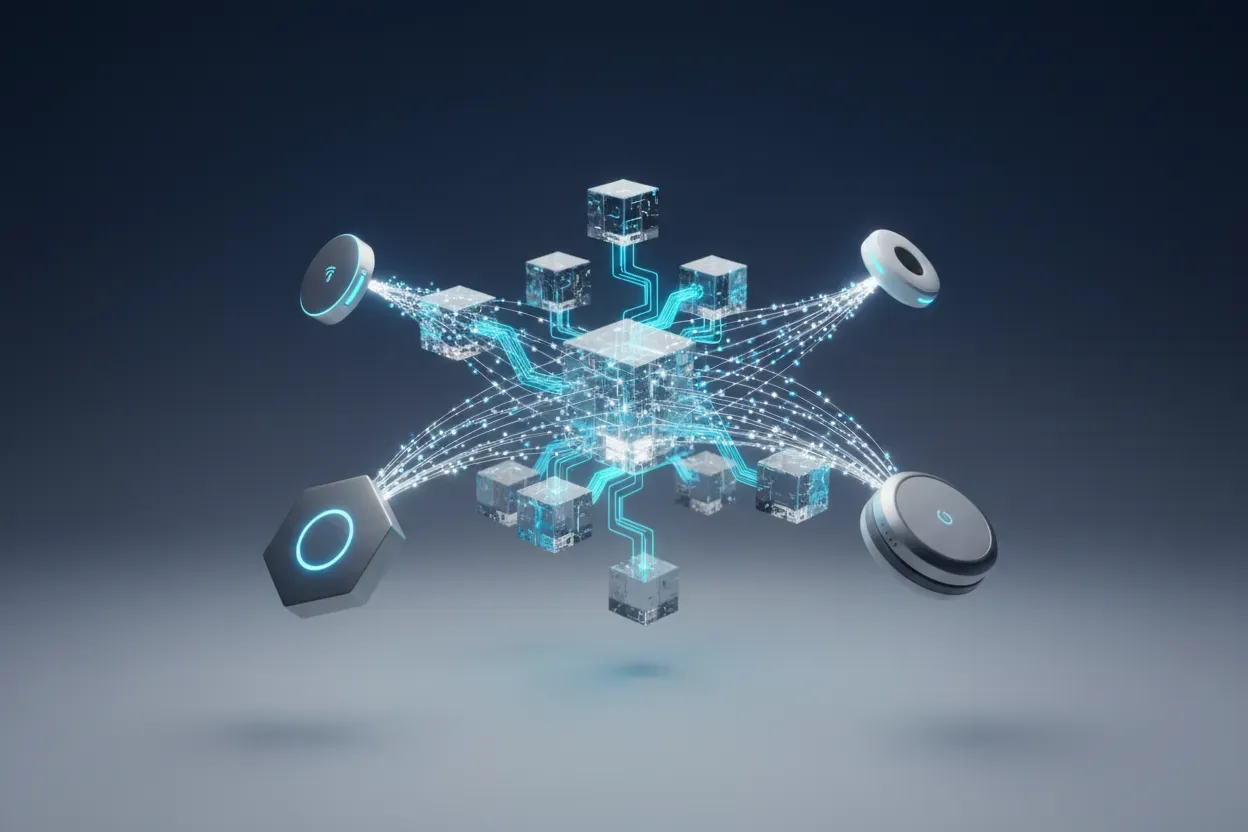
The rise of blockchain in IoT networks addresses these structural vulnerabilities through distributed ledger technology (DLT). In this framework, every device or group of devices acts as a node within a network. Transactions, including data logs, firmware updates, and command execution, are recorded on a shared ledger. Once a record is cryptographically confirmed by the consensus mechanism, it becomes nearly impossible to retroactively alter. This provides a "source of truth" that does not require total trust in a single manufacturer or cloud service provider.
Core Architectural Benefits
Integrating blockchain into IoT is not merely about adding a database; it is about shifting the trust model from human-managed central entities to mathematically verified, autonomous protocols.
Immutable Data Integrity
In industrial IoT (IIoT), such as supply chain tracking or energy grid monitoring, the accuracy of data is paramount. Blockchain ensures that sensor readings—whether temperature, pressure, or location—are time-stamped and stored immutably. If a sensor reports a violation, that report cannot be deleted or manipulated to hide operational errors or safety hazards.
Decentralized Device Authentication
In conventional IoT setups, managing digital identities for millions of devices is a logistical nightmare involving complex Public Key Infrastructure (PKI) managed by centralized Certificate Authorities. Blockchain enables Self-Sovereign Identity (SSI) for devices. Each IoT device can generate its own cryptographic keys and anchor its identity on the blockchain. This removes the need for a central registry and enables devices to securely interact and perform peer-to-peer (P2P) authentication without constant cloud relay.
Automated Logic with Smart Contracts
Smart contracts—self-executing code stored on the blockchain—allow IoT networks to automate complex workflows. For example, in a logistics scenario, a smart contract could be programmed to trigger a payment automatically once a sensor-equipped container confirms it has reached a specific destination and maintained a safe temperature throughout the journey. This eliminates administrative overhead and reduces the potential for human error in supply chain management.
Technical Implementation Considerations
Deploying blockchain in an IoT environment requires navigating the constraints of edge hardware. Many IoT devices possess limited processing power, memory, and battery capacity, making the full execution of resource-heavy chains like standard Ethereum or Bitcoin impractical.
Table 1: Comparison of Consensus Mechanisms for IoT
| Mechanism | Resource Intensity | Security Level | Scalability | Primary Use Case |
|---|---|---|---|---|
| Proof of Work | High | Very High | Low | Rare in IoT; requires too much energy. |
| Proof of Stake | Low | Moderate | Moderate | Enterprise IoT platforms. |
| Directed Acyclic Graph (DAG) | Very Low | High | Very High | Micropayments and high-frequency sensor data. |
| Proof of Authority | Minimal | Moderate | High | Private, consortium-based industrial networks. |
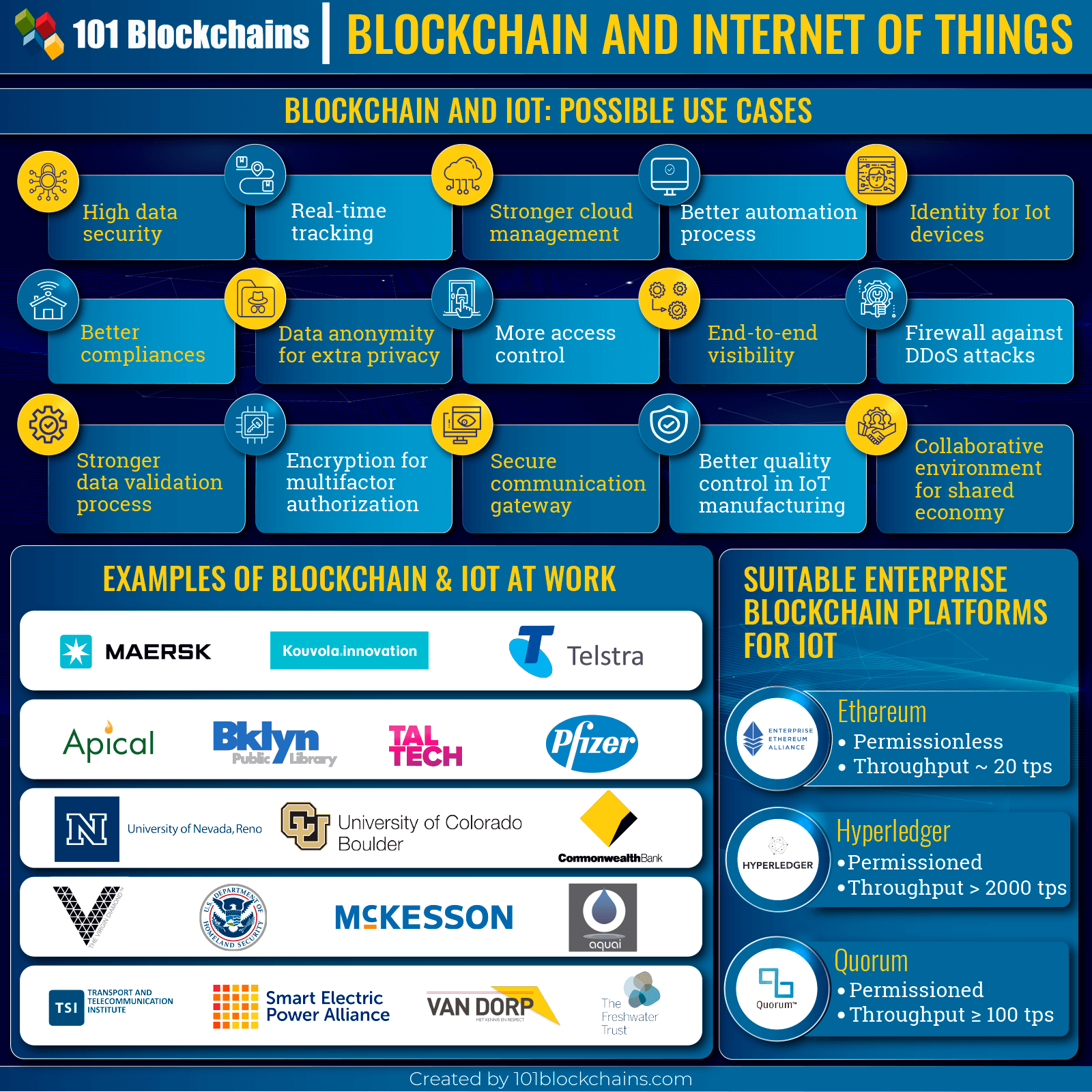
To overcome resource limitations, developers often look toward Directed Acyclic Graphs (DAGs), such as the IOTA Tangle, or permissioned enterprise frameworks like Hyperledger Fabric. These alternatives prioritize lightweight transactions and high throughput, which are essential for networks consisting of thousands of lightweight sensors.
Operational Hurdles and Mitigations
Despite the promise, the rise of blockchain in IoT faces significant hurdles that must be addressed during the design phase.
Scaling and Throughput
IoT networks often generate massive amounts of telemetry data every second. Standard blockchain designs often struggle with throughput, leading to network congestion. To mitigate this, developers frequently use "off-chain" aggregation techniques, where raw sensor data is stored in localized storage, and only the cryptographic hash of that data is uploaded to the blockchain at periodic intervals.
Interoperability
With various blockchain protocols and IoT ecosystems currently in operation, interoperability remains a challenge. If a device on a private supply chain ledger cannot communicate with a public ledger used for international shipping, the efficiency benefits are diminished. Standardizing communication protocols via initiatives like the Trusted IoT Alliance (though now largely integrated into broader DLT ecosystems) remains a critical focus for developers in 2026.
Firmware and Physical Security
Blockchain ensures that the data recorded is authentic, but it does not fix a compromised physical device. If a sensor is physically tampered with or its firmware is infected with malware before it records data, the blockchain will faithfully record the fraudulent or corrupted data. This confirms that blockchain must be used as one layer of a multi-faceted security strategy, rather than a silver bullet. Hardware security modules (HSMs) and secure enclaves must remain part of the device architecture.
Future Outlook and Strategic Adoption
As of 2026, the rise of blockchain in IoT is moving from experimental proofs-of-concept to robust, production-grade deployments in critical infrastructure. The focus is shifting toward "Energy-Efficient Decentralization," where the overhead of maintaining the ledger is minimized to ensure that it does not shorten the lifespan of battery-operated edge devices.
For organizations looking to integrate these technologies, the strategy should involve:
- Pilot identification: Start with high-value tracking or authentication tasks where data integrity is the primary pain point.
- Infrastructure evaluation: Assess whether a public, permissionless chain or a private, permissioned consortium ledger best fits the privacy requirements of the deployment.
- Hybrid approach: Utilize a hybrid model where local edge processing handles high-frequency data, and the blockchain handles only critical milestones, device identity, and transaction settlements.
Frequently Asked Questions
Does blockchain solve all security issues in IoT?
No. Blockchain is highly effective at ensuring data integrity and securing device communication, but it does not address physical hardware vulnerabilities or software bugs within the IoT device itself. It must be paired with robust encryption, secure boot processes, and traditional network firewalls.
How do I choose between a public and private blockchain for IoT?
Public chains offer maximum decentralization and transparency but often come with higher transaction costs and lower speeds. Private or permissioned chains (like Hyperledger) offer higher throughput and strict access control, which is often preferred for industrial supply chains and internal corporate IoT networks.
What is the biggest limitation of blockchain in IoT today?
The primary limitation is the trade-off between resource constraints and network performance. Balancing the need for cryptographic security with the limited CPU and battery power of typical sensors requires careful architectural design, often favoring specialized architectures like DAGs over traditional blockchain structures.
Is blockchain necessary for all IoT projects?
No. Blockchain introduces complexity and overhead. It is best suited for scenarios where multiple stakeholders lack mutual trust, where there is a need for an immutable audit trail, or where automated, P2P machine-to-machine payments are required.
How does blockchain impact IoT device latency?
When implemented correctly, blockchain can reduce latency by enabling direct peer-to-peer interactions without needing to route through a central cloud server. However, if the network is congested or the consensus mechanism is too heavy, it can introduce delays.
What is the role of 5G in the rise of blockchain for IoT?
5G provides the high-bandwidth, low-latency connectivity required to facilitate communication between distributed nodes. By providing a stable, high-speed backbone, 5G allows blockchain-enabled devices to sync their state faster, significantly improving the real-time performance of decentralized networks.
Next Steps for Implementers
Begin by auditing your current IoT architecture to identify centralized components that act as points of failure. If you require immutable logs for compliance or audit purposes, investigate lightweight, permissioned DLT frameworks. Prioritize hardware that supports secure elements or Trusted Execution Environments (TEEs) to ensure the data being anchored on the ledger is verified at the source.
Image Gallery