Oregon Workers’ Compensation Impairment Rating: What You Need to Know
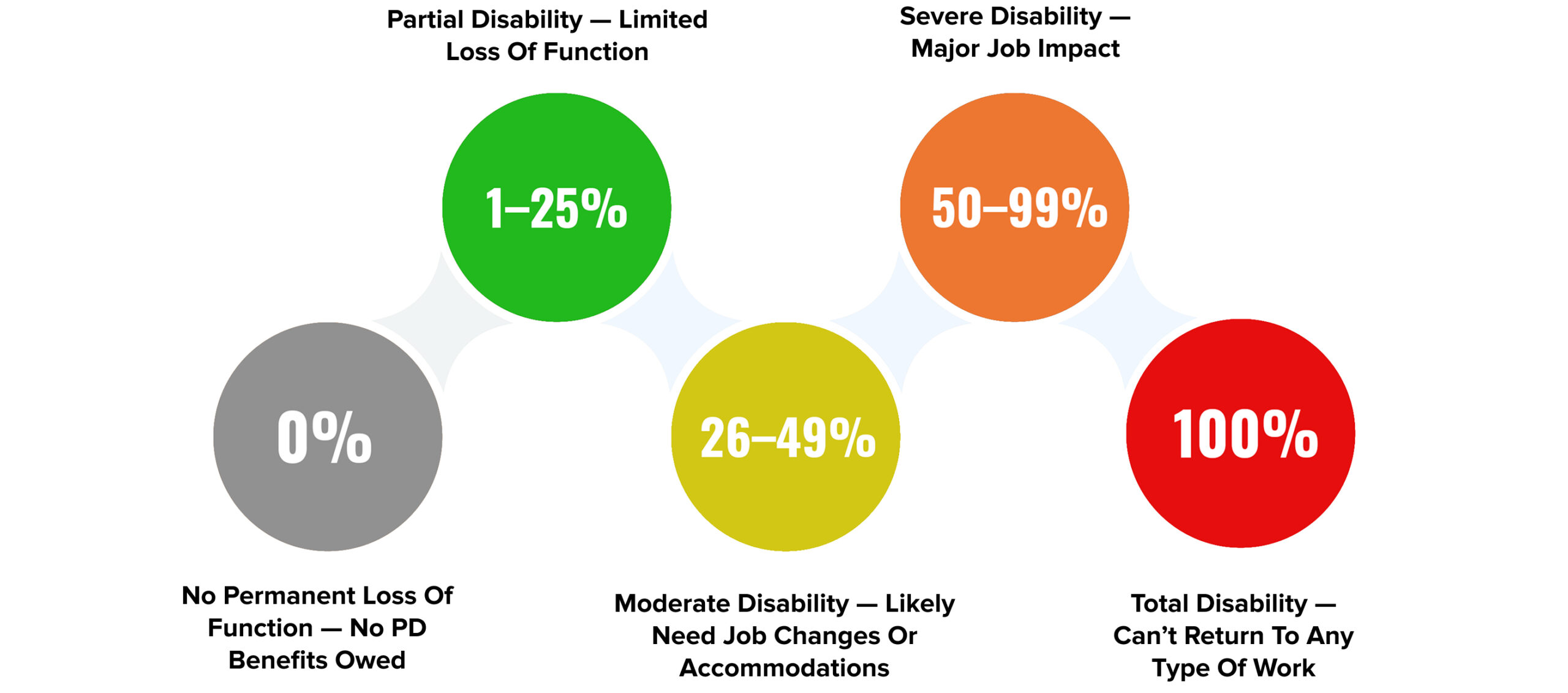
An Oregon workers’ compensation impairment rating is a standardized percentage representing the permanent loss of use or function of a body part or system resulting from a work-related injury. Calculated once a worker is "medically sta...
An Oregon workers’ compensation impairment rating is a standardized percentage representing the permanent loss of use or function of a body part or system resulting from a work-related injury. Calculated once a worker is "medically stationary," this rating determines the financial value of Permanent Partial Disability (PPD) benefits awarded to the injured employee.
Contents
In the Oregon workers’ compensation system, the impairment rating is one of the most critical factors in determining the final settlement or award an injured worker receives. As of 2026, the process remains governed by strict administrative rules designed to provide a consistent framework for evaluating permanent physical and mental limitations. Understanding how these ratings are derived, who performs the evaluation, and how they translate into monetary benefits is essential for any worker navigating a long-term recovery.
The Concept of Medically Stationary Status
Before an impairment rating can even be considered, a worker must reach a point known as being medically stationary. In other jurisdictions, this is often referred to as Maximum Medical Improvement (MMI). According to Oregon Administrative Rules (OAR) 436-030-0005, a worker is medically stationary when no further material improvement is expected from medical treatment or the passage of time.
Reaching this status does not necessarily mean the worker is "cured" or back to their pre-injury state. It simply means that the window for active curative treatment has closed. At this juncture, the attending physician (AP) must determine if the injury has left the worker with any permanent impairment. If the worker has returned to 100% function, they are "medically stationary without permanent impairment." However, if lingering restrictions, loss of range of motion, or chronic pain persist, an impairment rating must be assigned.
The Role of the Attending Physician and the Rating Exam
The attending physician is typically the first person responsible for providing impairment findings. This evaluation is not a standard check-up; it is a formal examination where the doctor measures specific physical deficits.
In Oregon, doctors must follow the standards set forth in the Oregon Workers’ Compensation Division (WCD) Impairment Standards (OAR 436-035). These rules provide detailed instructions on how to measure loss of function for various body parts, including:
- Range of Motion (ROM): Using tools like goniometers to measure exactly how many degrees a joint can move compared to standard norms.
- Strength Testing: Quantifying the loss of muscle power or grip strength.
- Sensory Loss: Mapping areas of numbness or chronic tingling.
- Loss of Body Part: Specific values assigned to the amputation or total loss of use of digits, limbs, or organs.
- Chronic Pain: While Oregon’s system focuses heavily on objective findings, specific rules allow for limited "pain-based" impairment if it significantly impacts functional use.
If the attending physician is not comfortable performing the rating, or if the insurance company wants a second opinion, an Independent Medical Examination (IME) may be scheduled. It is important to note that IME doctors are paid by the insurance carrier, which sometimes leads to lower impairment ratings than those provided by the worker’s own doctor.
How the Impairment Rating is Calculated
Oregon uses a "Whole Person" impairment model for injuries occurring after a certain date, though the calculation can still feel complex. The rating is expressed as a percentage. For example, a 5% whole-person impairment rating for a back injury or a 10% rating for a knee injury.
Scheduled vs. Unscheduled Awards
Historically, Oregon distinguished between "scheduled" injuries (arms, legs, hands, feet) and "unscheduled" injuries (back, neck, head, internal organs). However, current standards have largely unified these under a whole-person percentage. The total number of degrees or the "value" of a 100% whole-person rating is set by the state legislature and updated periodically.
The Conversion Formula
Once the percentage is established, it is converted into a dollar amount based on the State Average Weekly Wage (SAWW) at the time of the injury. The formula essentially multiplies the impairment percentage by a set statutory dollar value. In 2026, these values are adjusted annually to account for inflation and economic shifts, ensuring that the compensation maintains its relative purchasing power.
The Impact of "Work Disability"
In Oregon, an impairment rating is only one half of the Permanent Partial Disability (PPD) equation for many workers. If a worker cannot return to their "regular work" (the job they held at the time of injury) and the employer does not offer suitable alternative employment, the worker may also be entitled to a Work Disability benefit.
Work disability takes the impairment rating and adds factors such as age, education, and transferable skills. For example, a 50-year-old manual laborer with a 5% impairment rating who cannot return to heavy lifting will receive a much higher PPD award than a 25-year-old office worker with the same 5% rating who can return to their desk job.
| Feature | Impairment Rating | Work Disability |
|---|---|---|
| Basis | Purely physical/functional loss. | Physical loss + Vocational factors. |
| Criteria | ROM, strength, objective findings. | Age, education, job history, and impairment. |
| Applicability | All workers with permanent loss. | Only those who can't return to regular work. |
| Measurement | Percentage of the "Whole Person." | Calculated as additional "value" on top of impairment. |
The Notice of Closure (NOC)
The formal document that communicates your impairment rating is the Notice of Closure. When the insurance company receives the "medically stationary" report from the doctor, they have a limited timeframe to issue this notice.
The NOC will list:
- The date you were declared medically stationary.
- The period for which you are owed temporary disability (time loss) payments.
- Your permanent impairment rating.
- The total dollar amount of your PPD award.
Reviewing this document is critical. If the insurance company misses a body part that was injured or uses a lower rating than what your doctor suggested, the NOC is the legal starting point for an appeal.
Challenging a Low Impairment Rating
It is common for workers to feel that their impairment rating does not accurately reflect their level of disability. If you disagree with the Notice of Closure, you have 60 days from the date the notice was mailed to request a Reconsideration from the Oregon Workers' Compensation Division.
During the reconsideration process:
- Medical Arbiter Examination: The state may appoint an independent doctor (a Medical Arbiter) to examine you. This doctor’s findings are often given significant weight and can override previous ratings.
- Legal Representation: Many workers hire an attorney at this stage. In Oregon, workers' compensation attorney fees are generally regulated by statute and are often paid out of the increased settlement amount, meaning there is no out-of-pocket cost to the worker.
- Correcting Errors: Sometimes, the insurer simply calculates the math wrong or fails to include a secondary injury (like depression or a compensatory gait injury). The reconsideration process is designed to fix these administrative and medical discrepancies.
Common Mistakes to Avoid
Navigating the impairment rating process requires precision. One of the most common mistakes is failing to report all symptoms to the rating physician. If you have "good days" and "bad days," you must describe your function on a bad day or an average day. If a doctor only measures your range of motion on a day when you are feeling uncharacteristically flexible, your rating may be lower than what is fair.
Another mistake is missing the 60-day deadline to appeal the Notice of Closure. Once this window closes, it is extremely difficult to reopen the claim or contest the rating, even if new medical evidence emerges.
Finally, workers often assume that their impairment rating is a "settlement" for their entire claim. In reality, a PPD award based on an impairment rating usually leaves the "medical" portion of the claim open. This means the insurer may still be responsible for future prescriptions or prosthetic replacements related to the injury, even after the PPD award is paid out.
FAQ
How long does it take to get an impairment rating after an injury? There is no set timeframe. You must first reach "medically stationary" status. For minor injuries, this could be three months; for complex surgeries or spinal injuries, it could take 12 to 18 months. Only after your condition has stabilized can the rating examination occur.
Can I get a rating for psychological injuries? Yes. Oregon law allows for impairment ratings for mental health conditions, such as PTSD or clinical depression, provided they are caused "primarily" (more than 50%) by work-related stressors or as a direct result of a physical work injury. These are evaluated by psychiatrists or psychologists using specific Oregon impairment standards.
What if my condition gets worse after I receive my rating? If your condition "worsens" after the claim is closed, you may file an Aggravation Claim. This requires medical evidence that your condition has objectively deteriorated. If accepted, the claim reopens for further treatment, and you may eventually receive a new, higher impairment rating.
Does the rating affect my ability to return to work? The rating itself is a measurement of loss, but the underlying physical restrictions determined during the rating exam will dictate your return-to-work status. If your rating reflects a permanent inability to lift more than 20 pounds, your employer must accommodate that restriction or you may be eligible for vocational rehabilitation.
Is the PPD award paid in a lump sum? In Oregon, if the PPD award is below a certain statutory threshold, it is paid in a lump sum. If it is a larger award, it is typically paid in monthly installments equal to the state’s average weekly wage until the balance is paid. However, workers can often request a lump-sum payment of the remaining balance, subject to certain approvals and discounts.
Next Steps and Recommendations
If you are approaching the end of your medical treatment in 2026, start by discussing "medically stationary" status with your attending physician. Ask them if they feel comfortable performing a formal impairment rating or if they intend to refer you to a specialist.
Once you receive your Notice of Closure, compare the impairment rating to your own experience of your limitations. If the rating seems low, or if the "Work Disability" portion was omitted despite your inability to return to your old job, consult with a workers’ compensation attorney immediately. Because the 60-day appeal window is strict, acting quickly is the only way to ensure your compensation accurately reflects the permanent impact of your injury on your life and livelihood.
Image Gallery