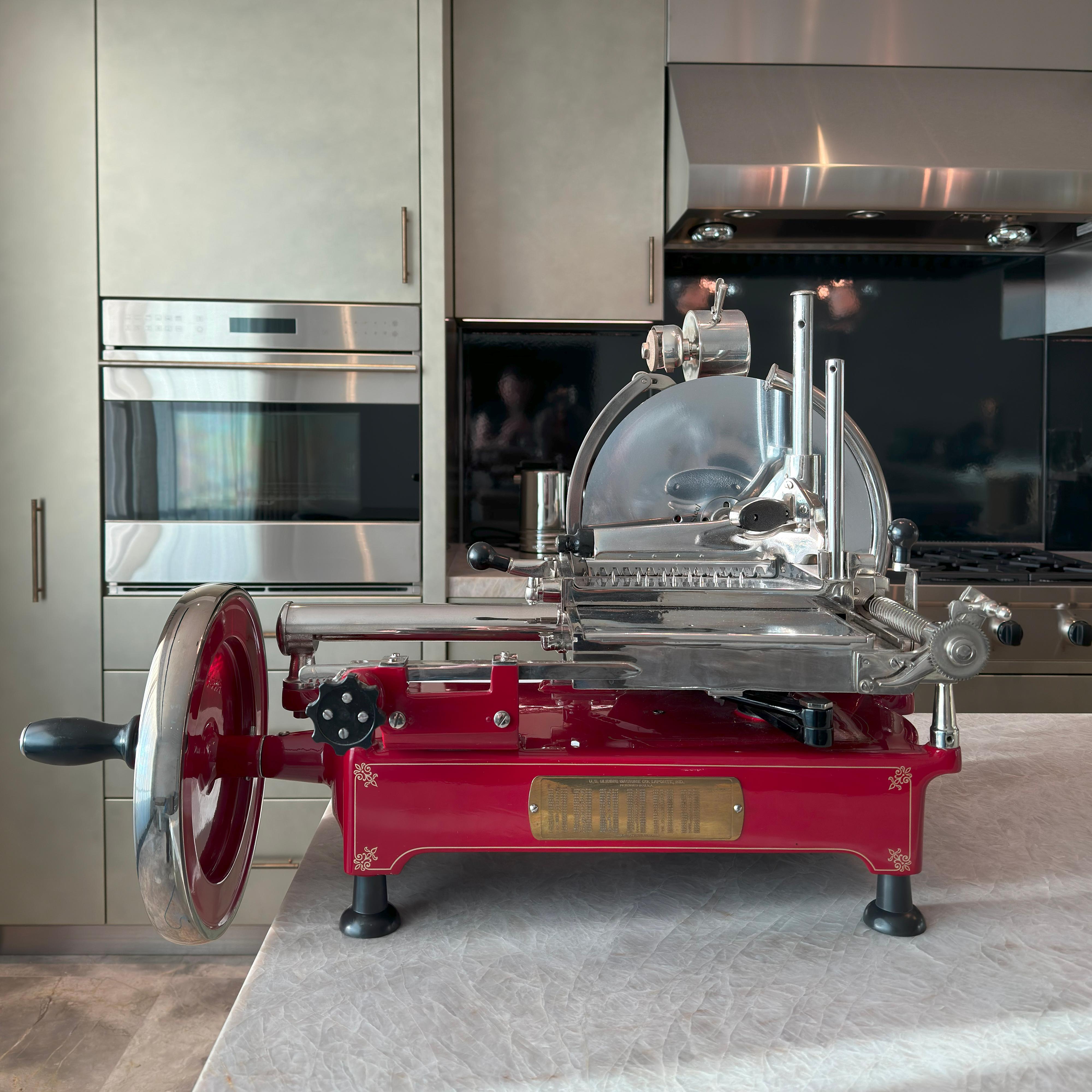
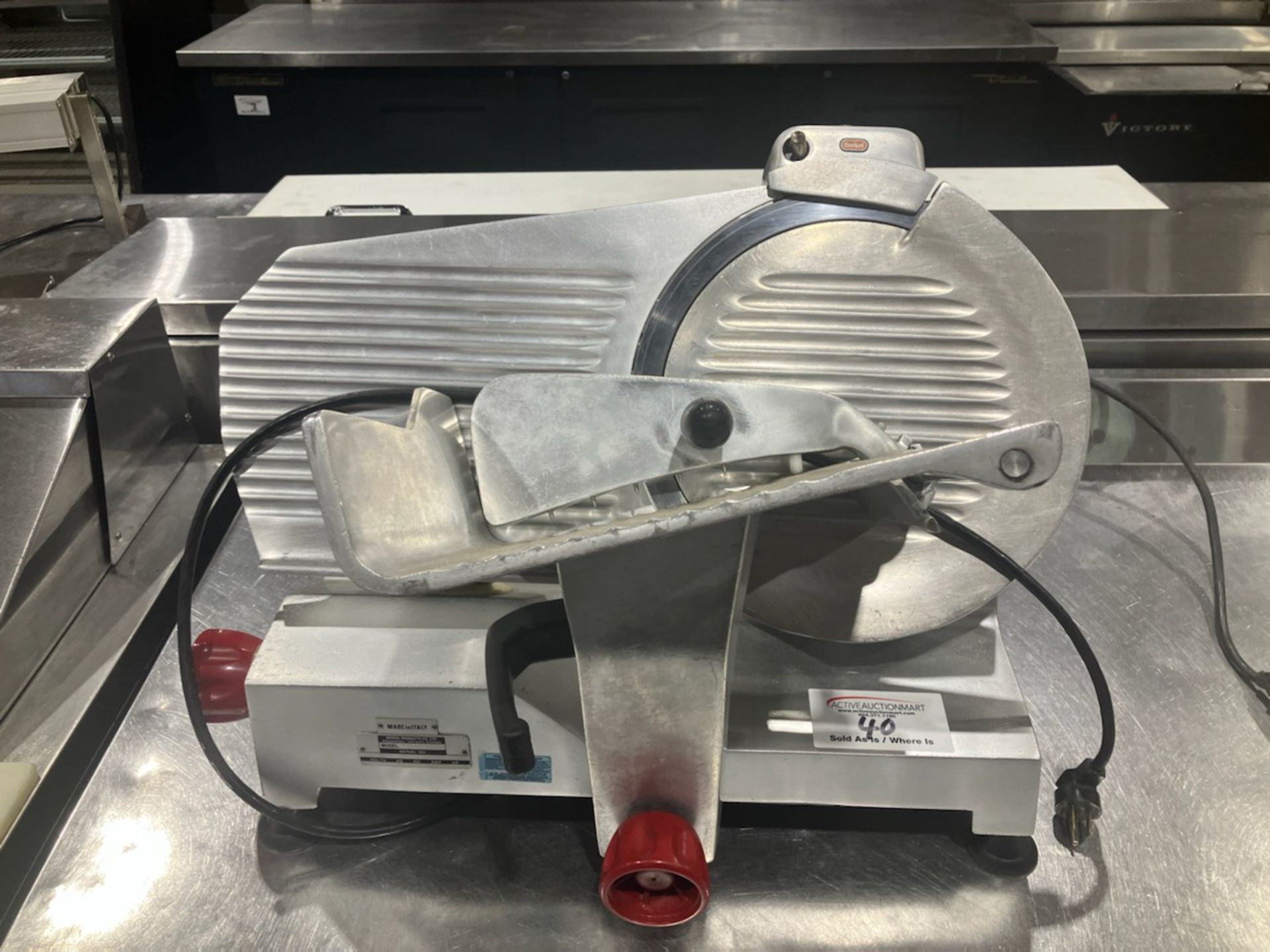
Understanding the Berkel Model 827 Manual Gravity Feed Slicer
The Berkel Model 827 is a professional-grade manual gravity feed slicer featuring a 12-inch blade and a 1/4 HP motor. Designed for light-to-medium-duty commercial use, it specializes in slicing meats and vegetables with precision. Its...
The Berkel Model 827 is a professional-grade manual gravity feed slicer featuring a 12-inch blade and a 1/4 HP motor. Designed for light-to-medium-duty commercial use, it specializes in slicing meats and vegetables with precision. Its compact footprint and anodized aluminum construction make it a staple for small delis, cafes, and restaurants.
Contents
The Role of the Berkel 827 in Commercial Kitchens
The Berkel Model 827, often designated as the 827E (Enhanced), represents a mid-range solution for foodservice operators who require more capacity than an entry-level 10-inch slicer but do not have the volume requirements of a heavy-duty 24-hour deli. Manufactured by Berkel, a company with a history dating back to the invention of the meat slicer by W.A. Van Berkel in 1898, the 827 model balances heritage engineering with modern sanitation standards.
In the 2026 commercial kitchen landscape, efficiency and space management are paramount. The 827 addresses these needs by offering a gravity-feed design. This means the product table is set at a 45-degree angle, allowing the weight of the meat or cheese to assist the feeding process. This reduces operator fatigue during busy lunch rushes and ensures consistent slice thickness from the beginning to the end of the product.
While Berkel produces various tiers of equipment, the 800 series—to which the 827 belongs—is specifically engineered for businesses that slice for approximately two to four hours per day. It is not intended for heavy cheese slicing (which requires higher torque and specialized blades) or continuous high-volume production, but for standard sandwich prep, it remains one of the most reliable units in its class.
Technical Specifications and Engineering
The Berkel 827 is defined by its materials and its motor capabilities. Understanding these technical nuances is essential for operators looking to maximize the lifespan of their equipment.
Blade and Cutting Capacity
The heart of the 827 is its 12-inch (300 mm) carbon steel knife. This blade is hollow-ground and chromium-plated to provide a sharp, durable edge that resists corrosion. A 12-inch blade is a significant upgrade over 9-inch or 10-inch models because it increases the "swing" or the maximum size of the product that can be sliced. The 827 can typically handle products up to 10.75 inches wide by 7.625 inches high, or round products up to 8.25 inches in diameter.
Power and Transmission
The unit is powered by a 1/4 HP, single-phase motor that is permanently lubricated. In a manual slicer, the motor's primary job is to spin the blade at a constant RPM while the operator moves the carriage. The 827 utilizes a poly-V belt drive system. Belt drives are generally quieter than gear-driven slicers and provide enough vibration dampening to ensure a smooth cut, though they do require occasional tension adjustments over years of use.
Construction and Footprint
Berkel utilizes anodized aluminum for the body of the 827. Anodization is an electrochemical process that converts the metal surface into a decorative, durable, corrosion-resistant, anodic oxide finish. This is critical for food safety, as it prevents the aluminum from reacting with acidic foods (like tomatoes or onions) and makes the surface non-porous and easy to sanitize.
| Feature | Specification |
|---|---|
| Blade Diameter | 12 Inches (300 mm) |
| Motor Power | 1/4 HP, 115V, 60 Hz, 2.5 Amps |
| Slice Thickness | Up to 9/16 inch (14 mm) |
| Product Dimensions (Max) | 10.75" Width x 7.625" Height |
| Drive System | Poly-V Belt Drive |
| Housing Material | Anodized Aluminum |
| Weight | Approximately 54 lbs (24 kg) |
| Safety Certification | NSF/ANSI 8 and UL listed |
Operational Advantages: Why Choose the 827?
For many business owners, the Berkel 827 is chosen for its specific operational profile. It occupies a "sweet spot" in terms of cost-to-performance ratio.
Ergonomic Design
The 45-degree gravity feed is not just about physics; it is about ergonomics. By allowing the product to slide naturally toward the blade, the operator applies less manual pressure. This design minimizes the risk of repetitive strain injuries, which are common in high-volume slicing environments. The meat pusher (or "last slice" device) is also designed with teeth that grip the product firmly, ensuring that even the end pieces of a ham or turkey breast are sliced accurately without slipping.
Integrated Sharpening System
One of the standout features of the 827 is the built-in, top-mounted dual-stone sharpener. Unlike cheaper models where the sharpener might be a separate tool that can be lost, the Berkel sharpener is always attached. It uses a "two-stone" system: one stone to sharpen the edge and a second stone to remove the burr (the small flap of metal created by sharpening). This ensures the blade remains razor-sharp, which is vital for preventing "shredding" of delicate meats.
Precision Control
The thickness control knob on the 827 allows for infinite adjustments from tissue-thin (paper-thin for premium deli presentation) up to 9/16 of an inch. The index knob is calibrated for repeatability, meaning an operator can return to the exact same setting every morning to ensure portion control consistency across different shifts.
Sanitation and Maintenance Protocols
In 2026, health inspections have become increasingly stringent regarding "harborage points" where bacteria like Listeria can grow. The Berkel 827 is designed to be disassembled quickly without the need for specialized tools, facilitating deep cleaning.
Daily Cleaning Steps
The 827 features a removable carriage arm and a removable meat pusher. Operators should follow these general steps daily:
- Set thickness to zero: This ensures the blade edge is protected by the gauge plate.
- Unplug the unit: Never clean a slicer while it is connected to power.
- Remove components: Take off the slice deflector, the center plate, and the product table.
- Wash and Sanitize: These parts should be cleaned in a three-compartment sink using a food-grade detergent and sanitizer.
- Clean the Blade: Using a long-handled brush and cut-resistant gloves, wipe the blade from the center outward to avoid the sharp edge.
Long-term Maintenance
Beyond daily cleaning, the 827 requires periodic lubrication of the slide rod. Use only food-grade lubricant (H1 rated). Mineral oil or generic lubricants can gum up the works or, worse, contaminate the food. The belt tension should be checked annually, especially if the operator notices a "slipping" sound or a loss of torque when slicing dense products like aged salami.
Safety Features and Compliance
The Berkel 827 is built with several layers of protection to satisfy OSHA and local health department requirements.
- Permanent Ring Guard: This is a metal guard that covers the non-cutting portion of the knife even when the center plate is removed for cleaning. This significantly reduces the risk of accidental cuts during maintenance.
- No-Volt Release: This safety feature prevents the slicer from automatically restarting if the power is interrupted and then restored. The operator must manually press the "on" button again.
- Moisture-Protected Switch: The power buttons are sealed to prevent liquids from entering the electrical housing, which is a common cause of short-circuits in kitchen environments.
- Knife Cover Interlock: On modern versions of the 827, the unit will not operate if the blade cover is not properly secured in place.
Comparison: Berkel 827 vs. 825 and 829
Choosing between models in the Berkel 800 series depends on your specific product volume.
- Berkel 825: This is the smaller sibling of the 827. It features a 10-inch blade. While it has the same 1/4 HP motor, its smaller blade diameter limits the size of the roasts or cheese blocks you can slice. It is ideal for very small cafes or "low-volume" sandwich shops.
- Berkel 827: The 12-inch blade provides better versatility for standard deli meats (turkey, ham, roast beef) and allows for a slightly larger cutting capacity.
- Berkel 829: This model typically features a 14-inch blade and often a more powerful motor (1/2 HP). It is designed for businesses moving toward "medium-to-heavy" duty use where larger cuts of meat are the norm.
Common Troubleshooting for the Berkel 827
Even with high-quality engineering, mechanical issues can arise. Identifying them early can prevent costly repairs.
- Ragged Slices: This is usually a sign that the blade is dull or the sharpening stones are glazed with fat. Clean the sharpening stones with alcohol and resharpen the blade.
- Motor Hums but Blade Doesn't Spin: This often indicates a snapped drive belt or a seized bearing. Given the poly-V belt design, check for belt debris inside the housing.
- Carriage is Hard to Push: This is almost always due to a lack of lubrication on the slide rod. Clean the rod thoroughly of old grease and apply a fresh coat of food-grade lubricant.
- Unit Vibrates Excessively: Check if the slicer is sitting on a level surface. If it is, the blade may be out of balance due to improper sharpening or physical damage (like a nick from dropping a tool on it).
FAQs About the Berkel Model 827
Can the Berkel 827 slice cheese? The Berkel 827 can slice cheese, but it is limited to occasional use (less than 30 minutes per day). Cheese creates significant friction and "drag" on the blade and motor. For heavy cheese slicing, a gear-driven slicer or a unit with a higher horsepower motor and a Teflon-coated blade is recommended to prevent motor burnout.
What is the difference between the 827 and the 827-A? The "A" often refers to automatic models in many slicer lines, but for the 827 series, variations usually relate to the "E" (Enhanced) or "A" (Legacy) versions. The 827E is the modern standard with updated safety switches and improved anodization compared to legacy versions from several decades ago.
How often should I sharpen the blade? Sharpening frequency depends on usage. For average deli use, sharpening once a day or every other day is standard. However, you should only sharpen for a few seconds. Over-sharpening wears down the blade diameter prematurely, eventually requiring an expensive blade replacement.
Does the Berkel 827 require a special electrical outlet? No. The Berkel 827 is designed to operate on a standard 115V, 60 Hz, single-phase 15-amp circuit. It comes with a standard NEMA 5-15P three-prong plug, making it "plug-and-play" for most North American kitchens.
Where can I find replacement parts for an 827? Because the 827 is such a popular model, parts like sharpening stones, belts, and blades are widely available through commercial kitchen equipment suppliers and authorized Berkel service agencies. Always use OEM (Original Equipment Manufacturer) parts to ensure safety compliance and machine longevity.
Final Recommendation for Operators
The Berkel Model 827 remains a premier choice for small-to-medium-sized foodservice operations in 2026. Its 12-inch blade offers the versatility needed to handle a variety of menu items, while its compact design ensures it doesn't dominate valuable prep space. If your business requires slicing for more than four hours a day or involves heavy blocks of hard cheese, you should consider stepping up to the Berkel 900 series. However, for the average sandwich shop, bistro, or independent grocer, the 827 provides the perfect balance of durability, precision, and ease of maintenance. When purchasing, ensure you are buying the NSF-certified version to guarantee compliance with modern health and safety regulations.
Image Gallery