Why the "Because I could not stop for Death" PDF Matters for You
A high-quality PDF of Emily Dickinson’s "Because I could not stop for Death" is vital because it preserves the author’s unique punctuation and capitalization—elements essential for accurate literary interpretation. It provides a portab...
A high-quality PDF of Emily Dickinson’s "Because I could not stop for Death" is vital because it preserves the author’s unique punctuation and capitalization—elements essential for accurate literary interpretation. It provides a portable, annotatable, and scholarly-reliable version for students and researchers seeking the structural integrity of the original 19th-century manuscript.
Contents
The Enduring Significance of Dickinson’s Masterpiece
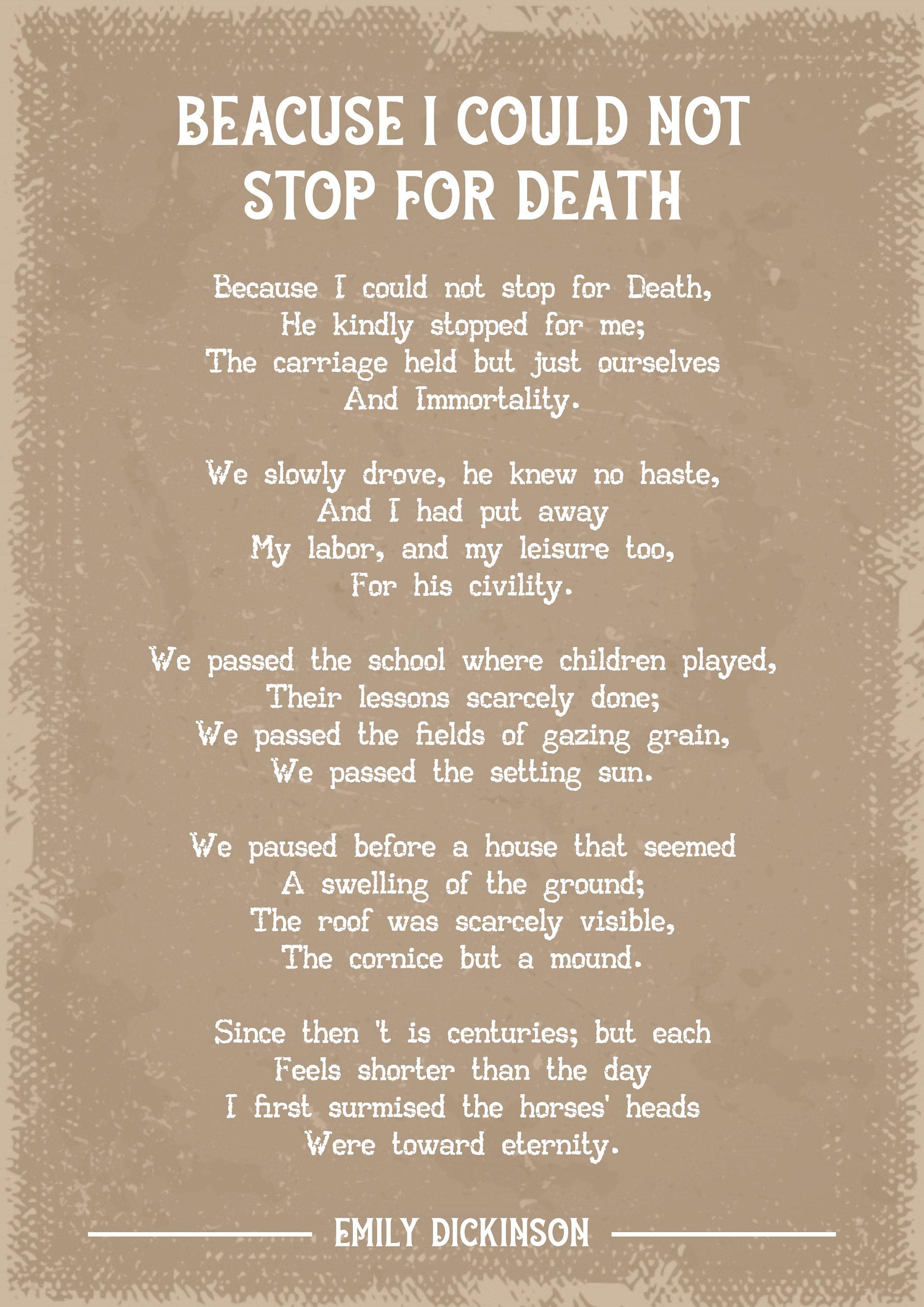
Emily Dickinson’s Poem 712, commonly known by its first line "Because I could not stop for Death," remains one of the most studied works in American literature. Written around 1862 and published posthumously in 1890, the poem challenges the traditional Victorian "danse macabre" by personifying death as a courteous suitor rather than a terrifying specter. For a modern reader in 2026, accessing this poem in a stable PDF format is not merely a matter of convenience; it is a prerequisite for deep analytical work.
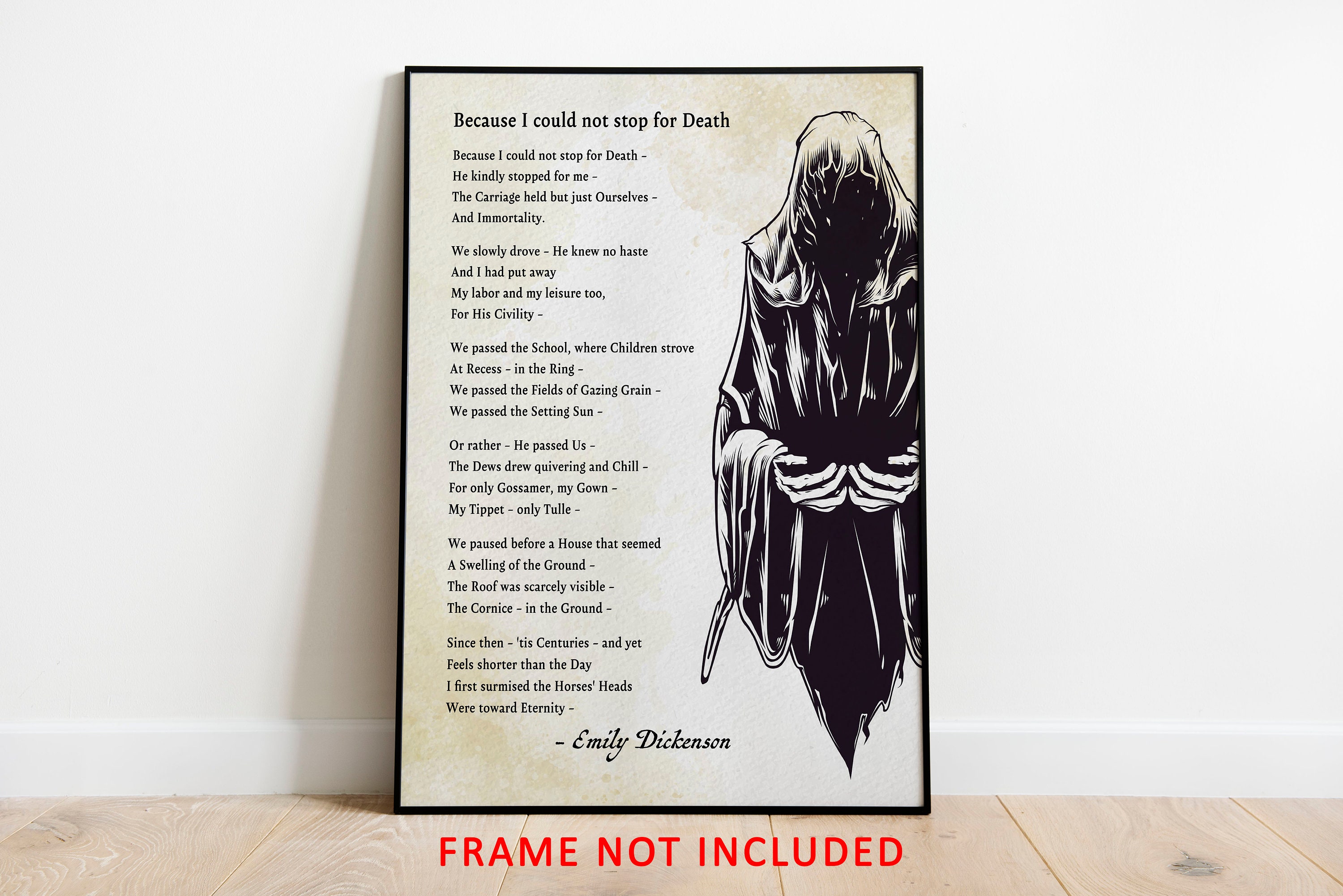
The poem describes a carriage ride with Death and Immortality, passing through the stages of life—childhood, maturity, and the sunset of existence—before arriving at a "House" that is actually a grave. The narrative then shifts into a realization that centuries have passed, yet they feel "shorter than the Day" since the realization of eternal life. This complex interplay of time, mortality, and the afterlife requires a document that allows for slow, methodical reading.
Technical Superiority: Why the PDF Format is Essential
While the poem is widely available on websites and blogs, the PDF format offers several technical advantages that are critical for academic and personal study. In the realm of digital humanities, the "fixity" of a PDF ensures that the visual architecture of the poem remains unchanged regardless of the device used to view it.
Preservation of the "Dickinson Dash"
Emily Dickinson’s use of dashes is perhaps her most famous stylistic signature. These are not standard em-dashes or hyphens; they vary in length and direction in her original manuscripts. Web-based text often "normalizes" these dashes to standard punctuation, which can fundamentally alter the rhythm and meaning of the poem. A high-quality PDF, particularly one sourced from a scholarly edition like the Franklin or Johnson editions, preserves the placement and frequency of these dashes, allowing the reader to experience the "breaths" and pauses Dickinson intended.
Maintaining Capitalization and Line Breaks
Dickinson’s idiosyncratic capitalization—often capitalizing common nouns like "Carriage," "Civility," and "Gossamer"—serves to elevate these objects to symbolic status. Standard HTML text can sometimes lose this formatting during copy-pasting or due to CSS styling. A PDF ensures that every "Cornice" and "Headdress" remains exactly where Dickinson placed it, which is vital for anyone writing a formal analysis or preparing for a literary exam.
Navigating Scholarly Editions in PDF
Not all PDFs are created equal. When searching for a version that truly "matters," you must distinguish between a plain-text scan and a scholarly-verified document. In 2026, the two primary authorities on Dickinson’s text remain the Johnson edition (1955) and the Franklin edition (1998).
- The Thomas H. Johnson Edition (1955): This was the first edition to restore Dickinson's original punctuation and capitalization, which previous editors had "corrected" for decades. A PDF of this edition is excellent for historical context.
- The R.W. Franklin Edition (1998): Currently considered the most accurate scholarly standard, the Franklin edition further refined the chronological order and the specific rendering of Dickinson's punctuation. Most university-level courses in 2026 require the Franklin version.
Where to Find Authentic PDFs
To ensure you are using a reliable document, prioritize sources such as:
- The Emily Dickinson Archive (EDA): Provides high-resolution PDFs of original manuscripts alongside transcriptions.
- JSTOR and Project MUSE: These platforms host peer-reviewed articles that often include the full, verified text of the poem in PDF format.
- University Digital Libraries: Institutions like Harvard University (which houses many of her original papers) offer digitized versions that are essential for serious research.
Thematic Analysis: Why You Need to Annotate the Text
The primary benefit of a PDF for the user is the ability to use digital annotation tools. In 2026, these tools allow readers to layer their insights directly onto the text. "Because I could not stop for Death" is a poem of layers, and a PDF allows you to track these themes visually.
The Personification of Death
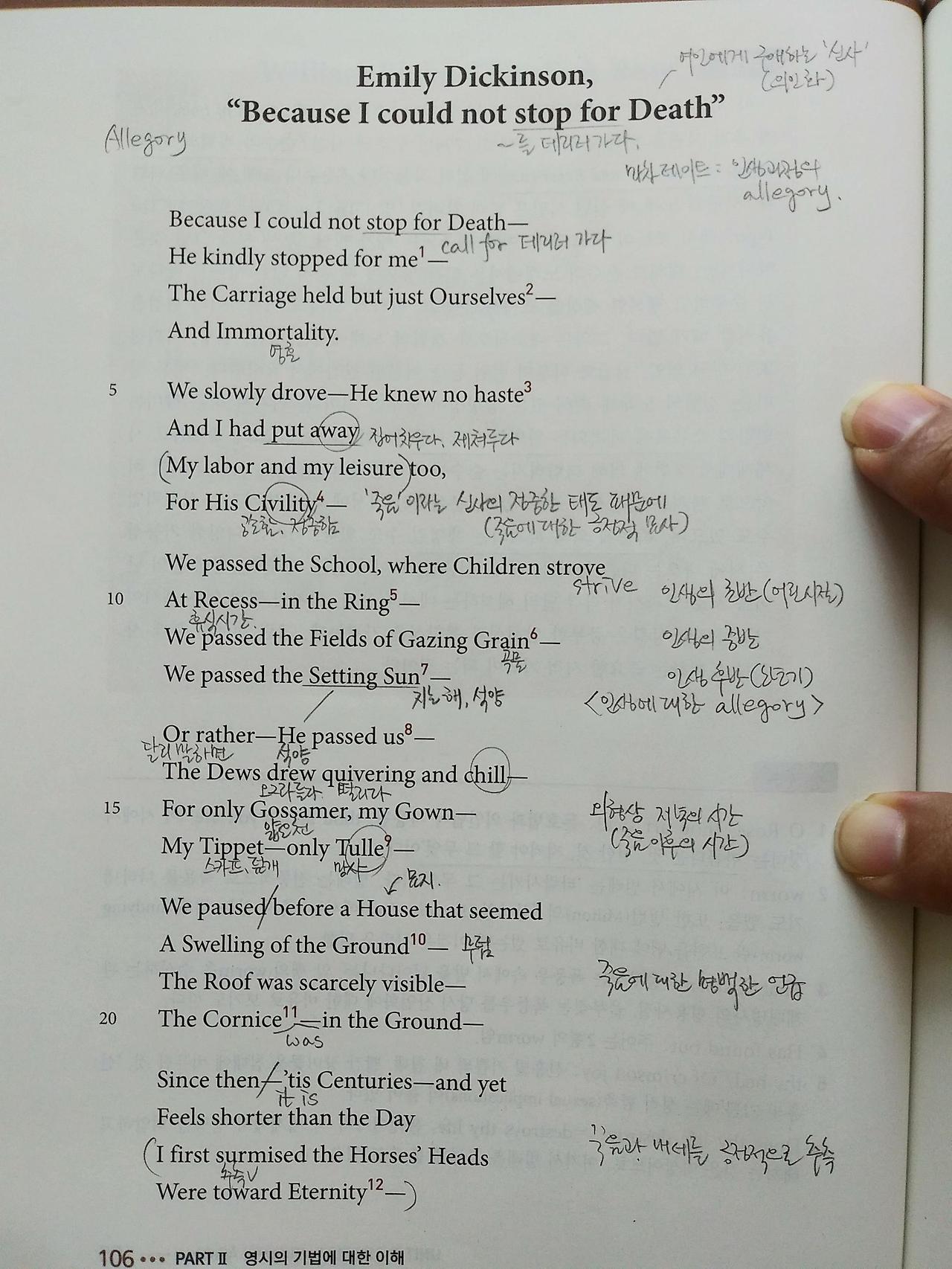
In the first stanza, Death "kindly" stops for the speaker. This is a radical departure from the "Grim Reaper" archetype. By using a PDF, you can highlight every instance of personification—from Death’s "Civility" to the presence of "Immortality" as a silent third passenger. Annotating these specific terms helps in understanding Dickinson’s attempt to domesticate the infinite.
The Stages of Life
The third stanza represents a chronological journey:
- The School: Representing childhood and the beginning of the journey.
- Fields of Gazing Grain: Representing maturity and the harvest of life.
- The Setting Sun: Representing old age and the transition out of the physical world.
Using a PDF allows you to color-code these transitions, making the cyclical nature of the poem's structure more apparent.
Comparative Overview of Textual Formats
When deciding how to consume "Because I could not stop for Death," consider how different formats impact your retention and analytical capability.
| Feature | Web Text (HTML) | Standard PDF | Scholarly PDF (Franklin/Johnson) |
|---|---|---|---|
| Punctuation Accuracy | Low (often normalized) | Moderate | High (manuscript-based) |
| Annotation Capability | Requires browser extensions | High (standard PDF tools) | High (supports citations) |
| Portability | Requires internet access | Offline access | Offline access |
| Academic Acceptance | Generally discouraged | Varies by source | Gold Standard |
| Visual Fidelity | Variable (reflowable) | Fixed Layout | Fixed Layout |
Practical Applications for Students and Educators
In 2026, the "Because I could not stop for Death" PDF serves as more than just a reading assignment; it is a tool for several specific academic and professional tasks.
For Students: Preparing for Close Reading
Close reading is the cornerstone of literary criticism. A PDF allows you to zoom in on specific stanzas without losing the context of the whole poem. For instance, analyzing the "House that seemed / A Swelling of the Ground" requires looking at the shift from the movement of the carriage to the stillness of the grave. The PDF format allows for side-by-side comparison with other poems in Dickinson’s fascicles, helping you spot recurring motifs like "eternity" and "time."
For Educators: Distributing Material
Educators benefit from the PDF format because it ensures all students are looking at the exact same version of the text. This is crucial when discussing specific line numbers (e.g., "Line 12: The Dews drew quivering and chill"). If students are using different web versions, their line numbering and even word choices may vary, leading to confusion during classroom discussions.
For Researchers: Using AI Analysis Tools
In 2026, many researchers use AI-driven linguistic tools to analyze patterns in 19th-century poetry. These tools typically require a "clean" input. A high-quality PDF can be converted into a structured text file that maintains the integrity of Dickinson’s dashes, which is essential for sentiment analysis or structural modeling of her work.
Verifying the Integrity of Your PDF
Before you rely on a PDF for an essay or presentation, perform a quick verification check. Check for the presence of the following elements:
- The Dash Test: Does the poem end with a dash? (The final line "towards Eternity –" should conclude with a dash, indicating an unfinished or ongoing journey).
- Stanza Count: Ensure the PDF contains all six quatrains. Some older or censored versions omit the fourth stanza ("Or rather – He passed Us –") because of its complex imagery regarding the speaker's clothing.
- Source Citation: A professional PDF should include a footer or header indicating which edition was used (e.g., The Poems of Emily Dickinson, ed. R.W. Franklin).
FAQs About the "Because I could not stop for Death" PDF
Why is the fourth stanza sometimes missing in older versions?
Early editors, such as Mabel Loomis Todd and Thomas Wentworth Higginson, often edited Dickinson’s work to make it more "conventional." They sometimes removed the fourth stanza because the description of the speaker's "Gossamer" gown and "Tippet" of "Tulle" was considered too suggestive or rhythmically awkward for the late 19th-century palate. Modern PDFs restore this stanza, which is crucial for understanding the speaker's vulnerability.
Can I use a PDF scan of the original manuscript?
Yes, and for advanced scholars, this is the preferred method. Scans of the original manuscripts (available via the Emily Dickinson Archive) show her actual handwriting. However, for most students, a PDF of a typed scholarly transcription is more practical for readability and citation.
Is the poem in the public domain in 2026?
Yes, the poem itself is in the public domain. However, the specific formatting and editorial notes found in modern scholarly editions (like the Franklin edition) may still be under copyright. For personal study and classroom use, these PDFs are generally accessible, but they should be cited properly in published work.
How does the PDF help with understanding the poem's meter?
The poem is written primarily in iambic tetrameter and iambic trimeter (common meter), similar to a hymn. Because a PDF maintains the exact line breaks and spacing, you can more easily mark the "feet" and "scansion" of the poem, which is often disrupted by the reflowable text of mobile websites.
Recommendation for Next Actions
To get the most out of this literary masterpiece, do not rely on a simple search-engine snippet. Instead, visit an academic repository such as the Emily Dickinson Archive or your university's digital library to download a verified PDF of the Franklin Edition. Once downloaded, use a PDF editor to highlight the "shifts in time" throughout the poem—noting where the carriage moves from the physical world to the eternal realm. This active engagement with a stable, accurate text is the only way to truly grasp the genius of Dickinson’s meditation on the end of life.
Image Gallery