Martellus Bennett and the Dallas Cowboys: A Comprehensive Career Retrospective
Martellus Bennett’s tenure with the Dallas Cowboys represents a pivotal early chapter in the tight end's distinguished ten-year NFL career. Drafted by Dallas in the second round of the 2008 NFL Draft, Bennett served as a high-potential...
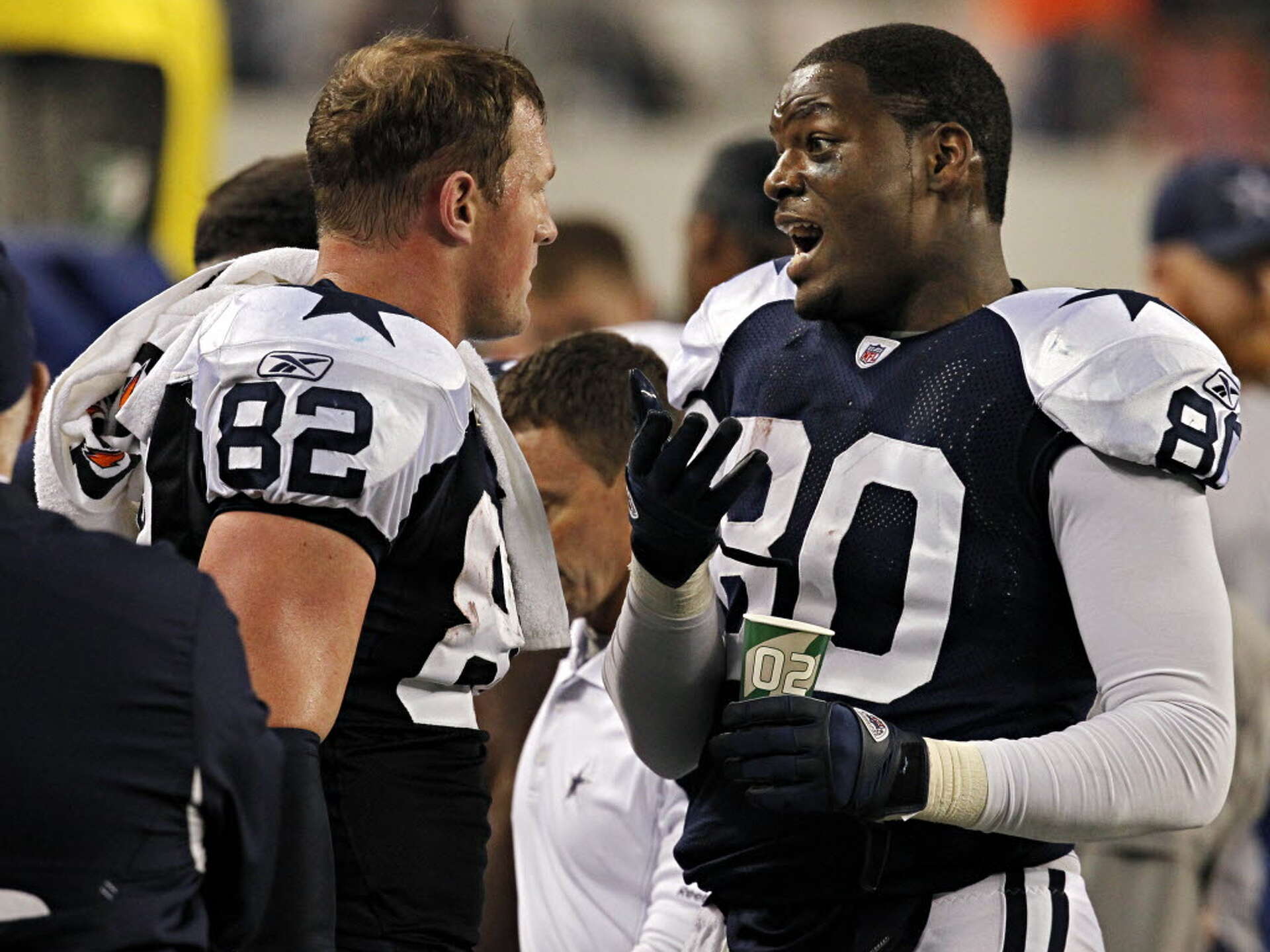
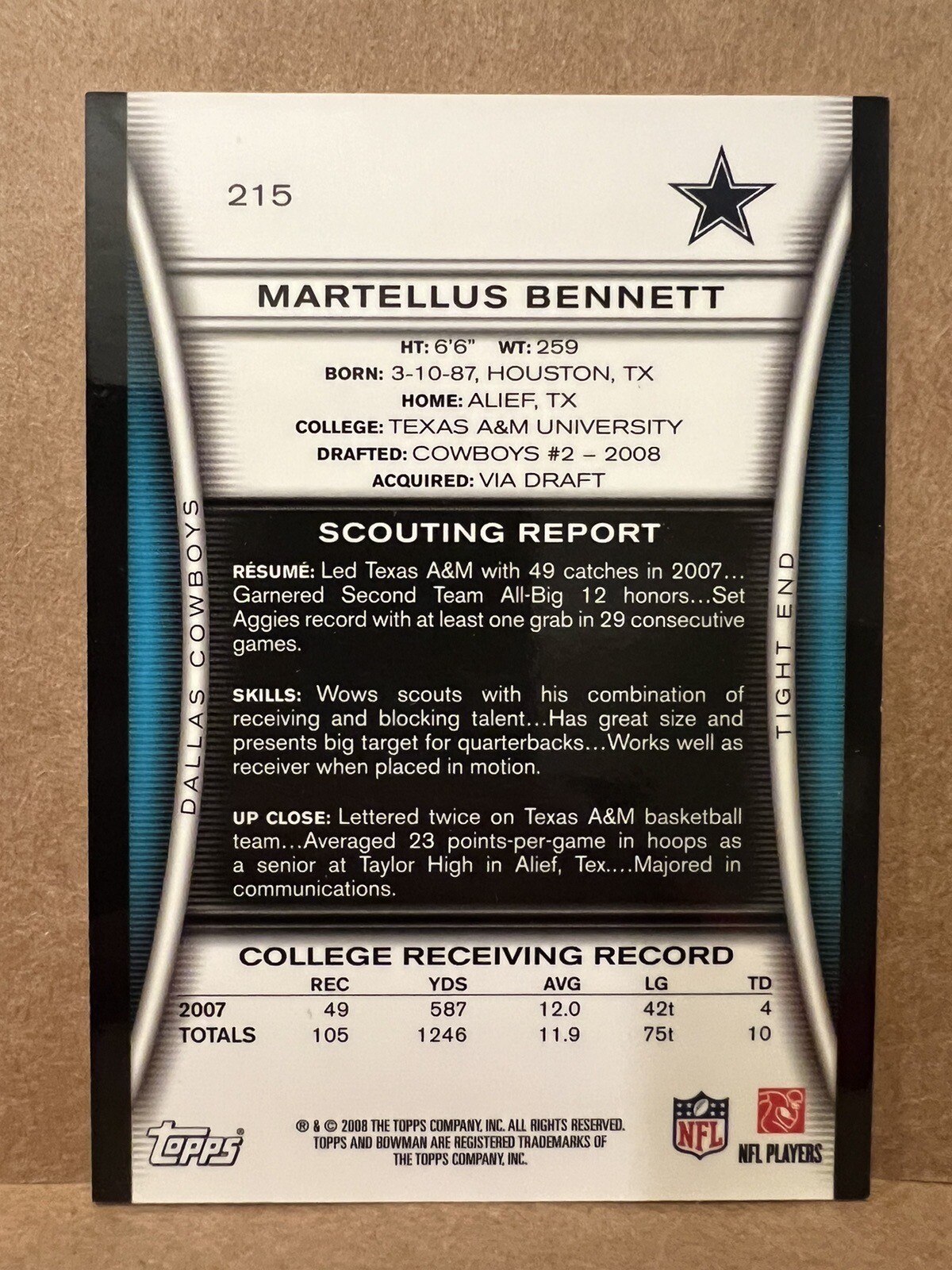
Martellus Bennett’s tenure with the Dallas Cowboys represents a pivotal early chapter in the tight end's distinguished ten-year NFL career. Drafted by Dallas in the second round of the 2008 NFL Draft, Bennett served as a high-potential understudy to future Hall of Famer Jason Witten, providing the team with elite physical blocking and versatile receiving skills until his departure in 2012.
Contents
Draft Pedigree and Early Expectations
The Dallas Cowboys selected Martellus Bennett with the 61st overall pick in the 2008 NFL Draft out of Texas A&M. At the time of his arrival in Dallas, the team was looking to diversify its offensive attack. Bennett arrived with significant physical stature—standing 6'6" and weighing approximately 265 pounds—which immediately drew comparisons to other "move" tight ends who could dictate matchups against smaller defensive backs and linebackers.
The primary strategic intent behind the pick was to create a "two-headed monster" at the tight end position. By pairing Bennett with the established, route-running technician Jason Witten, the Cowboys hoped to implement more "12 personnel" sets (one running back, two tight ends). This strategy was intended to force opposing defenses into difficult personnel decisions, as Bennett’s blocking capability allowed the team to remain effective in the run game while his athleticism kept him as a credible threat in the passing game.
Technical Role within the Cowboys Offensive Scheme
During his four-year stint in Dallas, Bennett’s role was heavily dictated by the presence of Jason Witten. Because Witten was the primary target for quarterback Tony Romo—frequently leading the team in receptions—Bennett was tasked with being the "in-line" blocker in many formations.
Technically, Bennett excelled in this capacity. He possessed the raw strength required to neutralize defensive ends in run-blocking schemes, which allowed the Cowboys' offensive line to shift protection toward other threats. However, his development as a primary receiving threat was often overshadowed by the team's reliance on Witten in third-down and red-zone situations.
Statistical Overview (2008–2011)
| Season | Games Played | Receptions | Yards | Touchdowns |
|---|---|---|---|---|
| 2008 | 16 | 20 | 283 | 4 |
| 2009 | 16 | 15 | 159 | 0 |
| 2010 | 16 | 33 | 297 | 0 |
| 2011 | 16 | 17 | 144 | 0 |
Note: Data reflects official NFL season totals during his tenure in Dallas.
Development and Performance Challenges
While Bennett demonstrated high-level athletic traits, his time in Dallas was defined by a steady but unspectacular statistical output. Several factors contributed to this:
- Usage Constraints: In the Cowboys’ offensive playbook, the primary tight end role was locked by a perennial Pro Bowler. Consequently, Bennett’s opportunities to develop rhythm with the quarterback were sporadic.
- Consistency and Focus: Throughout his tenure, media reports and coaching staff assessments occasionally noted challenges regarding his consistency in concentration. These early-career hurdles are common for young players transitioning to the professional speed of the NFL, but they limited his capacity to carve out a larger share of the target distribution during the 2009 and 2011 seasons.
- Scheme Evolution: The Cowboys' offense underwent shifts in coordinators and philosophy during Bennett's four years, impacting how the tight end position was utilized. Transitioning from the late-2000s era to the early-2010s required tight ends to become more integrated as receiving threats, a role Bennett was technically prepared for but often sidelined from due to personnel hierarchies.
The Transition to Free Agency
By the conclusion of the 2011 season, it became evident that Bennett’s trajectory would require him to be the primary option in a different system. With his rookie contract expiring, the Cowboys opted not to retain him as a starter.
In 2012, Bennett signed with the New York Giants. This move proved to be the catalyst for his professional maturation. Released from the constraints of being a secondary option, Bennett saw his production climb significantly. He went on to have productive stints with the Chicago Bears, New England Patriots—where he won a Super Bowl ring in 2017—and the Green Bay Packers. His departure from Dallas serves as a classic case study of a talented player needing a change in environment to transition from a developmental prospect to a primary offensive starter.
Historical Context and Legacy
Martellus Bennett’s time with the Cowboys is often viewed through the lens of potential versus realized output. He was a high-draft-pick asset whose presence allowed the Cowboys to maintain one of the most effective tight-end units in the league during the late 2000s, even if he did not record the massive statistical volume he achieved later in his career.
His tenure highlights the difficulty of grooming "heir apparent" players at positions where a team already has a legendary, high-usage veteran. The success Bennett found later in his career validated the Cowboys' initial evaluation of his physical talent, confirming that his transition to a premier tight end was largely a matter of role and opportunity rather than a lack of capability.
Frequently Asked Questions
Did Martellus Bennett play for the Dallas Cowboys? Yes, Martellus Bennett played for the Dallas Cowboys from 2008 through 2011. He was selected by the team in the second round of the 2008 NFL Draft after playing college football at Texas A&M.
Why did the Cowboys let Martellus Bennett leave? Following the 2011 season, Bennett reached the end of his rookie contract. Given that the team already had Jason Witten in the starting role, and Bennett desired an opportunity to be a primary tight end elsewhere, both parties moved on, leading to Bennett signing as a free agent with the New York Giants.
How successful was Bennett statistically in Dallas? Bennett’s stats were moderate, with his highest production occurring in 2010, when he recorded 33 receptions for 297 yards. His development was naturally limited by the Cowboys' heavy reliance on Jason Witten, who was one of the highest-targeted tight ends in the league during that period.
Was Martellus Bennett considered a bust for the Cowboys? He is rarely categorized as a "bust." While he did not achieve Pro Bowl status while in Dallas, he provided reliable blocking and contributed to the team’s offensive depth. His subsequent success with other teams confirmed his skill set, illustrating that his time in Dallas was more about a lack of opportunity rather than a lack of talent.
How did the Cowboys use Bennett compared to other tight ends? The Cowboys primarily utilized Bennett as a "Y" tight end, focusing on his blocking ability to support the offensive line. This allowed the team to utilize two-tight-end sets effectively, providing a physical advantage in the running game that was crucial for the Cowboys' offensive strategy during that era.
Practical Next Steps for Researchers
For those interested in further analyzing the impact of tight end usage on NFL offensive production, reviewing the statistical archives of the 2008–2011 seasons provides deeper insight. By comparing the targets-per-route-run metrics of the 2010 Dallas Cowboys to subsequent seasons for both Bennett and the team, researchers can better quantify how changes in offensive personnel distribution affect individual player development.
Image Gallery