Understanding the Haru Urara Meaning: History, Cultural Impact, and Legacy
Understanding the Haru Urara meaning requires exploring the dual identity of a legendary Japanese racehorse and a profound cultural symbol of perseverance. While the name literally translates to "glorious spring" or "bright and cheerfu...
Understanding the Haru Urara meaning requires exploring the dual identity of a legendary Japanese racehorse and a profound cultural symbol of perseverance. While the name literally translates to "glorious spring" or "bright and cheerful spring," Haru Urara achieved legendary status precisely by failing to win a single race throughout a 113-start career, transforming into a beloved national icon of resilience, hope, and the dignity of never giving up.
Contents
The Origins and Literal Translation of Haru Urara
To fully grasp what Haru Urara represents in Japanese culture, one must first look at the linguistic and literal composition of the name. In Japanese, "Haru" (春) means spring, and "Urara" (うらら or 麗ら) implies a bright, clear, serene, and glorious springtime day. Combined, the name evokes imagery of pleasant weather, blooming flowers, and joyful new beginnings. Paradoxically, this cheerful moniker was given to a chestnut filly born in 1996 at the Mitsuishi Farm in Hokkaido, setting the stage for a dramatic contrast between her name and her professional destiny on the racetrack.
Her racing career began in the late 1990s at Kochi Racecourse, a regional track operated by the Kochi Prefectural Government on the island of Shikoku. Unlike elite thoroughbreds racing at major Japan Racing Association (JRA) venues, regional tracks like Kochi operated under the Narukei (NAR) system, featuring smaller purses and horses of more modest pedigree. Haru Urara was small, lacked explosive speed, and possessed a running style that typically left her trailing far behind the pack from the opening gate.
Despite consistent losses, her persistence captured the attention of local racing fans. Trainers and stable staff noted her gentle disposition and willingness to run, even when victory was mathematically out of reach. This combination of an optimistic name, an underdog status, and an unyielding work ethic laid the foundation for her eventual transformation from a last-place finisher into a cultural phenomenon.
The Streak: 113 Losses and the Rise of a National Underdog
The defining characteristic of Haru Urara’s racing career was her historic losing streak. Between 1998 and 2004, she entered 113 official races across regional tracks without securing a single first-place finish. In competitive sports, consecutive losses usually result in obscurity, a swift retirement, or a transfer to lesser duties. However, Haru Urara achieved the exact opposite effect. Her inability to win turned her into a media sensation and a darling of the Japanese public.
Her popularity surged dramatically around 2003 when a Kochi Racecourse official and local media outlets publicized her streak. In a society navigating economic stagnation and societal pressures, a horse that kept running and trying despite guaranteed defeat struck a powerful emotional chord. She was dubbed Makenai Meibo—the "Star That Never Gives Up."
| Racecourse Era | Total Starts | First-Place Finishes | Cultural Status |
|---|---|---|---|
| Early Career (1998–2002) | ~80 | 0 | Local regional runner |
| Peak Media Craze (2003–2004) | ~30 | 0 | National resilience icon |
| Post-Retirement (2004–Present) | 0 | 0 | Pensioned ambassador and charity symbol |
Public fascination manifested in unconventional ways. Betting tickets (tousen tickets) for Haru Urara became popular good-luck charms, specifically among students taking high school or university entrance exams. Because her name and number combinations on betting slips could be interpreted as "never lose" (makenai), people purchased losing tickets as amulets. Prime Minister Junichiro Koizumi even publicly praised her tenacity, stating that it was wonderful for people to keep trying hard even when facing difficult circumstances.
Cultural Impact: From the Racetrack to Modern Pop Culture
The cultural resonance of Haru Urara extended far beyond the dirt tracks of Kochi, cementing her place in modern Japanese folklore and entertainment media. Her story transcended sports journalism, appearing in television documentaries, children's books, and mainstream news outlets as a parable about perseverance, self-worth, and finding value in the journey rather than just the destination.
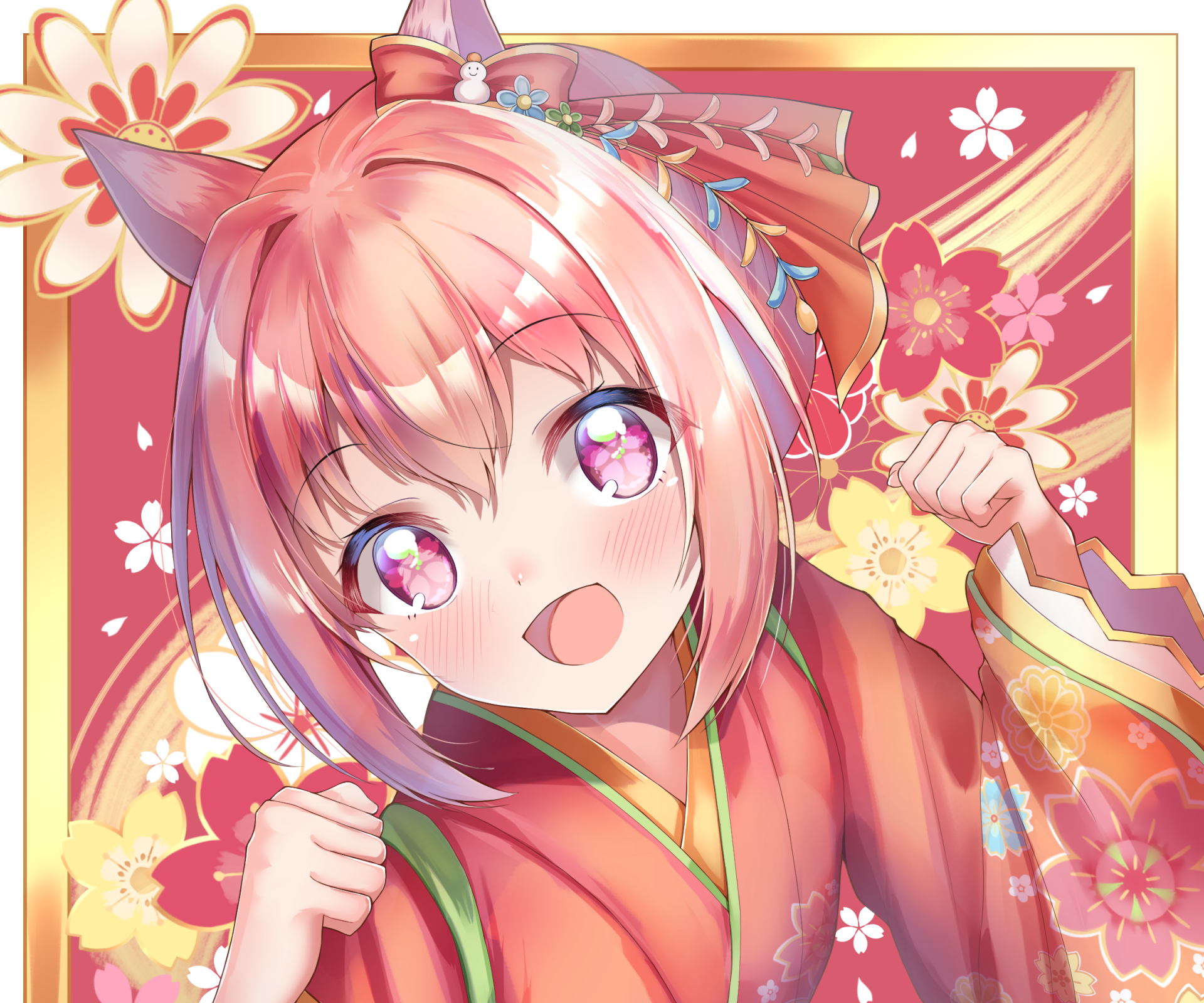
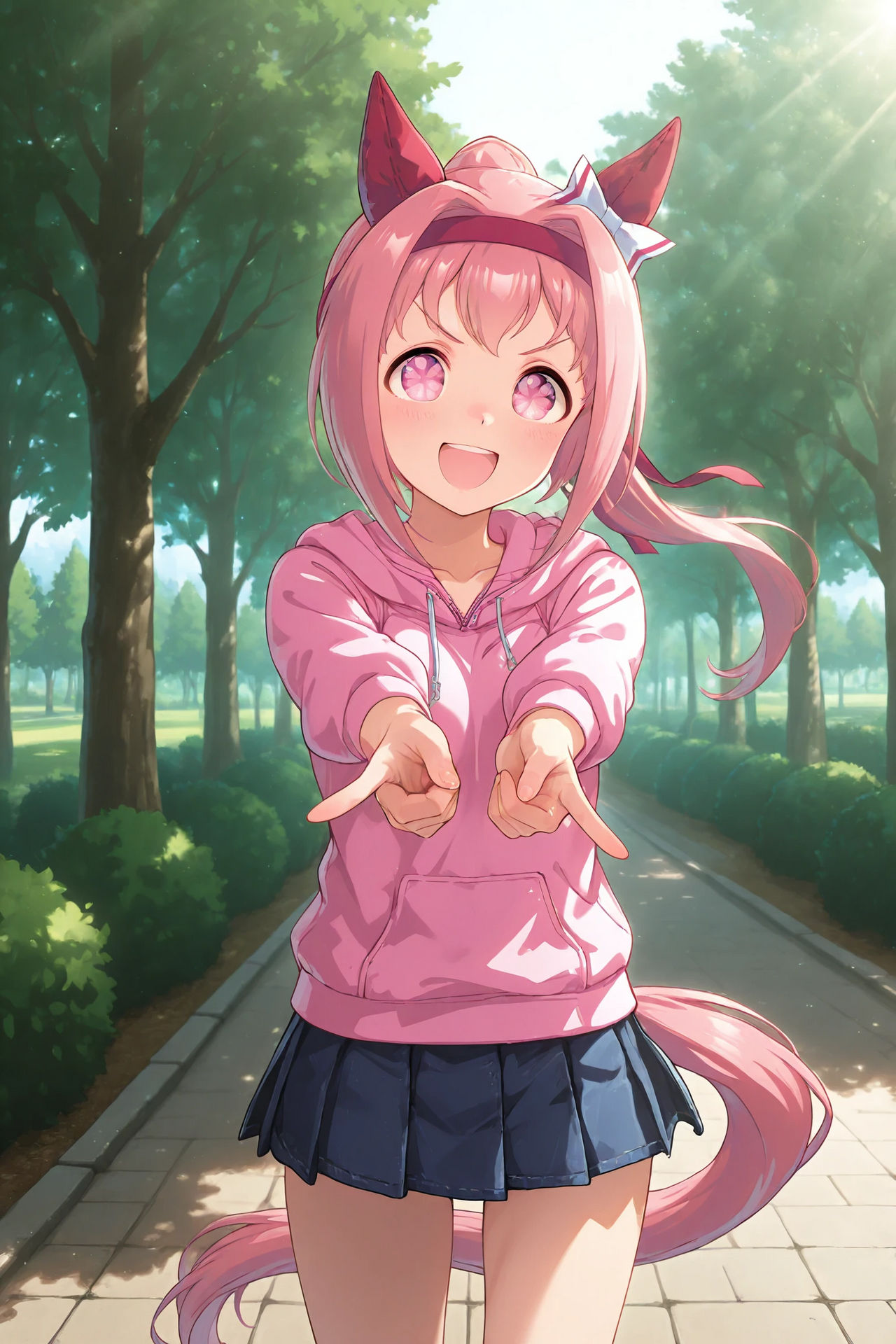
In contemporary times, this legacy was introduced to a global audience through multimedia franchises like Umamusume: Pretty Derby, developed by Cygames. In this franchise, historical racehorses are reimagined as anthropomorphic anime girls competing in high-stakes racing leagues. Haru Urara appears as a cheerful, relentlessly optimistic character who loves carrots and refuses to let a lack of victories dampen her radiant spirit.
- [Real-World History]
- (113 Losses & Unyielding Spirit)
- [Cultural Symbolism]
- ("The Star That Never Gives Up" / Exam Good-Luck Charm)
- [Modern Media Adaptation]
- (Umamusume: Pretty Derby Character Representation)
- [Modern Media Adaptation]
- ("The Star That Never Gives Up" / Exam Good-Luck Charm)
- [Cultural Symbolism]
- (113 Losses & Unyielding Spirit)
This modern adaptation successfully preserves the core historical meaning of Haru Urara for younger generations who were not alive during her active racing years in the late 1990s and early 2000s. It reinforces the idea that her identity is not defined by a zero in the win column, but by the joy she brought to spectators and the comforting message that failure does not invalidate effort.
Retirement, Animal Welfare, and Post-Racing Legacy
As her racing career wound down in 2004, financial pressures and declining public attendance at Kochi Racecourse threatened her future. A massive public outcry and fundraising campaign saved her from an uncertain fate, raising millions of yen to secure her retirement. This movement highlighted a growing awareness in Japan regarding the post-career welfare of racehorses, shifting perspectives from disposable commodities to cherished living monuments.
Haru Urara spent her retirement years at facilities dedicated to equine welfare, eventually settling at the Tozan Farm in Chiba Prefecture, where she lived comfortably under the care of dedicated animal welfare advocates. Her caretakers established visitor programs and crowdfunding initiatives to ensure her upkeep, allowing fans to continue supporting her long after her final race.
Her longevity became another testament to her resilience. Living well into her twenties—an advanced age for a thoroughbred horse—she remained a peaceful ambassador for retired racehorse sanctuaries across Japan. Her ongoing care helped pave the way for broader institutional frameworks supporting retired equine athletes, transforming individual sentiment into systemic advocacy for animal welfare.
Common Misconceptions About Haru Urara
When examining the phenomenon surrounding this famous mare, several myths and misunderstandings frequently arise among casual observers and international fans discovering her story through modern media.
- Misconception 1: She was abused or forced to race despite injury.
- Fact: While her losing streak was long, trainers at Kochi Racecourse maintained strict veterinary oversight. She was noted for her strong health, calm demeanor, and enjoyment of the routine, being retired safely before any physical decline compromised her quality of life.
- Misconception 2: Her owners profited massively from her losses.
- Fact: Regional racing in Kochi struggled financially during the economic downturn of the early 2000s. While her fame brought temporary media attention to the track, the operational costs of regional racing meant that her caretakers relied heavily on public fundraising and donations to fund her secure retirement.
- Misconception 3: She was the only winless horse in racing history.
- Fact: While 113 consecutive losses is a notable statistical anomaly, other horses have recorded longer losing streaks. Haru Urara's distinct status stems entirely from the timing of her media exposure and the cultural symbolism attached to her cheerful name and persistent attitude.
Frequently Asked Questions
What does the name Haru Urara mean in Japanese?
The name translates literally to "glorious spring" or "bright and cheerful spring day." The kanji for haru (春) signifies the spring season, while urara (麗ら) conveys a sense of serene, sunny, and beautiful weather, creating an ironic contrast with her winless racing record.
How many races did Haru Urara lose?
Haru Urara finished her professional racing career with a record of 0 wins out of 113 starts at Kochi Racecourse and other regional tracks in Japan, making her one of the most famous winless racehorses in sports history.
Why did Haru Urara become so famous in Japan?
Her fame stemmed from the stark contrast between her cheerful name, her continuous last-place finishes, and her unbreakable work ethic. During an economically difficult period in Japan, her refusal to quit resonated with citizens, turning her into a symbol of perseverance and an accidental good-luck charm for students taking exams.
Is Haru Urara still alive?
Haru Urara passed away of natural old age. She spent her final years in peaceful retirement at an equine sanctuary in Chiba Prefecture, supported by dedicated animal welfare advocates and fans who contributed to her ongoing care.
How is Haru Urara represented in popular culture today?
She is famously featured as a playable character in the multimedia franchise Umamusume: Pretty Derby. In this adaptation, she is portrayed as a bright, endlessly optimistic runner who charms audiences with her enthusiasm despite never securing a first-place finish.
Conclusion and Final Perspective
Understanding the Haru Urara meaning requires looking past traditional metrics of athletic success—such as medals, trophies, and win percentages. Her story demonstrates that public value and cultural significance do not require perfection. By transforming a streak of 113 consecutive defeats into a national narrative of hope, resilience, and unyielding determination, Haru Urara secured an enduring legacy as an irreplaceable icon of Japanese popular culture and equine welfare.
Image Gallery