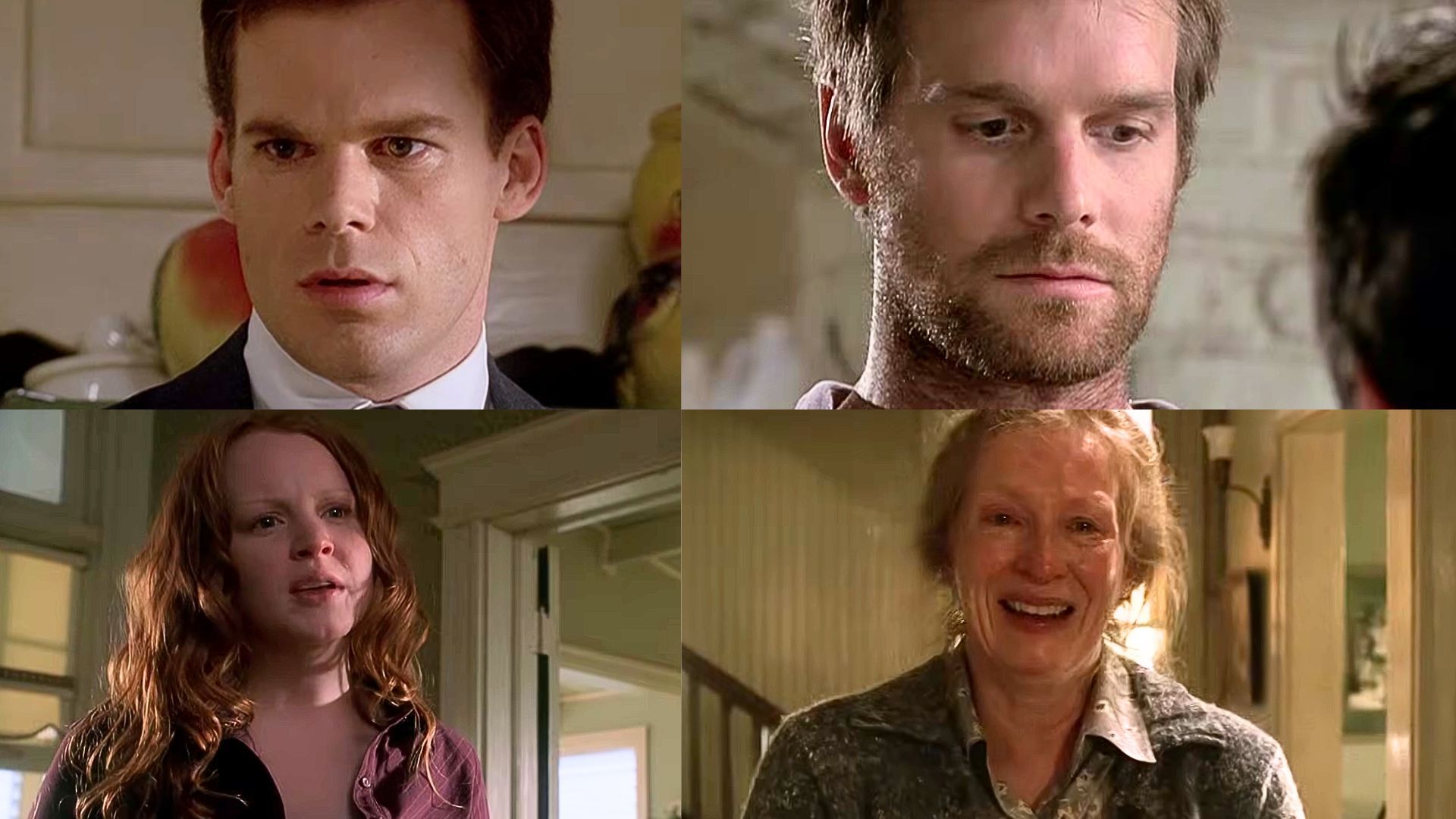
Why the Six Feet Under Finale Still Resonates
The Six Feet Under series finale remains an enduring touchstone in television history because its final seven minutes offer an unflinching, emotionally complete meditation on human mortality, transforming how serialized fiction address...
The Six Feet Under series finale remains an enduring touchstone in television history because its final seven minutes offer an unflinching, emotionally complete meditation on human mortality, transforming how serialized fiction addresses the inevitability of death.
Contents
The Cultural Landscape of Television Endings
When Six Feet Under concluded its five-season run on August 21, 2005, the landscape of prestige television looked fundamentally different than it does today. Cable television was still carving out its identity as a medium capable of complex, serialized storytelling, and audiences were accustomed to finales that either tied up narrative loose ends neatly or left viewers stranded on ambiguous cliffhangers. Created by Alan Ball and broadcast on HBO, the series centered on the Fisher family and their independent funeral home in Los Angeles. Throughout its run, the show distinguished itself by treating death not merely as a plot device or a dramatic backdrop, but as an intimate, everyday reality. Each episode opened with a distinct mortality event, setting a tone of philosophical reflection that permeated the characters' domestic trials, romantic entanglements, and existential crises.
As the series approached its conclusion, expectations were high for how the lives of Nate, Claire, David, Brenda, and Ruth would resolve. However, rather than focusing exclusively on where the surviving characters would be in the immediate future, the finale—titled "Everyone's Waiting"—chose an unprecedented structural path. It bypassed standard narrative pacing in its final sequence to answer the ultimate question facing every mortal being: how and when will these lives end? This bold creative choice ensured that the series would not merely fade out, but would instead deliver a definitive emotional impact that continues to resonate with viewers decades later.
Dissecting "Everyone's Waiting": Structure and Execution
The sequence that defines the Six Feet Under finale is a masterclass in economic storytelling and emotional timing. Set to Sia’s haunting track "Breathe Me," the final montage bypasses traditional dialogue to present a rapid, chronological flash-forward of the primary and secondary characters' remaining years. Viewers witness Claire driving away from Los Angeles toward a new life in New York City, her rearview mirror capturing the vastness of her future. As the song swells, the narrative cuts forward in time, showing snapshots of aging, milestone celebrations, quiet moments of domesticity, and, ultimately, the exact manner of each character's death.
This structural deployment serves a profound psychological function for the audience. By confronting the viewer with the definitive mortality of characters they have grown to love over five years, the show removes the illusion of permanence that fiction often provides. David Fisher dies decades later while gardening, seeing a vision of a young Keith. Ruth passes away in a hospital bed surrounded by family. Brenda and Claire live into old age, experiencing the full spectrum of human joy and sorrow before their own final breaths. The execution avoids melodrama, relying instead on a quiet, rhythmic acceptance that mirrors the very business the Fisher family operated.
The Philosophy of Mortality in Modern Media
To understand why the finale retains its cultural resonance, one must examine society's evolving relationship with grief and existential media. Contemporary entertainment frequently treats death as spectacle—an instantaneous event in action thrillers or a tragic catalyst in melodramas. Six Feet Under, by contrast, insists on the mundane and natural aspects of dying. The finale forces viewers to sit with the reality that every relationship eventually ends, that every life has a definitive boundary, and that this finiteness is precisely what grants human existence its depth and value.
In an era characterized by endless reboots, expanded universes, and open-ended streaming narratives designed to run indefinitely, the absolute closure provided by the Six Feet Under finale feels increasingly radical. It offers a counter-narrative to the idea that stories must continue past their natural expiration dates. By showing the complete arc of human existence from young adulthood to old age and death within a matter of minutes, the series provides a form of emotional catharsis that few other artistic works have replicated. This uncompromising focus on mortality transforms the viewer from a passive consumer into an active participant in an existential meditation.
| Character | Fate Depicted in Finale | Underlying Thematic Significance |
|---|---|---|
| Claire Fisher | Moves to New York, lives a full artistic life, dies alone at age 102. | Represents artistic endurance, independence, and the courage of new beginnings. |
| David Fisher | Lives a long life with Keith, dies in his yard after seeing a vision of a young Keith. | Illustrates the persistence of love, domestic stability, and reconciled fears. |
| Ruth Fisher | Passes away peacefully in a hospital bed surrounded by loved ones. | Captures the matriarchal anchor finding resolution, family unity, and quiet surrender. |
| Brenda Chenowith | Lives past Nate's death, experiences professional and personal endurance, dies old. | Exemplifies resilience, intellectual growth, and adaptation through profound grief. |
Why Contemporary Audiences Return to the Finale
The enduring appeal of the Six Feet Under conclusion is evident in how frequently it is discussed, analyzed, and shared across digital platforms. Whenever discussions arise regarding the greatest television episodes of all time, the finale consistently ranks near the top, often cited alongside landmark endings like those of The Sopranos, Breaking Bad, or The Wire. However, while other finales focus on institutional survival, criminal consequences, or moral ambiguity, Six Feet Under remains uniquely universal because its subject matter is shared by every human being.
Furthermore, cultural attitudes toward mental health, grief, and mortality have shifted significantly in the decades since the show aired. Modern audiences, having navigated collective trauma, global anxieties, and a heightened awareness of psychological vulnerability, often find solace in art that addresses mortality honestly rather than avoiding it. The finale does not offer easy comfort or false optimism; instead, it offers a reminder that grief is the price of love and that living fully requires an acceptance of our temporal limits. This unvarnished emotional truth ensures that the final minutes of the series continue to introduce new generations of viewers to its profound perspective.
Frequently Asked Questions
What song plays during the Six Feet Under finale?
The song playing during the final montage is "Breathe Me" by the Australian singer-songwriter Sia. The track's gradual build, emotional vocal delivery, and melancholic piano chords were instrumental in establishing the sequence's overwhelming emotional resonance, subsequently introducing Sia to a much broader global audience.
Was the finale planned from the beginning of the series?
While the overarching thematic focus on death was present from the pilot episode, creator Alan Ball did not map out the exact sequence of character deaths until the final season was being written. The decision to flash forward through each character's remaining life was conceived as a way to provide absolute closure and honor the show's core premise.
How does the finale address the theme of grief?
The finale addresses grief by normalizing it as a natural consequence of deep attachment. Rather than showing characters overcoming their losses in a linear, tidy fashion, the sequence demonstrates how people carry their grief across decades, integrating sorrow into the ongoing fabric of their daily lives.
Why is the ending considered one of the best in television history?
The ending is widely celebrated because it defies conventional narrative structures by showing characters' deaths rather than leaving their futures open. It provides complete emotional closure, honors the show's philosophical exploration of mortality, and utilizes music and visual storytelling to evoke a powerful, universal human response.
Conclusion and Next Actions
The enduring legacy of the Six Feet Under finale lies in its fearless confrontation with the human condition. For viewers revisiting the series or discovering it for the first time, the primary takeaway is not a morbid preoccupation with death, but an urgent call to appreciate the fragile, fleeting nature of the present moment. To engage deeply with this masterpiece of television is to reflect on one's own relationships, priorities, and acceptance of life's natural boundaries. Consider watching the complete series arc with attention to its recurring motifs of art, family dynamics, and emotional honesty, allowing the narrative framework to deepen your own perspective on living and letting go.
Image Gallery