The Case of Matheau Moore and Emily Noble: Timeline, Trial, and Forensic Analysis
The criminal trial of Matheau Moore in the death of his wife, Emily Noble, stands as one of central Ohio’s most contentious legal proceedings. Noble disappeared from Westerville, Ohio, in May 2020, and her remains were discovered month...
The criminal trial of Matheau Moore in the death of his wife, Emily Noble, stands as one of central Ohio’s most contentious legal proceedings. Noble disappeared from Westerville, Ohio, in May 2020, and her remains were discovered months later in nearby woods. Prosecutors alleged Moore murdered Noble and staged a suicide, but a Franklin County jury acquitted Moore of all charges in August 2022 after extensive expert testimony on forensic evidence and cause of death.
Contents
Overview of the Disappearance and Investigation
Emily Noble, a 52-year-old resident of Westerville, Ohio, was last seen on May 24, 2020. Her husband, Matheau Moore, reported her missing the following morning, initiating a search effort that attracted substantial local and national true-crime media attention. Noble’s personal belongings, including her cell phone, keys, wallet, and vehicle, were left behind at the couple's condominium, complicating initial efforts by law enforcement to trace her movements.
Timeline Summary: May 2020: Emily Noble reported missing in Westerville, OH Sept 2020: Body discovered in wooded area near residence June 2021: Matheau Moore arrested and indicted for murder August 2022: Jury returns verdict of NOT GUILTY on all counts
For nearly four months, search teams and volunteers conducted sweeps of the surrounding parks and residential developments. On September 16, 2020, landscape workers and searchers located Noble’s remains hanging from a tree in a heavily wooded area approximately a quarter-mile from her home. Due to severe decomposition and environmental exposure over the summer months, initial identification required forensic dental analysis.
Following the recovery of the body, the Franklin County Coroner’s Office conducted a post-mortem examination. Law enforcement agencies, including the Westerville Police Department and the Ohio Bureau of Criminal Investigation (BCI), escalated their inquiry into a homicide investigation based on preliminary anatomical findings. In June 2021, a Franklin County grand jury indicted Matheau Moore on counts of murder and felonious assault, alleging he killed Noble inside their home or nearby before staging the scene in the woods.
Key Evidence and Prosecution Arguments
The prosecution's theory centered on the assertion that Emily Noble's death was a homicide staged to look like a suicide. Prosecutors argued that marital strain, financial friction, and behavioral inconsistencies following Noble's disappearance pointed directly to Matheau Moore.
Prosecution Theories vs. Forensic Interpretations: ---------------------------------------------------------------------- Subject Area Prosecution Allegation Defense Counter-Argument ---------------------------------------------------------------------- Neck Fractures Indicated manual strangulation Caused by drop forces / hanging Facial Trauma Pre-mortem blunt force trauma Post-mortem decay / animal activity Staging Claim Moore carried body to woods No physical trail / lack of DNA Behavioral Profiling Moore showed lack of remorse Grief manifests differently
Forensic and Medical Examiner Findings
The prosecution relied heavily on testimony from medical examiners and forensic anthropologists who examined Noble's skeletal remains. Key autopsy findings presented by the state included:
- Multiple Fractures: Fractures were identified in the hyoid bone, thyroid cartilage, and facial bones, including the neck region.
- Mechanism of Injury: State experts argued that the specific pattern of bone disruption was inconsistent with a simple low-drop hanging and suggested manual strangulation or blunt force assault prior to suspension.
- Staging Hypothesis: Prosecutors alleged that Moore inflicted fatal trauma on Noble, transported her body to the wooded ravine, and used a cord to suspend her body to mislead investigators into treating the death as a self-inflicted hanging.
Behavioral and Circumstantial Evidence
In addition to forensic reports, the prosecution presented circumstantial evidence intended to demonstrate Moore's guilt:
- Public Statements and Demeanor: Recorded media interviews and body-camera footage were introduced to argue that Moore exhibited suspicious responses and lacked emotional distress during search efforts.
- Digital Footprint and Timeline: Analysts examined cell phone location data and home automation records, asserting that Moore had unaccounted periods during the night Noble disappeared.
- Marital Tension: Witnesses testified regarding interpersonal conflicts between the couple in the months leading up to May 2020.
The Defense Strategy and Forensic Rebuttal
The defense, led by attorneys Dan Sabol and Diane Menashe, built its strategy on attacking the reliability of the forensic interpretation and establishing an alternative explanation rooted in Noble's personal history. The defense maintained that Emily Noble died by suicide and that the prosecution lacked physical evidence linking Moore to her death.
Challenging the State’s Medical Evidence
The defense presented independent forensic pathologists and biomechanical experts who disputed the state's conclusions regarding the neck and facial fractures:
- Hanging Mechanics: Expert witnesses for the defense testified that fractures to the hyoid bone and thyroid cartilage occur in a significant percentage of suicide hangings, particularly when dynamic force or body weight falls at specific angles.
- Decomposition and Environmental Factors: Defense experts argued that facial bone displacement could have resulted from post-mortem decomposition, animal scavenging, or environmental pressure while the body remained outdoors for nearly four months.
- Absence of Transfer Evidence: The defense highlighted that forensic testing revealed no DNA, blood, or physical evidence belonging to Moore on the cord, tree, or surrounding brush, nor was any blood or struggle evidence found inside the couple's home.
Mental Health and Psychological Context
To support the suicide defense theory, counsel presented evidence regarding Noble's mental health state prior to her disappearance:
- Past Loss: Evidence was introduced showing Noble had suffered severe grief following the loss of her stepson to suicide years prior, an event that deeply affected her mental well-being.
- Personal Struggles: Defense witnesses testified about Noble's battles with depression, body weight concerns, and personal stressors during the spring 2020 pandemic lockdowns.
Case Timeline and Trial Milestones
| Date | Event / Legal Milestone | Significance |
|---|---|---|
| May 24, 2020 | Emily Noble disappears | Last verified sighting; husband reports her missing the next day. |
| September 16, 2020 | Discovery of remains | Remains found suspended in woods near Westerville condo complex. |
| June 17, 2021 | Arrest of Matheau Moore | Grand jury indicts Moore on charges of murder and felonious assault. |
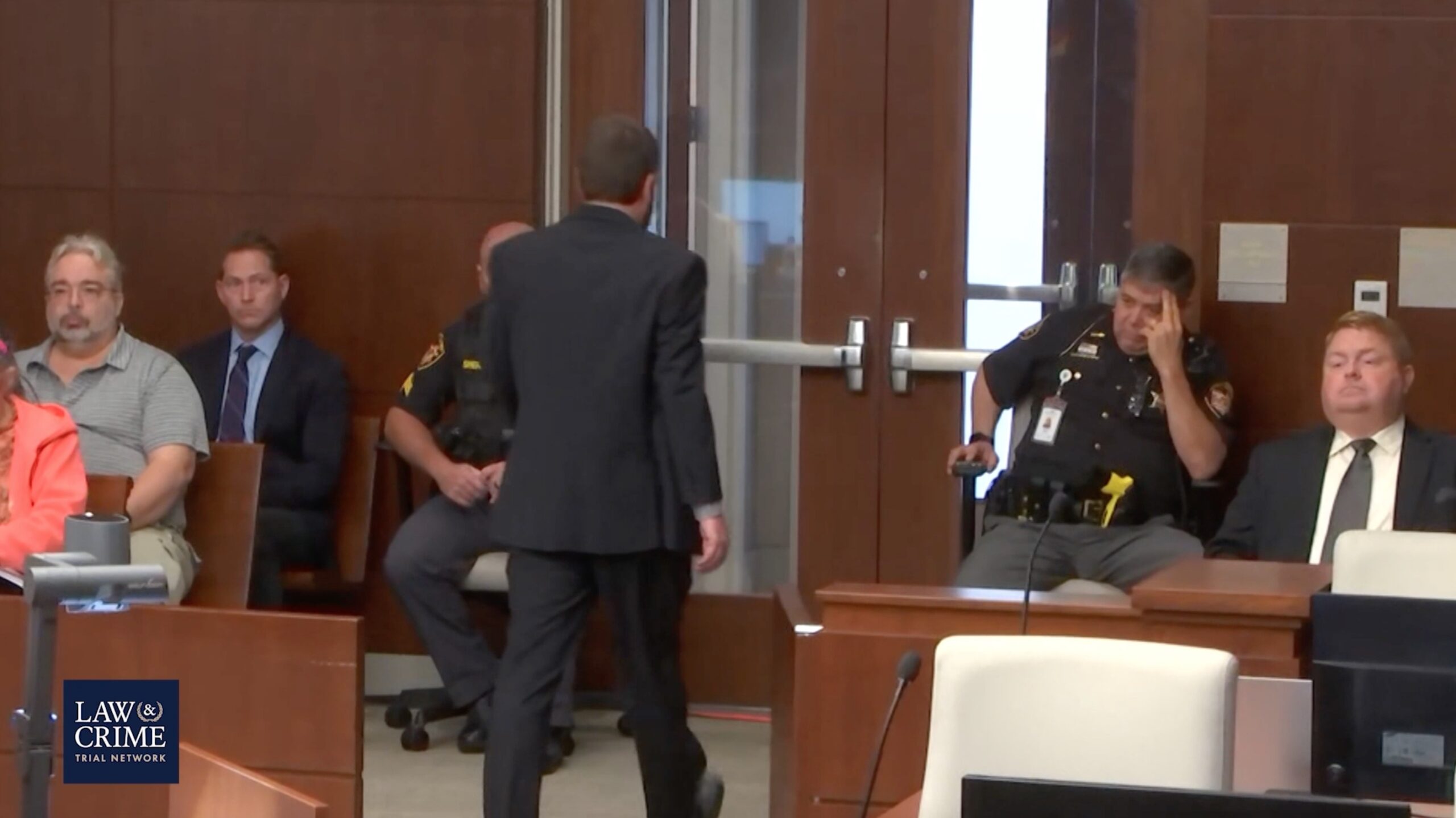
| August 8, 2022 | Jury trial commences | Proceedings open in Franklin County Common Pleas Court. |
| August 24, 2022 | Not Guilty Verdict | Jury acquits Moore on all counts after multi-week trial. |
The Verdict and Legal Analysis
On August 24, 2022, after deliberating for less than three hours, the Franklin County jury returned a verdict of not guilty on all counts, fully acquitting Matheau Moore of murder and felonious assault.
Trial Outcome Summary (Franklin County Court of Common Pleas): - Charge 1: Murder — NOT GUILTY - Charge 2: Murder (Unintentional during felonious assault) — NOT GUILTY - Charge 3: Felonious Assault — NOT GUILTY
Analysis of the Jury's Decision
Legal analysts identified several key factors that contributed to the rapid acquittal:
- High Burden of Proof: In criminal proceedings, the prosecution must prove guilt beyond a reasonable doubt. The presence of competing, highly qualified forensic expert opinions created significant doubt regarding whether a crime had even occurred.
- Lack of Direct Physical Evidence: The absence of Moore's DNA, fingerprint evidence, or luminal-detected blood at the scene or in the home made it difficult to prove he staged the death.
- Sensationalism vs. Admissible Proof: While media coverage focused heavily on Moore’s behavior during public interviews, the jury was instructed to base its verdict strictly on physical, testimonial, and forensic evidence presented in court.
Forensic Takeaways from the Case
The case of State of Ohio v. Matheau Moore serves as a prominent study in modern forensic science and high-stakes criminal defense.
1. The Complexities of Skeletal Trauma Analysis
When human remains are subjected to prolonged environmental exposure, differentiating pre-mortem trauma (injuries inflicted before death) from peri-mortem or post-mortem damage (injuries occurring around or after death) requires cautious interpretation. Bone fractures in decomposed bodies often allow for multiple scientifically valid hypotheses, which can complicate the prosecution's effort to establish causation beyond reasonable doubt.
2. Behavioral Evidence vs. Physical Proof
Prosecutorial reliance on a defendant’s subjective demeanor during grief or police inquiries often carries limited weight in court without corroborating physical evidence. Jurors frequently reject behavioral profiling when counterbalanced by plausible scientific explanations.
3. Forensic Staging Allegations
To prove that a crime scene was staged, investigators must provide clean chain-of-custody evidence and physical links—such as drag marks, foreign fibers, or transfer DNA. The total absence of physical traces linking Moore to the location where Noble was found significantly undermined the state's staging theory.
Disclaimer: This summary is based on official court transcripts, public filings, and media reports from the Franklin County Court of Common Pleas. It is intended for educational and analytical purposes and does not constitute formal legal advice.
Frequently Asked Questions
What were the official charges against Matheau Moore?
Matheau Moore was indicted by a Franklin County grand jury on two counts of murder and one count of felonious assault relating to the death of his wife, Emily Noble.
How was Emily Noble’s body discovered?
Noble's remains were found on September 16, 2020, by search teams and workers in a dense, wooded area near the Westerville condo complex where she lived with Moore. She had been missing since May 24, 2020.
Why did the prosecution believe Emily Noble was murdered?
Prosecutors pointed to autopsy findings showing fractures to her neck and facial bones, arguing these injuries indicated manual strangulation and physical assault prior to being hung with a cord to simulate suicide.
What was the defense's main argument during the trial?
The defense argued that Emily Noble died by suicide, presenting expert testimony showing that hyoid and neck fractures can occur during hanging. They emphasized that there was zero DNA, blood, or physical evidence linking Moore to the scene.
What was the final verdict in the Matheau Moore trial?
On August 24, 2022, the jury found Matheau Moore not guilty on all charges, exonerating him of the murder and assault counts.
Can Matheau Moore be tried again for Emily Noble's death?
No. Under the Fifth Amendment's Double Jeopardy Clause in the United States Constitution, an acquitted defendant cannot be retried for the same criminal charges in the same jurisdiction once a verdict has been rendered.
Recommended Next Steps for Researchers and Legal Analysts
For individuals researching true-crime legal precedents, criminal defense strategies, or forensic evidence standards, the following resources provide authoritative primary information:
- Review Court Records: Access public docket entries and transcript filings through the Franklin County Clerk of Courts Public Access System to examine pre-trial motions and expert witness disclosures.
- Examine Forensic Standards: Consult peer-reviewed literature published by the American Academy of Forensic Sciences (AAFS) regarding neck structure fractures in hangings versus manual strangulation.
- Analyze Ohio Criminal Code Rules: Review the statutory definitions under Ohio Revised Code Title 29 (Crimes - Procedure) regarding murder standards and burden-of-proof requirements.
Image Gallery