Tiger vs Lion Size: Which Holds the Edge in the Weight and Measurement Comparison
When comparing the size of a tiger and a lion, the tiger generally holds the edge, boasting greater average body mass, length, and overall weight across most recognized subspecies, though specific regional variants and individual speci...
When comparing the size of a tiger and a lion, the tiger generally holds the edge, boasting greater average body mass, length, and overall weight across most recognized subspecies, though specific regional variants and individual specimens can sometimes blur these lines.
Contents
The debate regarding whether the tiger or the lion holds the edge in size is one of the most enduring discussions among wildlife enthusiasts, zoologists, and casual observers alike. Both animals represent the pinnacle of mammalian apex carnivores, exhibiting powerful builds, formidable muscle mass, and evolutionary adaptations suited to their respective habitats. However, looking closely at zoological data, museum records, and field studies reveals distinct anatomical differences in how these two magnificent felids scale in terms of weight, length, and shoulder height.
Understanding Felid Dimorphism and Subspecies Variation
To comprehend the size dynamics between tigers (Panthera tigris) and lions (Panthera leo), one must first account for the profound geographical variation and sexual dimorphism inherent in both species. Neither animal is a monolithic entity; rather, both comprise multiple subspecies adapted to vastly different environments, prey densities, and climatic conditions.
Tigers range from the diminutive Sumatran tiger, found on the Indonesian island of Sumatra, to the massive Amur (Siberian) tiger traversing the snowy expanses of the Russian Far East. Conversely, lions are divided primarily into African subspecies—such as the Southern African lion and the East African lion—alongside a distinct, slightly smaller population of Asiatic lions residing solely in India's Gir Forest.
Because of this broad geographic distribution, comparing a tiger to a lion requires defining which populations are being evaluated. When wildlife biologists analyze broad population averages, the largest tiger subspecies consistently outweigh the largest lion subspecies. Nevertheless, environmental factors such as Bergmann's rule—which posits that animals in colder climates evolve larger body sizes to conserve heat—play a pivotal role in shaping these dimensions.
Weight Comparisons: The Ultimate Measure of Mass
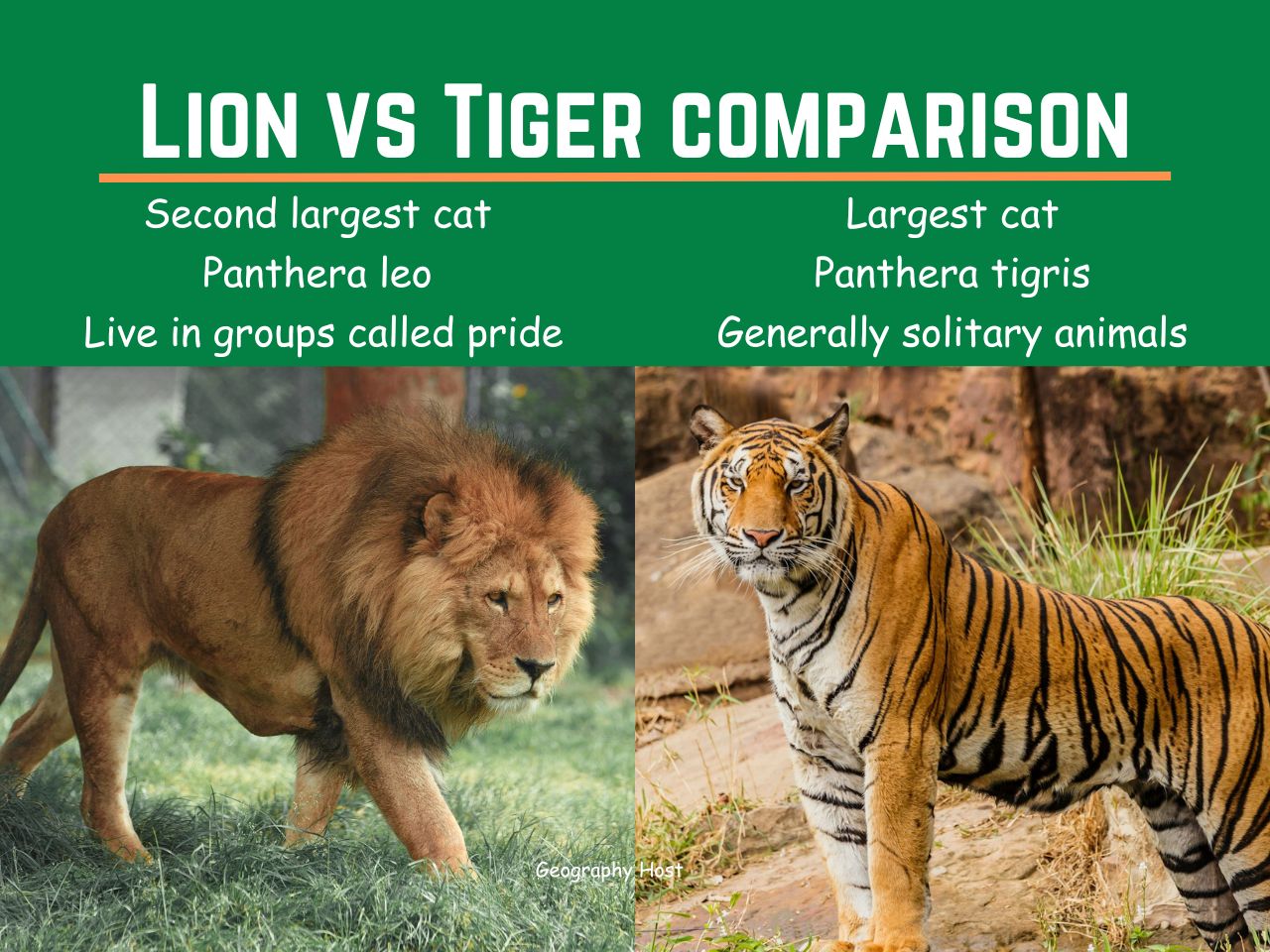
Weight is the most critical metric when determining physical dominance and mass superiority between large predators. Across historical and contemporary scientific literature, the tiger decisively claims the upper hand in maximum and average weight parameters.
Amur and Bengal tigers routinely tip the scales at figures that surpass typical African lions. A mature male Amur tiger in the wild can weigh anywhere from 180 to 300 kilograms (400 to 660 pounds), with exceptional historical specimens reported well beyond those ranges. Bengal tigers exhibit a similarly impressive mass, with adult males averaging between 180 and 250 kilograms.
In contrast, adult male African lions typically weigh between 150 and 225 kilograms (330 to 500 pounds). While exceptionally large male lions in Southern Africa (such as those in Kruger National Park or the Kalahari) have been documented reaching or exceeding 250 kilograms, these individuals represent the upper tier of the lion population. The average adult male tiger across stable populations inherently maintains a heavier, more robust frame than the average adult male lion.
| Felid Species and Subspecies | Average Male Weight | Average Female Weight | Maximum Recorded Wild Weight |
|---|---|---|---|
| Amur (Siberian) Tiger | 180 – 300 kg (400 – 660 lbs) | 100 – 160 kg (220 – 350 lbs) | Up to 320 kg+ (Historical/Verified) |
| Bengal Tiger | 180 – 250 kg (400 – 550 lbs) | 100 – 160 kg (220 – 350 lbs) | Up to 260 kg+ |
| Southern African Lion | 150 – 225 kg (330 – 500 lbs) | 110 – 150 kg (240 – 330 lbs) | Up to 272 kg |
| Asiatic Lion | 130 – 190 kg (285 – 420 lbs) | 90 – 140 kg (200 – 310 lbs) | Up to 200+ kg |
| Sumatran Tiger | 100 – 140 kg (220 – 310 lbs) | 75 – 110 kg (165 – 240 lbs) | Up to 150 kg |
Skeletal Structure, Length, and Shoulder Height
Beyond raw body weight, structural dimensions such as overall body length, cranial architecture, and shoulder height provide a comprehensive view of skeletal scale. Here again, the tiger frequently displays superior linear measurements.
When measuring length—typically taken from the tip of the nose to the base of the tail, excluding the tail itself—large male tigers regularly measure between 2.5 and 2.9 meters (8 to 9.5 feet) total length including the tail. Lions, while possessing impressive length, often measure slightly shorter on average due to a more compact, muscular torso designed for enduring long pursuits in open savannahs.
Shoulder height presents a closer contest. Large male lions often stand remarkably tall at the shoulder, sometimes reaching up to 1.2 meters (nearly 4 feet). This height is accentuated by the voluminous mane of the male lion, which creates a striking optical illusion of greater mass and height. Tigers, while possessing a lower-slung, highly muscular profile that sits closer to the ground for stealth and stability in dense brush, match or exceed this height through sheer skeletal heft rather than fur density.
Environmental Adaptations and Dietary Drivers
The divergence in size between tigers and lions is deeply rooted in evolutionary ecology and habitat mechanics. The prey base available to each predator dictates to a large extent how much physical mass is advantageous to maintain.
Tigers are solitary ambush predators inhabiting dense forests, tall grasslands, and swampy taigas. In these environments, stealth and explosive power are paramount. A heavier, more densely muscled frame allows a tiger to wrestle large, formidable prey items—such as water buffalo, gaurs, and large cervids like sambar deer—to the ground single-handedly. The massive bone density and broad paw structure of the tiger are evolutionary adaptations designed to absorb the immense kinetic energy exerted by struggling heavy prey in wooded terrain.
Lions, conversely, are social predators living in prides within open environments like savannahs and scrub forests. Their social structure allows them to hunt cooperatively, taking down large prey such as zebra and wildebeest as a team. Because lions rely on endurance, coordinated group tactics, and chasing prey across open ground, a slightly more streamlined musculature compared to the solitary tiger offers functional advantages for running efficiency.
Common Misconceptions in Big Cat Comparisons
Public perception regarding big cat sizes is frequently skewed by captive specimens, artistic depictions, and the visual impact of the lion's mane. Addressing these variables clarifies why the scientific consensus favors the tiger in overall size metrics.
- The Mane Factor: A male lion's mane is an evolutionary asset designed to protect the neck during intraspecific fights and to signal health and vigor to females. However, it adds significant visual volume, making lions appear much heavier and larger than their actual skeletal frame dictates.
- Captive vs. Wild Specimens: Captive tigers, particularly those in breeding facilities or private collections, often exceed wild counterparts due to regular feeding schedules and restricted movement. Hybrid specimens, such as ligers (offspring of a male lion and a female tiger), dwarf both parent species entirely, but they do not reflect natural zoological realities.
- Subspecies Generalization: Assuming all tigers are massive is a frequent error. An insular Sumatran tiger is notably smaller than a mature African lion from the Kruger population. The size edge belongs to the tiger only when comparing the premier subspecies (Amur and Bengal) against standard lion populations.
Summary of Findings
When weighing the biological and physical evidence, the tiger holds the definitive edge in average and maximum size over the lion. While exceptional individuals from both species can challenge general rules, the robust skeletal structure, greater average body mass, and extended length of northern tiger subspecies cement their status as the largest living wild felids on Earth.
Frequently Asked Questions
Do tigers weigh more than lions on average?
Yes, across recognized comparable populations, adult male tigers—particularly Amur and Bengal subspecies—average greater body mass than standard adult male African and Asiatic lions. While top-tier individual lions can rival average tigers, the baseline weight for mature male tigers is higher.
Why do male lions look bigger if tigers are heavier?
Male lions possess a thick, prominent mane that frames the head and neck, creating an optical illusion of greater overall size, bulk, and height. Tigers have shorter fur relative to their body mass, meaning their visual profile aligns more closely with their actual physical dimensions.
Which big cat is longer from nose to tail?
Large tigers generally hold the advantage in total linear length, including body and tail measurements, compared to lions. This elongated, powerful frame aids the tiger in navigating dense undergrowth and subduing heavy prey.
Are female tigers larger than female lions?
Comparing the sexes reveals a similar pattern. Female tigers (tigresses) from major mainland subspecies often equal or slightly outweigh average lionesses, though individual variation across localized regional populations can overlap significantly.
Does the lion's social hunting style influence its size?
Yes, living in a pride allows lions to cooperate on hunts, reducing the necessity for a solitary predator to possess the extreme mass and independent wrestling strength required by a tiger taking down heavy prey alone in dense cover.
Image Gallery