How to Estimate the Total Cost of Car Ownership
Estimating the total cost of car ownership requires adding up fixed monthly expenses—such as loan interest, insurance premiums, taxes, and registration fees—with variable operational costs like fuel, maintenance, repairs, parking, and...
Estimating the total cost of car ownership requires adding up fixed monthly expenses—such as loan interest, insurance premiums, taxes, and registration fees—with variable operational costs like fuel, maintenance, repairs, parking, and annual depreciation. Subtracting the vehicle's estimated resale value at the end of your planned ownership period yields your net total cost of ownership.
Contents
Understanding Total Cost of Ownership Beyond the Sticker Price
When prospective buyers calculate whether a vehicle fits their budget, they frequently focus exclusively on the monthly auto loan payment or the advertised sticker price. However, the purchase price represents only a fraction of the actual long-term financial commitment. The Total Cost of Ownership (TCO) measures every dollar spent to acquire, operate, maintain, and eventually dispose of a vehicle over a designated period—typically five years or 60,000 miles.
Failing to account for non-payment expenses leads to severe budget miscalculations. Insurance premiums, state registration fees, routine maintenance, unplanned mechanical repairs, fuel or electric charging, and—most significantly—asset depreciation combine to equal or exceed the initial purchase price over the vehicle's lifespan. By evaluating these expenses systematically before signing a finance contract, buyers can select a vehicle that aligns with their actual long-term financial capacity.
Disclaimer: This guide is provided for educational and financial planning purposes only. Auto insurance rates, tax laws, loan terms, and vehicle depreciation rates vary by jurisdiction, lender, individual credit profile, and market conditions. Consult a qualified financial advisor or tax professional for advice tailored to your personal circumstances.
The Core Components of Vehicle Ownership Costs
Calculating an accurate TCO requires breaking down expenses into two distinct categories: fixed costs (expenses incurred regardless of how much you drive) and variable costs (expenses that fluctuate directly with mileage and usage).
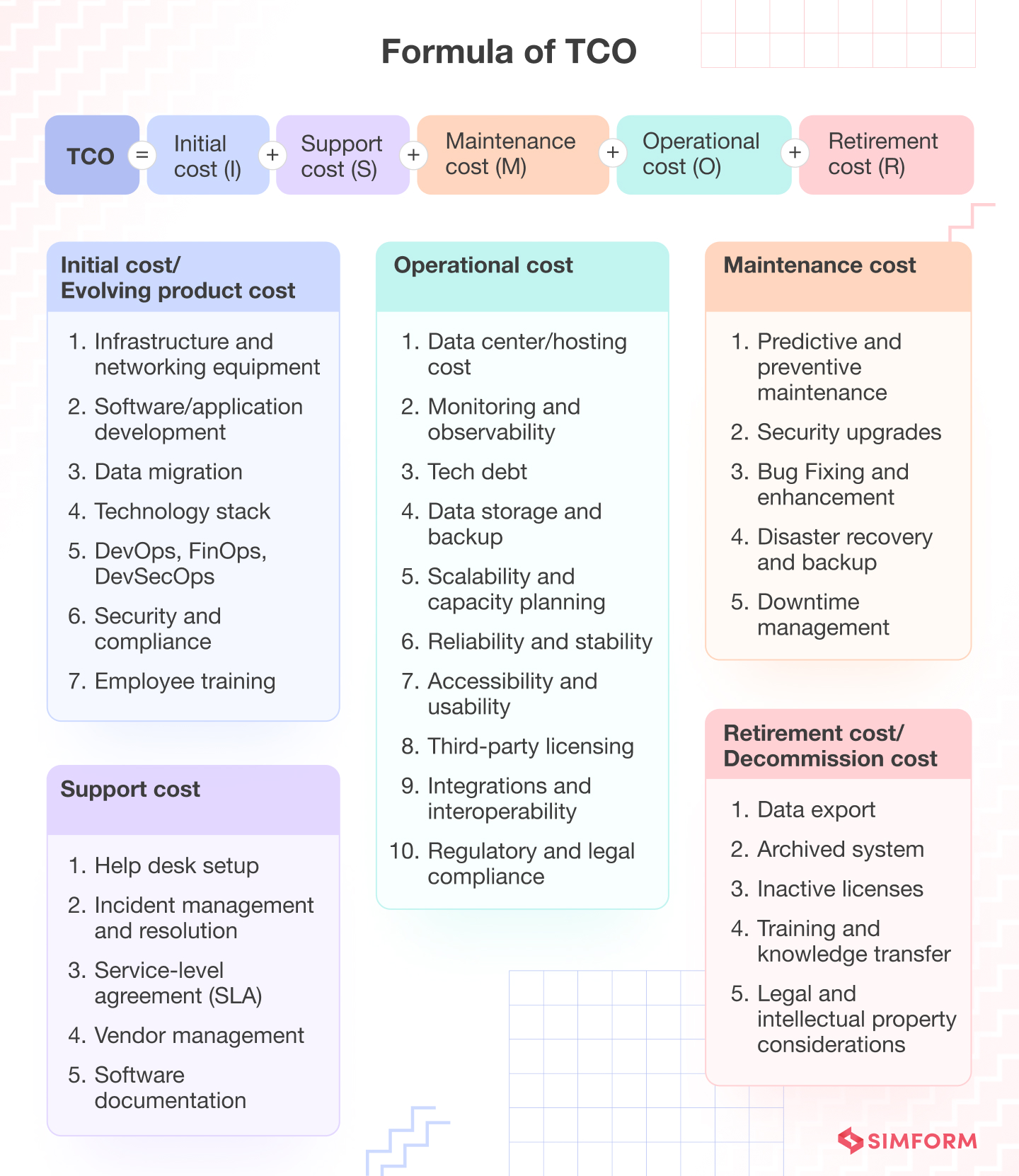
Total Cost of Ownership = (Purchase Price + Financing Interest + Total Operating Costs + Taxes & Fees) - Resale Value
1. Depreciation (The Largest Hidden Cost)
Depreciation represents the loss in a vehicle’s market value over time. Although it is a non-cash expense that does not require a monthly payout from your checking account, it is typically the single largest cost of owning a new vehicle.
On average, a brand-new vehicle loses approximately 15% to 20% of its value in the first year alone. Over the first five years, typical passenger vehicles lose 40% to 60% of their original retail value. Factors influencing depreciation rates include:
- Vehicle Segment: Trucks, popular SUVs, and limited-supply models generally retain value better than midsize sedans or luxury electric vehicles.
- Brand Reputation: Brands with proven long-term reliability ratings suffer slower depreciation curves.
- Mileage Accumulation: High-mileage vehicles depreciate faster than low-mileage counterparts.
2. Financing and Interest Charges
If you finance your vehicle purchase, interest rates significantly increase your total outlay. The true cost of financing is not merely the annual percentage rate (APR), but the cumulative interest paid across the entire loan tenure (e.g., 48, 60, or 72 months).
Longer loan terms reduce monthly payments but dramatically increase total interest costs. Furthermore, long-term loans increase the risk of becoming "upside down" or carrying negative equity—where you owe more on the loan than the vehicle is worth on the secondary market.
3. Auto Insurance Premiums
Auto insurance is a mandatory fixed expense that varies widely depending on multiple risk vectors. Key factors determining your premium include:
- Vehicle Characteristics: Safety features, theft statistics, repair cost complexity, and engine performance classification.
- Driver Profile: Age, driving record, credit history (in states where permitted), and geographical location (zip code).
- Coverage Scope: Comprehensive, collision, liability limits, and deductibles selected.
Luxury and sports models often carry insurance costs up to 50% higher than standard sedans or compact crossovers.
4. Fuel and Energy Expenses
Fuel or electric charging costs represent a primary variable expense directly tied to annual mileage and powertrain efficiency. To estimate annual energy costs accurately:
- Determine your projected annual mileage (the U.S. national average is approximately 13,500 miles per year).
- Identify the vehicle's combined fuel economy rating (Miles Per Gallon / MPG for internal combustion engines, or kWh per 100 miles for electric vehicles).
- Multiply the required units of energy by prevailing local fuel or electricity prices.
5. Scheduled Maintenance and Unanticipated Repairs
Maintenance costs encompass routine services necessary to maintain safety, reliability, and warranty validity. These include fluid changes, tire rotations, brake pad replacements, cabin air filters, and wiper blades.
Repairs represent non-routine fixes for component failures (e.g., alternator failure, suspension wear, sensor replacements). During the manufacturer's warranty period (typically 3 years/36,000 miles up to 5 years/60,000 miles), repair costs are minimal. Once the warranty expires, repair probability and costs rise significantly, particularly for complex vehicles with expensive replacement parts.
6. Taxes, Registration, and Title Fees
Government fees vary significantly by state and local municipality. Initial charges include state sales tax, title transfer fees, and initial registration fees. Ongoing charges include annual license plate renewal fees and, in certain jurisdictions, personal property taxes assessed annually on the vehicle's current market valuation.
7. Parking, Tolls, and Ancillary Expenses
Urban drivers must include recurring parking permit fees, garage spaces, daily commuter parking, highway tolls, and routine vehicle cleaning. While minor individually, these costs frequently add up to thousands of dollars over a multi-year ownership period.
Step-by-Step Framework to Calculate Your Vehicle's TCO
To compute an accurate TCO for any vehicle under consideration, follow this five-step analytical process before committing to a purchase.
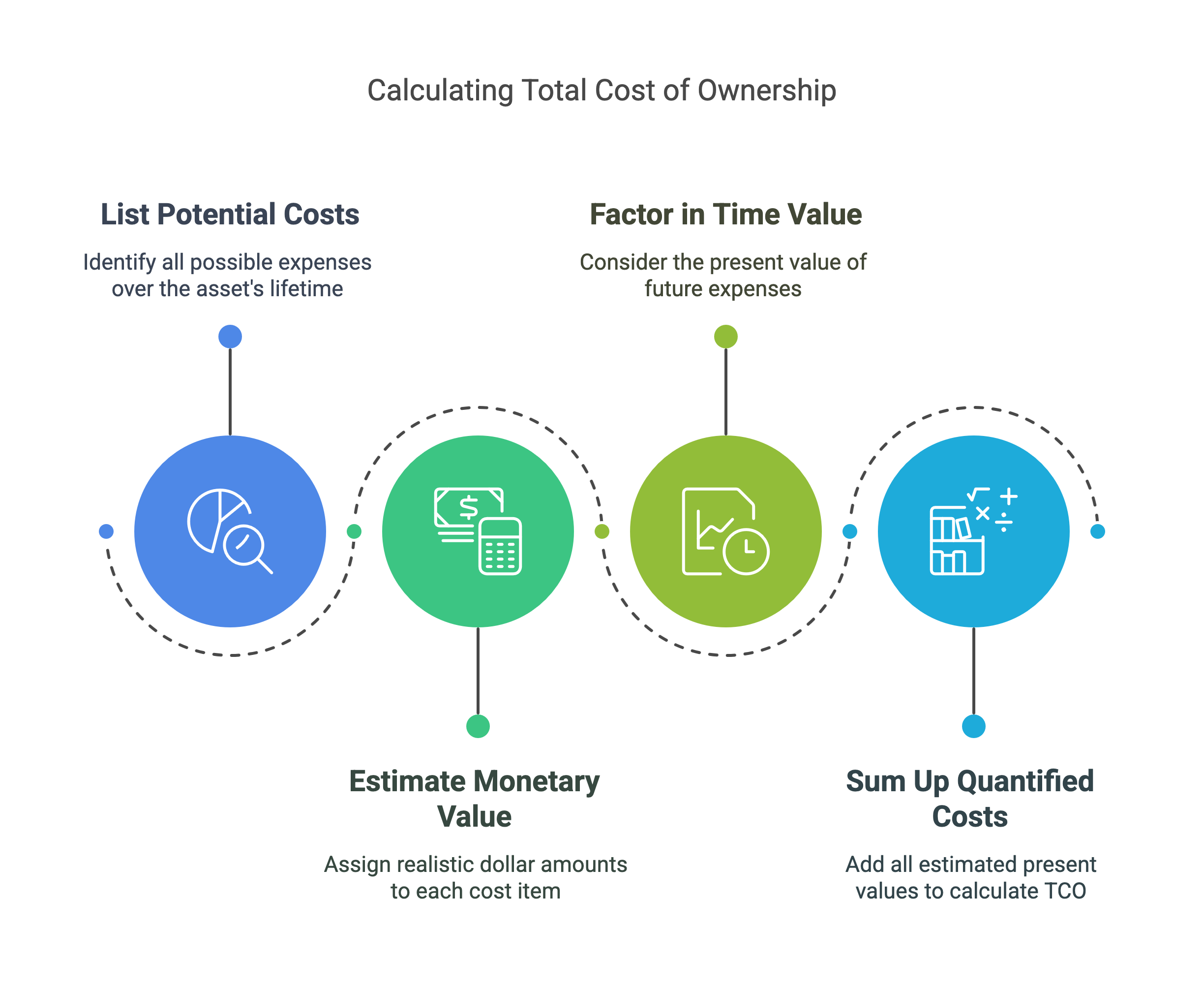
Step 1: Baseline Inputs -> Step 2: Fixed Costs -> Step 3: Variable Costs -> Step 4: Depreciation -> Step 5: Final Net TCO Formula
Step 1: Establish Your Baseline Parameters
Gather key inputs regarding your intended usage and vehicle acquisition details:
- Purchase Price (Out-the-Door Price): Include negotiated vehicle price, dealer fees, and add-ons.
- Ownership Horizon: Define how long you intend to keep the car (e.g., 5 years / 60 months).
- Annual Mileage: Estimate how many miles you drive each year.
Step 2: Calculate Fixed Annual Expenses
Calculate all non-negotiable yearly recurring fees:
- Financing: Multiply your monthly loan payment by 12, then subtract the principal reduction to isolate interest, or use an amortization table to sum annual interest paid.
- Insurance: Multiply your actual or quoted semi-annual premium by 2.
- Taxes and Fees: Sum annual registration fees and localized personal property taxes.
Step 3: Project Variable Per-Mile Operating Costs
Calculate operational costs based on expected mileage:
- Fuel Cost:
(Annual Miles ÷ Combined MPG) × Fuel Price per Gallon - Electric Cost:
(Annual Miles ÷ 100) × kWh per 100 Miles × Electricity Rate per kWh - Maintenance & Tires: Use an estimated benchmark based on vehicle age (typically $0.08 to $0.12 per mile for newer standard vehicles; $0.15 to $0.25 per mile for older or European luxury vehicles).
Step 4: Estimate Net Depreciation and Residual Value
Research the historical retained value for the specific vehicle make, model, and trim level using automotive valuation guides such as Kelley Blue Book (KBB) or Edmunds. Estimate the vehicle's market value at the end of your ownership timeframe.
Total Depreciation = Initial Purchase Price - Projected Resale Value
Step 5: Aggregate into Net Monthly and Total Ownership Cost
Apply the cumulative formula to establish both monthly and total costs across your ownership timeframe:
$$\text{Total 5-Year TCO} = \text{Depreciation} + \text{Total Interest} + \text{Total Insurance} + \text{Total Fuel/Energy} + \text{Total Maintenance/Repairs} + \text{Total Taxes/Fees}$$
$$\text{Effective Monthly TCO} = \frac{\text{Total 5-Year TCO}}{\text{Total Ownership Months (e.g., 60)}}$$
Comprehensive TCO Comparison: 5-Year Cost Projection
The following table compares estimated 5-year ownership costs across three distinct vehicle categories assuming 15,000 miles driven per year (75,000 total miles over 5 years).
Note: Data figures represent illustrative market averages based on national cost patterns for illustrative comparison.
| Expense Category | New Compact Gas Sedan ($26,000 Purchase) | Used Midsize SUV ($24,000 Purchase - 3 Yrs Old) | New Electric Crossover ($42,000 Purchase) |
|---|---|---|---|
| Initial Purchase Price | $26,000 | $24,000 | $42,000 |
| Estimated Resale Value (Yr 5) | $12,500 | $10,500 | $17,000 |
| 5-Year Depreciation | $13,500 | $13,500 | $25,000 |
| Loan Interest (60 Mos @ 6% APR) | $3,450 | $3,820 | $5,570 |
| Insurance (5 Years) | $8,500 | $8,200 | $10,200 |
| Fuel / Energy Costs (75k Miles) | $8,800 (32 MPG @ $3.75/gal) | $11,700 (24 MPG @ $3.75/gal) | $3,150 (30 kWh/100mi @ $0.14/kWh) |
| Maintenance, Tires & Repairs | $3,200 | $5,400 | $2,400 |
| Taxes, Title & Registration | $2,600 | $2,100 | $3,800 |
| Total 5-Year Outlay (Net of Resale) | $40,050 | $44,720 | $50,120 |
| Effective Monthly Ownership Cost | $667.50 / mo | $745.33 / mo | $835.33 / mo |
Critical Errors to Avoid When Estimating Ownership Costs
When evaluating vehicle options, buyers frequently commit several analytical errors that lead to financial strain:
- Focusing Exclusively on the Monthly Payment: Sales departments often structure long-term financing (72 to 84 months) to lower the monthly payment. This approach significantly increases total interest costs and exposes the buyer to severe negative equity.
- Ignoring the Insurance Differential: Insurance premiums vary substantially between vehicle models. Upgrading from a standard sedan to a performance vehicle or luxury SUV can double annual insurance costs, neutralizing any savings achieved on the purchase price.
- Underestimating Post-Warranty Repairs: A used luxury vehicle may carry an attractive pre-owned purchase price, but its replacement components, specialized diagnostics, and labor rates remain calculated at luxury rates.
- Failing to Account for Tire Replacement Cycles: Modern crossover SUVs and electric vehicles often utilize specialized, low-profile, or heavy-load EV tires that wear faster and cost significantly more to replace than standard 16-inch passenger tires.
Frequently Asked Questions
What percentage of my income should total car ownership costs represent?
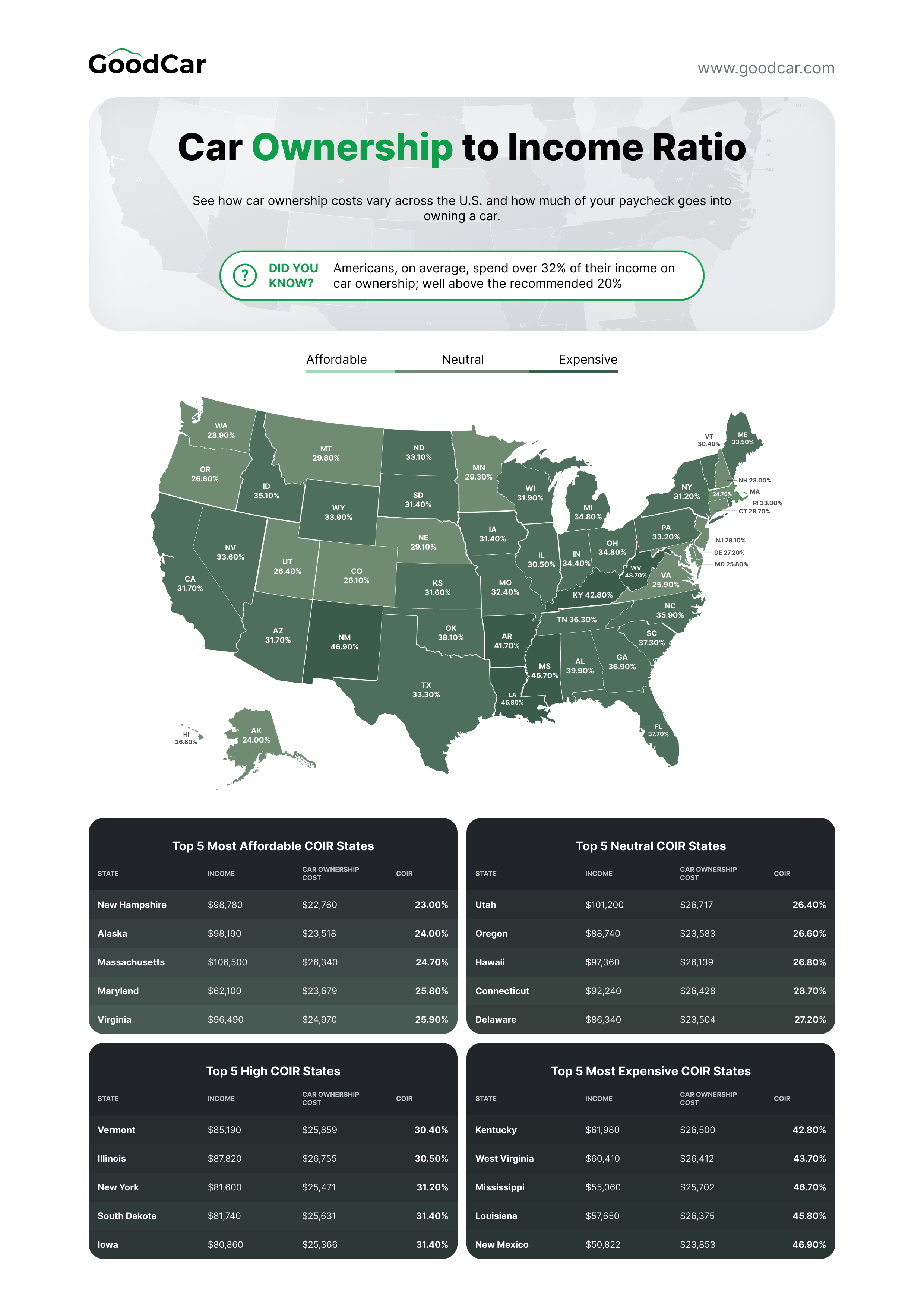
Financial planners generally recommend keeping total vehicle ownership expenses (including loan principal, interest, insurance, fuel, and maintenance) at or below 15% to 20% of your net take-home pay. If you are evaluating only the monthly auto loan payment, that single component should not exceed 10% to 12% of take-home pay.
How does an electric vehicle (EV) total cost of ownership compare to a gas vehicle?
EVs typically carry higher upfront purchase prices and steeper initial depreciation, resulting in higher loan interest and registration costs. However, they offset these initial expenses with substantially lower operational costs—specifically reduced energy expenses per mile and lower routine maintenance demands (no engine oil changes, reduced brake wear due to regenerative braking). Over a 5-to-7-year period, high-mileage EV drivers often achieve total cost parity or savings compared to gas-powered equivalents.
What is the national average annual cost to own and operate a new car?
According to data tracking from major automotive organizations such as AAA, the average annual cost to own and operate a new vehicle driving 15,000 miles per year ranges between $10,000 and $12,000 per year (approximately $850 to $1,000 per month) when accounting for depreciation, finance charges, insurance, fuel, maintenance, and fees.
How do I account for depreciation if I plan to drive the car until it stops running?
If your firm intention is to keep the vehicle for its entire functional lifespan (e.g., 12 to 15+ years until its resale value approaches zero), annual depreciation becomes less relevant to your operational budget. In this scenario, your primary long-term financial focus shifts toward escalating maintenance and mechanical repair costs as the vehicle ages past 100,000 miles.
Does buying a used car always result in a lower total cost of ownership?
Not automatically. While a used car avoids the steep initial 1-to-3-year depreciation hit, it may carry higher interest rates on auto loans, higher routine maintenance costs, and an immediate risk of major out-of-warranty mechanical repairs. A late-model used car with low mileage typically yields the optimal TCO balance, whereas an older, high-mileage used vehicle can become financially inefficient if major component failures occur.
Next Steps for Buyers and Owners
Before negotiating a purchase or signing a lease agreement, take the following concrete actions:
- Obtain Real Insurance Quotes: Request binding quotes from your insurance provider for the exact year, make, model, and trim level of the vehicles under consideration rather than using generic estimates.
- Calculate Your Actual Annual Mileage: Review your driving patterns over the past 12 months using service records or commute mapping to establish a realistic mileage baseline.
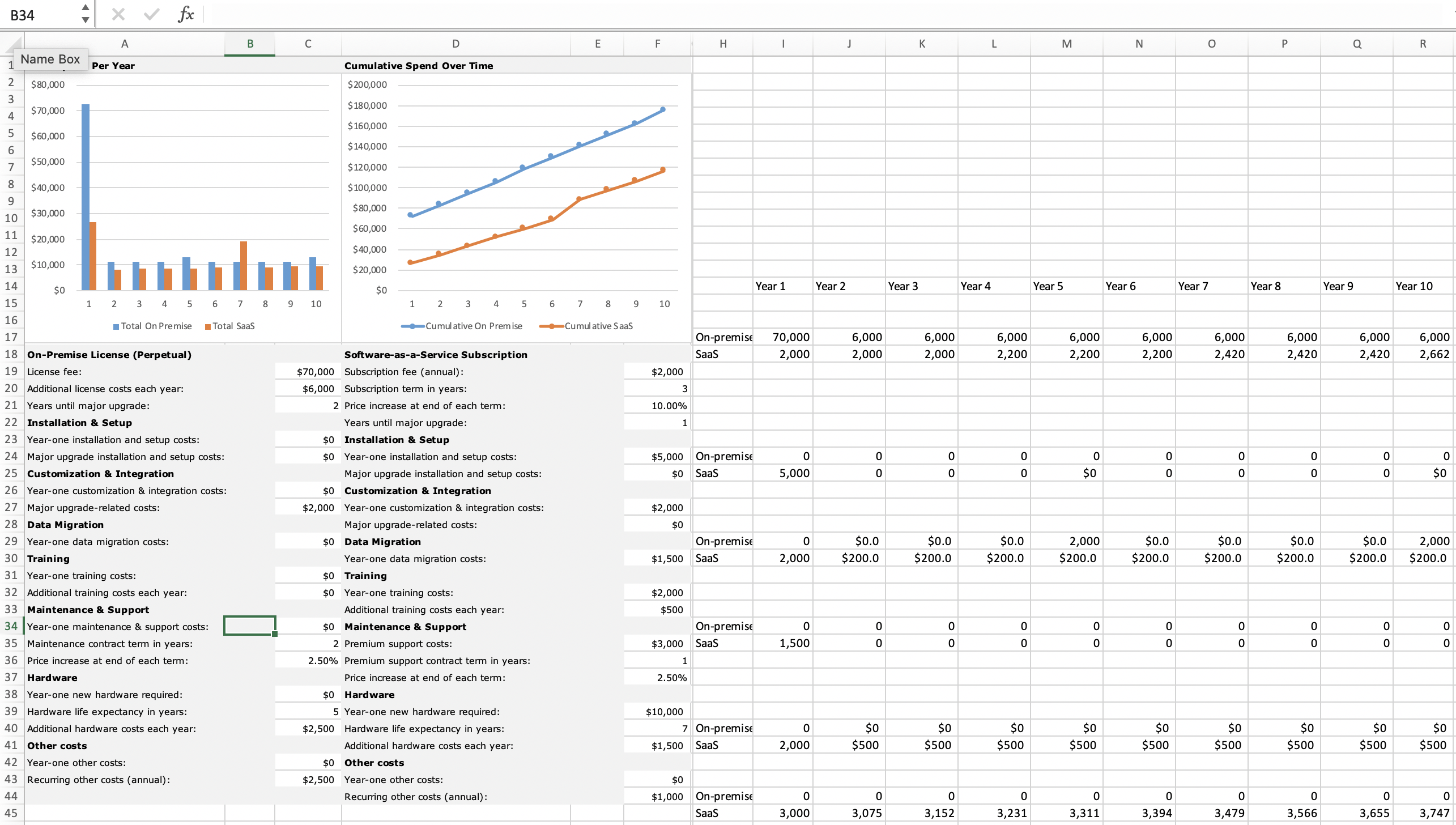
- Run a Multi-Vehicle Comparison: Plug the figures for two or three competing models into a TCO calculation spreadsheet to isolate how differences in depreciation, fuel efficiency, and insurance impact your long-term wealth.
Image Gallery